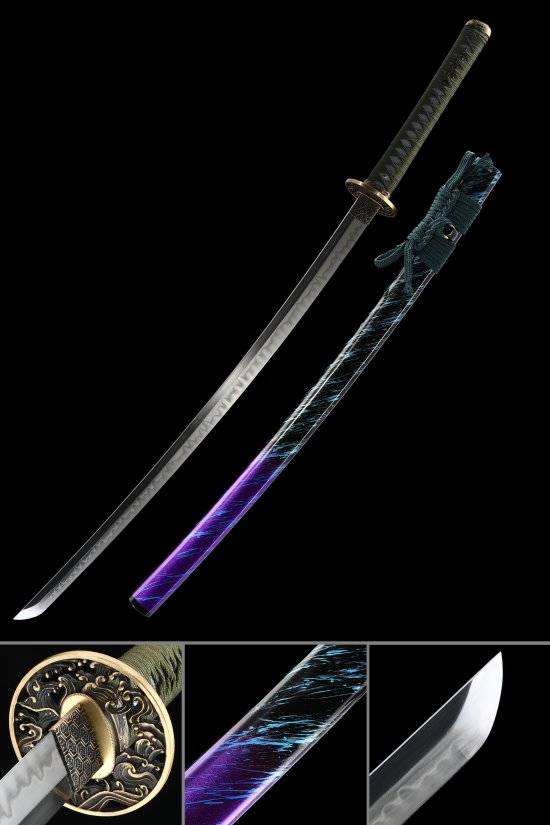
What Is A Full Tang Katana? Everything You Need To Know

Post by TrueKatana    Apr 05, 2026

If you've spent any time researching Japanese swords, you've almost certainly come across the term "full tang." It appears in product descriptions, buyer guides, and collector forums as a mark of quality — but what does it actually mean, why does it matter, and how do you tell a true full tang katana from a cheaper imitation? This guide answers all of those questions and helps you understand what to look for when choosing your next blade.


What Is a Tang?

The tang is the unsharpened extension of the blade steel that runs into the handle. On a Japanese sword, the blade and tang are forged from a single piece of steel — there is no weld or joint between them. The wooden handle panels (tsuka) are fitted around the tang and secured with one or more bamboo or metal pins called mekugi, which pass through holes drilled in both the tsuka and the tang itself.

The tang is hidden inside the handle under the tsuka-ito (handle wrap) and the wooden grip, so it is not visible during normal use. However, it is entirely responsible for keeping the blade locked securely in the handle — making it one of the most important structural elements of any samurai sword.


What Makes a Katana "Full Tang"?

A full tang katana is one where the tang runs the entire length of the handle from blade to pommel. When you remove the tsuka, the flat steel extends from the habaki collar all the way to the end of the grip. The steel is typically the same width as the handle, filling the grip channel almost completely.

This creates maximum surface contact between the steel tang and the wooden tsuka panels. Combined with the mekugi pins, the result is an extremely rigid, shock-absorbing connection that can withstand the stress of real cutting, martial arts practice, and repeated strikes.


Full Tang vs. Partial Tang: What Is the Difference?

Not every sword on the market is full tang. Budget swords, wall-hangers, and decorative pieces frequently use a partial tang — also known as a rat-tail tang. Here is how they compare:

Full Tang The steel extends the full length of the handle. It is as wide as the grip channel and secured through mekugi pins. This design distributes impact forces along the entire length of the handle, making it strong and safe for actual use. Every genuine battle ready katana and practice katana should be full tang.

Partial / Rat-Tail Tang A narrow rod of steel — often much thinner than the blade — extends partway into the handle. It is usually threaded and tightened with a bolt, or simply glued in place. Under stress, the handle can crack, wobble, or detach entirely. Partial tang construction is common in low-cost display katana and decorative pieces that are never intended for cutting.

Push Tang A very short stub of steel inserted into the handle with adhesive. Found only on the cheapest decorative swords — these should never be used for cutting or practice of any kind.


Why Full Tang Construction Matters

Safety A partial tang handle that fails during a swing can send the blade flying — a serious hazard in any practice environment. Full tang construction virtually eliminates this risk when the mekugi are properly fitted and maintained.

Performance Full tang geometry means the force of a cut travels cleanly from blade through tang through handle and into your grip. There is no weak point where energy is lost or where flexing can occur. This gives practitioners precise feedback and control.

Durability A High Carbon Steel Katana Sword with a full tang can last for decades of regular training and cutting practice. The handle may need re-wrapping over time, but the structural integrity of the blade-to-tang connection remains sound.

Value Retention For collectors, full tang construction is a key marker of quality. Whether you own a 1095 Carbon Steel Katana, a T10 Carbon Steel Katana, or a Damascus Steel Katana, full tang construction signals that the sword was built to authentic standards and will hold its value far better than a decorative piece.


How to Check If a Katana Is Full Tang

You do not need to disassemble the sword to verify full tang construction — though disassembly is the most definitive method. Here are some ways to check:

Ask the seller Any reputable seller should be able to confirm tang construction in writing. If the product description does not mention "full tang" explicitly, ask before purchasing.

Check the weight balance A full tang sword feels balanced and substantial in the hand. A rat-tail tang sword often feels tip-heavy or oddly light at the handle — the steel simply isn't there to provide proper counterbalance.

Inspect the pommel On many full tang katana, you can see the very end of the tang flush with or slightly protruding from the bottom of the handle. Rat-tail tangs often end in a visible bolt or nut at the pommel.

Disassemble the tsuka If in doubt, tap the mekugi pin free with a punch, slide off the tsuba and habaki, and remove the tsuka panels. You should see a wide flat tang running the full length of the wooden grip.


Full Tang Construction Across Different Sword Types

Full tang design is not exclusive to the katana. It is the expected standard across the entire family of Japanese swords:

Wakizashi The shorter companion blade worn alongside the katana, the wakizashi should also be full tang for any functional version. Collectors often seek matching daisho pairs.

Tanto The tanto is a short blade originally used as a close-quarters weapon and utility knife. A functional tanto is always full tang, with the steel running through a compact handle.

Tachi The tachi is an older, longer predecessor to the katana, worn suspended from the belt edge-down. Full tang tachi are prized for their historical authenticity and structural reliability.

Ninjato Straight-bladed and shorter than a katana, the ninjato also benefits from full tang construction for practice and cutting applications.

If you are building a complete collection, a Katana, Wakizashi And Tanto Set with full tang construction across all three blades is the most practical and aesthetically cohesive choice.


Full Tang Katana and Steel Type

Tang construction interacts closely with blade steel. The most popular steels for full tang functional katana include:

1095 Carbon Steel Katana One of the most common high-carbon steels for entry-level and mid-range full tang swords. Hard enough to hold a sharp edge, simple enough for beginner practitioners to maintain.

T10 Carbon Steel Katana A tungsten-alloyed tool steel with exceptional hardness and edge retention. Full tang T10 swords are popular with experienced practitioners who want performance and longevity.

Folded Steel Katana Folded steel construction produces thousands of micro-layers within the blade. In a full tang folded steel katana, these layers are visible through the tang cross-section — a sign of genuine craftsmanship.

Clay Tempered Katana Clay tempering creates the distinctive hamon (temper line) along the blade. Full tang clay tempered katana represent the closest modern equivalent to traditionally forged Japanese swords.

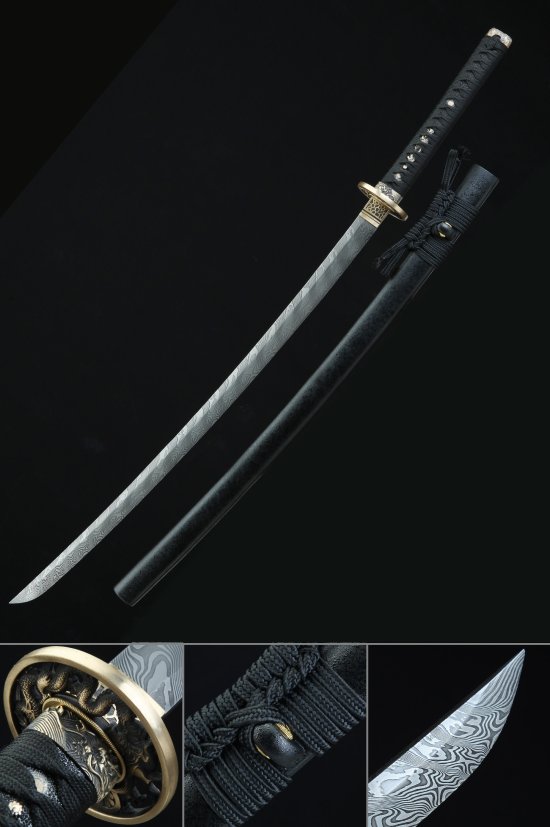
Damascus Steel Katana Damascus construction produces a visually striking pattern across the blade. Full tang Damascus swords combine aesthetics with structural integrity.


Full Tang Katana for Different Uses

Martial Arts Practice For iaido, kendo, or tameshigiri, a full tang practice katana is non-negotiable. The repetitive stress of drawing, cutting, and resheathing will quickly expose any weakness in a partial tang handle.

Tameshigiri (Test Cutting) Cutting through tatami mats or rolled bamboo places enormous stress on the blade-handle junction. Only a full tang sword is safe and effective for this practice.

Display and Collection Even as a display katana, full tang construction adds value and authenticity. Displayed on a proper sword stand, a full tang katana looks and feels like the real thing — because it is.

Gift and Starter Swords If you are buying a cheap katana as an entry point into the hobby, prioritize full tang construction above all other features. A low-cost sword with a partial tang is more of a liability than a bargain.


Where to Buy a Full Tang Katana

TrueKatana specializes in authentic, full tang Japanese swords for every budget and skill level. Whether you are searching for an affordable katana for sale to start your collection, or a premium hand-forged blade with clay tempering and real hamon, every sword in our catalog is built to functional standards with genuine full tang construction.

Browse our full range of Japanese swords at TrueKatana.com and find the blade that suits your style, budget, and purpose.


Conclusion

A full tang katana is the only type of Japanese sword worth owning if you plan to use it — and it is the standard of quality even for serious display collectors. The tang running the full length of the handle is what separates a real, functional samurai sword from a decorative wall piece. Whether you choose a battle ready katana for training, a Damascus Steel Katana for display, or a complete Katana Set for your collection, always verify full tang construction before you buy. It is the single most important structural feature your sword can have.

Explore Your Favorites Samurai Swords

Shop 2,500+ hand-forged swords. Free shipping. 30-day returns.

Shop All Katanas