Tactical Katana
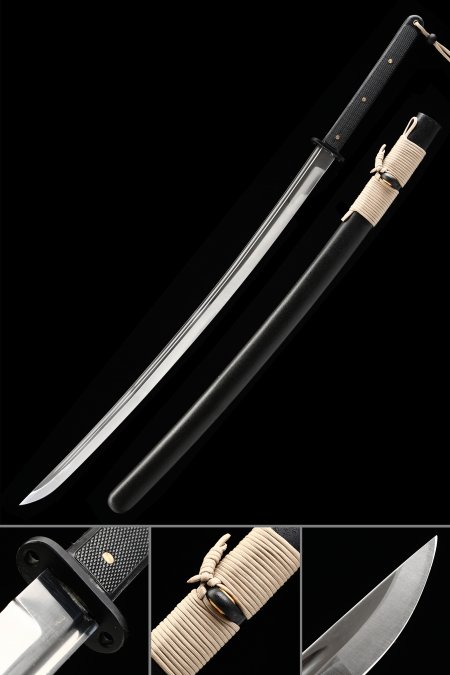
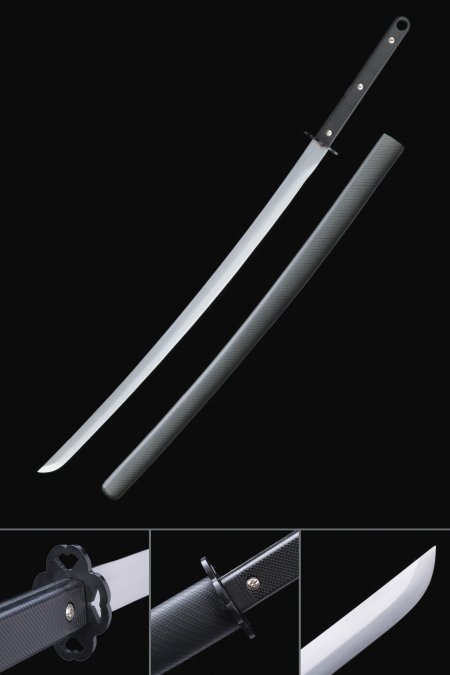
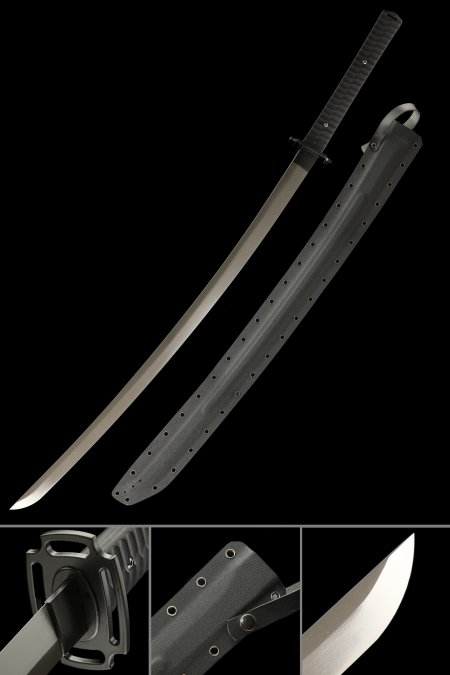
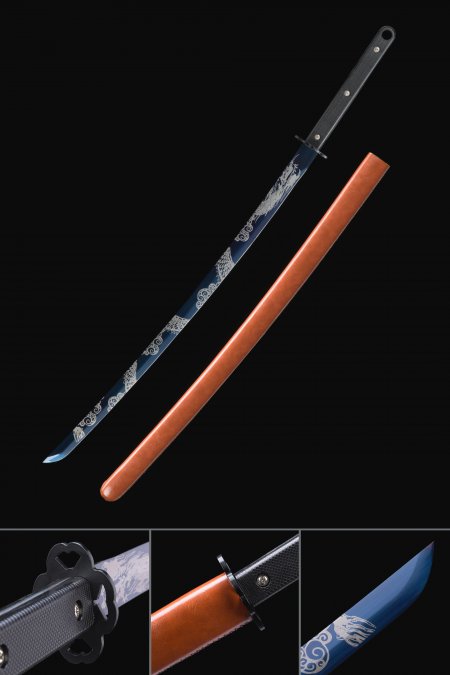
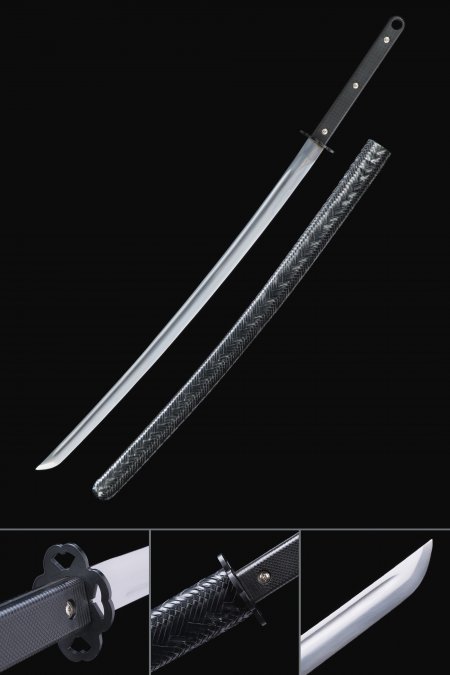
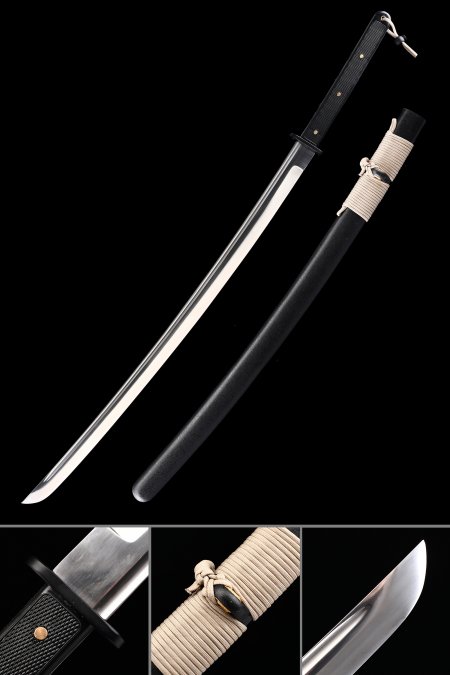
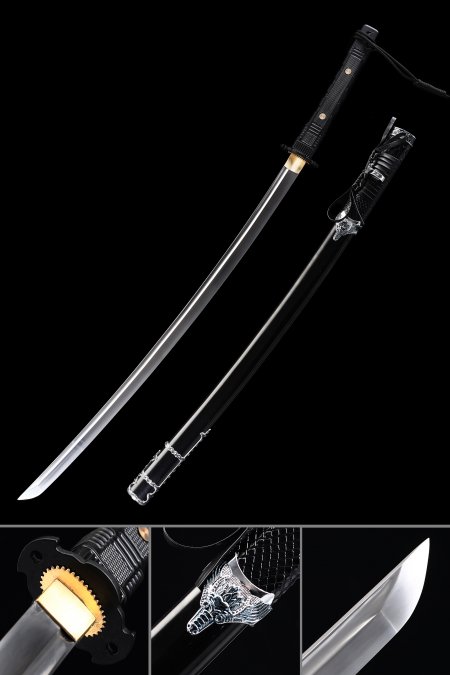
The tactical katana takes the proven geometry of the traditional Japanese sword — curved single-edged blade, two-handed handle, full-tang construction — and strips away the decorative finish in favor of a darker, more functional aesthetic. Black leather wrapping instead of silk ito, matte fittings instead of lacquered metal, and steel chosen for toughness rather than visual tradition. Every sword in this collection is hand-forged from 1095 carbon steel or spring steel, heat-treated to real sword specifications, and built to handle active use rather than sit untouched behind glass.
Related Collections
Frequently Asked Questions
What makes a katana "tactical"?
The term "tactical katana" describes a modern aesthetic approach to the traditional Japanese katana format rather than a fundamentally different sword type. The underlying design — curved single-edged blade, full-tang construction, two-handed handle proportions, high-carbon steel — remains identical to a traditional katana. What distinguishes a tactical version is the surface treatment and material choices applied to that foundation. Where a traditional katana uses silk ito cord over rayskin for the handle, a tactical katana uses black leather, paracord, or cord wrap in dark colors. Where traditional fittings are polished or decoratively finished metal, tactical fittings are matte, blackened, or minimalist. The scabbard is typically dark or black rather than lacquered in a traditional finish. The overall aesthetic tends toward dark, functional, and contemporary rather than ornate and historical. The steel underneath these presentation differences is the same quality material used in any serious sword — 1095 carbon steel or spring steel in TrueKatana's collection, properly heat-treated and built to real functional specifications. The "tactical" label emerged from the market for swords that appeal to collectors and users who prefer contemporary aesthetics and active-use durability over traditional visual presentation. It's not a performance upgrade over a traditional katana — it's a design philosophy that applies modern sensibility to a proven sword format. For collectors comparing options across the full range, the construction quality of a tactical model is equivalent to the traditional-finish katana swords in the same price range, with the difference being entirely in how the sword looks rather than how it's built.
Is a tactical katana good for cutting practice?
Yes — a properly built tactical katana with high-carbon or spring steel blade and full-tang construction is well suited for cutting practice, and in some ways better suited than a traditional-finish katana in the same steel and construction tier. The minimalist handle wrapping used on tactical models is more durable under the repeated mechanical stress of cutting sessions than traditional silk ito, which can loosen or fray with heavy use. The matte or dark fittings are less susceptible to cosmetic damage from handling and practice environments. The blade itself — whether 1095 carbon steel for sharp edge performance or 9260 spring steel for maximum toughness and flexibility — is the same material used in purpose-built cutting swords. For tameshigiri practice with rolled tatami mats, 1095 carbon steel delivers the edge capability and retention needed for clean cuts through the target, while spring steel provides more forgiveness for technique that's still developing. Both require proper cutting mechanics: clean edge alignment, controlled swing arc, and appropriate target density for the blade's hardness rating. For Iaido or Kenjutsu training with a live blade, the tactical katana's handle geometry and overall proportions are compatible with the draw and cut mechanics taught in those disciplines — the black handle doesn't change the functional characteristics. One practical consideration: carbon steel blades used for cutting need to be cleaned and oiled immediately after every session, since cutting targets introduce moisture that accelerates rust formation on untreated steel. A dedicated sword stand keeps the sword properly stored between sessions. For heavy-volume cutting practice over time, spring steel's tolerance for lateral stress makes it the more durable long-term choice.
How is a tactical katana different from a ninja sword?
Tactical katanas and ninja swords (ninjato) are often confused because both tend toward dark aesthetics and modern presentations, but they're fundamentally different blade types in terms of geometry and construction. A tactical katana follows the traditional katana format: curved, single-edged blade, standard katana proportions (typically 27–29 inch blade), and the full shinogi-zukuri geometry of a classical Japanese sword. The "tactical" descriptor refers to the aesthetic treatment — black leather, matte fittings, dark scabbard — not to any change in blade shape. A ninjato (ninja sword) is a different blade format entirely: straight-edged rather than curved, typically shorter than a katana, and associated with the historical tools of the shinobi. In modern replica production, ninjato designs vary widely — some are true to the straight-blade format, others are imaginative interpretations inspired by fictional portrayals in manga and film. A key visual distinction is the curve: a tactical katana retains the curved blade that defines the katana format, while a ninjato is straight or near-straight. Performance-wise, the curved blade of the katana provides cutting mechanics and draw characteristics that a straight blade doesn't replicate — the tactical version preserves these functional characteristics while changing the visual presentation. For collectors building a display that includes both blade types, the tactical katana and a ninjato pair well visually given their overlapping dark aesthetic — TrueKatana stocks both formats. A sword stand designed for multiple blade types accommodates both profiles for a combined display.
Is a tactical katana a good gift for someone who practices martial arts?
A tactical katana is a strong gift choice for martial arts practitioners, particularly those who train in sword-based disciplines like Iaido, Kenjutsu, or tameshigiri cutting practice, or who appreciate functional bladed tools alongside their training. The key advantage of giving a tactical katana over a traditionally finished Japanese sword is the aesthetic fit: practitioners who train in modern contexts, collect functional cutting tools, or have a contemporary aesthetic sensibility often find the dark, minimal presentation of a tactical katana more aligned with their preferences than a lacquered traditional finish. For gift buyers who aren't sure about the recipient's specific practice discipline or blade preferences, verifying a few details before purchasing makes the gift significantly more useful: does the recipient use a live blade in their training (which confirms functional construction is appropriate), what blade length do they prefer, and do they already have a display setup. TrueKatana's 30-day return policy means that if the specific model, steel type, or proportions aren't right for the recipient's needs, exchanging for the correct configuration is straightforward. The carbon steel construction — 1095 or spring steel — means the sword can actually be used for the cutting practice that martial arts students engage in, rather than being a display piece that can't participate in training. For a practitioner who already has functional training swords, a high-quality tactical katana as an additional blade in a preferred steel type is a meaningful upgrade. Pairing the sword with a quality katana maintenance kit — oil, cleaning cloth, and storage solution — makes the gift immediately practical from day one.
How does a tactical katana compare to a battle-ready katana?
The terms "tactical katana" and "battle-ready katana" are related but describe different things, and they're often used in ways that create confusion for buyers navigating the sword market. "Battle-ready" is a construction quality designation that refers to how a katana is built: full-tang construction, high-carbon steel blade (typically 1060 or above), proper heat treatment to sword-appropriate hardness, and fittings that are properly secured rather than decorative-only. A battle-ready katana is built to be used rather than just displayed — the construction standard is the key indicator, not the aesthetic. "Tactical katana" is an aesthetic category that describes how a katana looks: dark handle treatment, matte fittings, contemporary color scheme. A tactical katana can be battle-ready — in fact, most serious tactical katana offerings are built to battle-ready construction standards precisely because the tactical aesthetic attracts buyers who intend to use the sword. The TrueKatana tactical katana collection uses 1095 carbon steel and spring steel with full-tang construction — this is battle-ready construction by any standard definition of that term. Conversely, a traditionally finished katana can also be battle-ready, and a tactically styled katana could in theory be built to decorative-only standards with cheap steel and partial tang if a seller chose to prioritize the look over the build. The safest approach for buyers is to verify the construction specifications — steel type, tang construction, heat treatment details — regardless of whether the marketing label is "tactical," "battle-ready," or anything else. Both designations are useful signals, but neither substitutes for checking the actual specs. The full samurai sword collection at TrueKatana includes construction details for each model to make this comparison straightforward.