What makes a ninjato different from a katana?
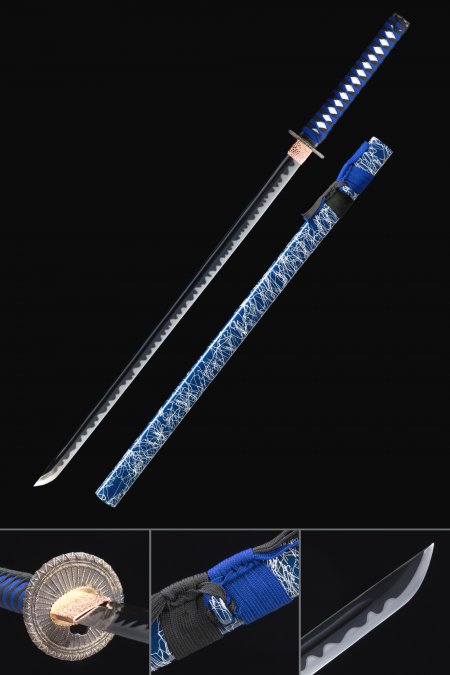
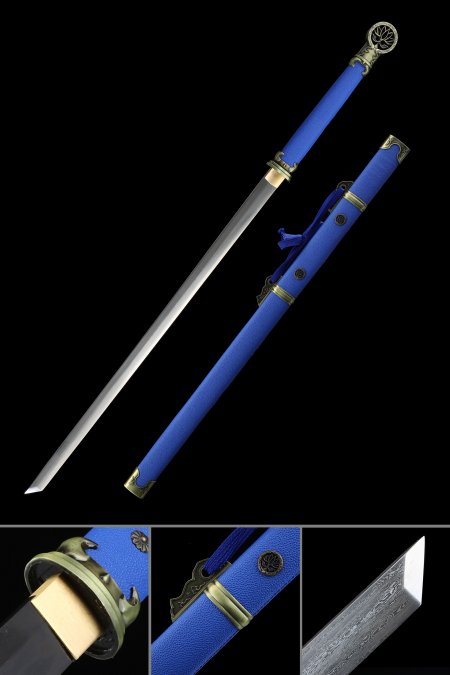
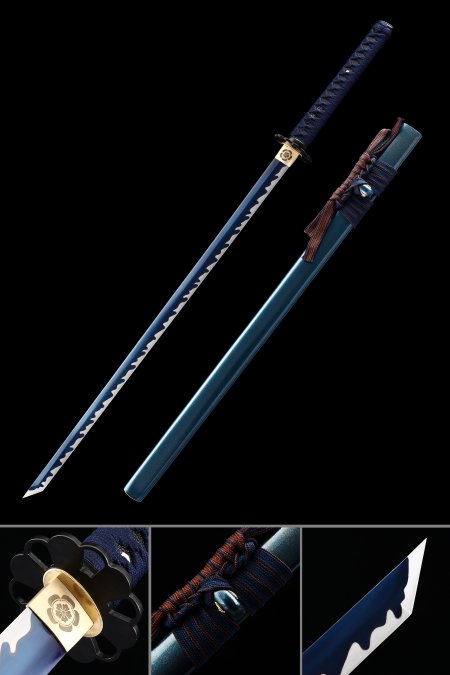
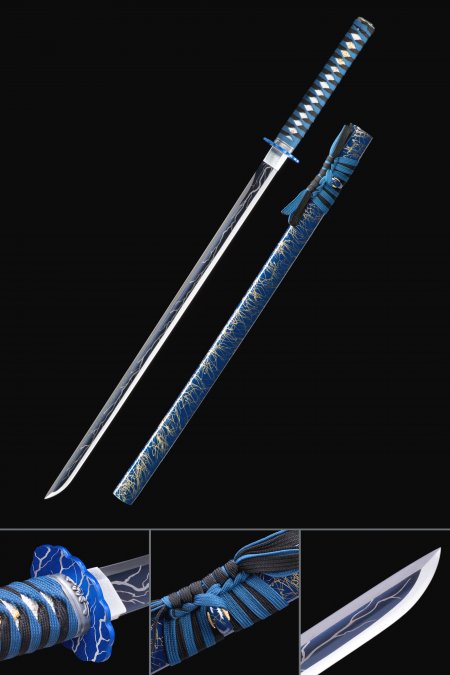
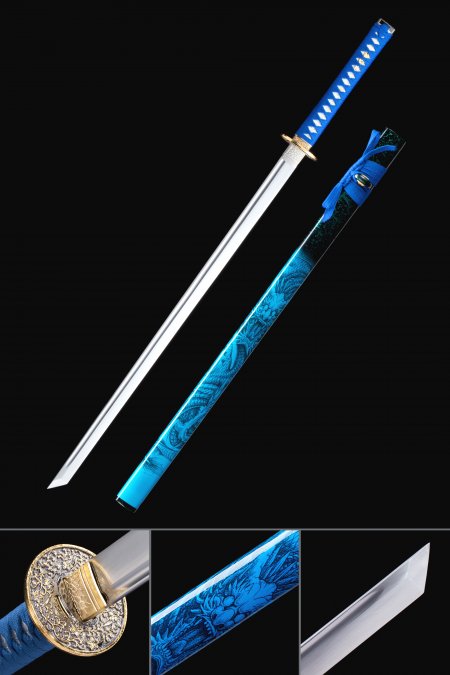
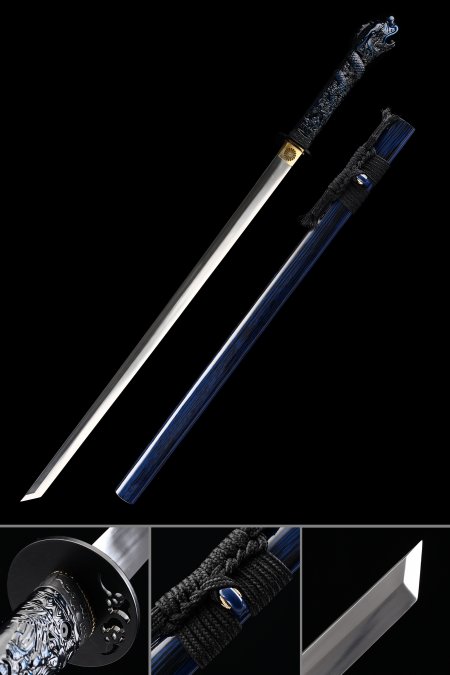
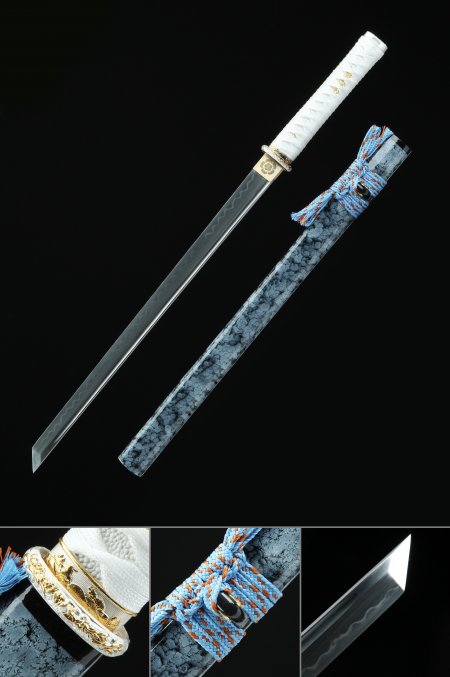
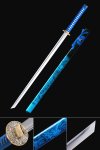
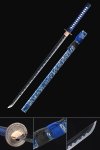
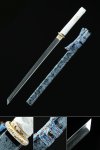
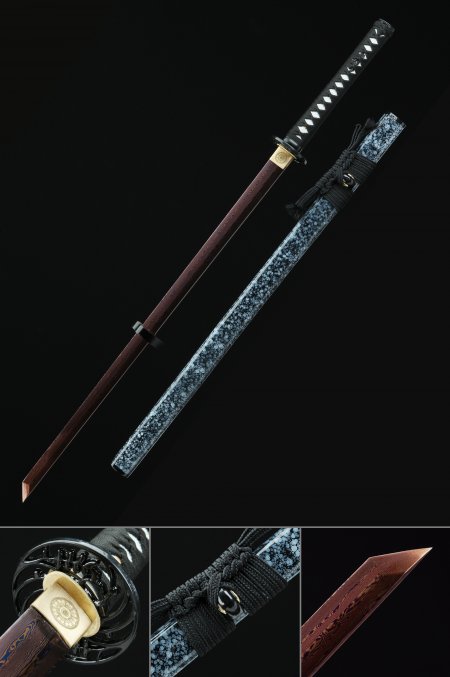
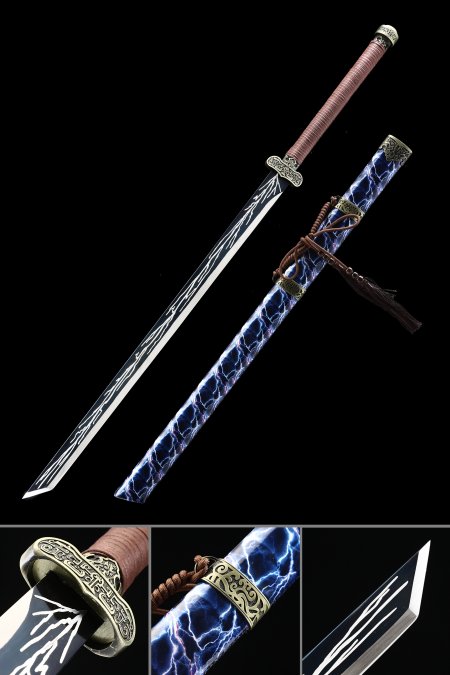
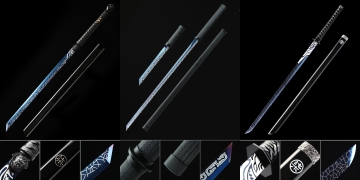
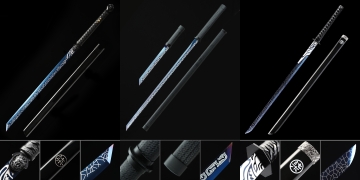
A ninjato is typically distinguished by its straighter blade profile and squared-off tsuba, in contrast to the katana's characteristic curved geometry and round or oval guard. The straighter blade gives the ninjato a more angular, geometric silhouette that many collectors find visually distinct and easier to display in tight spaces or on horizontal wall mounts. Historically, the ninjato's compact, no-frills design emphasized practicality over ceremony, which is reflected in the direct lines you still see in modern collector reproductions. In this collection, that straight-blade identity is preserved across manganese, T10, and Damascus steel options, each maintaining the classic ninjato proportions while incorporating decorative elements — dragon-carved sayas, ornate tsuba, and blue lacquer finishes — that elevate the piece well beyond a plain reproduction.
How does Damascus steel differ from T10 in these ninjato?
Damascus steel and T10 carbon steel represent two different approaches to blade character. Damascus is created by forge-welding multiple steel layers together and then acid-etching the finished blade to reveal the folded pattern — the result is a surface with flowing, organic lines that are completely unique to each individual piece. No two Damascus blades look identical, which makes them especially appealing as display collectibles. T10, by contrast, is a single high-carbon steel that is valued for its hardness and the visible hamon — the temper line — that appears along the blade edge when the sword is clay-tempered during production. The hamon gives T10 blades a more traditional Japanese aesthetic with a clearly defined activity line, whereas Damascus blades carry their visual complexity across the entire blade surface. Both are excellent collector choices; the decision often comes down to whether you prefer pattern complexity or traditional temper-line artistry.
What does full-tang construction mean for display swords?
Full-tang means the steel of the blade extends continuously through the entire length of the handle, rather than stopping at the guard and connecting to a separate wooden or resin core. For display collectibles, this matters for two reasons. First, it ensures long-term structural integrity — partial-tang handles can develop looseness over years of handling and repositioning, while a full-tang construction keeps the handle firmly seated. Second, it's a mark of authentic craftsmanship: full-tang assembly requires more steel, more precise fitting of the handle scales, and tighter tolerances at the tsuba. When you pick up a full-tang ninjato, the balance and solidity communicate quality immediately. For collectors who rotate their pieces between display stands and storage, or who handle them regularly for photography or inspection, full-tang construction is a practical feature, not just a specification checkbox.
How should I care for a lacquered blue saya?
Blue lacquer sayas are durable when treated correctly, but they do require some basic attention. Avoid exposing the saya to prolonged direct sunlight, which can cause the lacquer color to fade or develop hairline cracks over time. High humidity is also a concern — store the sword in a climate-controlled environment, ideally between 40–60% relative humidity, to prevent the wooden core of the saya from swelling or warping, which can cause the lacquer surface to chip. When handling the saya, clean skin oils off the surface with a soft, dry cloth rather than any chemical cleaner, which can dull the finish. The blade itself should be lightly oiled with choji oil every few months to prevent oxidation, applied with a soft cloth and wiped to a thin, even coat. Store the ninjato horizontally on a sword stand rather than vertically to prevent stress on the habaki and koiguchi over time.
Are these ninjato a good gift choice for a serious collector?
A Blue Saya Ninjato makes a particularly strong gift for collectors who already own katana or wakizashi and want to diversify their display with a straight-blade format. The distinctive blue lacquer saya immediately differentiates these pieces visually on a multi-sword wall display or stand arrangement, preventing the visual monotony that can come from a collection of similarly colored scabbards. The variety of motifs — dragon, cherry blossom, plum blossom, lightning, lotus — means you can match the design language to the recipient's existing aesthetic preferences. Damascus options are generally the most impressive visually and tend to read as higher-end gifts, while manganese steel options offer a more accessible price point without sacrificing the overall presentation quality. For gifting, pairing the sword with a proper display stand completes the presentation and signals that you understand what a collector actually values.