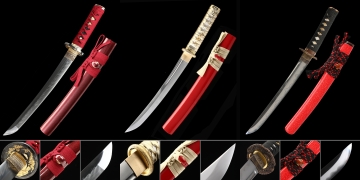
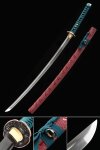
What steel types are used in green and red katana swords?
This collection spans three main steel grades. 1045 carbon steel is the most common entry point — it polishes cleanly and holds up well in display conditions. 1060 and 1065 carbon or manganese steel offers greater density and a more substantial feel when handled. T10 tool steel, used in the clay-tempered pieces, is the premium tier: it undergoes differential heat treatment that produces a visible hamon along the edge, a feature considered a mark of authentic craftsmanship in Japanese sword tradition. For collectors focused on metallurgical authenticity rather than just aesthetics, the T10 clay-tempered options in this collection are the most technically significant pieces.
How is piano lacquer saya different from standard saya finishes?
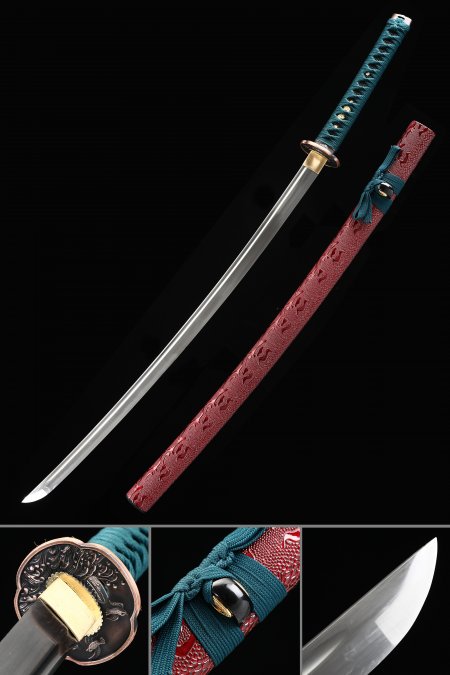
Piano lacquer saya undergoes multiple layers of lacquer application, with each layer sanded and polished before the next is added. The result is a glass-smooth, high-gloss surface that reflects light evenly and intensifies color — particularly vivid on red and green examples. Standard saya finishes are typically single-coat or two-coat applications with less surface preparation between layers, producing a flatter sheen. For display purposes, piano lacquer is the preferred finish because it photographs well, resists minor surface scratches more effectively than matte lacquer, and maintains its appearance longer under ambient lighting conditions.
What does full-tang construction mean on a collectible katana?
Full-tang means the steel blade extends continuously through the entire length of the handle — called the nakago — rather than stopping partway and being glued or pinned into a hollow grip. On a properly constructed full-tang katana, the nakago sits inside a wooden tsuka core, secured by a bamboo or brass mekugi pin, and is then wrapped in ito cord over a ray skin or synthetic same underlayer. This construction gives the sword structural integrity and is a direct reflection of how traditional Japanese swords were assembled. On the collectible pieces in this collection, full-tang construction is documented in the product specifications and is distinguishable by the visible mekugi pin hole on the handle.
How should I store a red or green lacquer saya long-term?
Lacquer is sensitive to humidity extremes and direct sunlight. For long-term storage, keep the saya in an environment with 45–60% relative humidity — too dry and the lacquer can develop hairline cracks, too humid and it may soften or develop mold on the wooden substrate beneath. Avoid displaying the sword in direct sunlight or near windows, as UV exposure causes red lacquer in particular to fade toward orange over time. A horizontal sword stand indoors, away from heating vents and exterior walls, is the standard recommendation. Wipe the saya surface periodically with a soft, dry cloth. Never use silicone-based polishes on lacquer, as they can cloud the finish over repeated applications.
Are anime-inspired katana replicas considered legitimate collectibles?
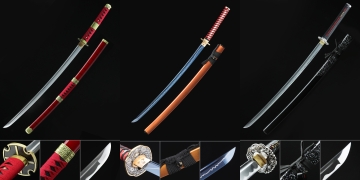
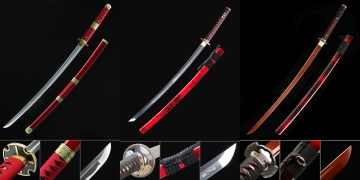
Yes — pop-culture sword replicas have become a recognized and growing segment of the collectibles market. Pieces like the Roronoa Zoro Sandai Kitetsu replica are produced to the same material and construction standards as non-character swords in this collection: 1045 carbon steel blade, traditional saya construction, and proper tsuba fitting. Their collectible value is tied to cultural significance within a specific fandom, which is no different conceptually from historical replica swords tied to a specific era or regional tradition. Many collectors begin with character-inspired pieces and develop a broader interest in Japanese sword craftsmanship from there, making these replicas a legitimate entry point into the hobby.