What makes 1095 carbon steel a good choice for collectible ninjato?
1095 carbon steel contains roughly 0.95% carbon, placing it at the high end of the plain carbon steel spectrum. This composition gives craftsmen the ability to achieve differential hardening - a process where the edge is quenched to a harder state than the spine - producing the visible hada (grain pattern) and hamon (temper line) that collectors specifically look for. For a display ninjato, this means the blade carries authentic metallurgical character rather than a purely decorative profile. The trade-off is that 1095 has no chromium, so it requires routine oiling to prevent surface oxidation, which most serious collectors consider an acceptable part of the ownership experience.
How is the dark red blade finish applied - is it paint or a treatment?
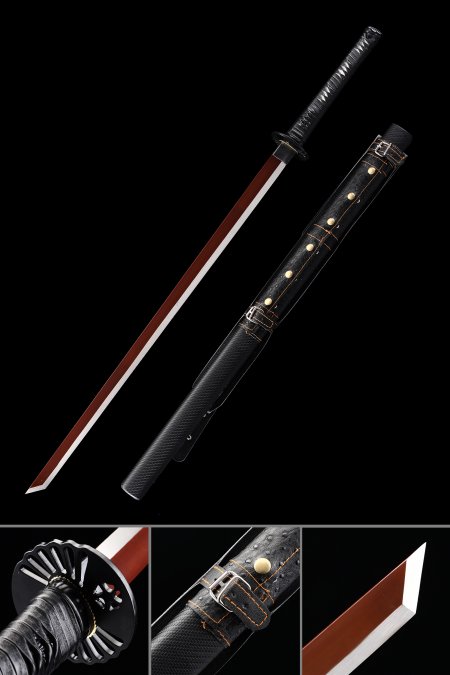
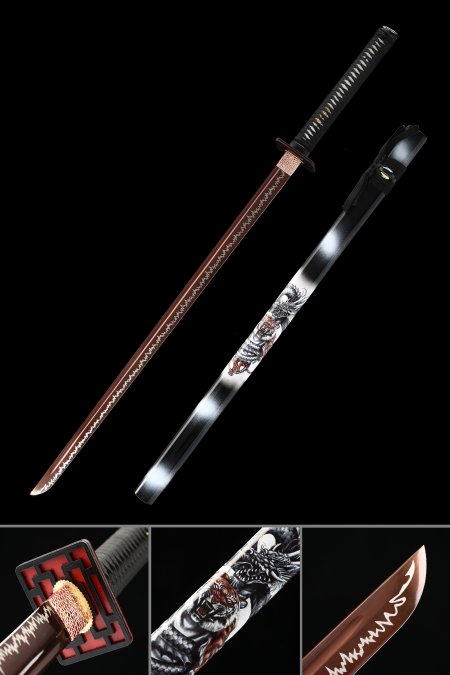
The dark red finish on these ninjato is not a sprayed or brushed paint layer. It is achieved through a controlled oxidation process followed by a bonded lacquer or acid-wash patina technique that chemically adheres to the steel surface. This method allows the underlying grain of the 1095 steel to remain visible under raking light, giving the finish depth rather than opacity. Because the color is integral to the surface rather than sitting on top of it, it is far more durable than conventional paint finishes and resists chipping under normal display and handling conditions. Touch-up oiling with camellia or mineral oil will also enhance the richness of the tone over time.
What is the difference between a ninjato and a chokuto?
These terms are often used interchangeably in collector contexts but describe slightly different concepts. A chokuto refers specifically to the straight-bladed sword form that predates Japan's curved-blade tradition - historically documented from the Nara period onward. A ninjato, by contrast, is a largely modern construction associated with the straight-bladed tools depicted in ninja folklore and twentieth-century popular culture; its historical authenticity as a distinct sword type is debated among scholars. In practical collecting terms, the distinction affects saya design: chokuto-style scabbards follow a straight geometric form, while ninjato replicas may incorporate more varied fittings. Both are displayed as cultural artifacts and replicas rather than documented historical weapons.
How should I care for a red-finished carbon steel ninjato on display?
Because 1095 carbon steel contains no rust-inhibiting chromium, consistent maintenance is essential. Apply a thin coat of camellia oil or food-grade mineral oil to the blade every two to three months using a soft cotton cloth, working from the spine toward the edge. For the red patina surface specifically, avoid abrasive cloths or metal polish - these will strip the treated finish. Store the piece in an environment with relative humidity below 55%; silica gel packets inside a sealed display case are an inexpensive and effective solution. Keep the ninjato away from prolonged direct sunlight, which can cause the crimson tone to shift toward a brownish hue over months of UV exposure.
Is a dragon-engraved ninjato or a geometric tsuba variant better as a display piece?
The answer depends on the collector's existing display aesthetic. The dragon-engraving variant creates a thematically unified piece - the mythology of the motif carries across the blade, tsuba, and saya - making it well suited to a display dedicated to traditional Japanese iconography or a dramatic focal point in a mixed collection. The geometric iron tsuba variant is more architecturally restrained; its precise cutout patterns draw the eye without narrative content, making it easier to pair with other pieces that have their own strong visual identity. For a collector building a curated wall display with multiple swords, the geometric version tends to coexist more gracefully with neighboring pieces.