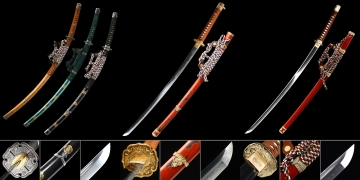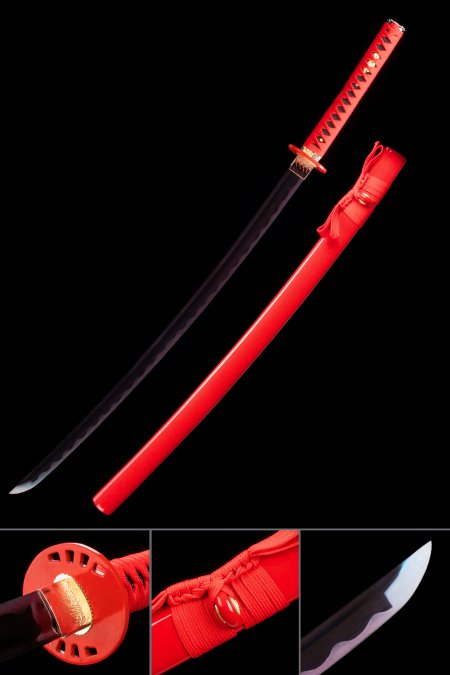
Red Tsuba Katana

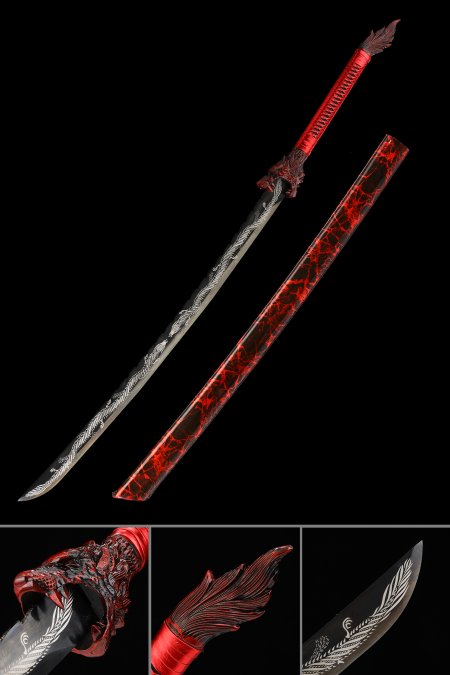
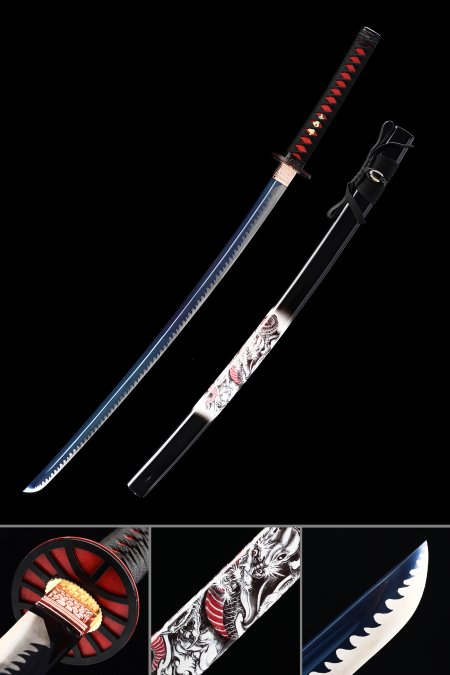
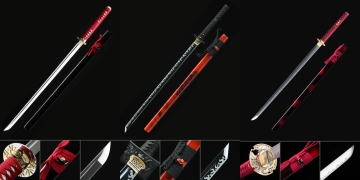
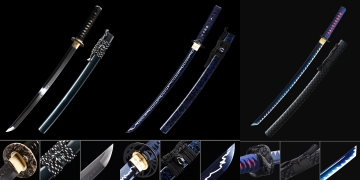
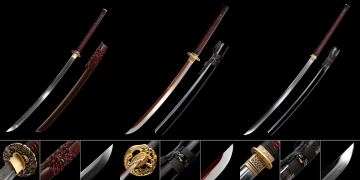
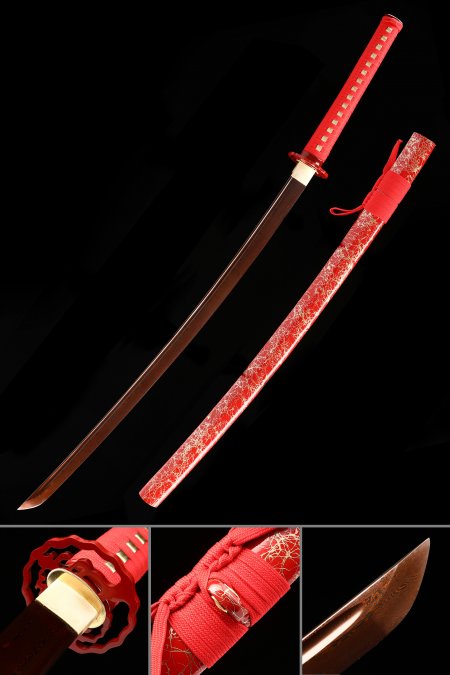
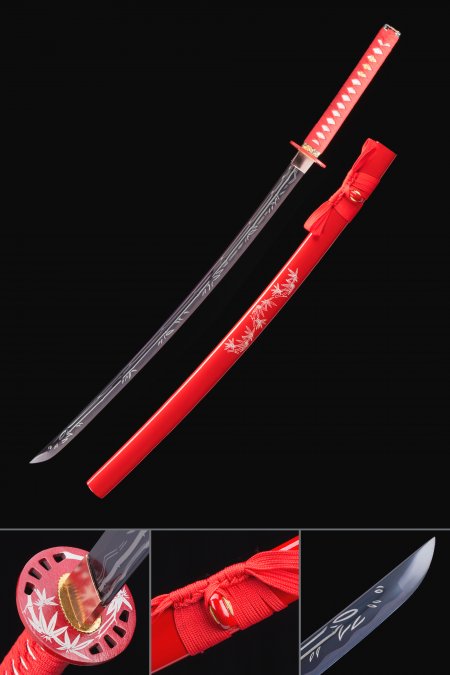
A red tsuba katana brings an unmistakable visual character to any serious sword collection - the guard's vivid crimson hue draws the eye while hand-forged blades in Damascus, T10, and high-carbon steel reward closer inspection with genuine craftsmanship. Each piece in this collection is built full-tang with carefully fitted fittings, lacquered saya, and wrapped handles that reflect traditional Japanese mounting traditions. Enjoy free standard shipping on your order, backed by our hassle-free return policy.
Showing 5 Products

Related Collections

Black And Red Katana111 items


1381 Reviews

Red Dragon Katana73 items


185 Reviews

Red Saya Tanto14 items


22 Reviews

Red Sageo Ninjato6 items


18 Reviews

Frequently Asked Questions

What makes a red tsuba different from standard iron guards?
Traditional iron tsuba were prized for their understated, oxidized patina - a deliberate aesthetic choice rooted in wabi sensibility. Red tsuba, by contrast, are typically crafted from lacquered or enameled alloy, prioritizing visual impact and thematic cohesion within the overall mounting. The crimson finish creates a strong chromatic anchor that ties together other red elements - ito wrap, saya lacquer, samegawa - into a unified composition. From a collector's standpoint, a red tsuba signals intentional design rather than utilitarian tradition, making it especially appropriate for display-focused pieces where visual drama is part of the curatorial intention.
How does Damascus steel differ from T10 in these katana?
Damascus steel in this context refers to pattern-welded construction: multiple steel billets are forge-welded together, folded, and manipulated so that contrasting layers create flowing surface grain visible after etching. Every Damascus blade carries a unique pattern - no two are alike - which gives each piece an individual character prized by collectors. T10 tool steel, on the other hand, is a high-carbon mono-steel valued for its clay-tempering compatibility. When coated with clay and quenched, T10 develops a distinct hamon - the crystalline temper line separating hardened edge from resilient spine - that mirrors techniques used in historical Japanese sword production. Damascus rewards visual inspection; T10 rewards knowledge of traditional heat treatment.
How should I store a lacquered red saya long-term?
Red piano lacquer and standard urushi-style finishes are vulnerable to two main threats: UV light and humidity fluctuation. Direct sunlight bleaches the pigment and causes the lacquer surface to develop fine stress cracks over months. Storing or displaying the saya in a UV-filtering display case eliminates the most common cause of color degradation. Humidity should be kept between 45% and 60% relative humidity - too dry and the lacquer can crack; too moist and the wooden core beneath may swell, distorting the fit. Avoid placing the display near heating vents or exterior walls with temperature swings. A horizontal stand with the blade edge upward is preferred, as it distributes weight evenly and prevents habaki wear.
Can red tsuba katana be displayed as a daisho set?
Yes - pairing a katana with a companion short sword in a matching color scheme creates a daisho display that references the historical samurai practice of wearing two swords together. A red-accented wakizashi with coordinating tsuba, ito, and saya lacquer can be mounted on a dual-tier horizontal stand directly beneath the katana, producing a visually cohesive grouping. The key to a convincing daisho display is consistency across the mounting elements: matching or complementary tsuba style, the same wrap color, and lacquer sheaths in the same finish family. Collectors assembling such a set will find compatible short-sword options in the Black And Red Wakizashi Sword collection.
Is blade engraving purely decorative on these swords?
Engraving - called horimono in Japanese sword terminology - has a history that is both aesthetic and symbolic. Traditional horimono motifs such as dragons, bonji Sanskrit characters, and bamboo were carved by specialist engravers called horishi and were believed to carry protective or auspicious meaning for the sword's owner. On the collectible pieces in this collection, feather motifs, bamboo leaf patterns, and dragon imagery are carved directly into the blade flat, adding dimensional detail that catches light differently at various angles. The engraving does not compromise blade geometry in a meaningful way for display purposes, but it does add a layer of narrative and craftsmanship that distinguishes an engraved piece from a plain-polished blade within a collection.

Customer Reviews