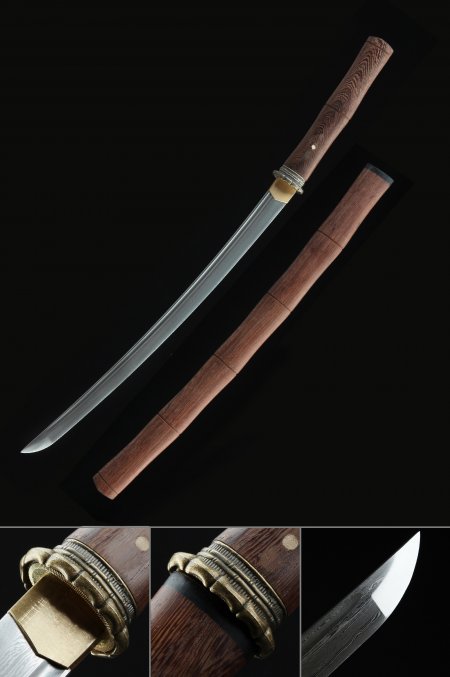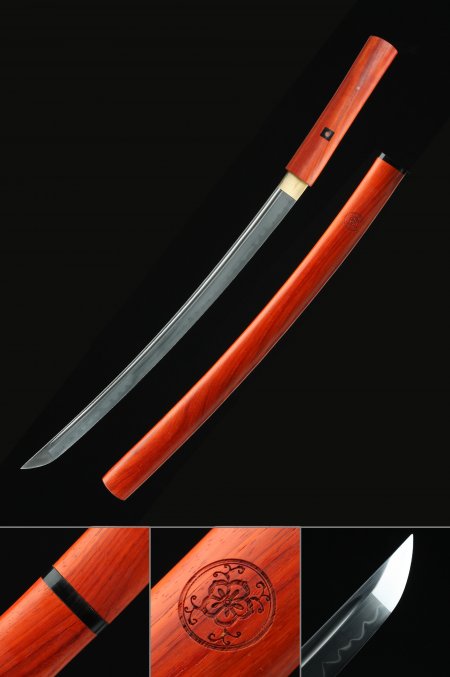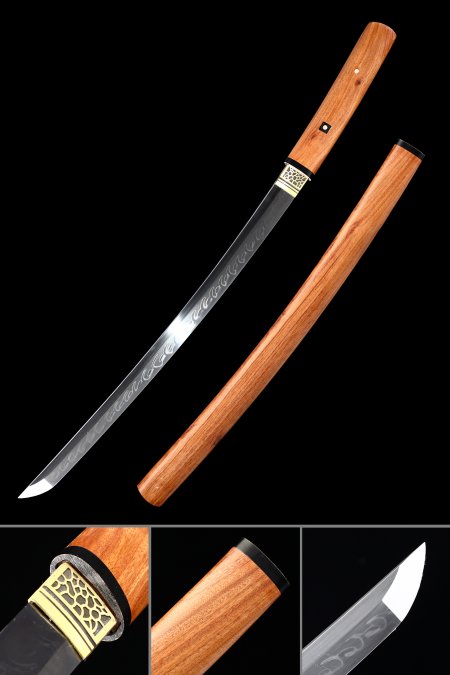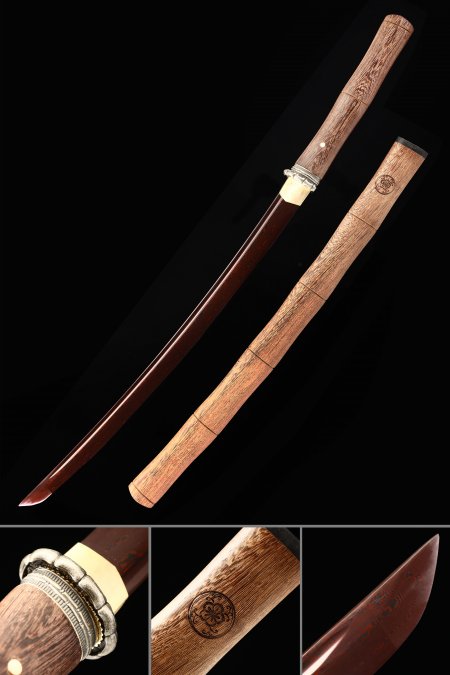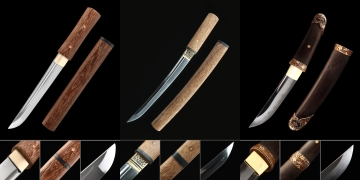
Shirasaya Wakizashi Katana

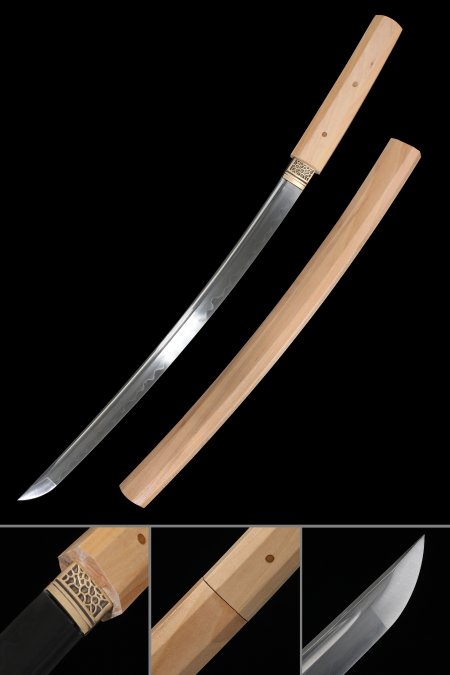
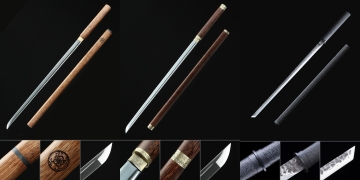
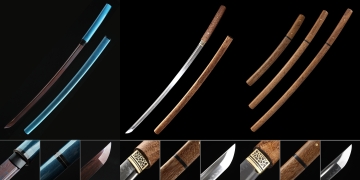
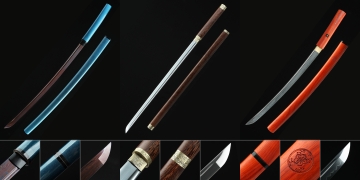
Explore our collection of shirasaya wakizashi katana - hand-forged Japanese short sword blades presented in the traditional plain wood shirasaya format, pairing T10 carbon steel craftsmanship with the minimalist elegance of unadorned wooden handle and scabbard. Each piece features full-tang construction with clay-tempered blades capable of displaying a clearly visible hamon, and is ready for immediate display or daisho pairing. Free US shipping and hassle-free returns included.

Showing 8 Products

Related Collections

Japanese Katana73 items


554 Reviews

Hand Forged Katana Sword45 items


28 Reviews

1045 Carbon Steel Shirasaya7 items


144 Reviews

T10 Shirasaya23 items


232 Reviews

Frequently Asked Questions

What is a shirasaya and why is it used for wakizashi presentation?
A shirasaya is the plain, unadorned wooden mounting format for a Japanese sword - a simple wooden handle and matching wooden scabbard without any of the conventional sword fittings such as tsuba guard, ito wrapping, menuki ornaments, or lacquer coating. The name translates roughly as 'white scabbard,' referring to the natural unfinished wood surface. The shirasaya format is historically associated with two contexts: long-term blade preservation and the presentation of a blade to emphasize its intrinsic quality rather than its decorative fittings. For a T10 clay-tempered wakizashi with a well-defined hamon, the shirasaya presentation is ideal because the absence of decorative elements focuses all visual attention on the blade itself - the hamon line, the grain structure of the steel, and the geometry of the tip. The plain wood also provides practical benefits: natural wood does not trap moisture against the blade in the way that lacquered scabbards can, making the shirasaya one of the better long-term storage formats for a high-carbon steel blade.
What steel grade and construction standards are used in shirasaya wakizashi?
Shirasaya wakizashi in this collection are built from T10 carbon steel - the premium high-carbon steel grade most closely associated with quality Japanese sword collecting. T10's tightly controlled grain structure and carbon content make it the grade most likely to produce a well-defined hamon during clay-tempered differential heat treatment, and its surface quality under polishing is superior to lower-grade carbon steels. Each blade is heat-treated using the clay-tempering method: a layer of clay is applied to the spine before quenching, producing differential hardness across the blade cross-section. Full-tang construction is standard, with the T10 steel running from the kissaki tip through the complete handle body and secured by a mekugi retention pin through the plain wood handle. The plain wood handle and scabbard of the shirasaya are fitted precisely to the blade and habaki collar dimensions, ensuring a secure fit without relying on lacquer or adhesive alone. The result is a blade presentation that prioritizes material quality and blade character above all else.
How do I identify a good hamon on a shirasaya wakizashi?
A well-defined hamon on a shirasaya wakizashi T10 blade is one of the most rewarding details in Japanese short sword collecting, and identifying it requires understanding what to look for and how to observe it. The hamon appears as a line running along the blade edge from the kissaki tip toward the habaki collar - it is the visible boundary between the harder edge zone and the tougher spine zone created by differential heat treatment. To see the hamon clearly, hold the blade under a directed light source - a lamp, spotlight, or bright window light - at a low angle to the blade surface, approximately ten to thirty degrees. As the light plays across the edge zone, the hamon boundary becomes visible as a white or grey undulating line against the darker background of the blade surface. A well-executed hamon will show consistent activity along its length: subtle patterns within the transition zone known as nie (visible crystalline activity) and nioi (a misty haze at the boundary) are indicators of quality heat treatment. The hamon's shape - whether a gentle wave, a dramatic cloud formation, or a complex pattern - varies by the smith's technique and the specific piece.
Can a shirasaya wakizashi be used in a daisho display with a matching katana?
Yes - a shirasaya wakizashi is the natural companion for a shirasaya katana in a daisho display, and several pieces in this collection include daisho set configurations that pair both blades together. In a shirasaya daisho arrangement, the two blades are matched in their plain wood presentation - the same natural wood tone and unfinished surface across both pieces creates a visual unity that makes the daisho immediately readable as a matched set. Display hardware for a shirasaya daisho arrangement is straightforward: a two-tier horizontal wall bracket with the katana above and the wakizashi below in the traditional position, both oriented with edge upward. The natural wood tones of the shirasaya complement a wide range of display environments and pair particularly well with wooden wall surfaces or minimal modern interiors. A shirasaya daisho display is one of the most refined arrangements in Japanese sword collecting because its visual impact comes entirely from the blades themselves and the quality of their construction, with no decorative elaboration required.

Customer Reviews

Evan Gallagher Florida, United States

I mean, it looks like a sword. Can't tell if it was forged in the fires of Olympus by Hephaestus himself or by some raggedy old dude with a rusty hammer banging pot metal together; but either way it's a sharp piece of metal. It's got a blade that feels sharp and cuts paper, and a pr
oint that's pointy and could definitely poke. Whether or not it could dismember somebody or stab a bear through the face and not break remains to be seen. But one thing is for certain, it can do both of those things at least once. I just hope I never have to leave another review after this one. I would give it five stars but could not in all good conscience simply because it only cost me about $230 something dollars. The only way I could believe this is a genuine article capable of doing the real thing is if it cost quite a bit more. That being said it is a beautiful sword and I am very happy with my purchase. The fact that it looks like a sword is good enough for me and it is a beautiful one at that.

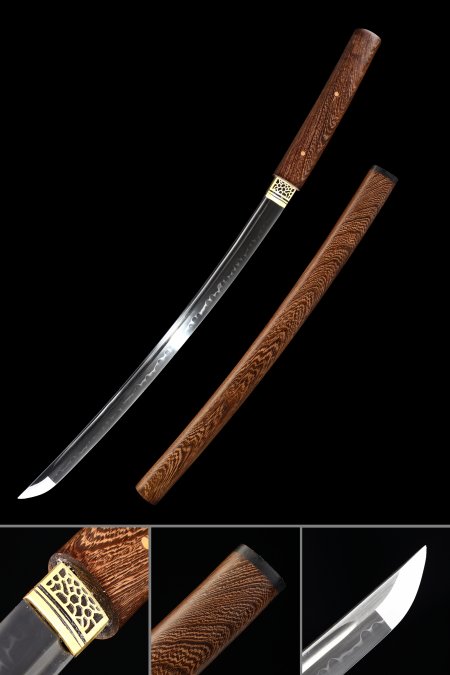
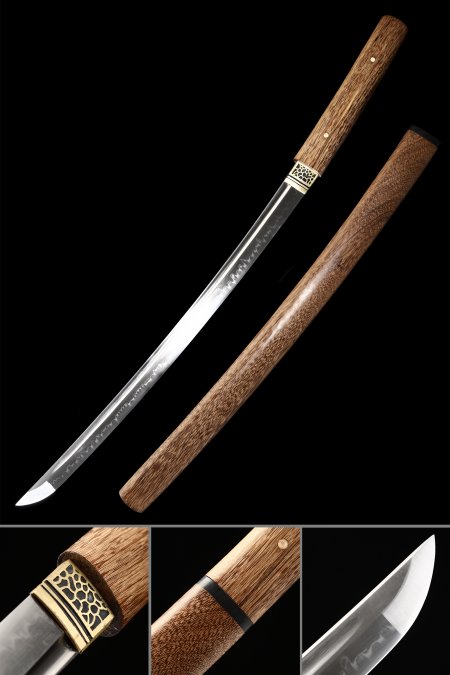
T10 Folded Clay Tempered Shirasaya Wakizashi with Wenge Wood Saya and Gold Openwork Habaki T10 Folded Clay Tempered Shirasaya Wakizashi with Wenge Wood Saya and Gold Openwork Habaki