What makes T10 steel different from 1045 or 1060 carbon steel?
T10 tool steel contains roughly 1.0% carbon — significantly higher than 1045 (0.45%) or 1060 (0.60%) — plus trace tungsten that refines the grain structure. This higher carbon content allows for a more dramatic and clearly defined hamon when clay-tempering is applied, which is a primary reason collectors prize T10. In contrast, lower-carbon steels like 1045 produce a more subdued or absent hamon and are generally considered entry-level. T10's fine grain also results in a blade surface that takes a superior polish, making the hamon more visually striking under light — a key factor for display-focused collectors.
How is the hamon on a T10 katana formed?
The hamon on a T10 katana is produced through differential clay-tempering, a process where the bladesmith applies a thick layer of insulating clay along the spine before the final quench in water or oil. The exposed edge cools rapidly, hardening into martensite, while the clay-covered spine cools slowly and remains relatively soft and resilient. The boundary between these two crystalline zones — visible as a misty, undulating line along the blade — is the hamon. Because the clay is applied by hand, the pattern varies between individual blades, meaning no two T10 katana share an identical hamon. This natural variation is part of what makes each piece genuinely collectible.
What does full-tang construction mean for a display katana?
Full-tang means the steel of the blade extends as a single unbroken piece through the entire length of the handle, rather than being attached via a short stub or threaded rod. For collectors, full-tang is both a structural and an authenticity marker — it mirrors the construction standard of historically significant Japanese swords. The tang is seated within the tsuka (handle) beneath layers of same (ray skin) and tightly wrapped cord, secured with a mekugi (bamboo peg). Even in a display context, full-tang construction demonstrates that the piece was built to proper sword-making standards rather than assembled purely for visual effect.
How should I care for and store a T10 carbon steel katana?
T10 high-carbon steel is reactive and will develop surface oxidation if left unprotected. After handling, wipe the blade with a soft, lint-free cloth to remove fingerprints — the acids in skin oils accelerate rust formation. Apply a very light coat of choji oil (traditional clove oil blend) or a food-grade mineral oil using a cloth, working from base to tip. Store the katana horizontally on a display stand or in its saya in a climate-controlled environment with low humidity. Avoid storing in a sealed bag, which traps moisture. Inspect and re-oil every one to three months depending on your local climate. The silver-finished saya should be wiped clean with a dry cloth and kept away from abrasive materials.
Are these katana suitable as gifts for sword collectors?
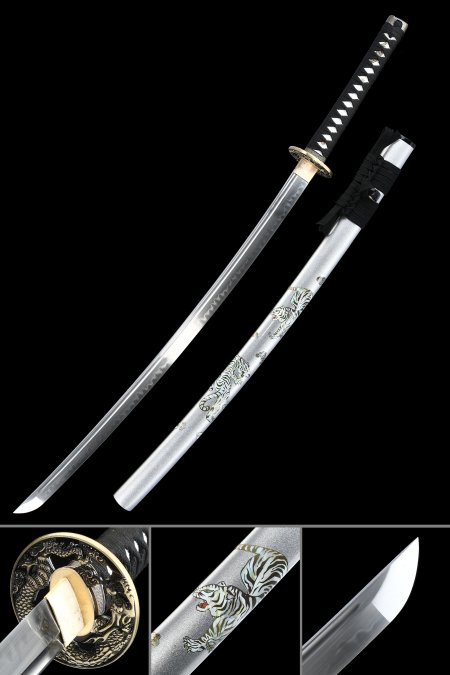
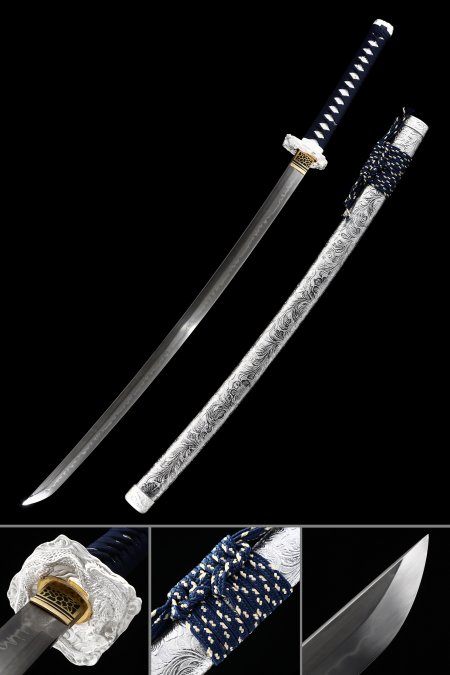
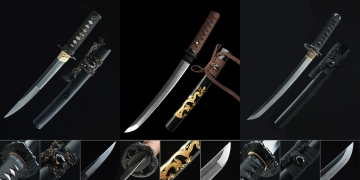
Yes — the silver T10 katana in this collection make particularly compelling gifts for collectors who already own standard high-carbon pieces and are looking for something visually distinctive. The combination of authentic clay-tempered hamon, full-tang build, and silver-finished engraved or relief-carved saya gives these pieces genuine display presence that more understated katana cannot match. For first-time recipients, they offer a meaningful entry into serious Japanese sword collecting. For experienced collectors, the T10 steel and genuine hamon represent a step above decorative-only pieces. Including a display stand with the gift completes the presentation.