FAST SHIP
Free Shipping
159.00 USD
ON SALE! 20% OFF
Was: 199.00 USD

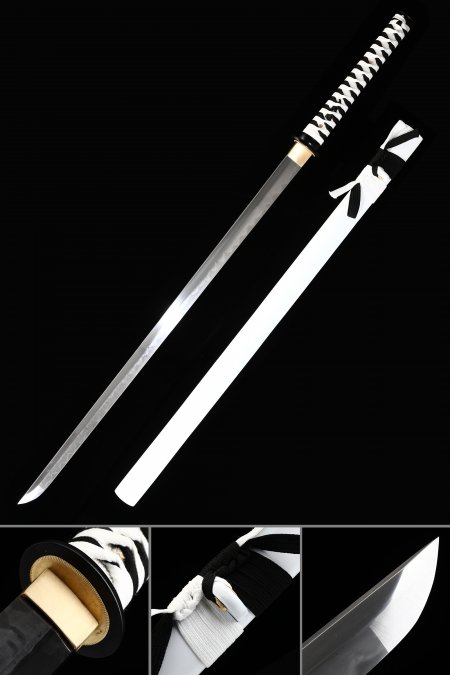
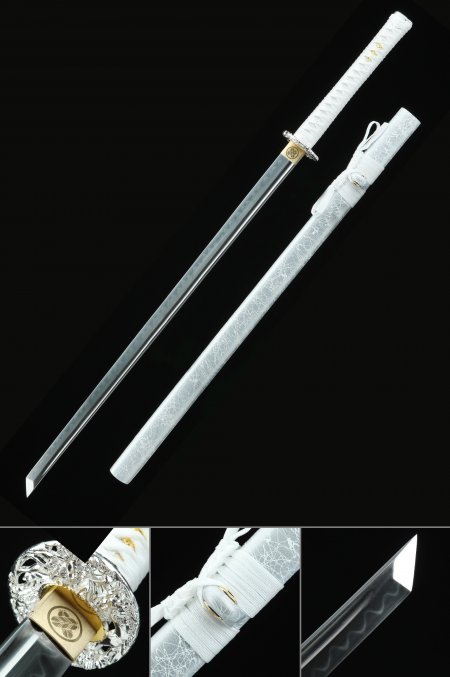
The White T10 Carbon Steel Ninjato collection brings together hand-forged blades crafted from high-carbon T10 tool steel, each clay-tempered to produce a genuine, visible hamon along the edge. These pieces are designed for the serious collector who values authentic Japanese sword-making tradition — from the hand-wrapped cord handle to the fitted hardwood saya. Every ninjato in this selection is a full-tang, display-ready collectible built with the care and precision that distinguishes a true artisan piece from a decorative imitation. Enjoy free shipping on your order, backed by our hassle-free return policy.
Very nice quality sword. Very well crafted, sharp, and looks great on display. Came packaged very well. Over, very nice product and will certainly purchase more in the future.
 |
T10 Carbon Steel Chokuto Ninjato with Real Hamon in White Saya - Silver Orchid Tsuba Collectible Sword |
It’s very sharp, very lightweight and it came out great!!
|
T10 Carbon Steel Chokuto Ninjato with Real Hamon in White Saya - Silver Orchid Tsuba Collectible Sword |
Thank you for the amazing katanas and customer service!! Great company
|
T10 Carbon Steel Chokuto Ninjato with Real Hamon in White Saya - Silver Orchid Tsuba Collectible Sword |
It looks exactly how I wanted it but it came very dirty. It seems like the sleeve was a perfect size for the blade so I’m not sure how it got this dirty but I will give a update on how the sword is holding up after a few weeks/months.
|
T10 Carbon Steel Chokuto Ninjato with Real Hamon in White Saya - Silver Orchid Tsuba Collectible Sword |
Overall amazing sword. Only issue is it came slightly oily for some reason, and a couple tid bits fit loosely. No biggie tho, it's an amazing piece of work regardless.
|
T10 Carbon Steel Chokuto Ninjato with Real Hamon in White Saya - Silver Orchid Tsuba Collectible Sword |
Deuxième commande chez Truekatana.com :)
Magnifiques.
2 petits regrets cette fois, dommage :
- les deux sabres commandés étant "en stock", la commande passée et payée le 28/5/2023 n'a été expédiée que le 11/6/2023 après ouverture de litige Paypal, et reçue le 16/6/2023 (Rapide FEDEX, bravo! ).
- le "Ray-Skin" du sabre noir est rouge et pas noir, ce qui fait que la poignée est rouge/rouge (ça fait beaucoup de rouge alors que le contraste rouge/noir aurait été parfait) mais ce n'est pas pour autant que je le renvoie car les frais de renvoi sont chers, et qu'il est magnifique malgré tout.
Un troisième regret : il est difficile de s'arrêter quand on contemple la naissance d'une magnifique collection ... :-D
|
T10 Carbon Steel Chokuto Ninjato with Real Hamon in White Saya - Silver Orchid Tsuba Collectible Sword |
Nice sword its a little blingy, but the white is a nice addition to my collection.
|
T10 Carbon Steel Chokuto Ninjato with Real Hamon in White Saya - Silver Orchid Tsuba Collectible Sword |
I didn't read the warning disclosure in time. Product is awesome.
|
T10 Carbon Steel Chokuto Ninjato with Real Hamon in White Saya - Silver Orchid Tsuba Collectible Sword |