What does the sageo cord do on a wakizashi?
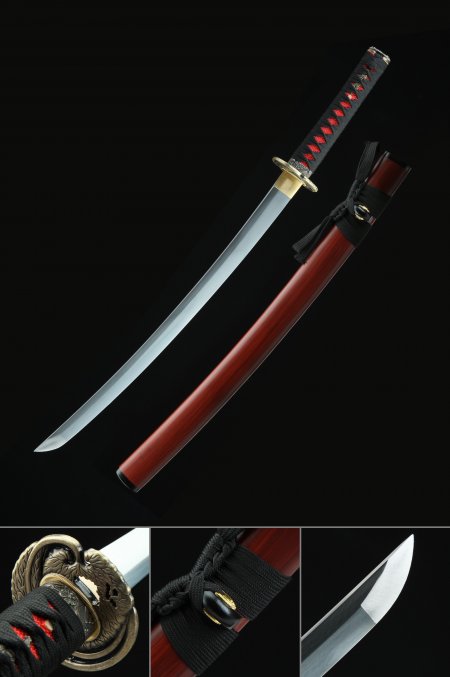
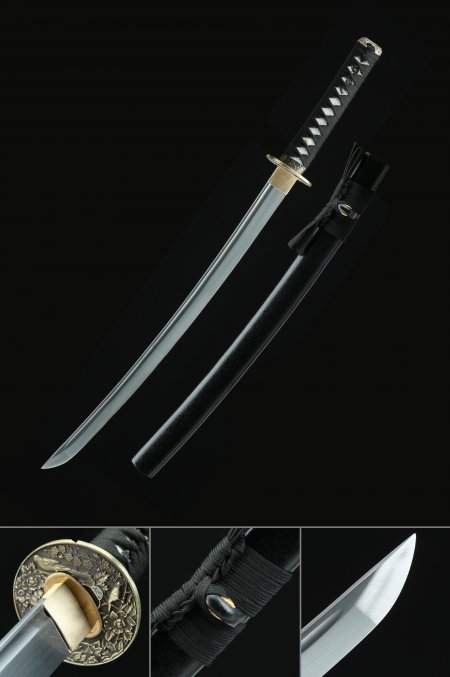
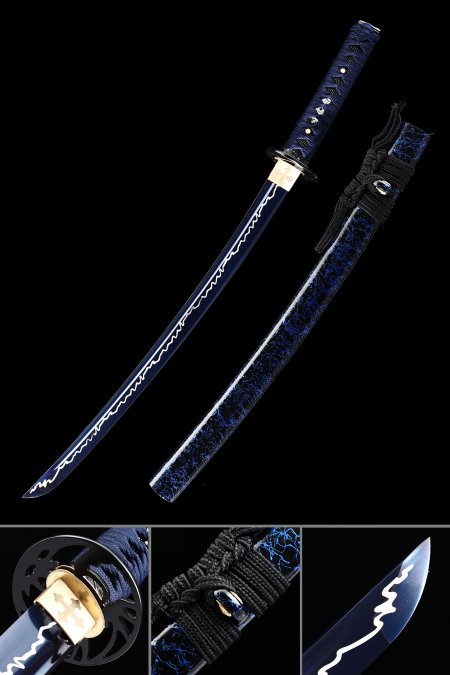
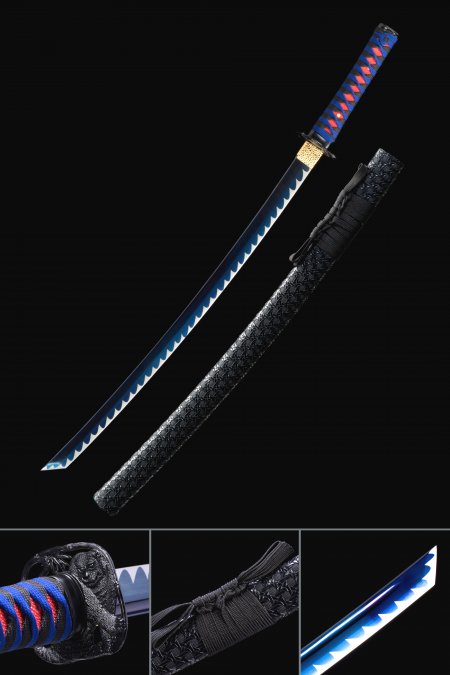
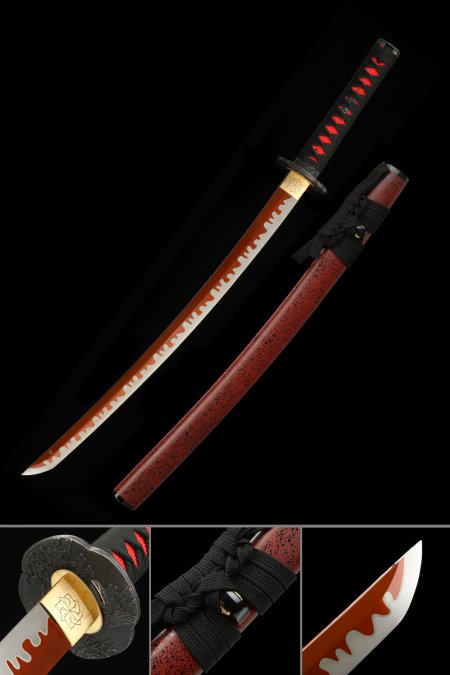
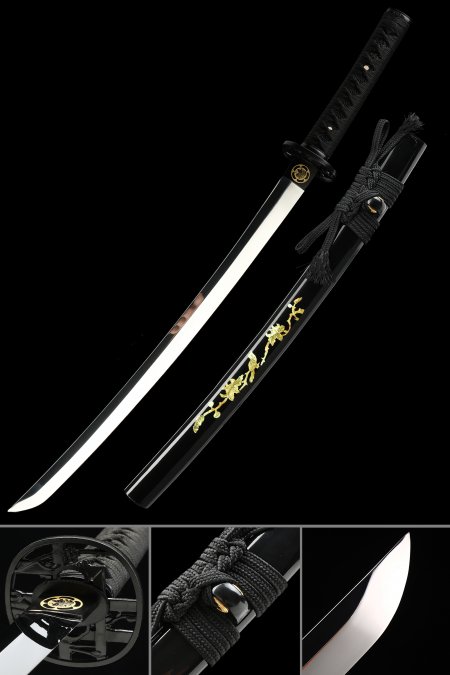
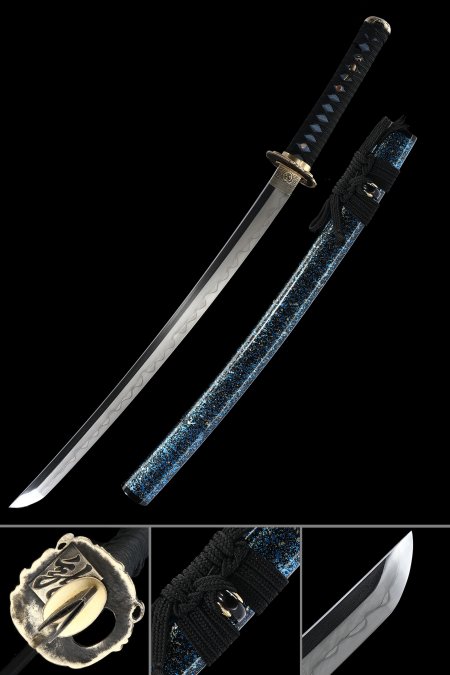
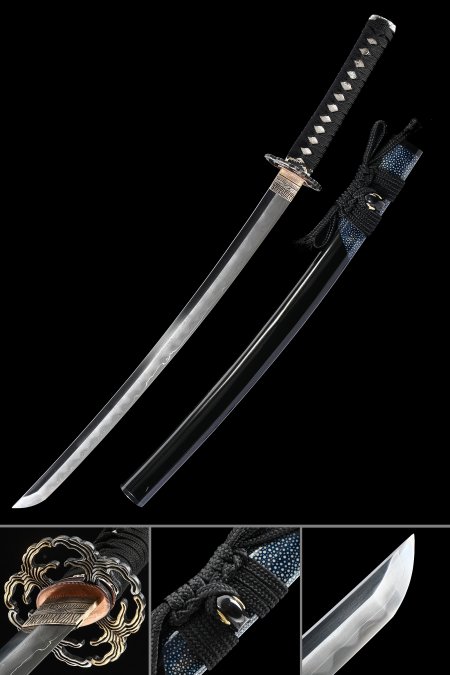
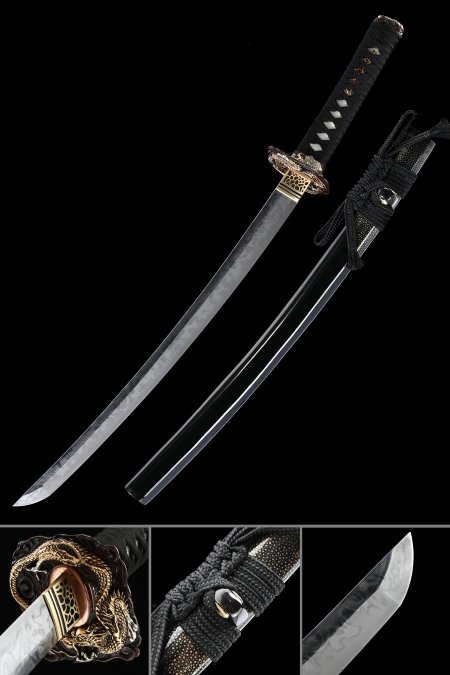
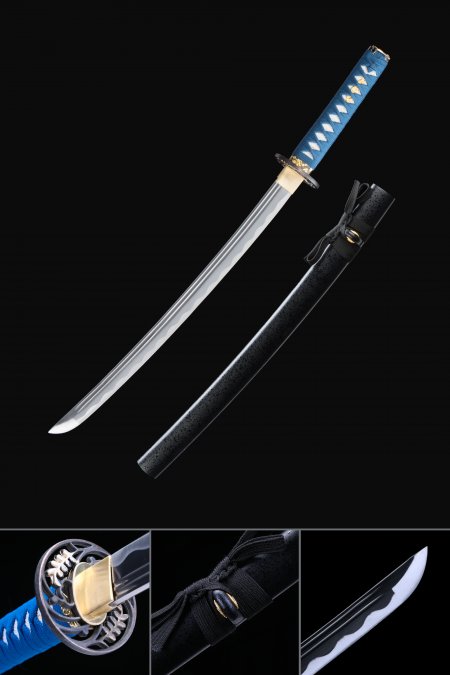
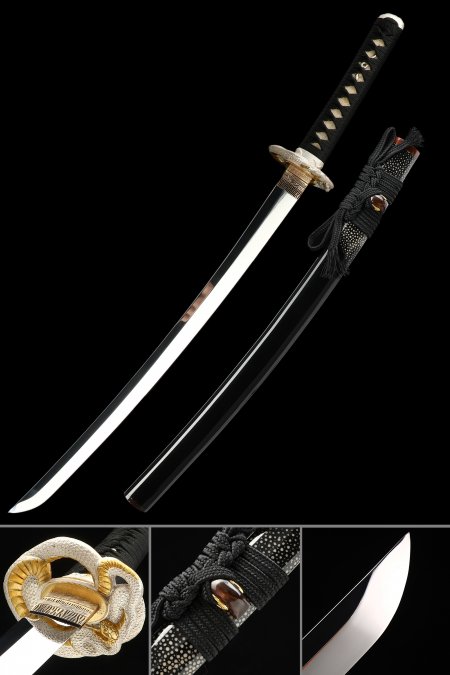
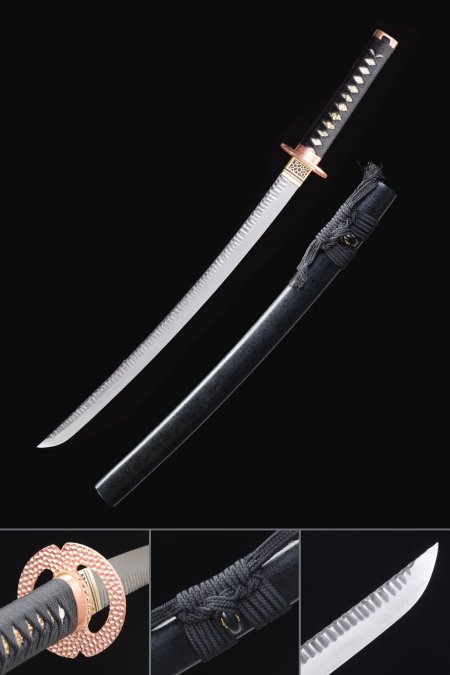
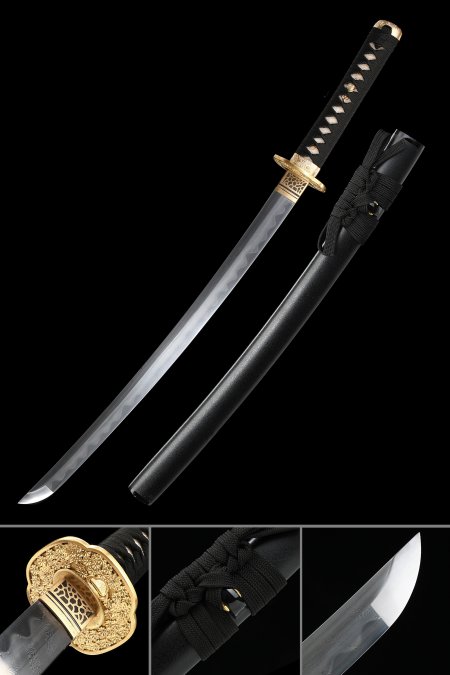
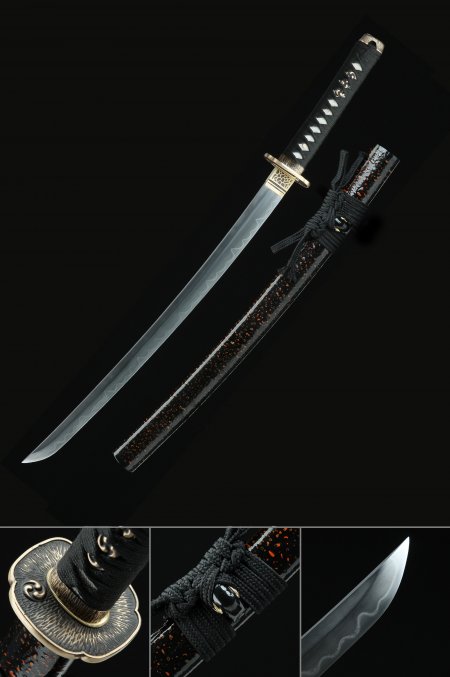
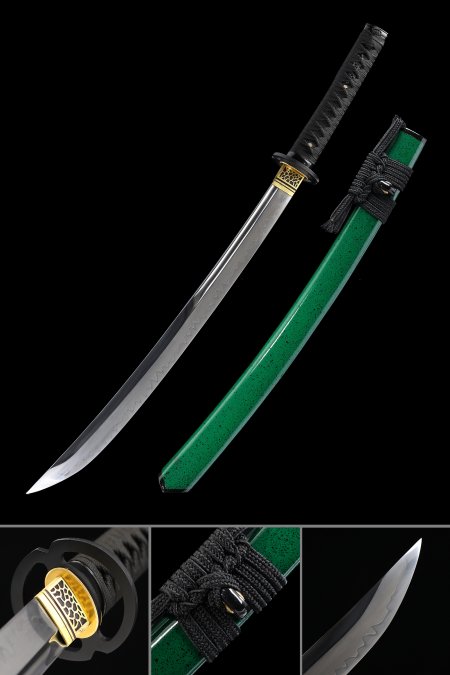
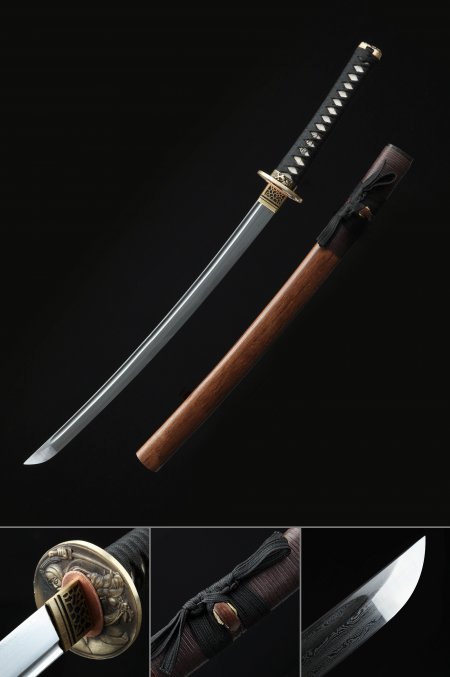
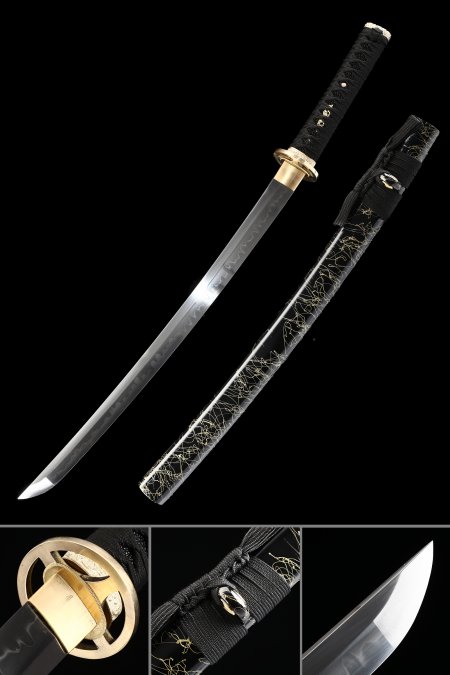
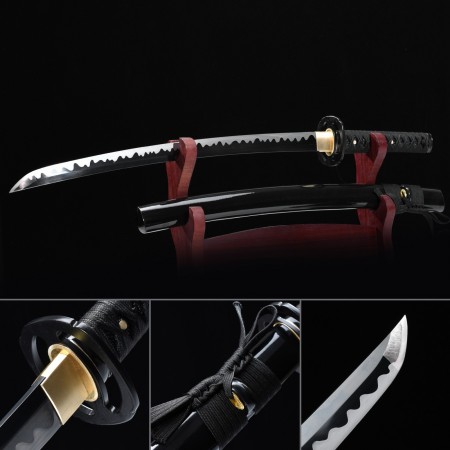
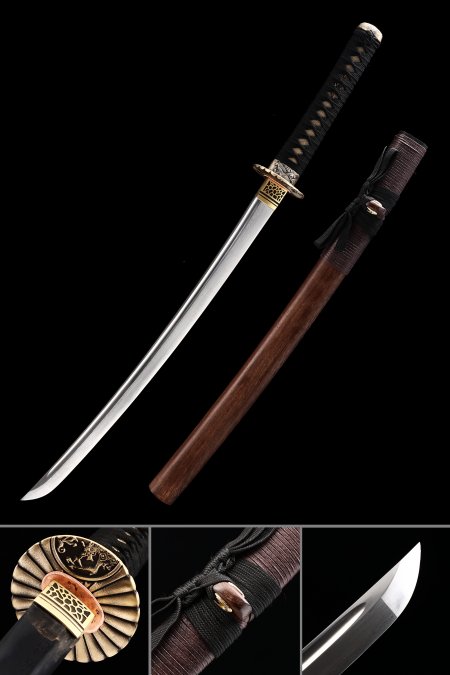
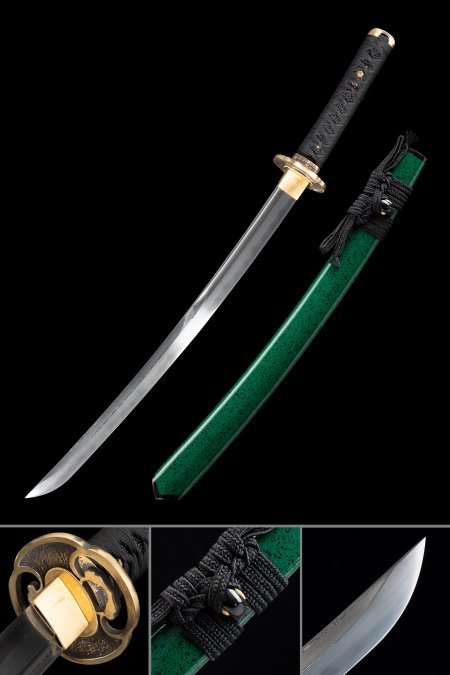
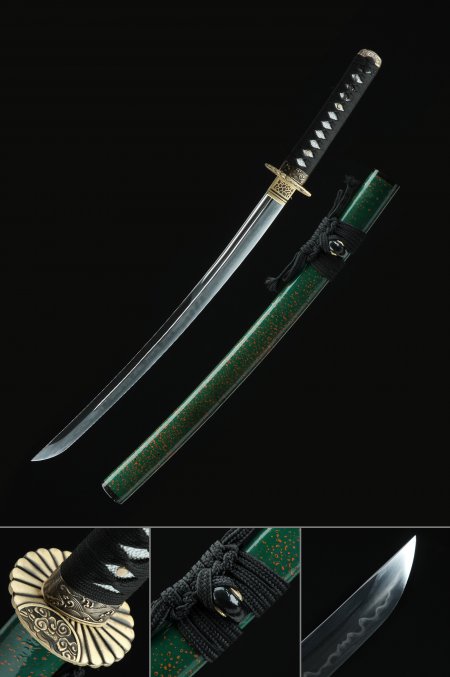
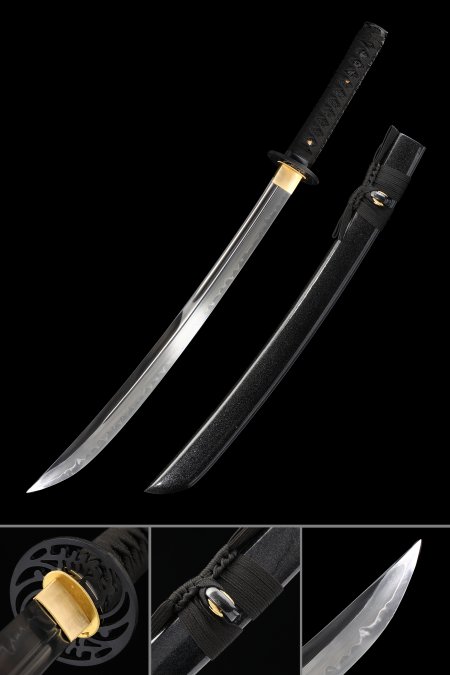
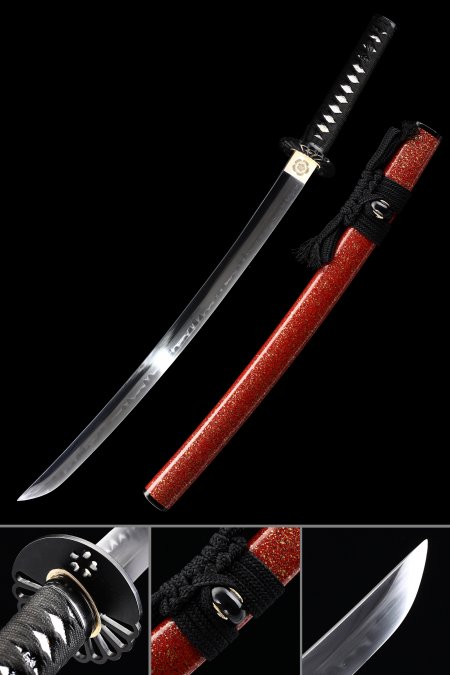
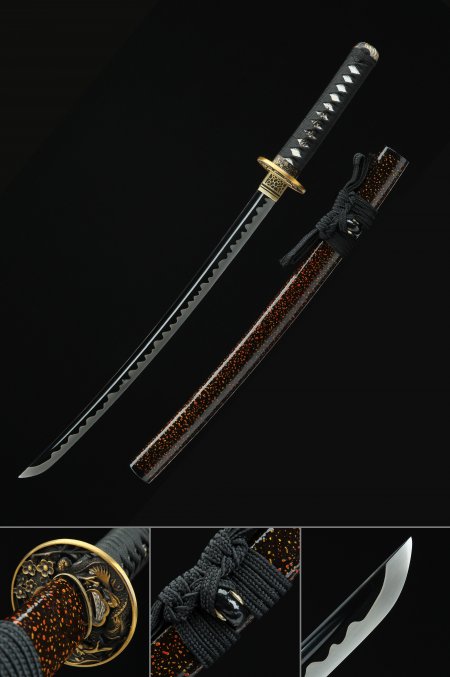
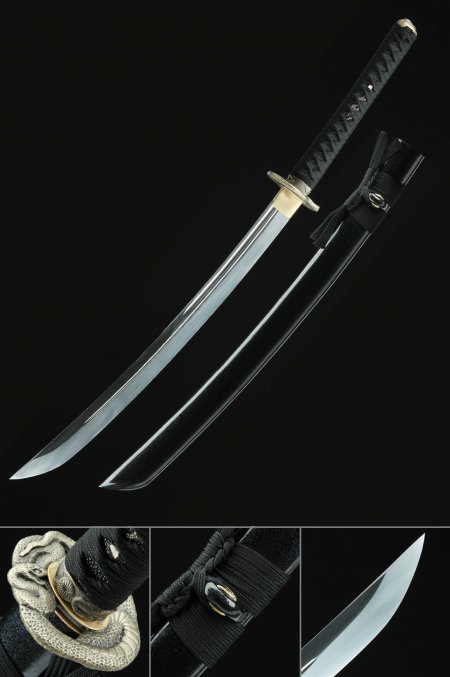
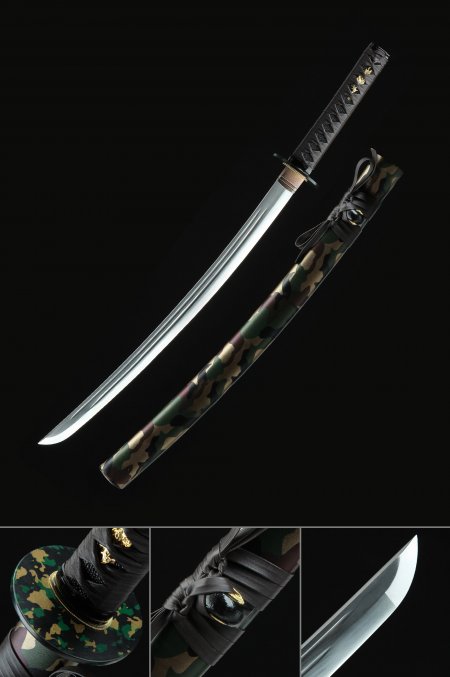
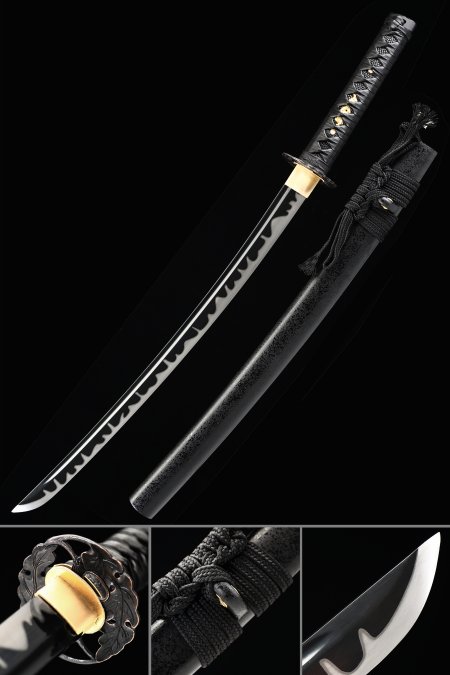
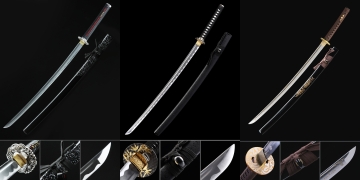
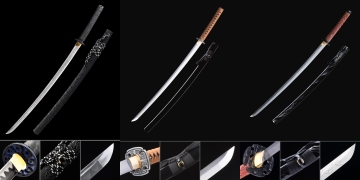
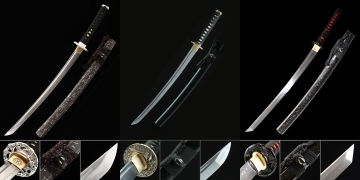
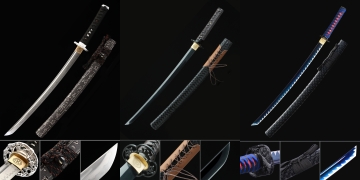
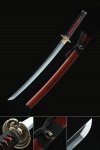
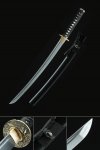
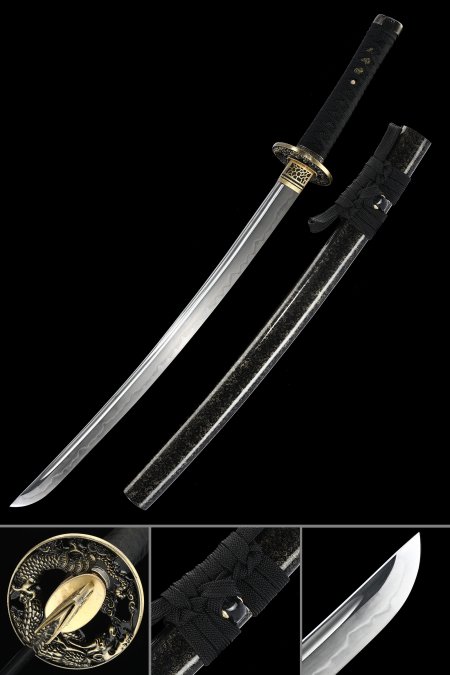
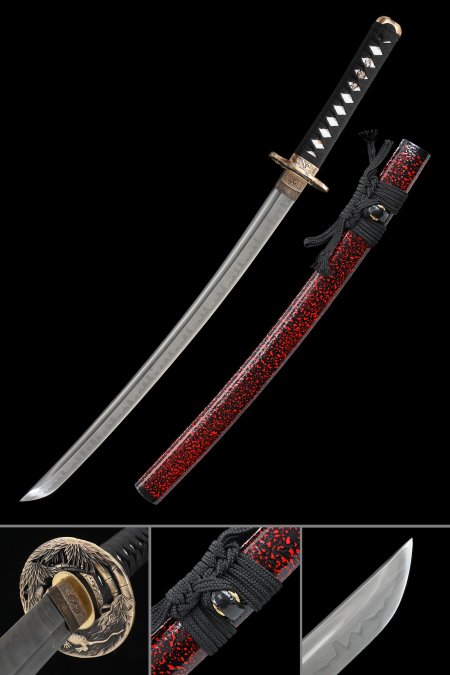
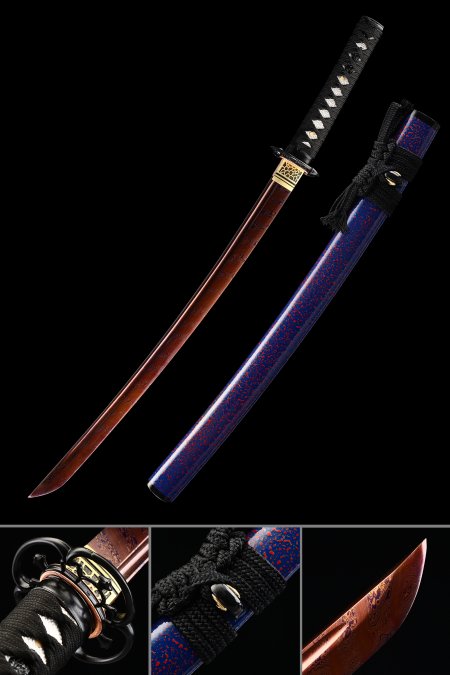
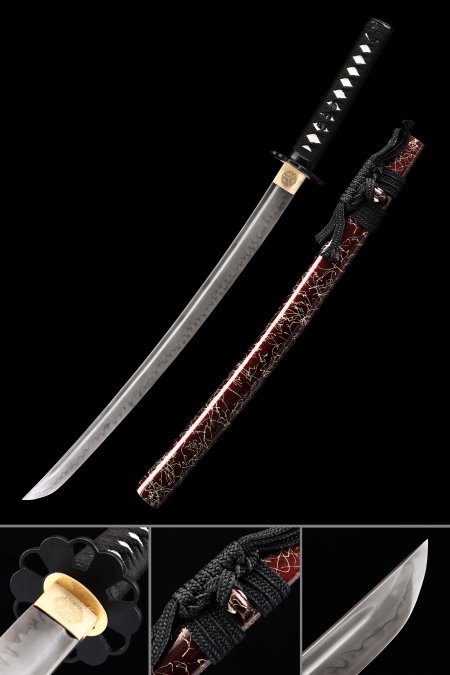
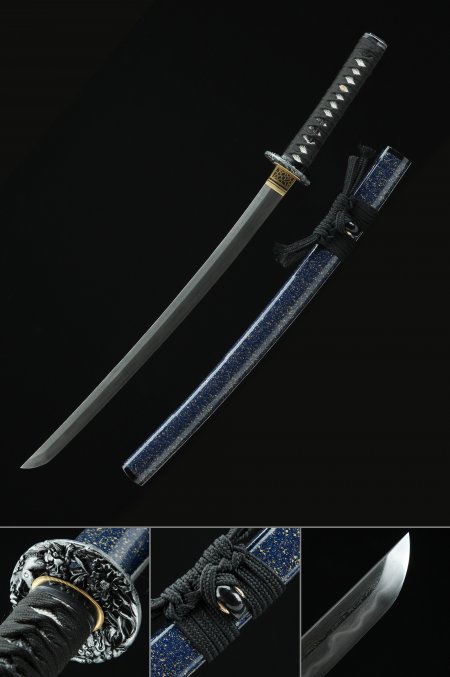
The sageo is the braided cord that threads through the kurigata — the small knob on the side of the saya (scabbard). On a traditionally appointed wakizashi, the sageo served both a functional and ceremonial role: it could be used to secure the saya to the obi (sash), bind the hakama during formal occasions, or assist in restraining a subdued opponent in certain classical schools of swordsmanship. On black sageo wakizashi made for display and collection today, the cord contributes directly to the piece's visual cohesion. A black sageo unifies the saya, ito wrapping, and overall koshirae into a single tonal composition — a detail that collectors familiar with Edo-period sword aesthetics will immediately recognize and appreciate.
How does T10 clay tempered steel differ from Damascus on a wakizashi blade?
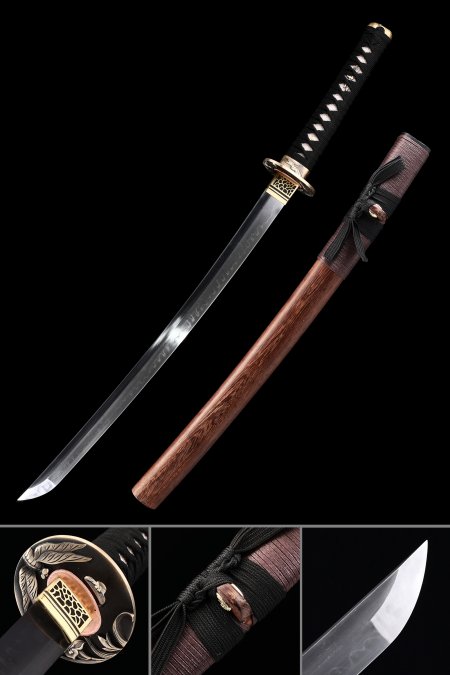
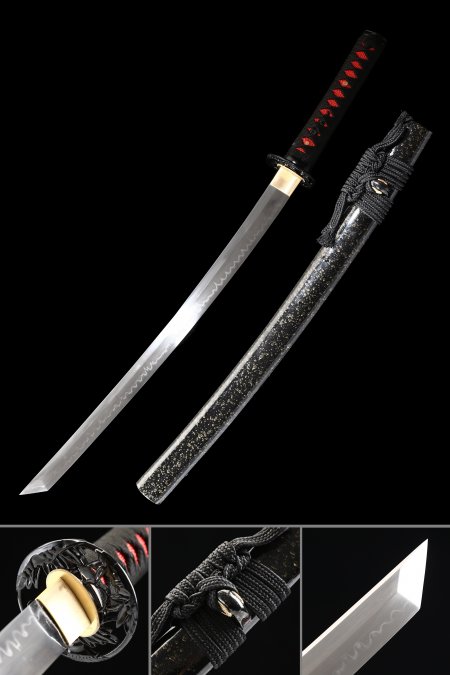
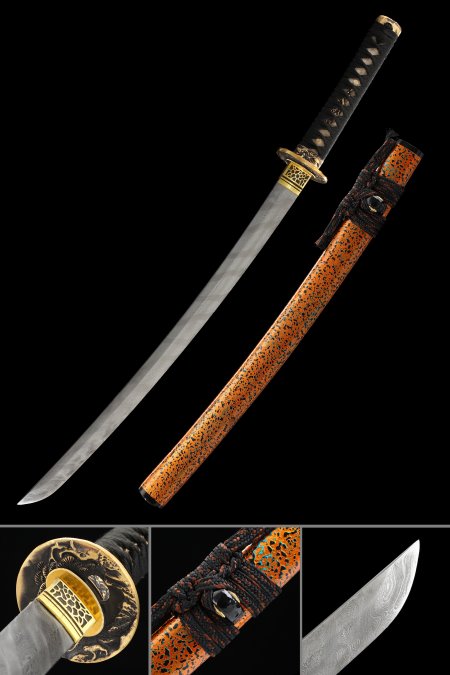
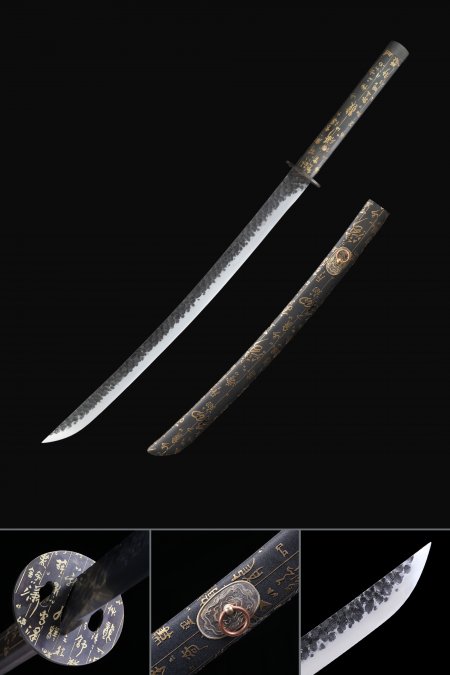
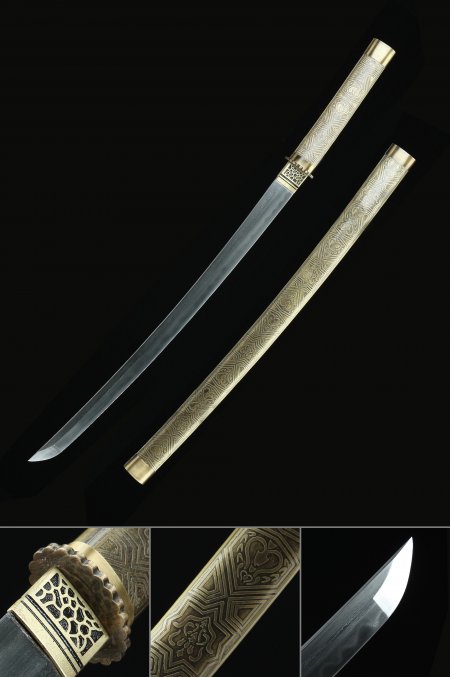
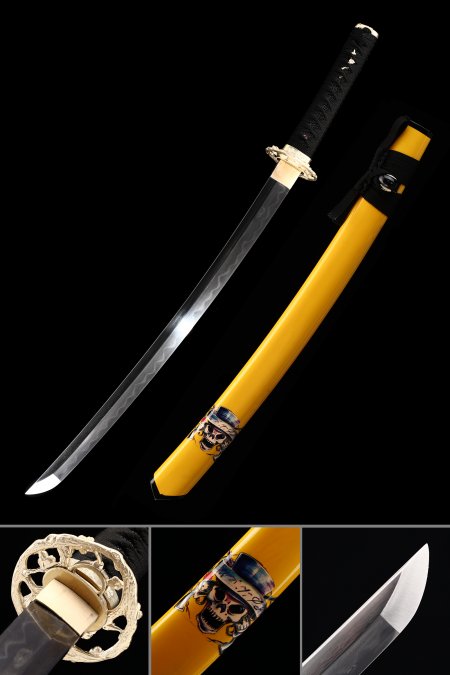
These are two distinct approaches to blade construction, each with its own visual signature and manufacturing philosophy. T10 high-carbon steel, when clay tempered, undergoes differential hardening: a clay mixture is applied along the spine before quenching, causing the edge to cool faster and reach a higher hardness while the spine remains comparatively flexible. This process produces a hamon — a visible temper line along the blade — that is considered a hallmark of authentic Japanese swordsmithing. The hamon on a T10 clay tempered wakizashi is unique to each blade and cannot be replicated artificially. Damascus steel, by contrast, is created by layering and folding two or more types of steel together repeatedly, then etching the finished blade to reveal the contrasting grain pattern. The result is a surface that shows the history of its own construction. Damascus does not typically produce a hamon in the traditional sense, but offers a dramatic aesthetic that many collectors find equally compelling. The choice between them often comes down to whether the collector prioritizes metallurgical tradition or distinctive surface artistry.
Is a wakizashi the right scale for a small display cabinet?
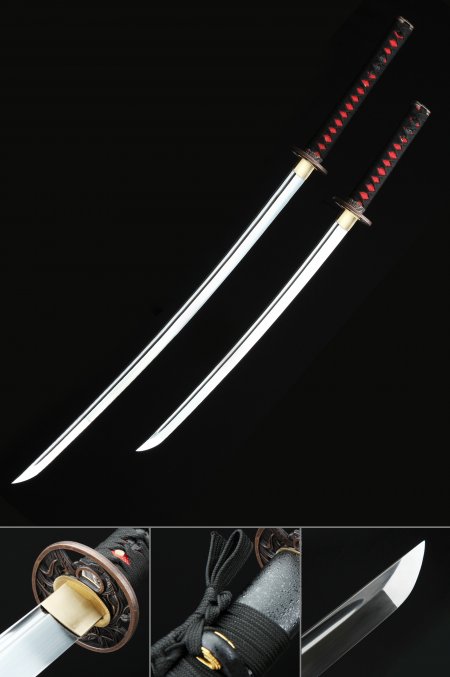
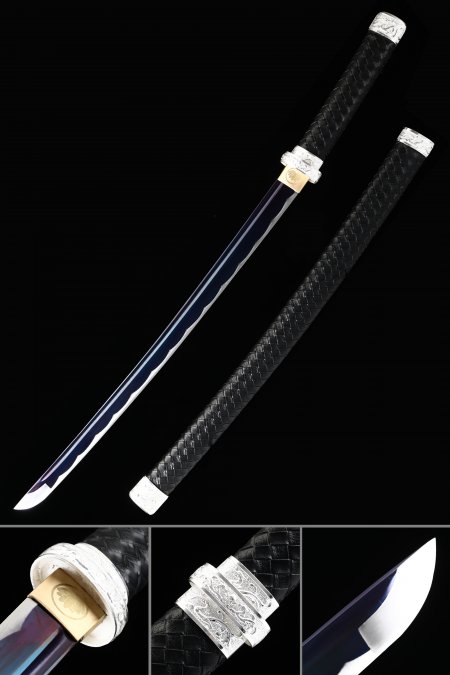
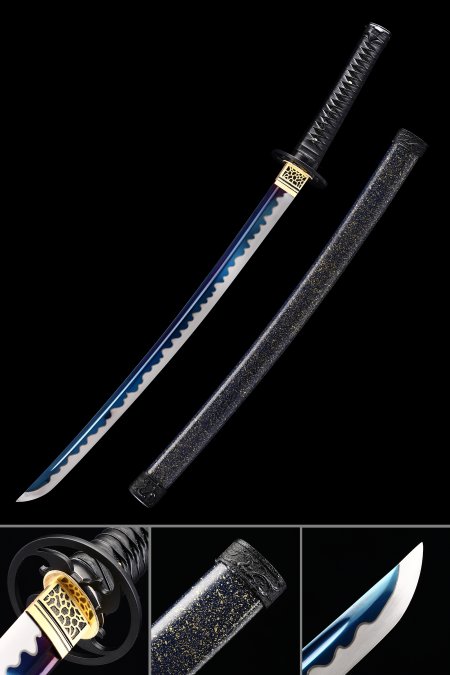
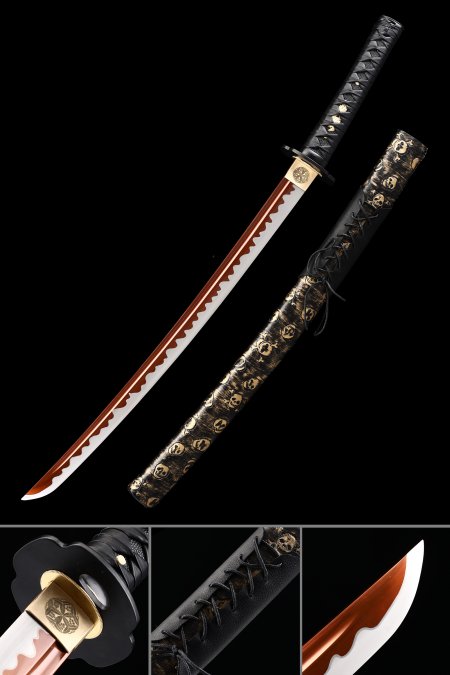
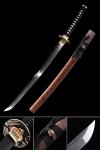
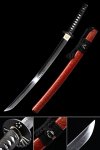
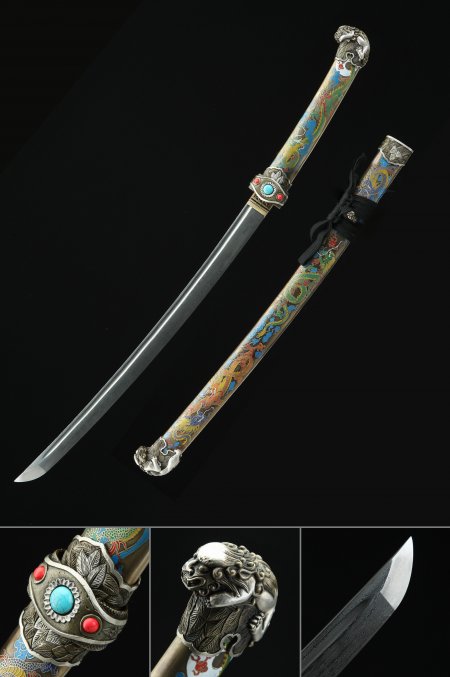
A wakizashi is an excellent choice for collectors working with limited display space. With blade lengths generally ranging from approximately 12 to 24 inches and an overall mounted length shorter than a full katana, a wakizashi fits comfortably on a standard tabletop sword stand or compact wall mount. Despite its smaller footprint, a quality wakizashi with full koshirae fittings — lacquered saya, wrapped tsuka, metal tsuba, and sageo cord — delivers the same visual richness as a longer piece. For collectors who want to present a historically authentic daisho pairing without committing to a large display area, a wakizashi alongside a tanto can create a compelling arrangement. Those with more room might consider pairing the wakizashi with a matching katana to form a complete daisho set, which represents one of the most iconic display formats in Japanese sword collecting.
How should I maintain a black lacquer saya on a display wakizashi?
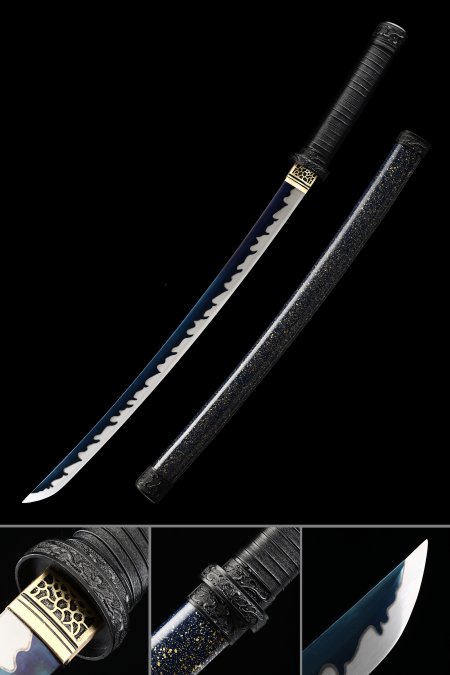
Black lacquer saya requires moderate but consistent care to preserve its finish over time. Keep the saya away from direct sunlight, as prolonged UV exposure can cause lacquer to fade, yellow, or crack at the surface. Humidity is equally important to manage: extremely dry conditions can cause the wooden core beneath the lacquer to contract and develop hairline cracks, while excess moisture encourages warping. A stable indoor environment between 45–60% relative humidity is ideal. For routine cleaning, wipe the exterior with a dry or very lightly dampened soft cloth — avoid any abrasive materials or chemical cleaners that could dull or lift the lacquer. The blade inside the saya should be lightly oiled with choji oil or a food-grade mineral oil before long-term storage to prevent surface oxidation. Remove the blade periodically to inspect both the blade and the interior of the saya, ensuring no moisture has been trapped between them.
What makes a black sageo wakizashi a good gift for a Japanese sword enthusiast?
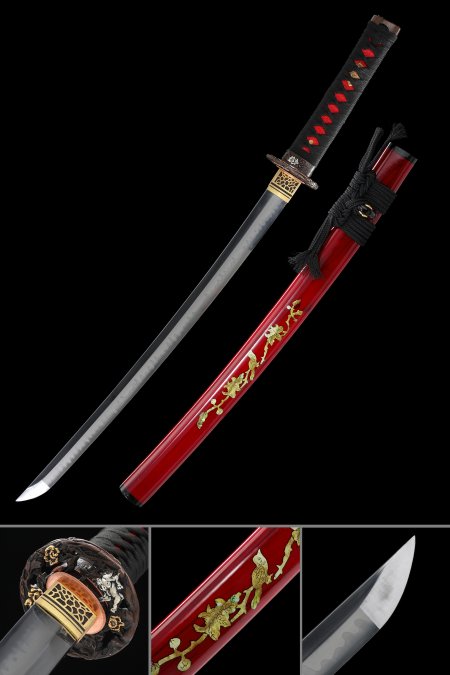
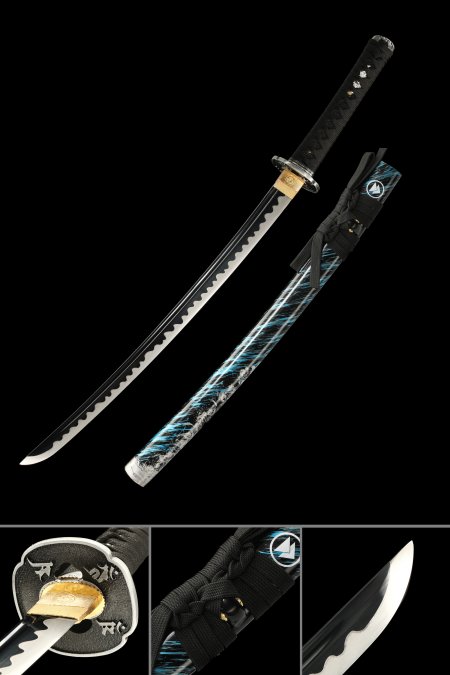
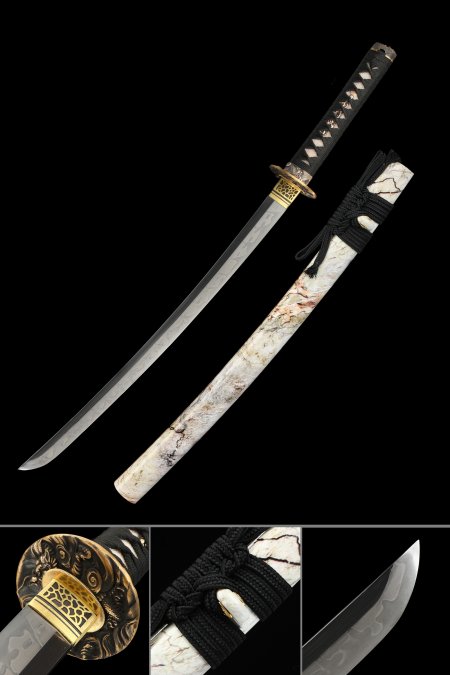
A black sageo wakizashi makes a particularly thoughtful gift because it combines historical depth with strong visual presence. Unlike generic decorative swords, a properly appointed wakizashi with authentic koshirae — copper or alloy tsuba, genuine ray skin or synthetic samegawa, braided ito, and a fitted lacquer saya — reflects real knowledge of Japanese sword culture, which experienced enthusiasts will notice and appreciate immediately. The black sageo aesthetic is versatile enough to suit collectors who prefer understated, museum-quality displays as well as those drawn to more dramatic visual styles. For someone who already owns a katana, a wakizashi in complementary fittings completes the daisho pairing — one of the most historically significant display formats in the genre. It is also a format that scales well: a wakizashi presents elegantly in almost any space, making it practical as well as meaningful.