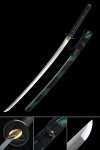
What makes 9260 spring steel different from high-carbon steel?
9260 spring steel is a silicon-manganese alloy — the elevated silicon content (roughly 1.80–2.00%) is what sets it apart from conventional high-carbon steels like 1060 or 1095. That silicon addition dramatically improves the steel's elasticity and cyclic stress tolerance, allowing a properly heat-treated blade to flex under lateral load and return to its original geometry rather than developing a permanent set or fracturing. High-carbon steels are often harder and can hold a finer edge, but they are also more brittle under torsional or bending stress. For a collectible or display katana that may be handled, test-swung, or simply enjoyed for decades, 9260's fatigue resistance means the blade retains its structural profile — and therefore its visual integrity — far longer than a comparably priced high-carbon piece might under similar conditions.
Is a black-finished saya purely decorative or does it serve a function?
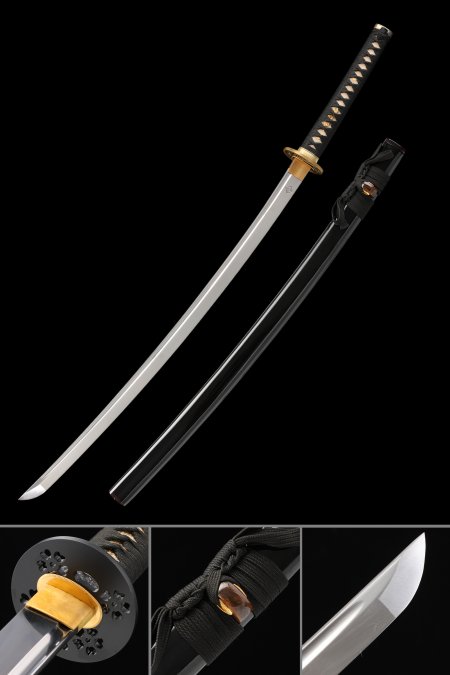
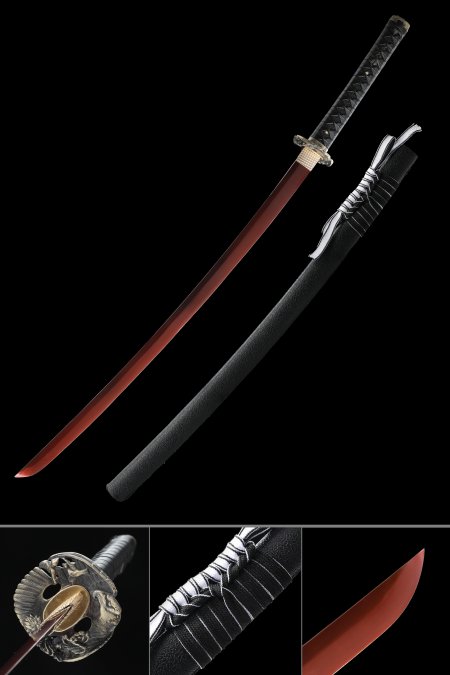
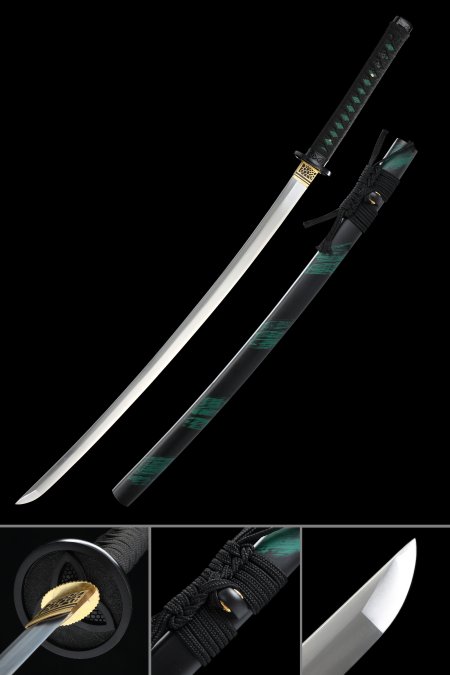
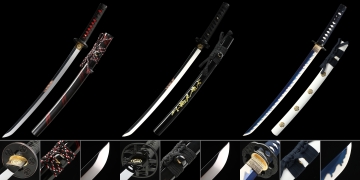
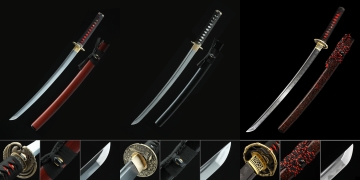
The finish on a saya is both aesthetic and protective. Traditional Japanese lacquer (urushi) and its modern piano-lacquer equivalents create a sealed surface that resists moisture intrusion, which directly benefits the blade housed inside by reducing the humidity the steel is exposed to during storage. A high-gloss black lacquer finish is particularly effective because the multiple-layer application process used to achieve that depth also builds up a durable barrier. PU leather-wrapped sayas used on some contemporary collectible katanas offer comparable moisture resistance with a matte or semi-gloss texture that suits certain fitting styles. Beyond function, the black saya in Japanese sword tradition has long been associated with restraint and martial discipline — making it a historically coherent choice for a display piece, not merely a modern aesthetic preference.
How often should I oil a spring steel katana for display?
For a blade stored indoors in a climate-controlled environment, a light oil application every three to six months is generally sufficient to prevent surface oxidation. Use choji oil (the traditional choice, blended from clove oil and mineral oil) or a high-quality food-grade mineral oil applied sparingly with a soft, lint-free cloth — wipe on, then buff off the excess so only a thin protective film remains. Avoid heavy application, as pooled oil can seep into the habaki or saya lining and cause wood swelling over time. In coastal regions or humid basements where relative humidity regularly exceeds 60%, shorten the interval to every six to eight weeks and consider placing a silica gel canister near the display stand. Never use WD-40 or automotive oils, as their additives can stain cord wrapping and degrade lacquer finishes.
Do the dragon motif fittings on these katanas follow historical patterns?
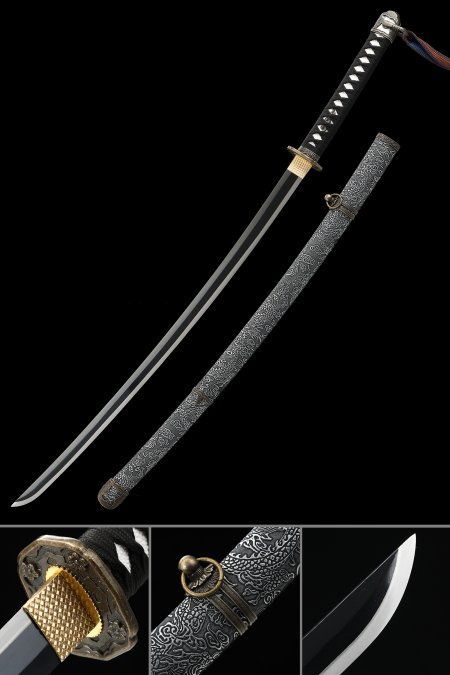
Dragon imagery in Japanese sword fittings (tosogu) has a genuine historical precedent stretching back centuries. The ryu (dragon) was a potent symbol in both Shinto and Buddhist traditions, representing wisdom, elemental power, and protection — qualities a samurai would want associated with his sword. Tsuba, menuki, and fuchi-kashira featuring dragon relief work were produced by specialist metalworkers (tsubashi) throughout the Edo period and beyond. Contemporary collectible pieces with dragon-engraved sayas or dragon tsuba are working within that decorative vocabulary rather than inventing it. The specific execution — silver saya engraving in koshirae style, for example — reflects a koshirae (complete mounting) approach where fittings, saya, and handle are designed as a unified set, which is historically consistent with how high-status Japanese swords were commissioned and presented.
Can a black spring steel katana work as a display centerpiece?
Absolutely, and several display strategies work particularly well with this aesthetic. A single katana on a two-tiered sword stand (katana-kake) placed at eye level against a neutral or dark wall creates an immediate focal point, with the contrast between the black fittings and the blade's surface doing the compositional work. For a more layered arrangement, pairing the katana with a shorter companion piece — a ninjato or aikuchi in a matching black scabbard — introduces scale variation that reads as intentional curation rather than accumulation. Lighting matters considerably: a narrow-beam warm LED positioned at a 30–45 degree angle to the blade brings out the grain of the lacquer and any engraved detail on the tsuba or saya. Avoid fluorescent overhead lighting, which flattens the surface and eliminates the depth that makes lacquerwork visually compelling.