What gives a Bronze Damascus katana its warm, golden appearance?
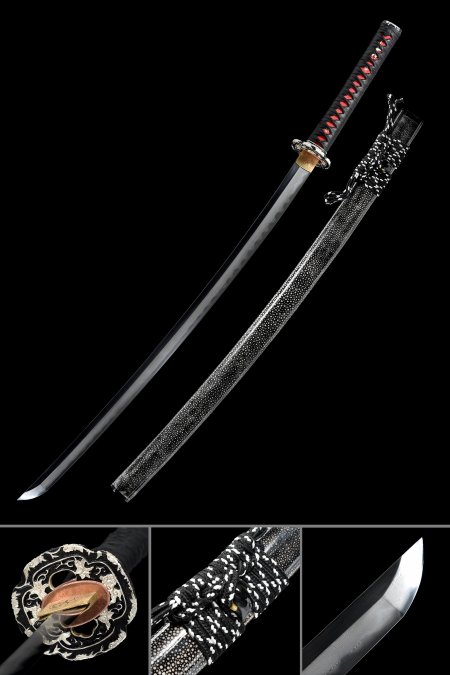
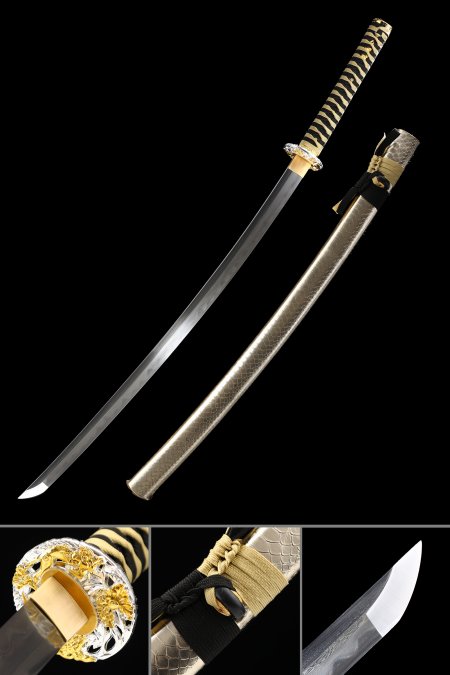
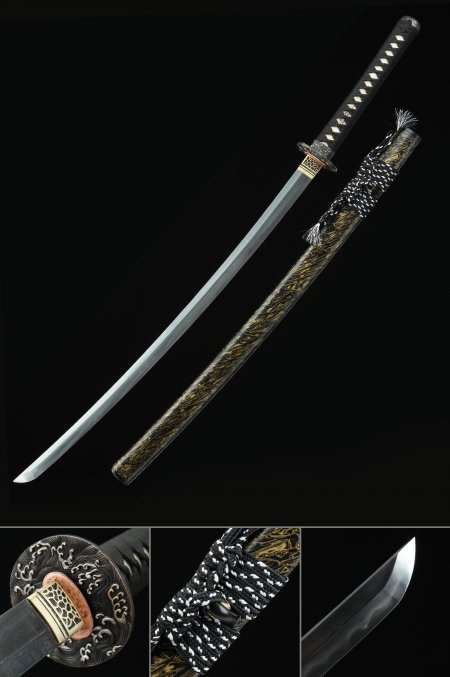
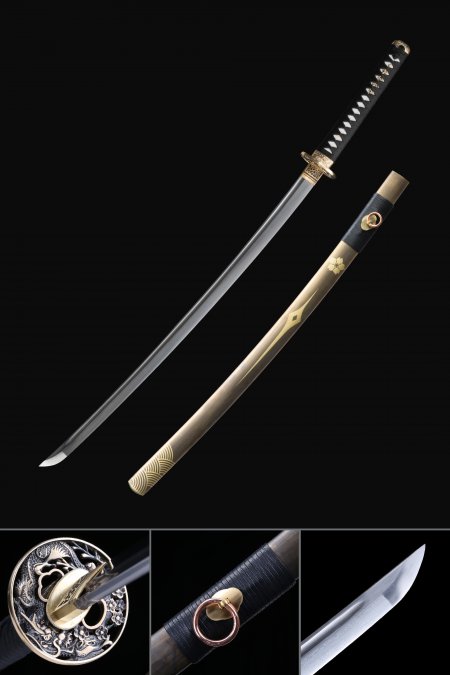
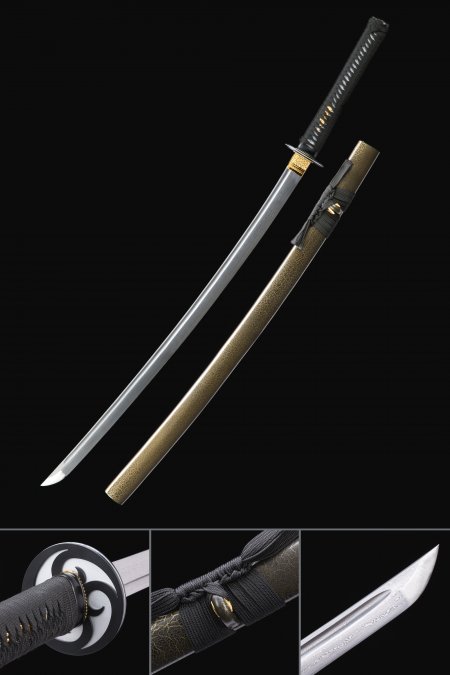
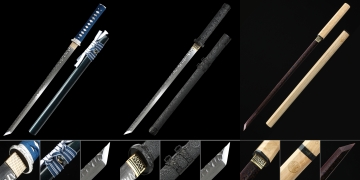
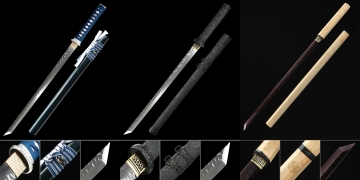
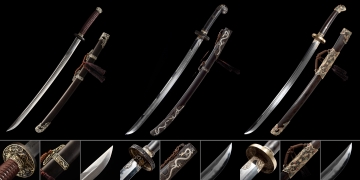
The bronze-toned aesthetic in these katana comes from two complementary sources. First, the Damascus blade itself is acid-etched after polishing, which reveals the layered grain pattern by differentiating the high- and low-carbon steel strata - this etching also produces a slightly warm, darkened surface tone rather than a cold silver finish. Second, the koshirae (sword fittings) are deliberately selected for their bronze and brass characteristics: tsuba, fuchi, and kashira are cast or finished in warm-hued alloys that reinforce the overall color story. Gold lacquer on the saya and gold-tone ito wraps complete the effect. This coordinated approach to color across blade and fittings is what distinguishes a thoughtfully composed bronze Damascus katana from a standard pattern-welded piece.
How does Bronze Damascus differ from standard Damascus katana?
The core blade material - pattern-welded, folded high-carbon Damascus steel - is shared between both categories. The meaningful differences lie in the koshirae and the finishing philosophy. Standard Damascus katana collections often feature black, silver, or charcoal fittings that emphasize the blade's contrast patterns in a starkly modern way. Bronze Damascus katana, by contrast, are assembled with warm-toned fittings - brass tsuba, gold lacquer saya, beige rayskin, bronze menuki - that project an antique, Edo-period sensibility. Collectors who appreciate the aesthetic of aged museum pieces or historically inspired presentations typically gravitate toward bronze configurations, while those who prefer a dramatic contemporary look may favor the standard Damascus finish.
Is a real hamon visible on Damascus steel katana blades?
Yes - select pieces in this collection display a genuine hamon, which is the visible temper line produced when the blade is differentially heat-treated before quenching. During this process, the spine of the blade is coated with a clay mixture that slows its cooling rate, while the edge cools rapidly and hardens. The boundary between these two zones becomes the hamon. On Damascus steel, the hamon interacts with the layered grain pattern in visually complex ways, producing a hamon line that appears particularly rich and textured compared to those seen on mono-steel blades. The presence of a real hamon is a meaningful quality indicator for collectors, as it confirms that proper heat-treatment technique was applied rather than a simulated cosmetic line.
How should I store and maintain a Bronze Damascus katana for display?
Proper storage begins with orientation - horizontal display racks with the edge facing upward (ha-mune position) distribute the blade's weight evenly and are consistent with traditional Japanese presentation. Bronze and brass fittings are susceptible to tarnishing from skin oils and humidity, so handling with cotton gloves is strongly recommended. The blade should be lightly coated with choji oil (a mineral oil traditionally used for Japanese swords) every one to three months, depending on your environment's humidity levels. High humidity accelerates oxidation on both the steel and the brass fittings, so climate control or silica gel desiccants in enclosed display cases are advisable. Avoid storing the blade in the saya for extended periods without ventilation, as moisture can become trapped and cause patination on the blade surface.
Can a Bronze Damascus katana make a meaningful gift for a collector?
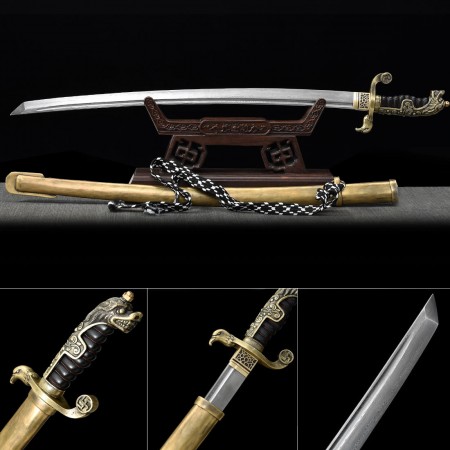
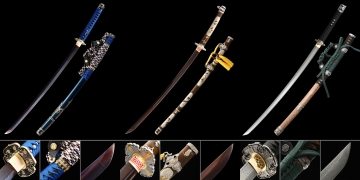
Absolutely - and the koshirae variety in this collection makes gift selection particularly rewarding. Dragon tsuba with gold-black lacquer saya suit collectors who appreciate bold symbolic imagery rooted in Japanese mythology. Chrysanthemum tsuba with beige rayskin saya project a more refined, courtly aesthetic that appeals to those with an appreciation for Meiji-era or imperial-style presentation. For recipients interested in military history, the Damascus Shin Gunto replica with its ornate brass saya and hawk tsuba references the late Imperial Japanese officer's sword tradition. Each configuration arrives as a complete, display-ready piece. Pairing a katana with a complementary wakizashi from our Damascus Steel Wakizashi collection creates a daisho gift set with genuine visual and historical coherence.