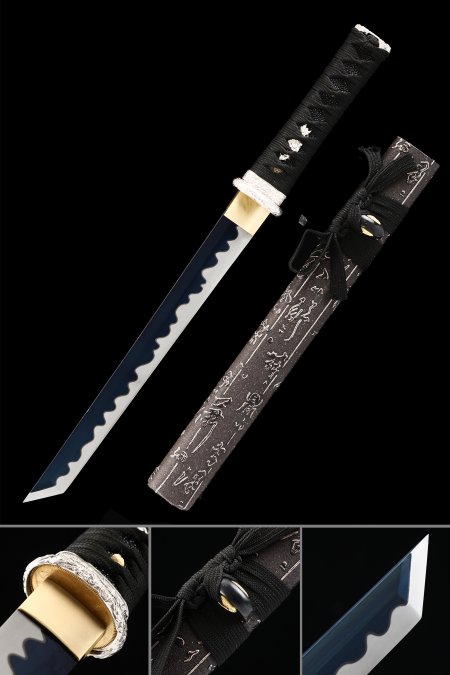
What makes the hamidashi style different from aikuchi?
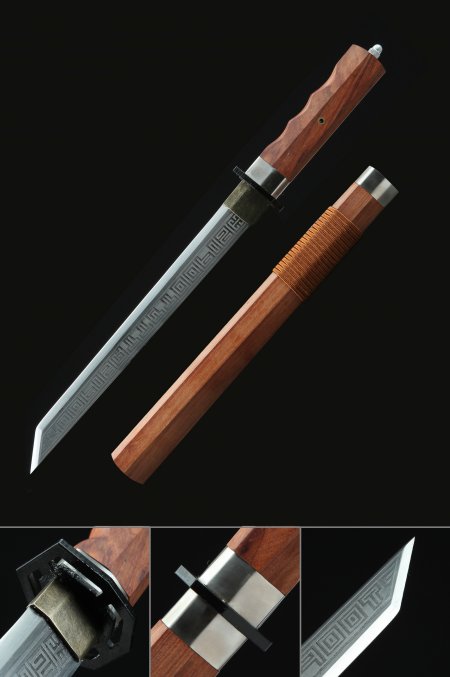
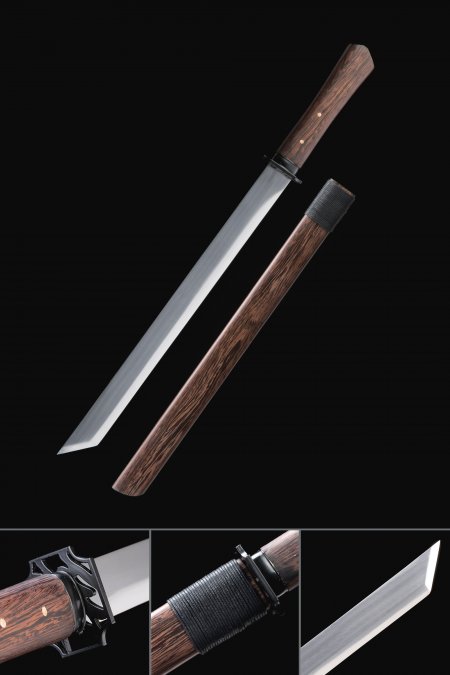
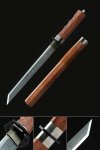
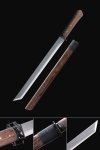
The hamidashi and aikuchi are both compact tanto-format collectibles, but they differ in one defining structural detail: the tsuba. An aikuchi mounting has no guard at all — the handle meets the saya in a clean, uninterrupted line. The hamidashi features a small tsuba that partially emerges from the koiguchi (scabbard mouth), creating a subtle but visually significant transition between handle and sheath. This exposed guard edge gives the hamidashi a more layered, architecturally complex silhouette. For collectors, this distinction matters both aesthetically and historically — the hamidashi style was associated with personal carry pieces where a full guard was considered unnecessary, yet some visual punctuation was still desired. When mounted with a brown saya, the small tsuba — often iron or copper — creates a striking tonal contrast against the warm wood grain.
How does T10 clay tempered steel differ from manganese steel in these tantos?
T10 tool steel and manganese steel produce noticeably different visual and structural results in a finished tanto. T10 is a high-carbon steel that responds well to clay tempering — a process where a clay mixture is applied to the spine before quenching, creating a differential hardness between the edge and the body. This produces a visible hamon, the undulating temper line running along the blade that is one of the most prized aesthetic features in Japanese blade collecting. Each hamon is unique to that specific quench. Manganese steel, by contrast, offers higher impact toughness and a more uniform, consistent surface finish. It does not produce a natural hamon but accepts polishing and surface treatments — including blue oxide finishes — very cleanly. Collectors who prioritize visual tradition and blade individuality often prefer T10 clay tempered pieces; those who value bold, graphic contrast and surface uniformity may lean toward manganese steel.
How should I store and maintain a brown saya tanto for display?
Brown saya tantos require simple but consistent care to preserve both the blade and the wooden scabbard. For the blade, apply a light coat of choji oil (or a neutral mineral oil) every two to three months using a soft cloth or traditional nugui paper. This prevents surface oxidation and keeps the steel in stable condition. Avoid leaving the tanto stored inside the saya for extended periods without airing — trapped moisture can cause rust at the habaki line. For the saya itself, keep the piece away from direct sunlight, which can fade and dry-crack natural wood finishes over time. Maintain humidity between 45–55% if possible; extremely dry environments cause wood to shrink and potentially loosen the koiguchi fit. A horizontal sword stand is ideal for long-term display, distributing weight evenly and keeping the saya from warping.
Is a brown saya hamidashi tanto a good gift for a Japanese culture enthusiast?
A hamidashi tanto in brown saya is among the more thoughtful collectible choices for someone who appreciates Japanese craft traditions. Unlike highly stylized or fantasy-influenced blade designs, the brown saya format signals historical grounding — natural wood finishes and classical mounting styles are consistent with period tanto aesthetics from the Edo period. The compact size makes it easy to display in most living spaces without requiring a dedicated sword rack. For gift presentation, the natural palette travels well across interior styles, from traditionally furnished rooms to minimalist modern spaces. It pairs meaningfully with other Japanese decorative objects, and for recipients who already collect, a hamidashi tanto introduces a distinct mounting style they may not yet have in their collection. Full-tang construction throughout this collection also ensures the piece has substance and weight that communicates quality the moment it is handled.
What does full-tang construction mean for a display tanto?
Full-tang means the steel of the blade extends as a continuous piece through the entire length of the handle, rather than ending at the habaki or partway into the tsuka. In practical terms, this provides structural integrity that keeps handle fittings — the fuchi, kashira, and tsuka-ito — securely anchored rather than relying on adhesive or a short stub tang. For a display collectible, full-tang construction means the tanto holds its form reliably over years and decades without loosening at the handle joints. It also gives the piece an authentic weight distribution that reflects how historical tanto were actually constructed. When you pick up a full-tang tanto, the balance point and overall heft feel deliberate and grounded — qualities that matter to collectors who value handling their pieces, not only viewing them.