Cyan Saya Katana

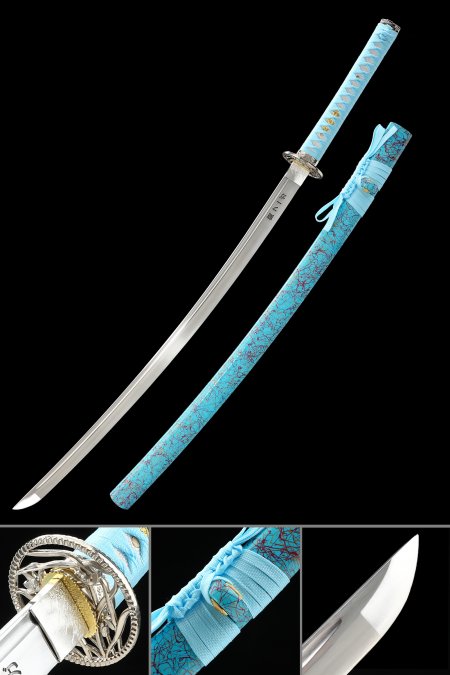
A cyan saya transforms a katana from a simple collectible into a visual statement - pairing the clean, cool tones of lacquered hardwood with the disciplined lines of traditional Japanese sword craft. Each piece in this collection is hand-assembled with full-tang construction, quality carbon or tool steel blades, and carefully selected fittings that complement the signature blue-green saya. Free standard shipping is included on all orders, along with a straightforward return policy so you can collect with confidence.
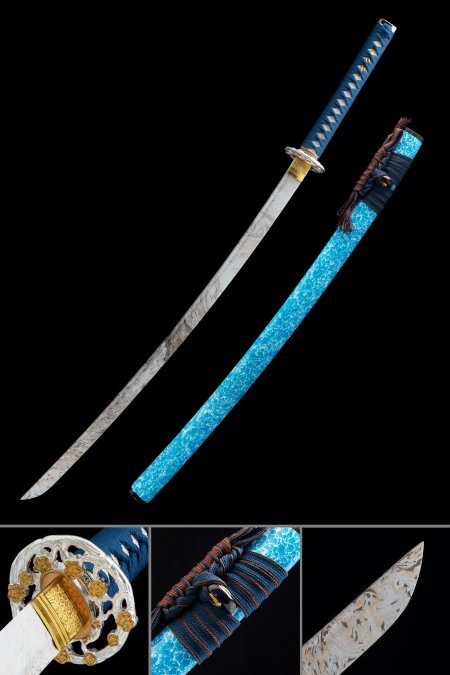
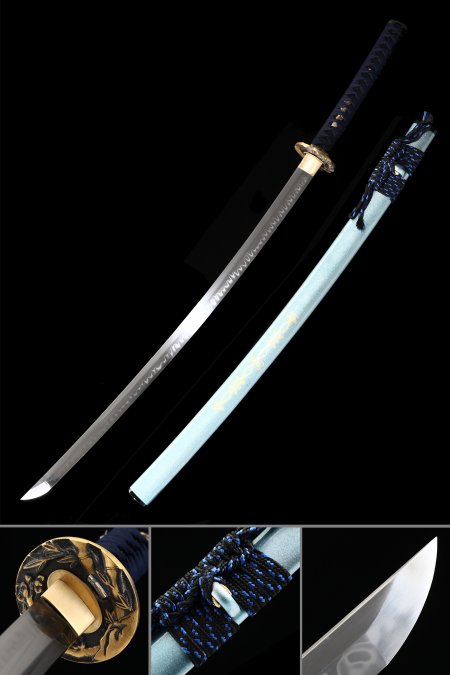
Showing 3 Products

Related Collections

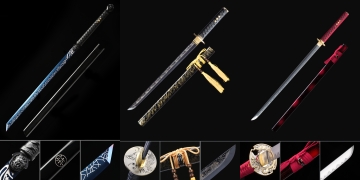
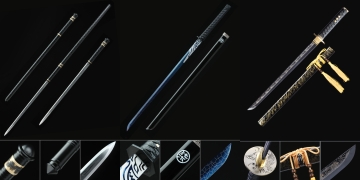
Dragon Tsuba Ninjato18 items


48 Reviews

Wave Blade Ninjato19 items


81 Reviews

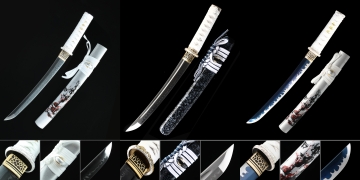
Geometric Tsuba Tanto22 items


105 Reviews

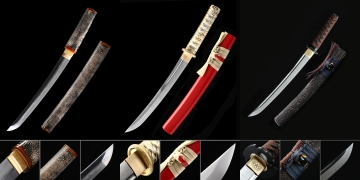
Plain Tsuba Tanto16 items


45 Reviews

Frequently Asked Questions

What makes a cyan saya different from standard lacquered scabbards?
Cyan lacquerwork sits in a specific segment of traditional Japanese saya finishing - it requires layering blue and green pigments within the lacquer medium to achieve a stable, coherent hue rather than simply applying a single-color coat. The result is a depth of tone that shifts slightly under different lighting conditions, which is part of its appeal to collectors. Unlike matte-black saya finishes that prioritize understated presentation, a cyan saya draws the eye and serves as a focal point in a display arrangement. The specific shade can vary between pieces - sky blue marble finishes produce a lighter, more variegated surface, while wave-lacquer applications tend toward a richer, more saturated cyan with visible texture in the finish itself.
How does clay tempering affect a T10 steel katana blade?
Clay tempering - known as tsuchioki in Japanese smithing - involves applying a clay mixture along the spine of the blade before the final quench. The clay insulates the spine, causing it to cool more slowly than the exposed edge, which results in a harder edge and a tougher, more flexible spine within a single blade. The visible byproduct of this process is the hamon, the temper line that runs along the length of the blade. On a properly clay-tempered T10 blade, this hamon is a genuine metallurgical feature with natural variation and activity, not a surface pattern added after the fact. T10 is a high-carbon tool steel with trace tungsten content, which contributes to wear resistance. For collectors, a clay-tempered T10 blade represents a higher level of craft investment than a through-hardened carbon steel blade at a comparable price point.
What is the difference between 1045 and 1065 carbon steel in katana blades?
The numbers refer to carbon content: 1045 steel contains approximately 0.45% carbon, while 1065 contains around 0.65%. Higher carbon content generally allows the steel to achieve greater hardness when properly heat-treated, which translates to better edge retention in a blade. However, higher carbon steel also requires more precise heat treatment - if quenched incorrectly, it becomes brittle rather than hard. For display-focused collectors, both steels produce a well-finished blade with good visual presence. For those who also intend occasional test cutting or want a blade that behaves closer to traditional specifications, 1065 is the more capable choice. 1045 is often recommended for beginners or as a lower-maintenance collectible option.
How should I store and maintain a cyan saya katana on display?
Lacquered saya finishes are sensitive to two primary environmental factors: UV light and humidity fluctuation. Prolonged exposure to direct sunlight will cause cyan lacquerwork to shift toward a washed-out, uneven tone over time - positioning the display away from south or west-facing windows makes a meaningful difference. For the blade itself, apply a thin coat of choji oil or a light, non-reactive mineral oil every two to three months using a soft cloth, wiping from the base toward the tip. This creates a barrier against oxidation without leaving residue that could affect the saya's interior lining. Store the katana horizontally or with the edge facing upward if vertical - this is the traditional orientation that minimizes stress on the habaki (blade collar) and the saya's interior fit over time.
Is a cyan saya katana a good gift choice for a sword enthusiast?
A cyan saya katana works particularly well as a gift for collectors who already own more conventional pieces - black or brown saya katanas are common, and a cyan lacquered piece offers genuine visual contrast in a display without requiring the recipient to reorganize their existing collection. The color also photographs exceptionally well, which matters to collectors who document their pieces. For someone newer to Japanese sword collecting, a full-tang carbon steel katana with quality matched fittings represents a meaningful entry point that holds lasting display value. Pairing the katana with a dedicated display stand makes the gift immediately presentable and signals an understanding of how the piece is meant to be appreciated.

Customer Reviews

Wyatt Rossell Kentucky, United States

The blade and handle are great. Very well put together and no loose feeling to it at all.

The saya or sheath is the only problem. The design is not center and a little part of it is missing when it was applied. Also there is a small chip in the paint.

Blade came sharp from factory as well. Overall. Beautiful, functional piece.

T10 Steel Katana with Clay Tempered Blade, Blue Hardwood Saya & Flower Tsuba T10 Steel Katana with Clay Tempered Blade, Blue Hardwood Saya & Flower Tsuba
Chris Nelson Washington, United States

Thank You TrueKatana for my very first Katana ever! Absolutely beautiful! I ordered this on 2/15/2021 and received it on 3/5/2021. This was not only a holiday for the U.S. , but also the starting week of Chinese New Year and I still received my sword in less than three weeks. I am not any kind of practitioner or expert in any way, but from all the videos and forums I could find about what makes a truly good Katana, this one checks all the boxes. Entire sword fitment is very tight.
Tightly wrapped cotton Ito, diamond pattern aligned, tight fitted kashira and fuchi.
Mid grade Tsuba ( I'm guessing brass by the thickness and edge color, but can't find a description besides alloy )
Habaki has smooth transition to the blade, and a very nice subtle hamon pattern. The only thing I could possibly say negative would be the Saya let's the sword slap around inside, but for under $300 what do I know? Now I just have to work up the nerve to cut with it!!! I will definitely be buying from this site again!

T10 Steel Katana with Clay Tempered Blade, Blue Hardwood Saya & Flower Tsuba T10 Steel Katana with Clay Tempered Blade, Blue Hardwood Saya & Flower Tsuba