What makes a ninjato different from a katana?
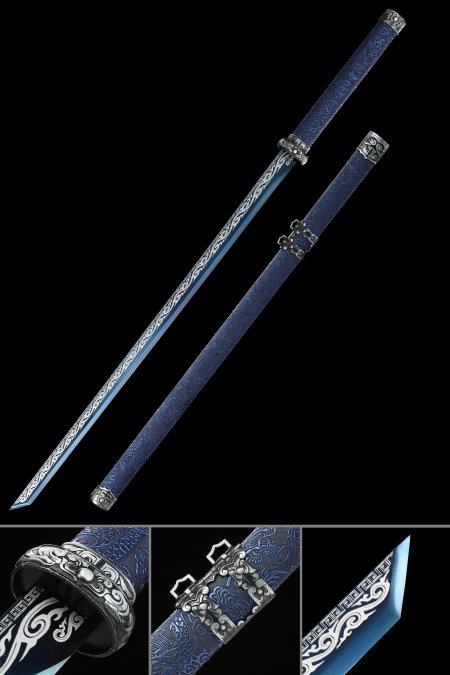
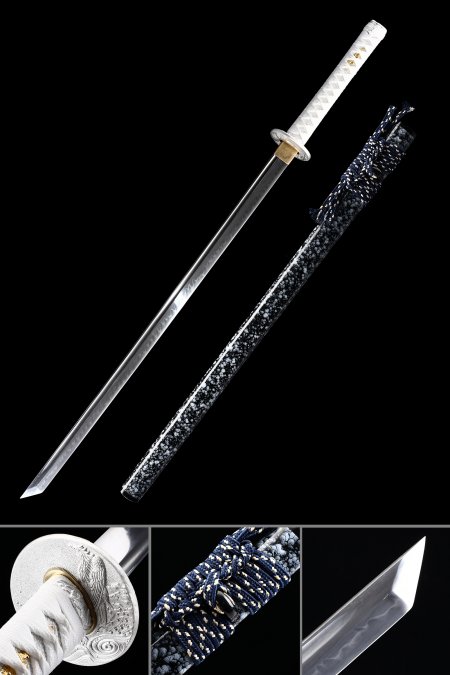
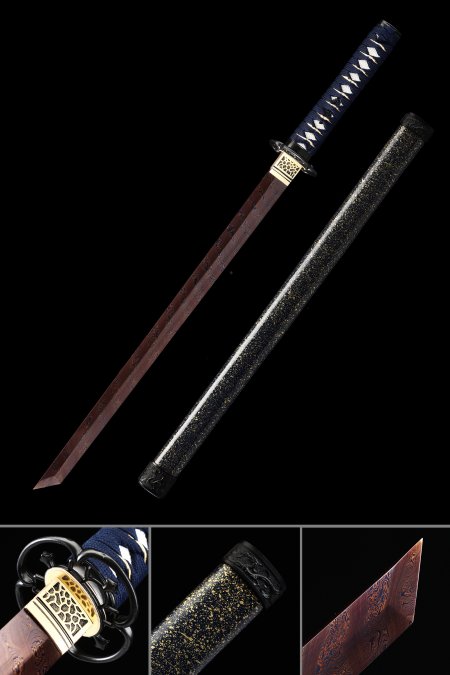
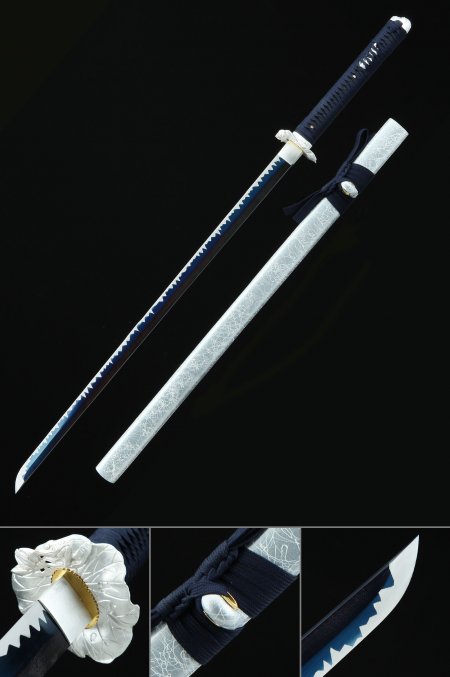
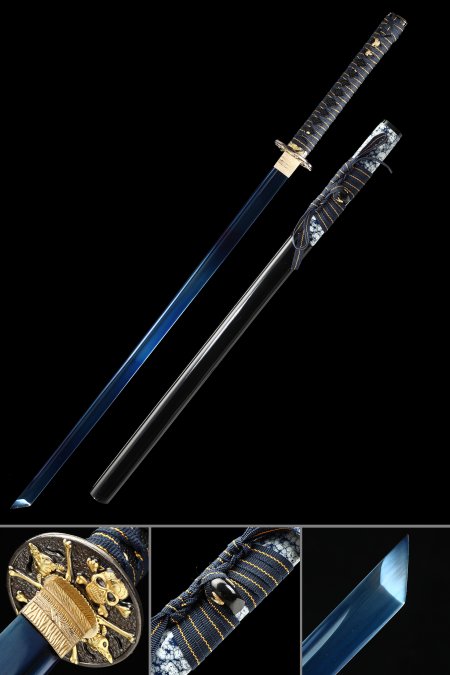
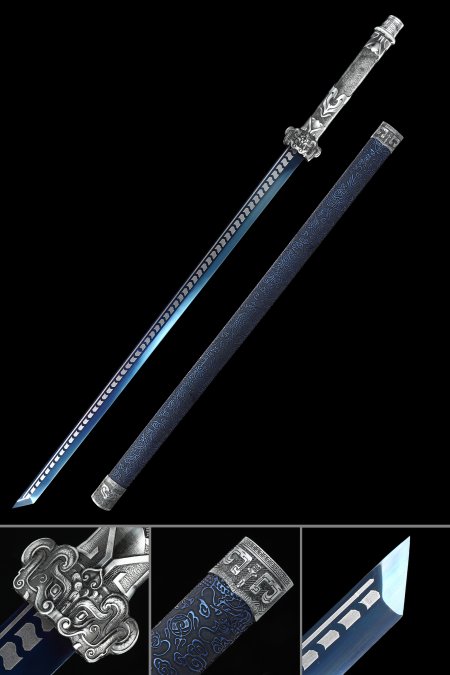
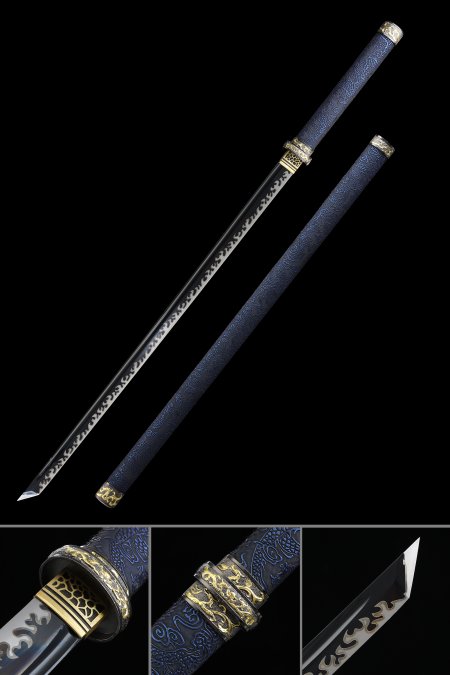
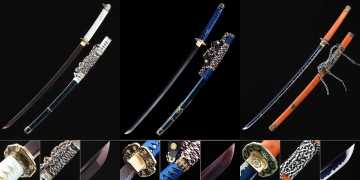
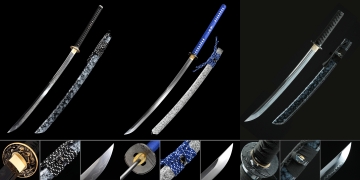
The ninjato is defined primarily by its straight or very slightly curved blade geometry and its characteristically squared tsuba, in contrast to the katana's pronounced curvature and round or oval guard. The ninjato's shorter, straighter profile creates a different visual mass in a display case — more architectural and angular where the katana reads as fluid and organic. From a construction standpoint, the same high-carbon steel types, full-tang assembly, and traditional fitting materials apply to both forms, so the collector investment in craftsmanship is comparable. The distinction lies in silhouette, historical narrative, and the aesthetic vocabulary each blade communicates on a wall or in a cabinet.
How does T10 steel compare to 1095 in these ninjato?
T10 and 1095 are both high-carbon steels, but T10 contains a small percentage of tungsten and slightly elevated silicon, which refines the grain structure and produces a harder, more wear-resistant edge after heat treatment. The practical difference for collectors is visible in the hamon — T10 blades tend to develop a more defined and complex temper line during clay differential hardening, making the hamon a stronger visual feature. 1095 produces an excellent hamon as well, but its grain is slightly coarser, which some collectors prefer for a more traditional, less polished appearance. Both steels take a clean polish and hold detail engraving well, so the choice often comes down to whether you prioritize hamon complexity or a more classic blade surface.
What is the best way to store a ninjato with a dark blue lacquer saya?
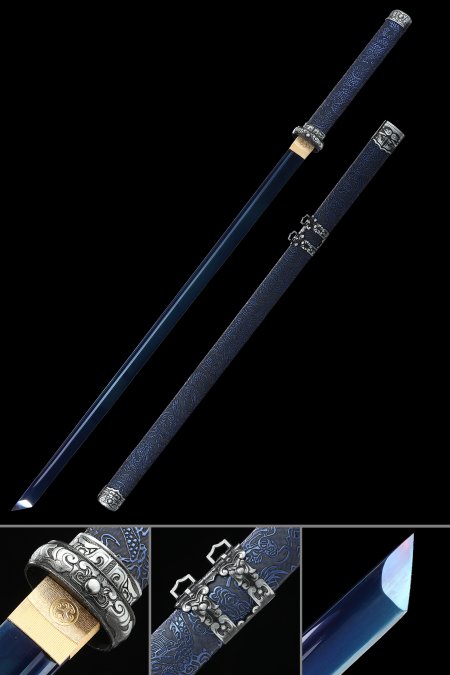
Lacquered saya are sensitive to two primary threats: prolonged moisture and direct UV exposure. Store the piece horizontally on a padded rack away from windows, ideally in a room maintained between 40–60% relative humidity. High humidity causes the wood core of the saya to swell, which can trap the blade and stress the lacquer surface; very low humidity causes the wood to contract and crack the lacquer at stress points near the koiguchi opening. Apply a light coat of renaissance wax or furniture paste wax to the saya exterior once or twice a year to maintain the lacquer's surface seal. The dark blue pigment in the lacquer is particularly vulnerable to UV fading, so display cases with UV-filtering glass are strongly recommended for pieces displayed near natural light sources.
Do dark blue ito wraps require special maintenance?
Dark blue ito — whether cotton, silk, or synthetic — benefits from occasional light cleaning with a dry microfiber cloth to remove dust that settles in the diamond-pattern gaps between the wrap layers. Avoid damp cleaning on natural fiber ito because water can cause dye migration that permanently stains the underlying same (ray skin) panels. Silk ito is the most visually refined but also the most fragile; cotton ito handles humidity changes better and maintains its wrap tension over time. If the wrap begins to loosen at the kashira end after extended storage, a gentle re-tensioning by pushing the wrap from pommel toward the tsuba will redistribute slack without requiring a full rewrap. Keeping the handle away from skin oils during handling — use cotton gloves — significantly extends the life of the ito color.
Can a dark blue sageo ninjato make a good gift for a collector?
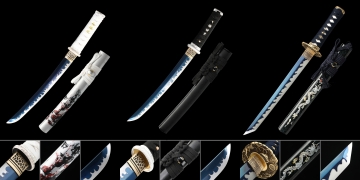
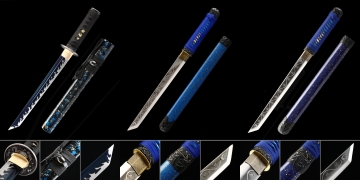
A coordinated dark blue sageo ninjato is one of the more visually complete gifts in Japanese blade collecting because the color scheme unifies every fitting — saya, cord, and handle wrap — into a single intentional aesthetic. For someone building a thematic display, a ninjato in this color family pairs naturally with a companion tanto or wakizashi in the same blue palette, creating a two- or three-piece set that looks purpose-built rather than assembled from unrelated pieces. The straight blade profile and squared tsuba also give the ninjato strong visual presence on a wall mount, making it a display centerpiece rather than a secondary piece. When selecting as a gift, noting the steel type — Damascus for surface pattern, T10 for hamon complexity, or 1095 for a classic finish — helps match the piece to the recipient's collecting focus.