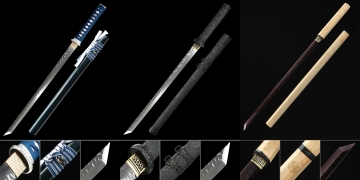
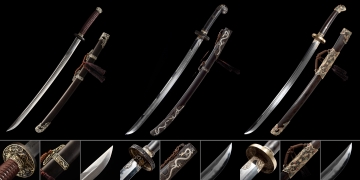
Green Damascus Steel Katana

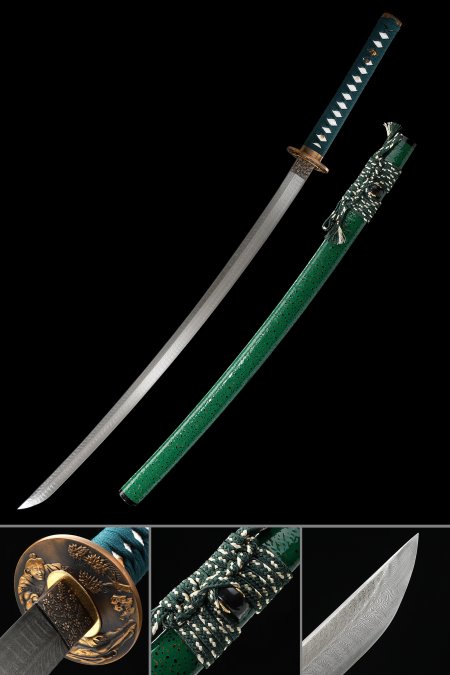
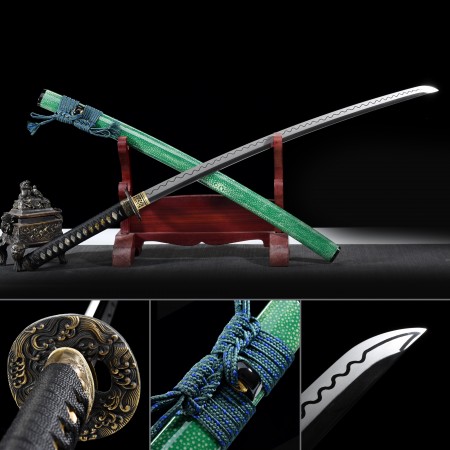
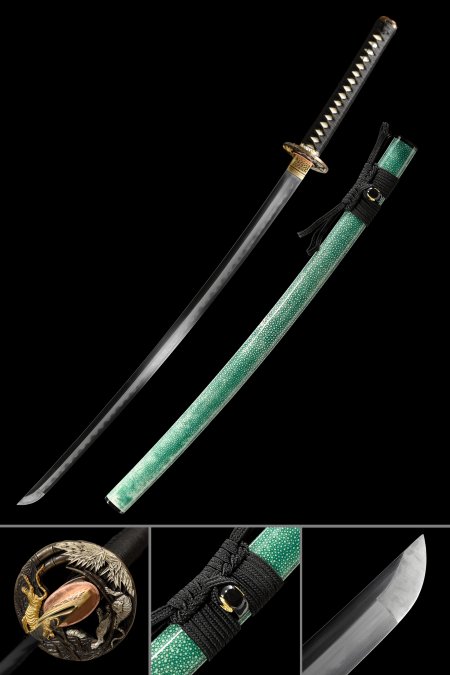
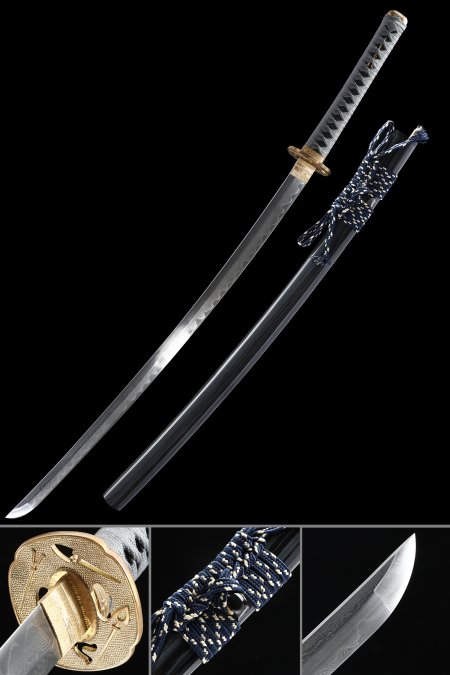
The Green Damascus Steel Katana collection brings together swords where layered Damascus patterning meets richly appointed green fittings - from genuine ray-skin saya to lacquered hardwood scabbards and hand-wrapped cord handles. Each piece is full-tang constructed and hand-forged, making it a compelling centerpiece for any serious Japanese sword collection. Every order ships free with hassle-free returns, so acquiring your next display piece is straightforward.
Showing 4 Products

Related Collections

Damascus Ninja Sword19 items


19 Reviews

Damascus Steel Katana257 items


526 Reviews

Damascus Tanto Fixed46 items


55 Reviews

Green Damascus Sword9 items


8 Reviews

Frequently Asked Questions

What makes Damascus steel visually distinct on a katana?
Damascus steel is produced by layering two or more types of high-carbon steel, then repeatedly folding, drawing, and welding the billet. As the layers multiply, distinct grain patterns emerge across the blade's surface - commonly described as water-grain, ladder, or teardrop patterns depending on how the billet was manipulated before final shaping. When the finished blade is acid-etched, these contrasting layers react differently to the etch, making the pattern visible as a swirling or flowing design. No two Damascus blades produce an identical pattern, which is a significant part of their appeal to collectors. The surface effect is purely a result of the steel's construction, not applied decoration, which means it remains a permanent feature of the blade rather than a finish that can wear away.
Is real ray-skin used on the saya, and why does it matter?
Genuine ray-skin (same-kawa in Japanese) is sourced from stingray hide and has been used in traditional Japanese sword furniture for centuries. Its appeal is functional as well as aesthetic: the naturally pebbly, calcified surface provides grip and abrasion resistance, and the hide is inherently moisture-resistant. Under light, same-kawa has a subtle pearlescent quality - small raised nodes across a pale or white field - that lacquered wood or synthetic materials cannot replicate convincingly. On the saya (scabbard), ray-skin is applied as a covering that adds both visual texture and a tactile dimension that collectors familiar with authentic Japanese sword fittings recognize immediately. Pieces in this collection that specify green ray-skin saya use this material for its authentic historical precedent as much as its decorative character.
How does a Damascus katana differ from a folded steel katana?
These terms are related but not interchangeable. A folded steel katana is made by repeatedly folding a single type of steel to refine its grain structure and distribute carbon more evenly - a technique historically used to work out impurities in pre-modern steel production. Damascus steel, by contrast, deliberately combines two or more steel types with different compositions so that their boundary layers remain visible after etching, creating the signature patterned surface. A Damascus blade may also be folded during construction, but the defining characteristic is the multi-alloy patterning rather than fold count. Some pieces in this collection specify folded Damascus construction, combining both techniques: the layered alloy mix of Damascus with the additional refinement of folding.
What is the best way to store a Damascus katana display piece?
Damascus steel contains high-carbon steel layers that are susceptible to oxidation if left unprotected. For display storage, apply a thin coat of camellia oil or a purpose-made sword oil to the blade surface every few months - or more frequently in humid environments. When mounting horizontally on a wall stand, position the blade edge facing upward following traditional Japanese convention. Avoid storing the sword in the saya for extended periods without inspection, as trapped moisture can cause rust beneath the fittings. If your display environment has significant humidity fluctuation, silica gel packets placed in the display case will help stabilize conditions. Keep the blade away from direct sunlight, which can fade handle cord and lacquered saya finishes over time.
Are these katana suitable as collector gifts for someone new to Japanese swords?
Green Damascus katana make an exceptionally strong gift choice for a first-time collector precisely because they offer immediate visual impact alongside genuine craft substance. The Damascus patterning and green fittings make the piece recognizable as distinct and considered - not a generic display sword - while the full-tang construction and authentic materials like ray-skin and bronze tsuba give an experienced collector recipient something technically meaningful to appreciate. For someone newer to collecting, the visible hamon and Damascus grain provide natural entry points into understanding how Japanese-style blades are constructed and finished. Pairing a katana with a companion piece from the Damascus Tanto Fixed Blade collection creates a coordinated set that demonstrates range within a Damascus steel theme.

Customer Reviews