Hamon Naginata

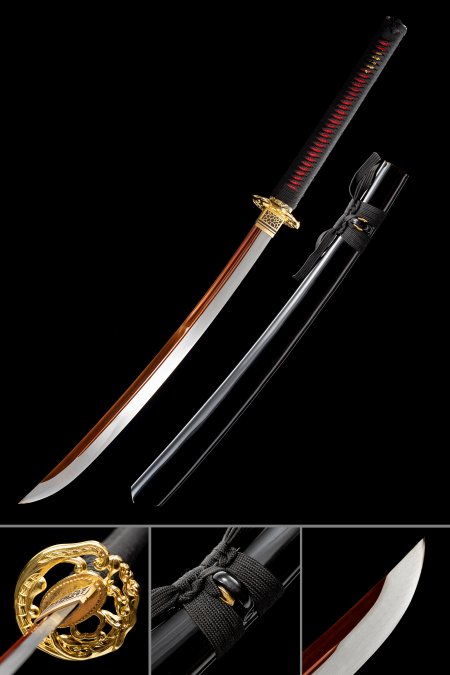
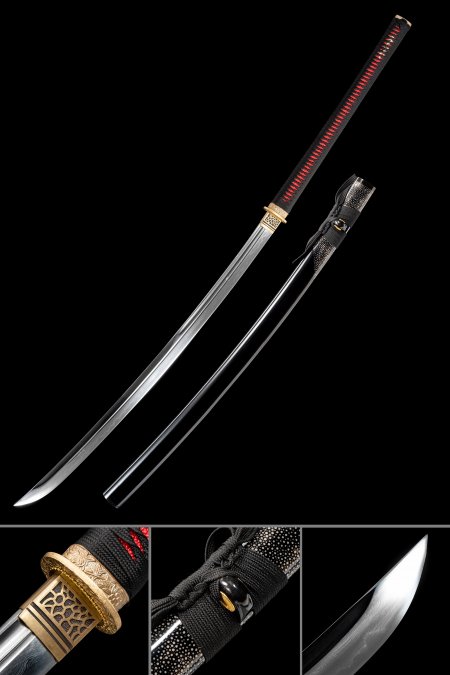
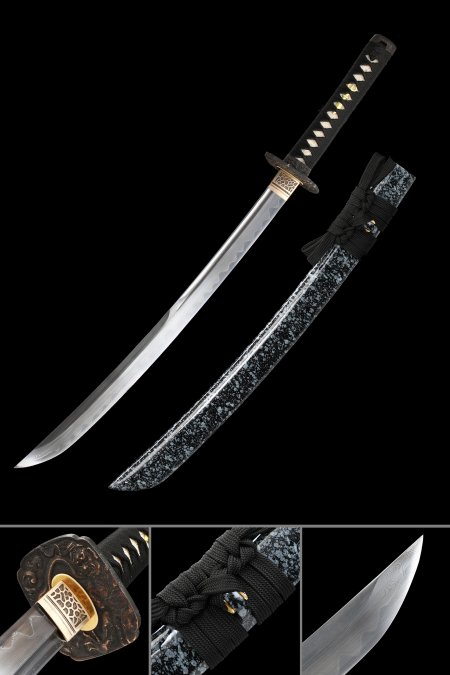
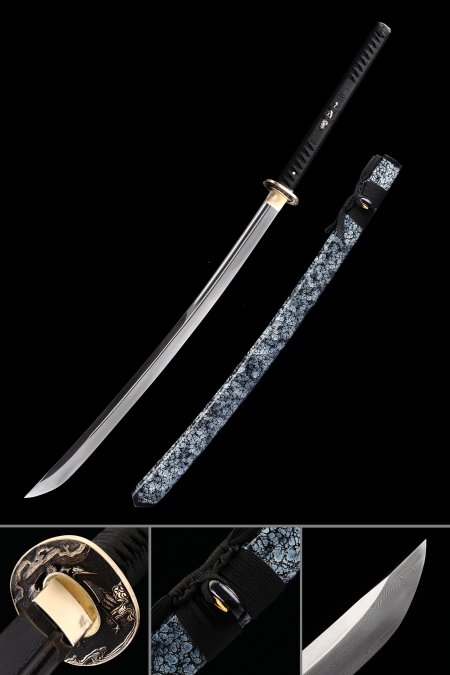
Explore our Hamon Naginata collection — hand-forged polearm replicas featuring authentic temper lines created through traditional clay tempering. Each piece showcases a genuine hamon pattern along the curved blade, crafted from T10 or Damascus steel with full-tang construction and lacquered saya. These collectible naginata honor centuries of Japanese bladesmithing heritage. Free shipping and free returns on every order.
Showing 9 Products

Related Collections

Naginata Katana12 items


15 Reviews

O-Naginata6 items


10 Reviews

WW2 Japanese Katana25 items


82 Reviews

Swords72 items


950 Reviews

Frequently Asked Questions

What makes a hamon on a naginata different from one on a katana?
The naginata's longer, more gently curved blade gives the hamon additional room to develop, so the temper line often stretches across a broader visual field than on a katana. Because a naginata blade is mounted at the end of a shaft rather than a short handle, the smith can apply clay in sweeping, uninterrupted strokes that produce flowing hamon patterns — midare (irregular waves), notare (gentle undulations), or suguha (straight lines) — that read almost like calligraphy along the extended edge. The wider, flatter geometry of many naginata blades also makes the contrast between the hardened edge and softer spine more immediately visible to the eye, turning the hamon into a dramatic centerpiece of the entire polearm rather than a detail glimpsed only at close range.
Is T10 steel or Damascus better for a collectible hamon naginata?
Each steel offers a distinct aesthetic and structural character. T10 is a high-carbon tungsten-alloy steel that responds exceptionally well to clay tempering; it produces bold, high-contrast hamon lines because its martensite and pearlite phases differ sharply in reflectivity after polishing. Damascus (pattern-welded) steel, by contrast, layers multiple steel types together and forge-welds them repeatedly, creating a visible woodgrain or ripple pattern across the entire blade surface. When a Damascus naginata is also clay tempered, you get two overlapping visual textures — the folded layers plus the hamon — which appeals to collectors who prize visual complexity. T10 tends to be the purist's choice for studying the hamon itself, while Damascus suits those who want maximum surface detail.
How should I display and maintain a hamon naginata long-term?
A horizontal wall rack or a vertical floor stand designed for polearms both work well; just ensure the blade rests inside its lacquered saya when not being examined to prevent dust accumulation and accidental contact. Handle the blade with clean cotton gloves to avoid transferring skin oils, which accelerate oxidation. After each handling session, wipe the steel with a soft cloth lightly coated in choji (clove) oil. In humid climates, consider placing a small silica-gel packet near the saya's opening. Every few months, use an uchiko powder ball to gently lift old oil and fine residue, then re-oil. This routine keeps the hamon crisp and the steel in display-worthy condition for decades.
Can I tell if a hamon is real or just etched onto the blade?
A genuine hamon created through clay tempering is embedded in the steel's crystalline structure, so it appears as a subtle, three-dimensional boundary visible under shifting light. Tilt the blade slowly under a single light source: a real hamon will reveal depth, with the harder edge zone and softer spine zone reflecting light at slightly different angles and intensities. An etched or acid-applied line, by contrast, sits on the surface and looks uniformly flat regardless of the viewing angle. All naginata in this collection are clay tempered by hand, producing authentic hamon lines that can be verified through this simple tilt test. Close inspection with a loupe will also show nie (individual martensite crystals) along the boundary in a genuinely tempered blade.
Are hamon naginata a good gift for Japanese sword collectors?
A hamon naginata makes an outstanding gift because it introduces a blade format many collectors have not yet added to their displays. Most enthusiasts begin with katana or wakizashi, so a polearm immediately diversifies a collection while demonstrating the same core forging and tempering traditions. The visual drama of a hamon running along a 40-plus-centimeter curved blade mounted on a full shaft tends to become a conversation starter. To create a well-rounded gift set, pair the naginata with a High Quality Katana so the recipient can compare how identical tempering techniques produce different aesthetic results across blade types. Each piece ships in a protective box, making presentation straightforward.

Customer Reviews

Cosmos Wrenn Tennessee, United States

My first Naganata. I'm hooked. The most solid and we'll balanced sword I have purchased yet. The wooden Saya is a thing of beauty. The entire sword is gorgeous from top to bottom. It came perfect out of the box. Sharp, no rattles, fits perfectly in the saya. It will be my main blade to practise with going forward. Great job!
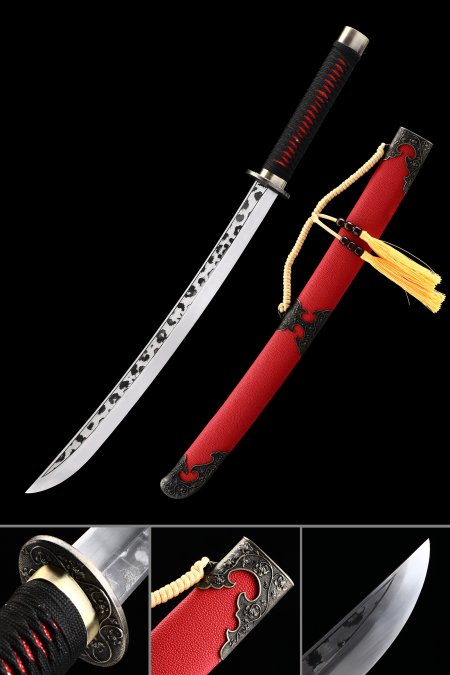
T10 Naginata - Handcrafted Clay Tempered Steel, Real Hamon, Red Saya, Wave Tsuba, 118cm T10 Naginata - Handcrafted Clay Tempered Steel, Real Hamon, Red Saya, Wave Tsuba, 118cm
Shawn P Franco New Mexico, United States

I have to say I'm impressed with the high quality and astounding prices. Here is my latest acquisition on the top tier. Extremely satisfied with this company's vast array of offerings. Very good business model ends up a win for all involved in any transaction. TRUEKATANA HAS IT NAILED!! Many thanks.
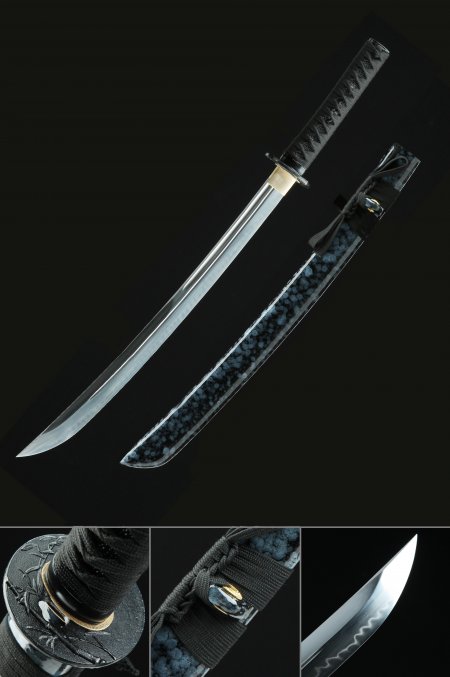
T10 Clay Tempered Naginata - Handcrafted Folded Steel, Real Hamon, Blue Saya, 118cm T10 Clay Tempered Naginata - Handcrafted Folded Steel, Real Hamon, Blue Saya, 118cm