Leather Damascus Steel Katana
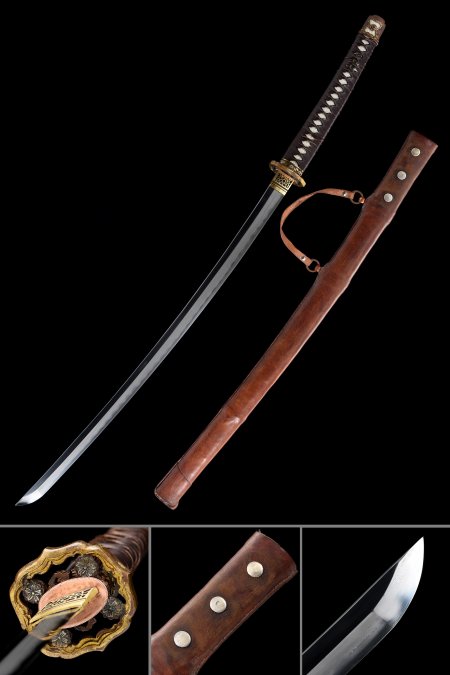
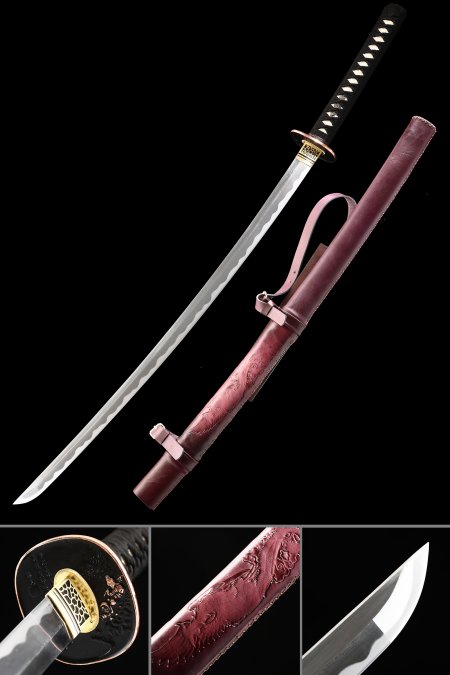
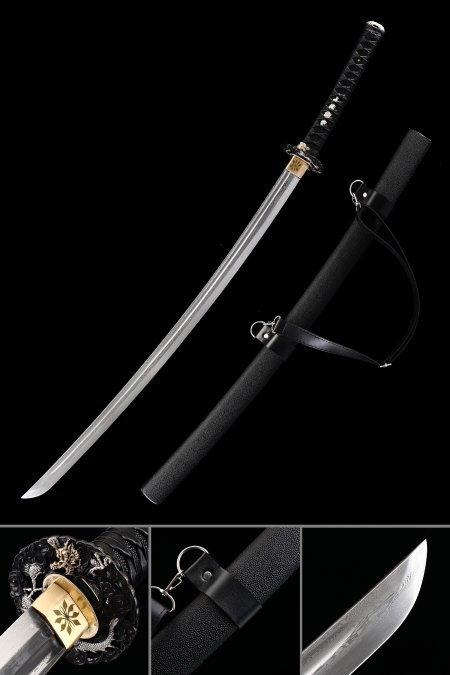
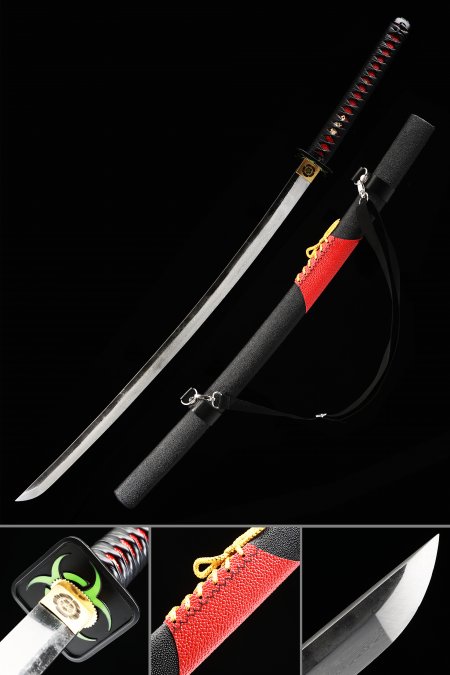
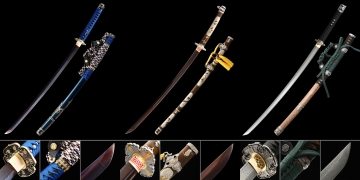
Leather Damascus Steel Katanas unite the ancient art of pattern-welded steel with richly crafted leather saya, producing display pieces of exceptional visual depth and tactile distinction. Each sword is hand-forged with a full-tang construction and finished with ornate tsuba, silk-wrapped handles, and genuine or premium PU leather scabbards that command attention on any collector's stand. Free standard shipping is included on every order, backed by our hassle-free return policy.
Free Shipping
459.00 USD
Free Shipping
349.00 USD
Free Shipping
229.00 USD
Related Collections
Frequently Asked Questions
What makes Damascus steel visually different from other blade types?
Damascus steel - more precisely called pattern-welded steel in modern sword-making - is created by forge-welding multiple layers of high-carbon and low-carbon steel, then repeatedly folding, drawing out, and twisting the billet. The differential carbon content between layers etches at different rates when treated with acid, revealing flowing, water-like patterns across the blade surface. No two blades produce an identical pattern, which is one reason collectors prize Damascus pieces so highly. The visual depth changes dramatically under different lighting conditions: what appears as a subtle ripple under overhead light becomes a bold, flowing grain in raking side light. This organic variation is impossible to replicate through grinding or surface treatment alone, making authentic pattern-welded construction the defining characteristic of the category.
Why do these katanas use leather saya instead of lacquered wood?
Traditional Japanese saya were most commonly finished in lacquered wood, but leather wrapping has a long history in both Japanese and continental sword traditions, particularly for field and presentation pieces. For collectors, leather saya offer several practical advantages: the material is naturally impact-resistant, does not chip or crack the way painted lacquer can during handling or display rotation, and develops a patina over time that adds to the piece's visual character. Premium PU leather used on many of these pieces closely replicates the texture and sheen of genuine leather while offering excellent moisture resistance. The structured surface of a leather saya also provides a tactile contrast to the polished steel fittings and cord-wrapped handle that many collectors find more visually interesting than a uniform lacquer finish.
How should I store a leather saya katana to keep it in top condition?
Proper storage protects both the blade and the leather saya from the two most common sources of damage: moisture and friction. Store the katana horizontally on a dedicated sword stand, edge facing upward in the traditional Japanese manner, in a space with stable humidity between 40-60%. Avoid sealed display cases without ventilation, as trapped humidity accelerates surface oxidation on the blade. For the leather saya, apply a thin coat of quality leather conditioner every six to twelve months to prevent drying and surface cracking - avoid petroleum-based products that can stain the material. Before sheathing the blade for extended storage, apply a light coat of choji oil (clove-infused mineral oil) to the blade surface with a soft cloth. Never store the sword in its saya long-term without this step, as microscopic moisture inside the saya can cause localized rust spots even on well-treated blades.
How does a full-tang blade differ from a partial-tang on a display katana?
The tang is the portion of the blade that extends into the handle. A full-tang construction runs the entire length of the handle, bonding blade and grip into a single continuous unit - typically secured by one or more mekugi (bamboo or metal retention pins) through the tsuka. A partial or rat-tail tang is narrower and does not fill the handle cavity, relying on adhesive or threading to hold the grip in place. For collectors, full-tang construction is the meaningful benchmark: it signals that the blade was made with structural integrity as a priority rather than as a surface-level decorative piece. All pieces in this leather Damascus collection feature full-tang blades, which is why they maintain their balance and handle alignment over years of display rotation and careful handling without the loosening that affects cheaper partial-tang alternatives.
Is a leather Damascus katana a good choice as a collectible gift?
For recipients who appreciate Japanese craft traditions, historical arms, or decorative metalwork, a leather Damascus katana makes a distinctly memorable gift precisely because it combines multiple artisan disciplines in one object - pattern-welded steel, leather craft, metal casting in the tsuba, and cord-wrapping in the handle. Unlike generic decorative swords, the visible Damascus patterning gives the recipient something genuinely interesting to examine and discuss. Presentation is effortless because the full koshirae - blade, tsuba, cord-wrapped handle, and leather saya with sageo - arrives as a complete, display-ready ensemble. Consider pairing a katana with a matching piece from the Damascus Steel Wakizashi Sword collection for a daisho-style two-piece display that reflects the traditional pairing of long and short blades in Japanese sword culture.