
O Katana
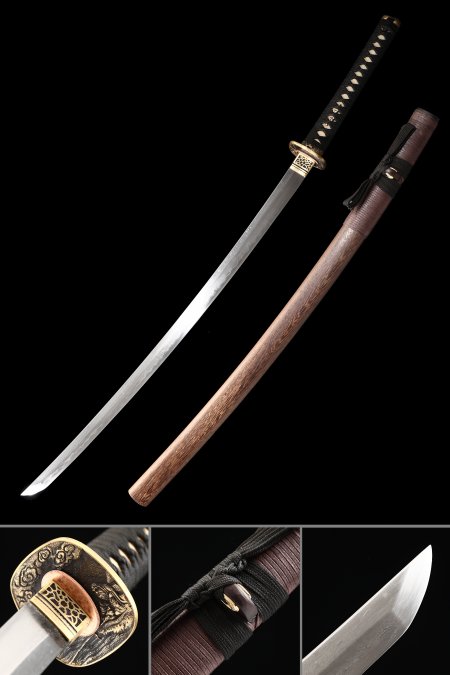
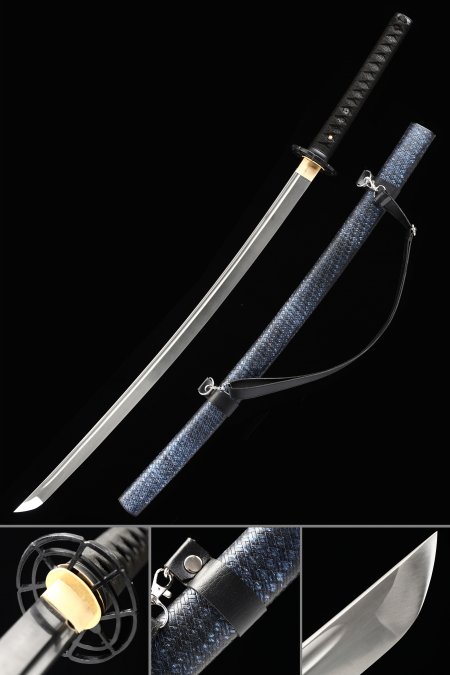
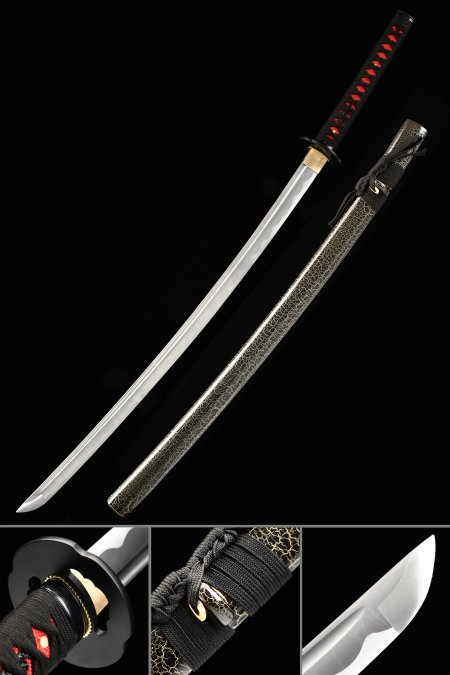
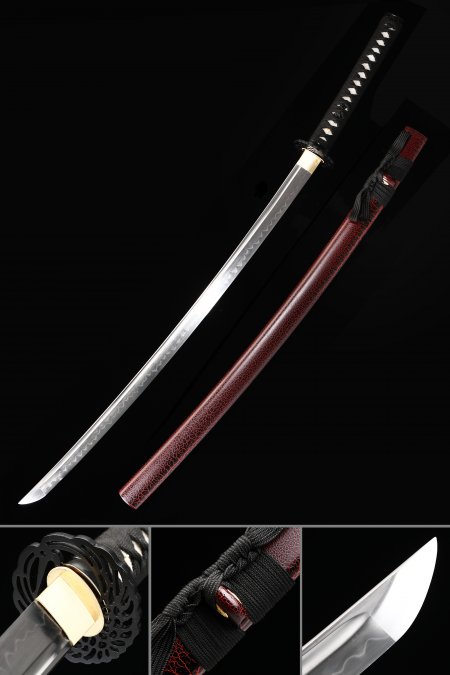
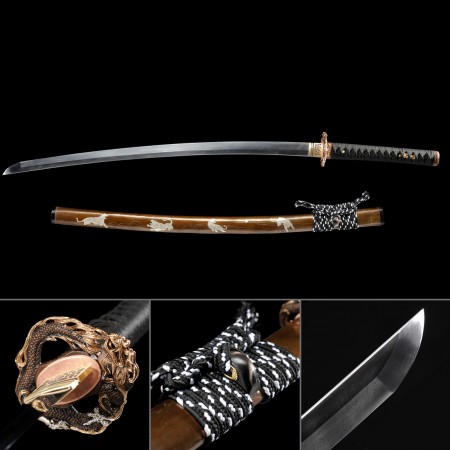
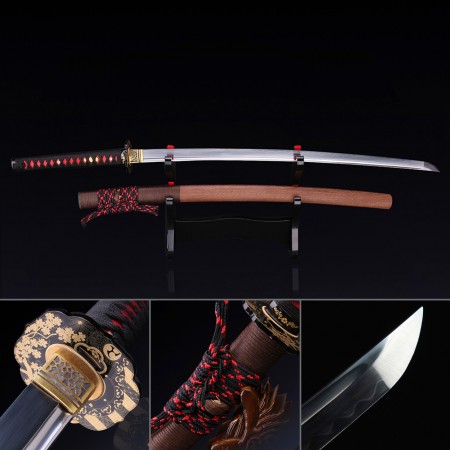
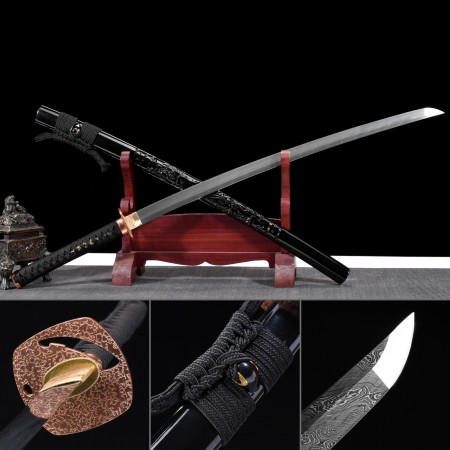
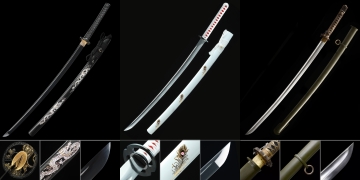
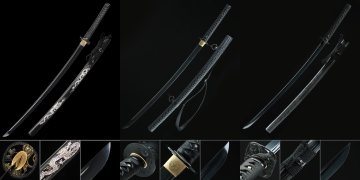
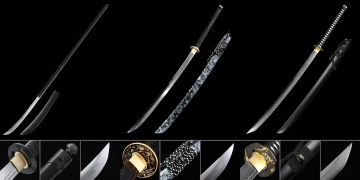
O-katana swords in this collection are oversized katana forged from T10 folded clay-tempered steel, featuring blades that extend beyond the standard katana length into the o-katana range - longer, heavier, and more visually commanding than a standard katana. Available in black, dark red, and other blade finishes with full-tang construction throughout. Free shipping and a 30-day return policy are included.
Free Shipping
199.00 USD
Free Shipping
209.00 USD
Related Collections
Frequently Asked Questions
What makes an o-katana different from a standard katana in length and handling?
An o-katana differs from a standard katana primarily in blade length. A standard katana has a blade length, measured from the habaki to the tip, of 60 to 75 centimeters. An o-katana extends this to 75 to 90 centimeters - a difference that is meaningful in both visual presence and handling character. The longer blade changes the sword's balance point, moving it slightly further from the handle and giving the sword a different feel in the hand. The reach advantage of the longer blade is also significant: an o-katana extends further at full extension and covers more arc in a swinging cut than a standard katana of the same handle length. For display purposes, the visual impact difference is immediately apparent - a longer blade with the same curve and the same T10 clay-tempered surface character simply reads as a more imposing object in the display context. The hamon line, which follows the edge of the blade, also has more surface to cover on a longer blade and creates a more expansive visual feature.
Why is T10 clay-tempered steel particularly well-suited for an o-katana?
T10 clay-tempered steel is appropriate for an o-katana for the same reasons it is appropriate for any high-quality katana, and those reasons become more significant as the blade length increases. T10 has a carbon content of approximately 1.0 percent, which allows it to achieve genuine edge hardness through the clay tempering and quenching process while the clay application keeps the spine area softer and more flexible. For an o-katana, where the blade spans 75 to 90 centimeters, the combination of a hard edge zone and a tough spine is more structurally important than in a shorter blade: a longer blade experiences greater bending moments along its length and needs the toughness of the unhardened spine area to distribute those forces without the blade becoming brittle along its full length. The visible hamon produced by clay tempering is also a particularly valuable aesthetic feature on a longer blade, where the hamon line covers more of the sword's surface and creates a more expansive visual feature than on a standard-length katana.
What display stand size is needed for an o-katana?
An o-katana in its saya has an overall length of approximately 105 to 130 centimeters, depending on the specific blade length and handle dimensions. Standard katana display stands are typically sized for overall lengths up to 115 to 120 centimeters, which accommodates the shorter end of the o-katana range. For o-katana on the longer end - 125 to 130 centimeters overall - you may need either a wider stand with a longer peg span or a wall-mount system with adjustable bracket positions that can be set for the sword's specific length and balance point. Before purchasing a display stand for an o-katana, measure the specific sword's overall length in its saya and verify that the stand's peg span and tier dimensions can accommodate it. A stand that is slightly undersized for the sword will display it with the tip unsupported past the outer peg, which is not ideal for long-term display of a heavy sword. A wall mount with two adjustable bracket positions is the most adaptable solution for o-katana at any length.
How does the hamon appear on T10 clay-tempered o-katana blades?
The hamon on a T10 clay-tempered o-katana blade is a visible line along the blade's edge that marks the boundary between the hardened edge zone and the unhardened body of the blade. On T10 steel, which has sufficient carbon content to develop a well-defined hardening boundary, the hamon is typically clearly visible with the naked eye and shows significant detail under examination with a light source angled across the blade surface. The hamon's shape - whether it runs in a straight line, in undulating waves, or in complex patterns - is determined by the pattern in which the smith applies the clay coating before quenching. The o-katana swords in this collection have individually applied clay tempering, which means each blade's hamon has a specific character rather than being uniform across the production range. On a longer blade, the hamon covers more of the sword's surface and creates a more extended visual feature - the line and its associated nie and nioi activity are visible across a greater proportion of the blade than on a standard-length katana.
Customer Reviews
Tre’shaun
Pennsylvania, United States
I am extremely happy with my purchase, I got a replica of sandai kitetsu from one Piece and it is beautiful
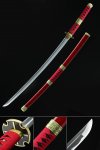 |
Roronoa Zoro Sandai Kitetsu - One Piece Cursed Sword Replica, 1045 Carbon Steel, Red Saya |
Quinden D Davison
South Carolina, United States
Honestly first swords I bought online. And will definitely buy the rest of the Zoro set.
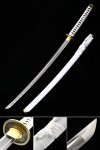 |
Roronoa Zoro Wado Ichimonji - One Piece Katana Replica, 1045 Carbon Steel, White Lacquer Saya |
Ivan Sehnal
Praha, Czech Republic
Great sword, amazing value, helpful customer service.
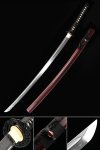 |
T10 Folded Clay Tempered Katana with Real Hamon in Dark Red Crackle-Finish Saya - Black Ito Full Tang Sword |
Cara Nuzzolese
Indiana, United States
Beautiful craftsmanship, my fiancé loved his sword would definitely buy again
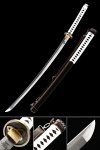 |
Michonne Inspired Katana - The Walking Dead Replica, 1090 Carbon Steel, Brown Leather Saya |
Michael Arbogast
Virginia, United States
The sword was damaged on the handle, there was a small piece that is missing from it. I thought it would have came sharper also. I had bought one before this one and it was sharper.
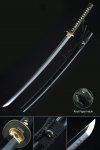 |
T10 Clay Tempered Katana with Real Hamon in Black Piano Lacquer Saya - Gold Copper Tsuba Full Tang Sword |
Sadie Williams
California, United States
Our grandson was delighted by this gift. It was well crafted and exactly what he wanted to display on his fraternity wall.
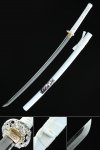 |
White T10 Clay Tempered Katana with Real Hamon in Piano Lacquer Saya and Silver Flower Tsuba |
John Vipperman
Ohio, United States
Very beautiful weapon, well crafted and sharp, glad it chose here to buy it from
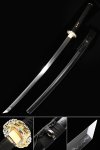 |
T10 Folded Clay Tempered Katana with Real Hamon in Black Matte Saya - Dragon Tsuba Collectible Sword |
Allen Elliott
Tennessee, United States
Sword looks beautiful but did come with a couple rusty spots. They offered a little discount and that made me happier. The sword was sharp but not as sharp as I thought it would be from the reviews and description according to the page. Overall still a beautiful sword that looks well made!
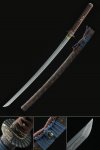 |
Clay Tempered T10 Steel Katana with Real Hamon - Brown Ito Wrap, Kanji Engraved Saya in Gold Gilding Tsuba |