Red Spring Steel Katana
Red Spring Steel Katanas combine the legendary resilience of 9260 spring steel with bold crimson aesthetics that make each piece a striking centerpiece for any serious collection. The alloy's exceptional flexibility and fatigue resistance allow the blade to endure repeated stress without deformation, while rich red lacquered sayas and ornate tsuba elevate the visual drama far beyond the ordinary. Every sword in this collection is crafted for display and dojo appreciation alike — a true testament to the swordsmith's art. Enjoy free standard shipping on your order, backed by our hassle-free return policy.
Related Collections
Frequently Asked Questions
What makes 9260 spring steel different from high-carbon steel?
9260 spring steel contains a significantly elevated silicon content — roughly 1.80–2.00% — compared to standard high-carbon steel grades like 1060 or 1095. That silicon acts as a structural reinforcement at the molecular level, giving the alloy its signature elasticity. While a high-carbon blade achieves hardness and edge retention through carbon alone, 9260 achieves a balance of flexibility and durability that makes it highly resistant to metal fatigue. In practical collecting terms, this means a 9260 blade can flex under stress and spring back to its original geometry without the micro-cracking that can gradually compromise a less flexible alloy. For a display piece that also gets periodic handling or tameshigiri practice, that resilience is a meaningful advantage.
How should I maintain the lacquered saya on my red katana?
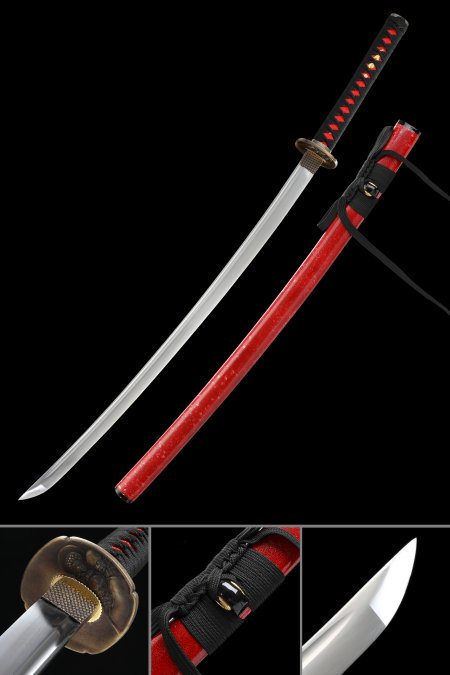
Lacquered hardwood sayas require a few specific care habits to preserve their finish over time. Avoid prolonged exposure to direct sunlight, which can fade the red pigment and cause the lacquer to crack or peel at the seams. When storing the katana, keep it horizontally or on an angled display stand — storing blade-down inside the saya for extended periods can pool moisture and stress the lacquer at the koiguchi opening. Wipe the exterior of the saya occasionally with a very lightly dampened soft cloth, then buff dry immediately. Never use solvent-based cleaners. For piano lacquer finishes in particular, a clean microfiber cloth is ideal because abrasive materials will introduce fine scratches that dull the high-gloss reflectivity that makes that finish so visually distinctive.
Is the tsuba on these katanas functional or purely decorative?
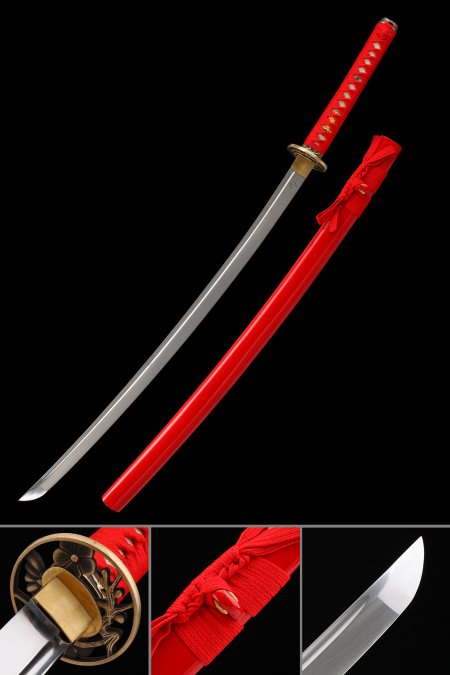
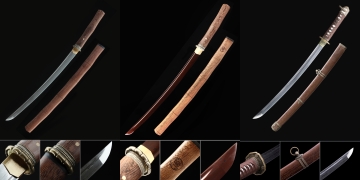
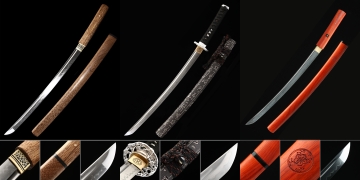
The tsuba on these red spring steel katanas is fully mounted as part of a structurally assembled sword, seated between the blade collar and the tsuka in the traditional manner. Bronze tsuba, like the one featured on the hardwood saya variant, are cast or forged from real bronze alloy and develop a natural patina over time — this is a characteristic collectors often prize, as it signals authentic material rather than a painted zinc substitute. The plum blossom gold-and-black tsuba on the piano lacquer model uses decorative inlay work to achieve its two-tone effect. While both are designed with the aesthetics of a display and collectible piece in mind, the materials and mounting method follow classical construction conventions rather than shortcuts common in lower-tier replicas.
What display setup works best for a red lacquered katana?
A horizontal two-tier sword stand is the most traditional and visually appropriate display choice for a katana with a decorative saya. Position the sword with the cutting edge facing upward — the traditional katana resting posture — and the tsuka to the left if displayed solo. The rich red of the saya contrasts exceptionally well against dark hardwoods like walnut or ebony display stands, or against a neutral wall-mounted panel. Avoid placing the display near heating vents or windows, as temperature cycling and UV exposure are the two factors most likely to affect both the lacquer finish and the 9260 steel's surface over time. A light application of choji oil to the blade every two to three months will protect the steel and maintain the clean, polished appearance that makes a displayed katana a true focal point.
Are red spring steel katanas a good choice as a collector's gift?
Red spring steel katanas make a particularly considered gift for collectors because they offer layered value — the metallurgical credibility of 9260 alloy, the visual distinctiveness of a crimson lacquered saya, and the symbolic resonance of traditional Japanese fittings like plum blossom tsuba motifs. The color red carries historical weight in Japanese sword culture, associated with strength and ceremony, which gives the recipient a talking point that goes beyond the object itself. For gift-giving, the piano lacquer finish variant tends to photograph and present exceptionally well, while the hardwood saya with bronze tsuba appeals to collectors who prefer materials that age and develop character over time. Either choice reflects a thoughtful knowledge of the craft rather than a generic purchase.