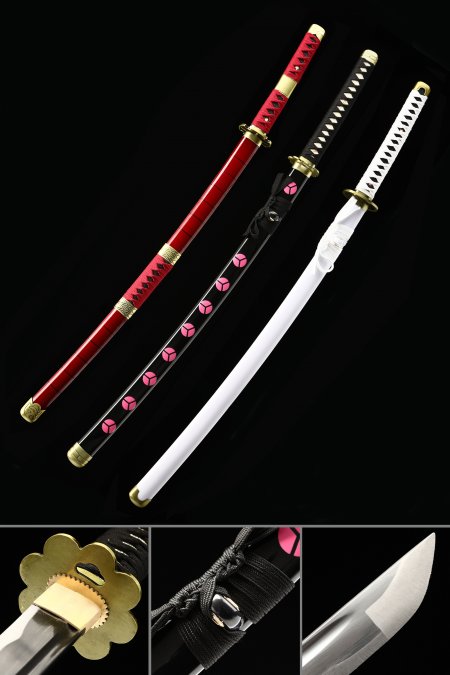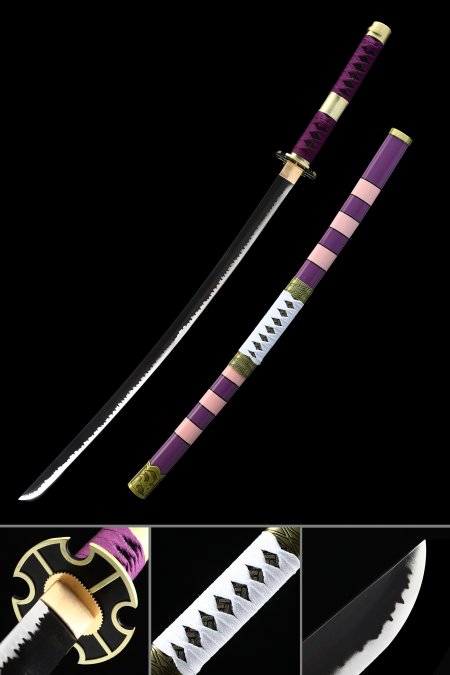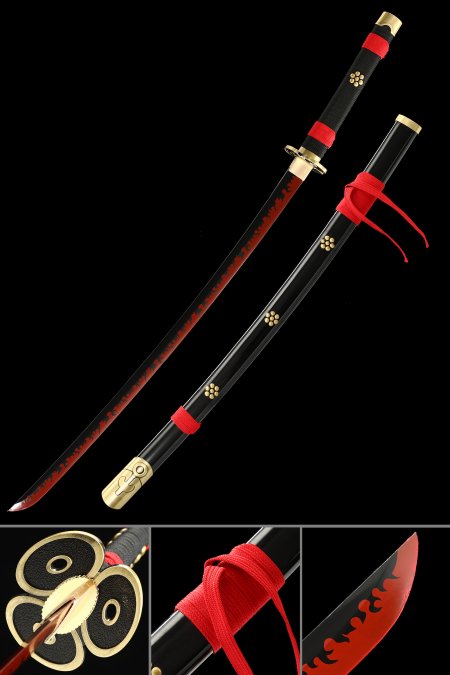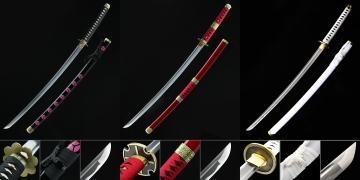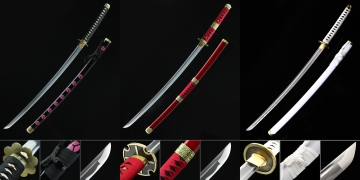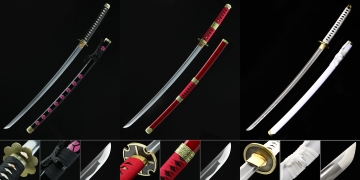
Zoro Demon Sword

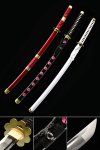
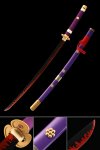
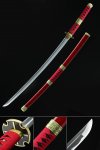
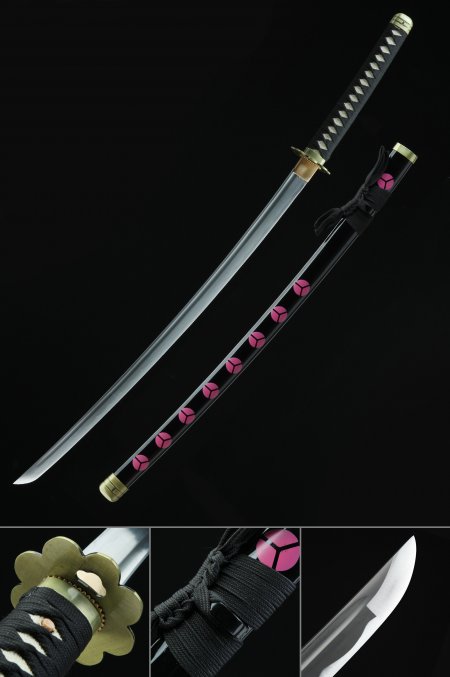
The Zoro Demon Sword collection brings together meticulously crafted replicas of Roronoa Zoro's most iconic blades from One Piece - from the cursed Sandai Kitetsu to the fearsome Enma - each rendered in 1045 or 1060 carbon steel with hand-assembled fittings and lacquered saya. Every piece is designed for serious collectors who demand authenticity in blade profile, tsuba design, and overall finish. Free standard shipping is included on all orders, and we stand behind every replica with a hassle-free return policy.
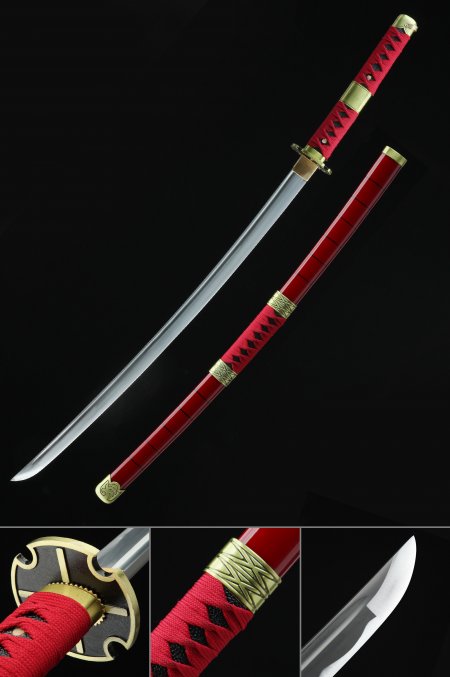
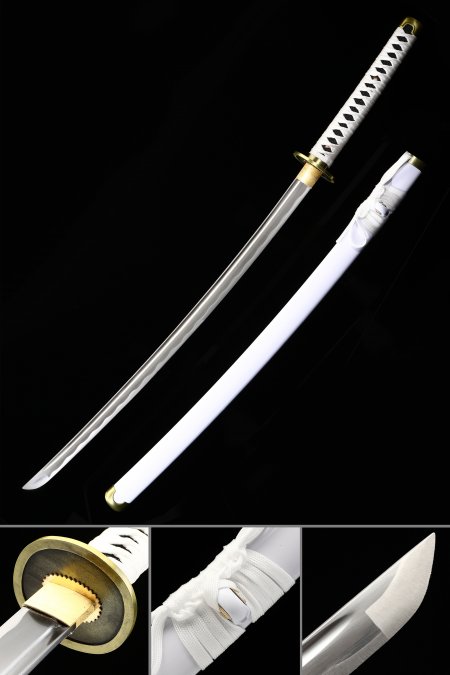
Showing 10 Products

Related Collections

One Piece Katana12 items


1222 Reviews

One Piece Zoro Katana9 items


1092 Reviews

One Piece Real Zoro Sword13 items


1234 Reviews

Zoro Triple Katana10 items


1181 Reviews

Frequently Asked Questions

What makes a Zoro sword a "demon sword" in One Piece?
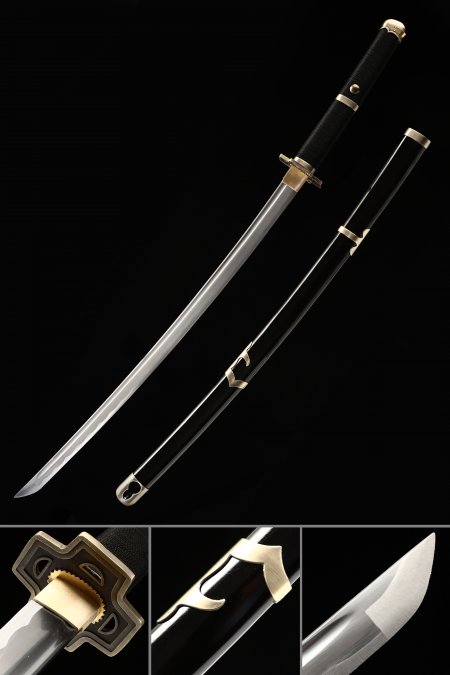
In One Piece lore, a demon sword - or "cursed blade" - is a katana said to have a will of its own, bringing misfortune or even harm to those who lack the strength to control it. The Sandai Kitetsu is the most prominent example: it belongs to a lineage of three cursed Kitetsu blades, each ranked differently in quality. Shusui, while not cursed in the same sense, is classified as a Black Blade - a rare category achieved when a swordsman's Haki permanently darkens the steel through mastery. Enma is notable for draining its wielder's Haki involuntarily, making it extraordinarily dangerous to handle. Oda drew these concepts from real Japanese folklore around muramasa blades, which were historically rumored to inspire aggression in their owners. Replica collectors value these swords precisely because each one carries a distinct fictional biography that gives the display piece a layer of narrative meaning beyond aesthetics.
What carbon steel grade is used, and does it affect display quality?
Most replicas in this collection are constructed from 1045 high-carbon steel, with select models - such as the Yama Enma - using 1060 carbon steel. The number refers to carbon content by weight: 1045 contains 0.45% carbon and 1060 contains 0.60%. For display purposes, higher carbon content produces a blade with a slightly more pronounced grain pattern and a darker, more visually complex surface finish - qualities that photograph well and reward close inspection. Both grades hold their geometry and finish far better than stainless steel over time, provided the blade receives basic maintenance. Neither grade is prone to the brittleness sometimes associated with higher-carbon production steel, making them well-suited for long-term static display without concern for structural degradation under normal indoor conditions.
How do I maintain a carbon steel replica sword for long-term display?
Carbon steel is reactive to moisture and will develop surface oxidation if left unprotected. For display pieces, the recommended routine is straightforward: wipe the blade clean with a soft, lint-free cloth after handling, then apply a thin, even coat of mineral oil or purpose-made sword oil (choji oil is the traditional choice) every one to three months depending on the humidity of your environment. Never use silicone-based sprays, as these can react poorly with lacquered saya and fittings over time. Store the sword horizontally or at a gentle angle, and if your display space experiences seasonal humidity swings, consider adding a silica gel packet nearby. Avoid leaving the blade seated in the saya for extended periods without periodic airing, as trapped humidity accelerates corrosion at the habaki. With these simple steps, a carbon steel display replica can maintain its finish for decades.
Is the Zoro 4-pack sword set worth it compared to buying individually?
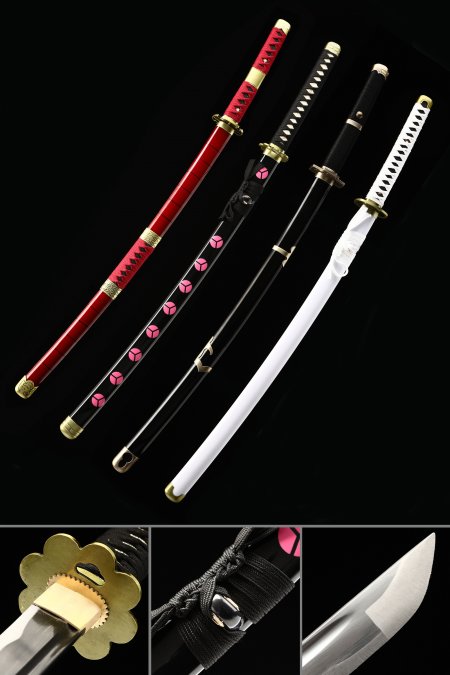
The four-sword set - comprising Shusui, Wado Ichimonji, Sandai Kitetsu, and Yubashiri - is purpose-built for collectors who want cohesive visual impact rather than piecemeal acquisition. Each sword in the set is finished to the same standard as its individually sold counterpart, so there is no quality trade-off. The practical advantage is display coherence: when mounted together, the contrasting saya colors (black, white, red, and black-gold) create an immediately recognizable visual grouping that any One Piece viewer will identify as Zoro's known arsenal at a glance. For gift purposes, the set also presents significantly better than individual boxes. The primary consideration is space - four full-length katana replicas require a display solution that accommodates their combined length and visual weight, so planning your mounting or case arrangement before the swords arrive is advisable.
How does the Enma replica differ from the Shusui in construction?
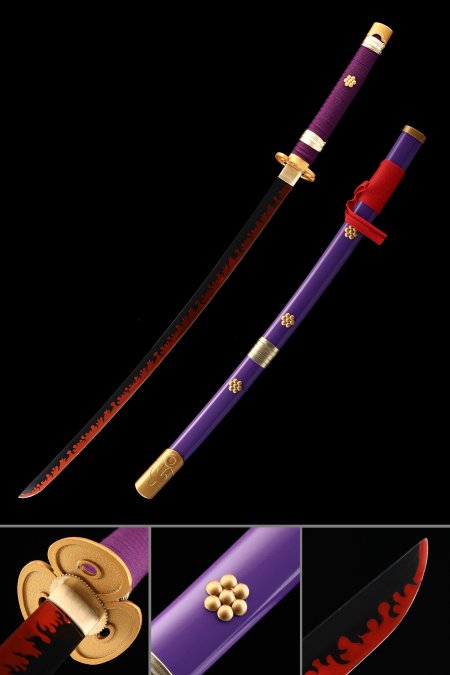
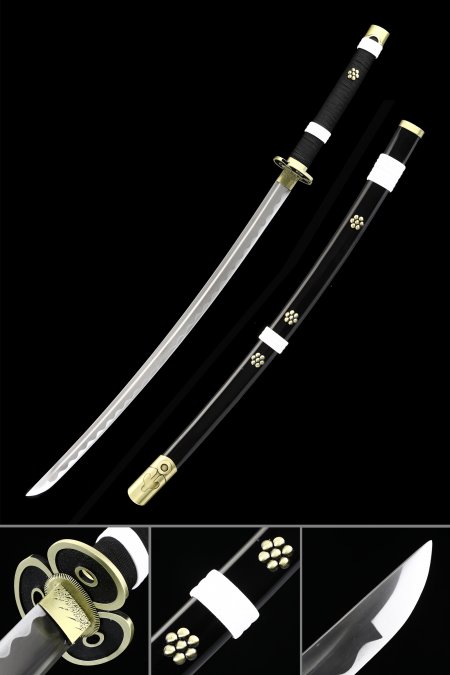
Despite both being centerpiece blades in Zoro's collection, the Enma and Shusui replicas differ in several meaningful ways. Shusui is produced as a Black Blade - the replica reflects this with a darkened blade finish, a specific blade curvature referencing the anime design, and a full-tang construction that gives it a notably solid feel when handled. Enma replicas, by contrast, feature a more conventional steel finish but are distinguished by their saya options: the black scabbard version includes 3D-detailed fittings that reference Enma's ornate guard and handle wrapping from the Wano arc, while the purple lacquer variant reflects the sword's earlier appearance. Collectors who prioritize structural presence tend to prefer Shusui; those drawn to decorative complexity and saya artistry often gravitate toward Enma. Owning both is a reasonable choice for anyone building a comprehensive Zoro display.

Customer Reviews