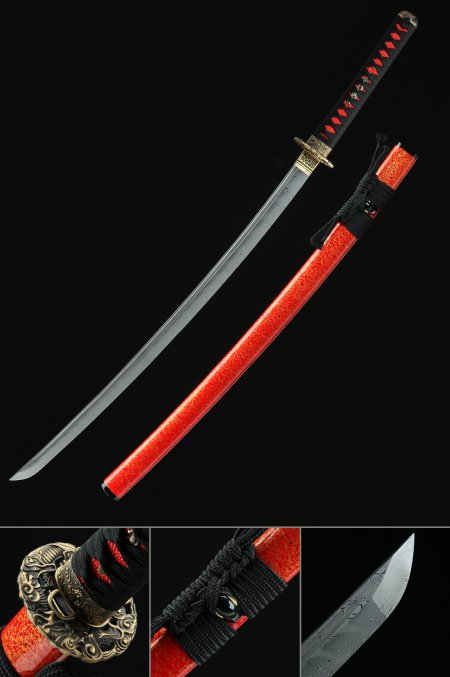
What makes Damascus steel's pattern visible on the blade?
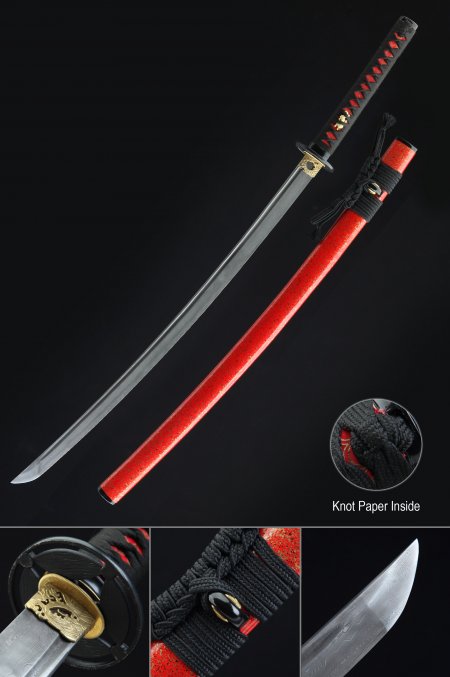
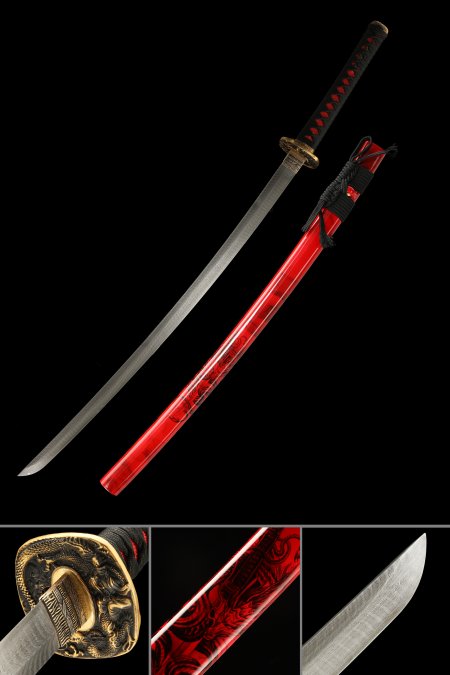
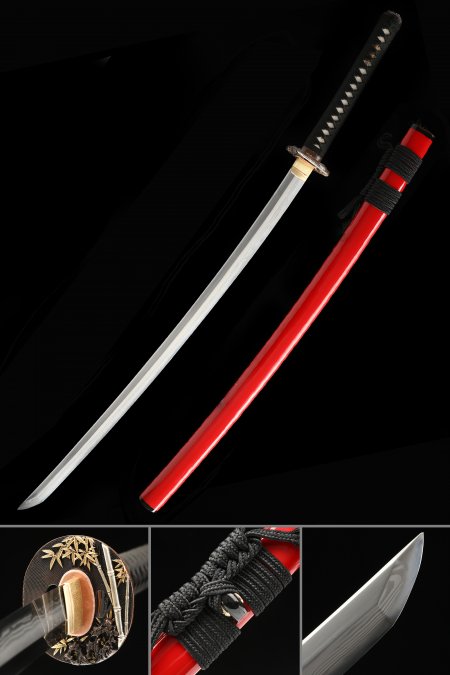
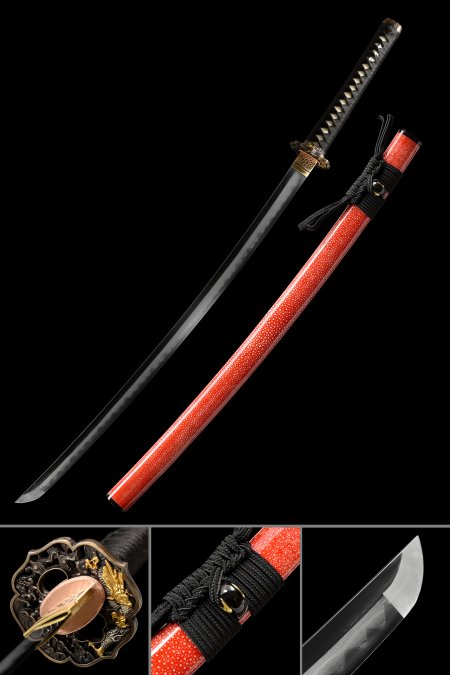
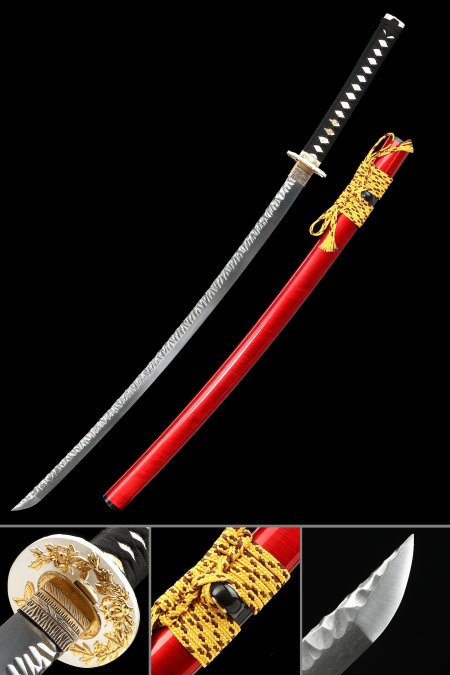
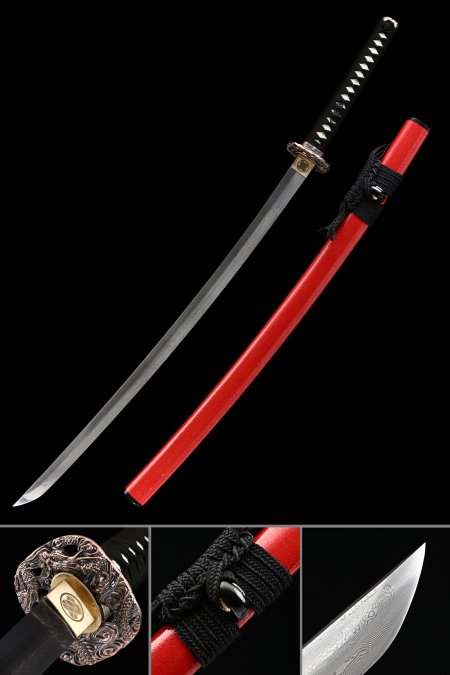
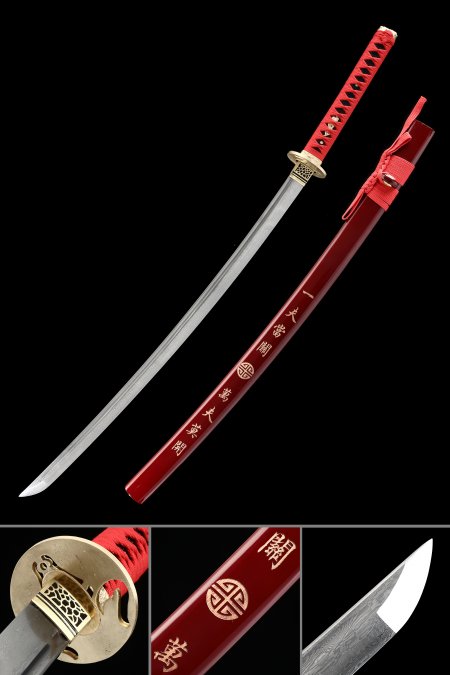
The layered pattern — called hada — is produced during forging when two or more steel compositions are welded together and repeatedly folded. Because the component steels have slightly different carbon content, they respond differently when the finished blade is submerged in an acid etching solution. The higher-carbon layers darken; the lower-carbon layers stay bright. The result is the flowing, wood-grain or water-ripple visual that defines Damascus steel aesthetics. On a well-forged blade, the pattern runs through the full cross-section of the steel, not just across the surface, which means it does not wear away with cleaning or light polishing the way a surface-only treatment would.
How does red lacquer saya construction differ from painted wood?
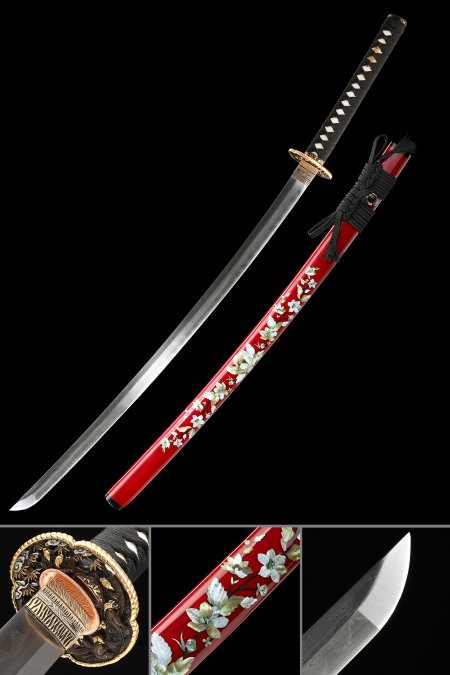
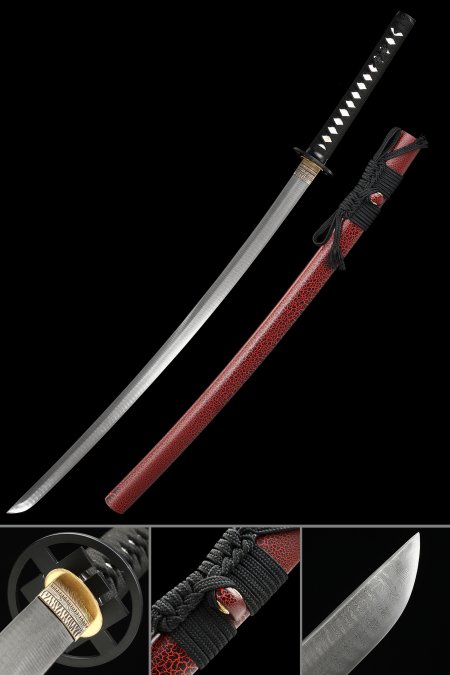
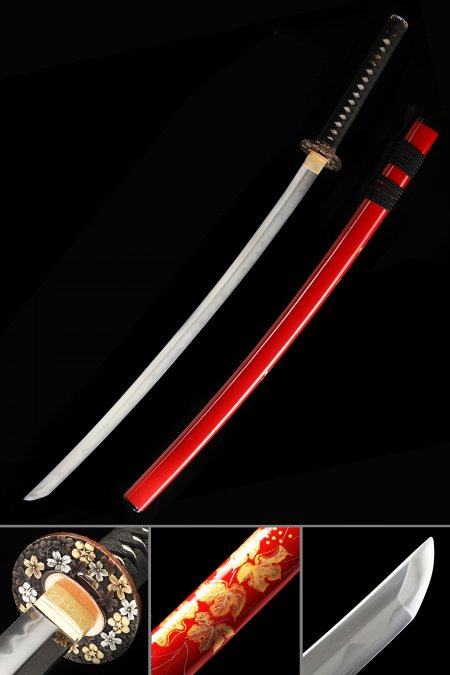
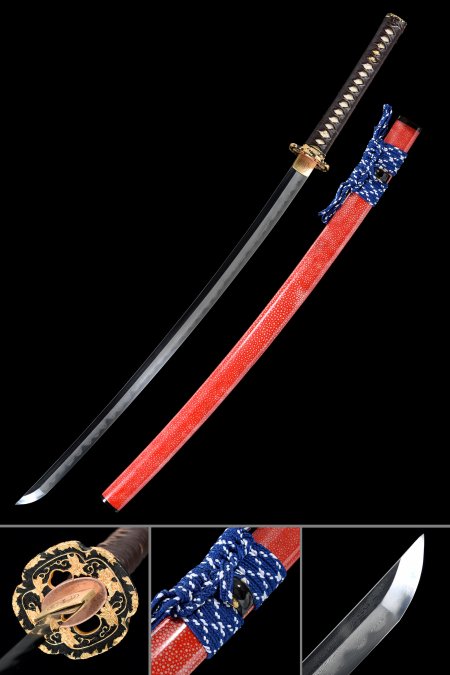
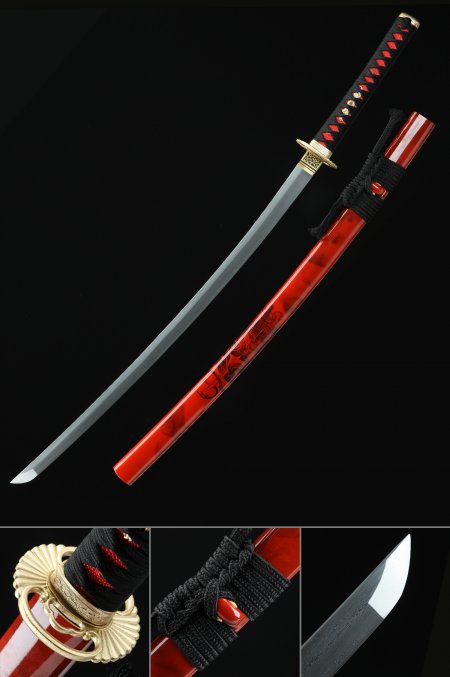
Traditional lacquered saya are built through an additive layering process: a base coat is applied to the shaped hardwood core, allowed to cure, sanded smooth, then another layer is applied on top. High-quality pieces go through this cycle many times before a final buffing stage. The result is a finish with genuine optical depth — you can see into the surface rather than just at it. A painted finish sits entirely on top of the wood and is visually flat by comparison. On the pieces in this collection, crackle-finish and cherry blossom motif variants are created by manipulating specific layers within this build-up process, making the decoration an integral part of the lacquer body rather than something applied over a finished surface.
What is the difference between a Damascus and Sanmai blade construction?
Damascus construction folds and welds steel throughout the entire blade cross-section, so the hada pattern appears across the full width of the metal. Sanmai — meaning 'three layers' — is a lamination method where a hard high-carbon steel core is sandwiched between two outer layers of softer steel. The outer layers protect the core and provide flexibility, while the core holds a fine edge. On a Sanmai blade, the Damascus-style surface pattern (if present) comes from the outer cladding layers only, not from the core. This collection includes both construction types; pieces described as Sanmai steel katana will show surface layering while maintaining a distinct core-and-jacket laminate structure rather than a fully folded cross-section.
How should I store a red lacquer saya to prevent finish damage?
Lacquered saya are sensitive to two main threats: prolonged UV exposure and humidity swings. Direct sunlight will fade and eventually crack even high-quality lacquer, so display positioning away from windows or under UV-filtering display case glass is strongly recommended. Humidity fluctuations cause the hardwood core to expand and contract, which stresses the lacquer layers above it — aim for a stable indoor humidity between 40% and 60% RH. Avoid storing the blade inside the saya long-term without occasional inspection; trapped moisture accelerates oxidation on the blade's steel near the habaki. A light application of choji oil to the blade before extended storage helps, but use only a thin film — excess oil can migrate into the saya interior and soften the wood over time.
Is a red Damascus katana a good gift for a first-time collector?
Yes — the red lacquer and patterned blade combination is visually immediate in a way that rewards someone new to Japanese sword collecting without requiring prior knowledge to appreciate. The aesthetic appeal is self-evident from first sight. For a gift context, pieces with a full tang construction and fitted hardwood saya offer the most complete display presentation out of the box. Dragon tsuba designs tend to be the most broadly recognized and appreciated motif among collectors who are early in the hobby, while geometric or chrysanthemum tsuba appeal more to collectors who have already developed a preference for understated classical forms. Including a tabletop display stand as a companion piece turns the katana from an object that needs to be stored into one that immediately becomes part of the room.