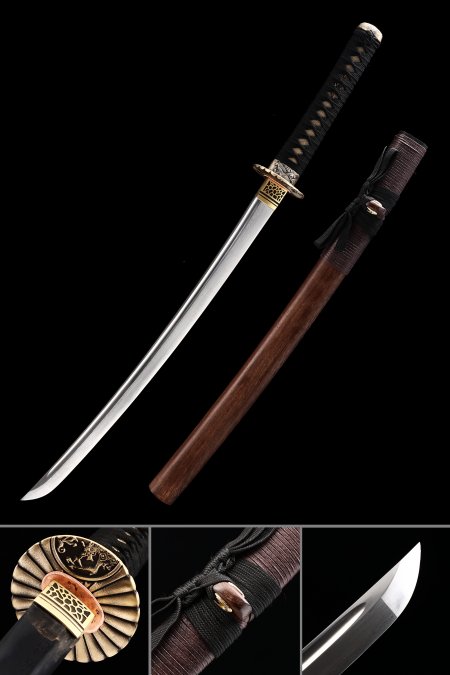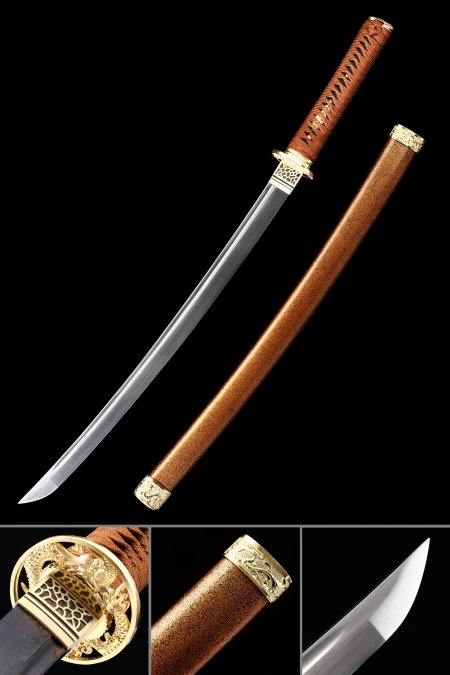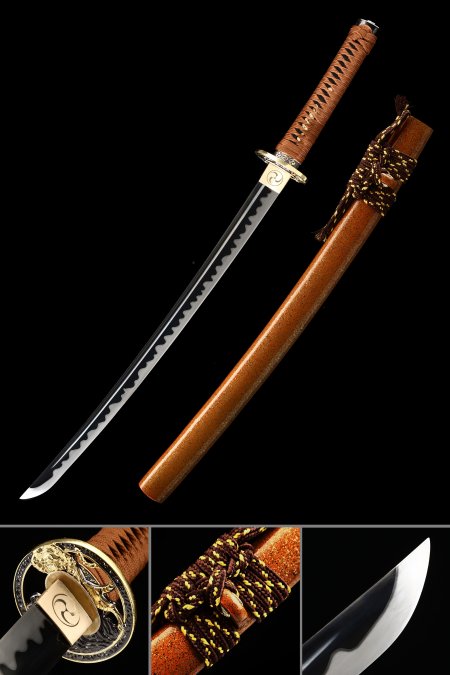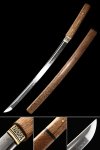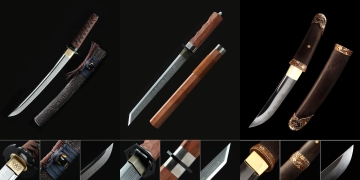
Brown Saya Wakizashi

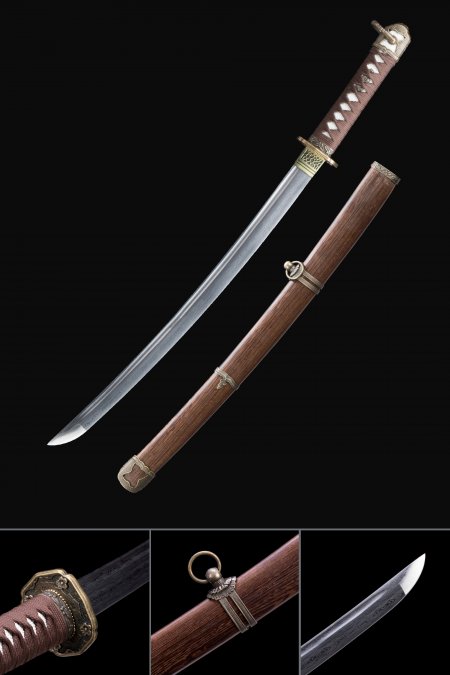
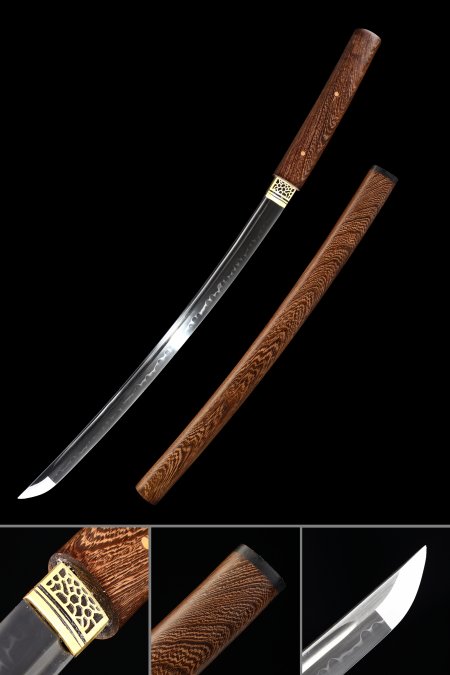
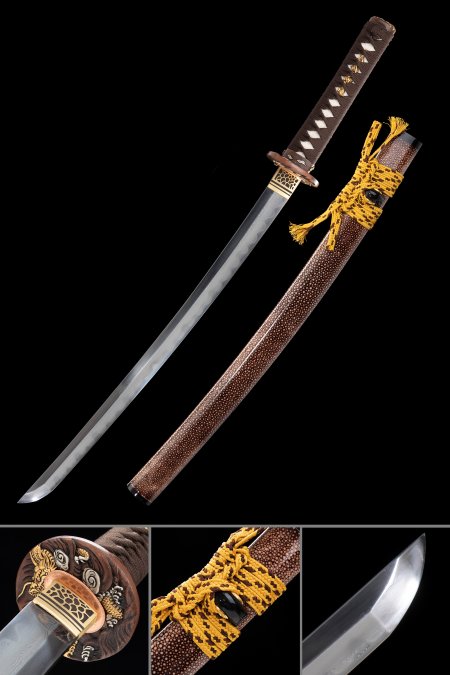
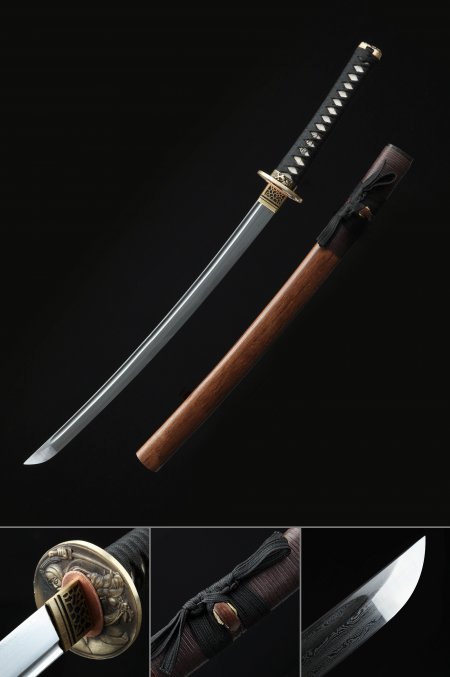
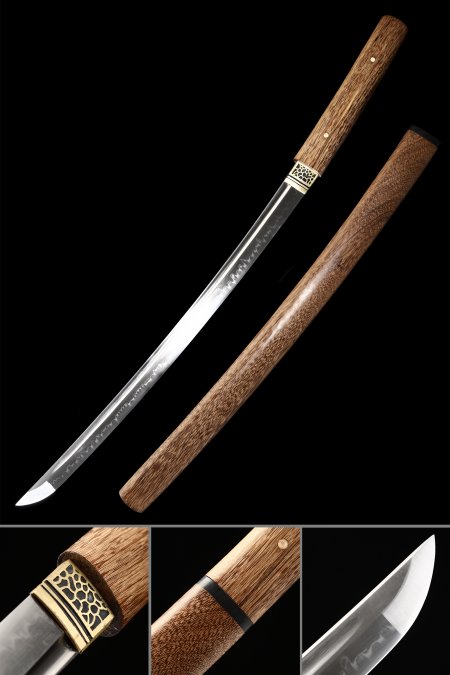
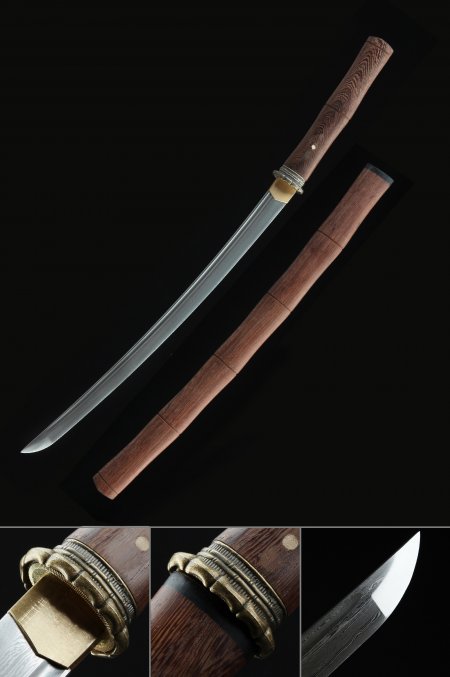
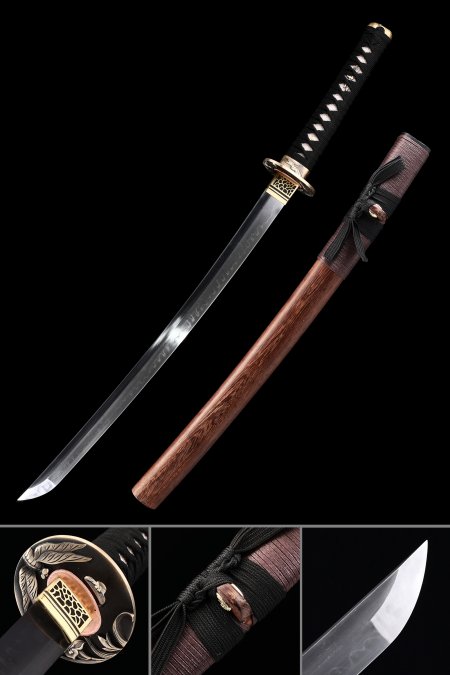
A brown saya wakizashi unites the understated warmth of hardwood with the meticulous craft of traditional Japanese sword-making - making each piece a genuine collector's centerpiece. From layered Damascus steel with flowing grain patterns to clay-tempered T10 blades bearing authentic hamon lines, every sword in this collection is hand-forged to exacting standards. Explore these distinguished short swords with confidence: all orders ship free and are backed by a hassle-free return policy.
Showing 10 Products

Related Collections

Brown Tanto15 items


43 Reviews

Brown Ninjato8 items


34 Reviews

Brown Odachi7 items


36 Reviews

Brown Aikuchi5 items


9 Reviews

Frequently Asked Questions

What makes a brown saya special compared to black lacquer?
Black lacquer saya are the most common finish in mass-produced Japanese swords, which is precisely why serious collectors often gravitate toward natural wood alternatives. A brown rosewood or wenge saya is finished to highlight the wood's own grain rather than obscure it under opaque lacquer. The result is a surface that catches light differently depending on the angle - warm amber tones near a lamp, deeper chocolate hues in shadow. Because natural grain patterns are unrepeatable, two swords made from the same wood species will never have identical saya. For display purposes, this individuality is a significant part of the collectible value.
How does Damascus steel differ from T10 in a collectible wakizashi?
Damascus steel and T10 carbon steel represent two distinct approaches to blade aesthetics in collectible wakizashi. Damascus - created by folding and welding multiple layers of high-carbon and low-carbon steel - produces a visible surface pattern of flowing lines and contrasting tones. No two Damascus blades share the same pattern, making each piece visually unique. T10 carbon steel, by contrast, is a single high-carbon alloy prized for its ability to develop a genuine hamon when clay-tempered. The hamon is the boundary line between the hardened edge and the softer spine - visible as a misty, undulating line with fine crystalline activity. Collectors who favor visual texture tend toward Damascus; those who value traditional Japanese sword metallurgy and hamon appreciation typically favor clay-tempered T10.
Are these wakizashi suitable for display in a home collection?
Yes - every piece in this collection is purpose-built as a collectible and display item. The hand-forged blades, fitted hardwood saya, and detailed copper or gold alloy fittings are selected for visual impact and long-term display integrity. For home display, a horizontal two-tier sword stand works best, positioning the wakizashi edge-up at a slight angle that shows both the saya and the tsuba profile simultaneously. Keep the display away from windows with direct sun exposure, as UV light gradually fades natural wood finishes. Humidity levels between 40-60% are ideal for both the wood saya and the steel blade. A wakizashi pairs naturally with a katana on a dual-tier stand for a classic daisho presentation.
How should I oil and maintain a hand-forged wakizashi blade?
Maintaining a hand-forged steel blade is straightforward once you establish a routine. Start by removing any old oil using a soft cloth lightly dampened with uchiko powder or a clean cotton patch - never abrasive materials. Apply two to three drops of choji oil (a traditional mineral oil used specifically for Japanese sword care) onto a fresh cloth and wipe the blade in smooth, overlapping strokes from the habaki toward the tip, following the direction of the grain. Avoid touching the blade surface with bare fingers during handling, as skin oils accelerate surface oxidation. Repeat this process every two to three months under normal indoor conditions, or monthly if you live in a coastal or high-humidity environment. Store the blade outside its saya during extended periods of non-display to allow airflow.
What fittings styles are common in brown saya wakizashi collections?
Brown saya wakizashi in this collection span a broad range of fitting styles, from elaborately decorated to deliberately minimal. Ornate configurations typically feature copper tsuba with relief-carved motifs - lions, dragons, and geometric openwork are most common - paired with gold alloy fuchi-kashira and menuki for accent. The brown ito wrap over rayskin samegawa handle provides both grip texture and aesthetic continuity with the saya. At the opposite end of the spectrum, shirasaya-style pieces eliminate the tsuba entirely, using only a plain habaki in bronze or gold to secure the blade in its close-fitting wenge wood saya. This minimalist format is historically associated with sword storage and is prized by collectors who prefer the blade's steel character to carry the visual weight without decorative distraction.

Customer Reviews

Dylan Kelso Iowa, United States

Super cool sword. Feels relatively sturdy. The fittings were a little messy, I had to file off some excess material but the blade is beautiful. I would say it's a pretty sword with good display value and it makes for some fun if you did want to cut softer objects with it. Although they have a long list of don't do's that's come with the blade. All in all I think the sword is well worth the price. The team is friendly and responds quickly. The shipping was quick as well.
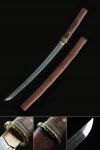
Damascus Steel Wakizashi with Natural Rosewood Saya and Gold Alloy Fittings - Folded Steel Collectible Sword Damascus Steel Wakizashi with Natural Rosewood Saya and Gold Alloy Fittings - Folded Steel Collectible Sword
Cart 0 Items

Your cart is empty