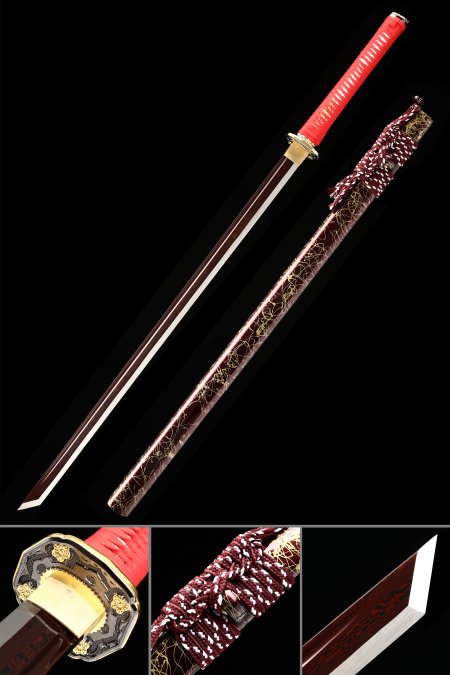
What is Damascus steel and why is it used in straight swords?
Damascus steel refers to a type of steel produced through a forge-folding process where multiple layers of steel are repeatedly folded and forge-welded together, creating a billet with a layered internal structure. When the finished blade is acid-etched after grinding and polishing, the differential carbon content between the layers reacts differently to the acid, revealing the flowing, water-like surface patterns that are Damascus steel's most recognizable characteristic. These patterns - which vary in density, flow, and visual complexity depending on the specific folding method used - make each Damascus blade genuinely unique, as the random variation introduced during the folding process ensures no two pieces produce identical surface markings. Damascus steel is used in straight swords for the same reason it is used in curved katana designs: it produces a blade with exceptional visual character alongside the structural integrity of a properly heat-treated high-carbon steel. The straight blade profile is particularly well suited to showcasing Damascus patterning because the flat, uncurved surface gives the patterns maximum display area.
Are Damascus straight swords in this collection suitable for display purposes?
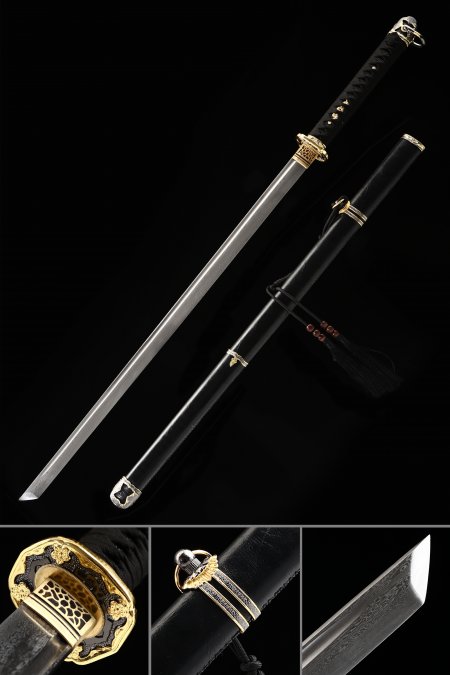
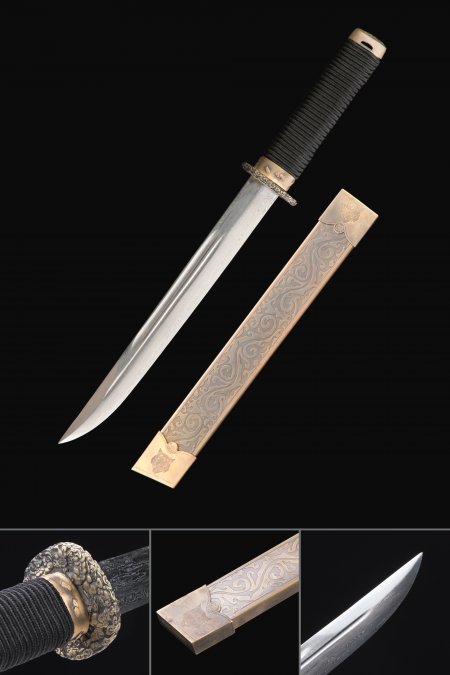
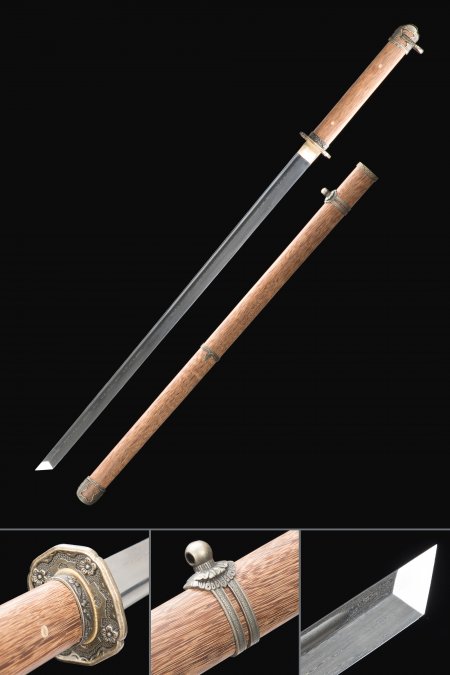
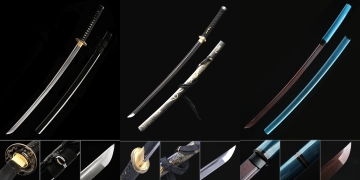
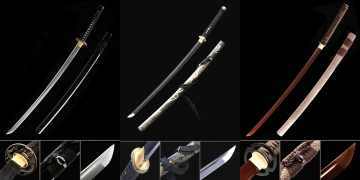
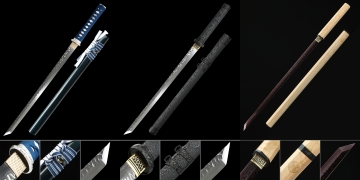
Yes - every Damascus straight sword in this collection is designed and positioned as a collectible display piece, making them well suited for wall mounting, display stands, and cabinet presentations. The Damascus patterning is the primary visual feature of each piece and is best appreciated as a display element rather than in a storage context. The straight blade profile simplifies display logistics: the blade sits level on a horizontal wall rack without the rotational tendencies that curved blades can exhibit, and the full length of the blade surface - including all of the Damascus patterning - is visible from the front without any foreshortening. Both Japanese-style ninjato forms and Chinese-influenced straight blade forms are represented in the collection, offering different lengths and fitting styles to suit different display environments. Each piece arrives with its matching scabbard for complete presentation, and the Damascus patterning is as impressive on the bare displayed blade as it is when the sword is sheathed.
How do the Chinese and Japanese straight sword styles differ in this collection?
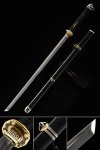
The Damascus straight sword collection includes both Japanese-style ninjato and chokuto pieces and Chinese-influenced straight sword forms including Han dynasty and Tang dynasty style blades and jian double-edged swords, offering collectors options from two distinct straight-blade traditions. Japanese ninjato and chokuto pieces feature the single-edged straight blade associated with the shinobi tradition, typically with a tsuba guard, wrapped ito handle, and lacquered scabbard - fittings that follow the Japanese sword-making convention. Chinese-style straight swords in the collection include both single-edged dao-type blades and double-edged jian forms, with fittings that reflect Chinese blade craftsmanship traditions including different guard shapes, handle wrapping styles, and scabbard construction. Both traditions produce distinctive and collectible Damascus straight swords, and some collectors deliberately build displays that include both Japanese and Chinese forms to showcase the breadth of the straight-blade tradition across East Asian sword history.
How do I care for a Damascus steel straight sword?
Caring for a Damascus steel straight sword requires the same core approach as any high-carbon steel Japanese or Chinese sword collectible, with one additional consideration specific to Damascus steel. The acid-etching process that reveals the Damascus surface pattern removes a very thin layer of steel and leaves the surface slightly more textured and porous than a standard polished blade. This means Damascus blades can be marginally more susceptible to surface oxidation if moisture is allowed to sit on them, so prompt wiping after handling is particularly important. After any handling session, wipe the full blade surface with a soft, lint-free cloth to remove fingerprints and moisture. Apply a very thin coat of camellia oil or quality mineral oil along the full blade length using a clean cloth, then buff away any excess until only a barely-visible film remains. Store the sword on an open display rack or in its scabbard in a room with stable temperature and low humidity. Avoid sealed plastic cases, which trap moisture against the blade. With this routine maintained consistently, the Damascus patterning will remain clear and the blade surface will stay in excellent display condition for many years.