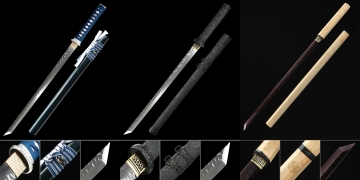
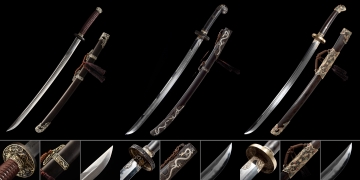
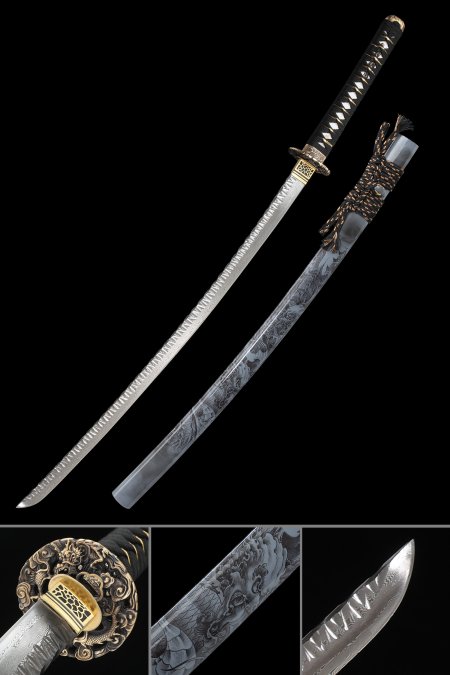
Gray Damascus Steel Katana

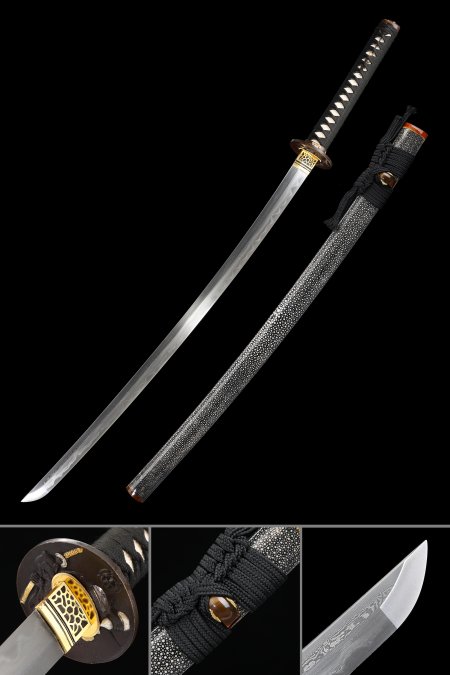
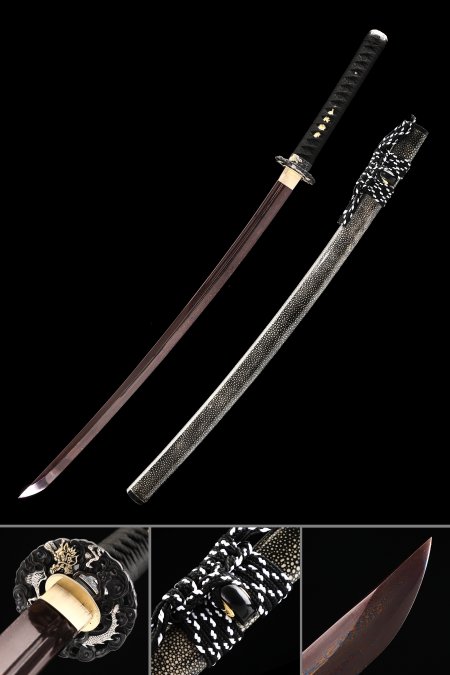
Gray Damascus Steel Katanas combine the timeless art of folded-pattern steel with a striking cool-toned aesthetic that sets them apart on any display stand or in any serious collection. Each blade is hand-forged to reveal layered Damascus patterns that shift in tone under different light, paired with meticulously crafted fittings - from rayskin-wrapped saya to ornate dragon and cherry blossom tsuba. These are full-tang, collectible-grade pieces built with the craftsmanship detail that discerning collectors expect. Enjoy free shipping on your order, with hassle-free returns for complete peace of mind.
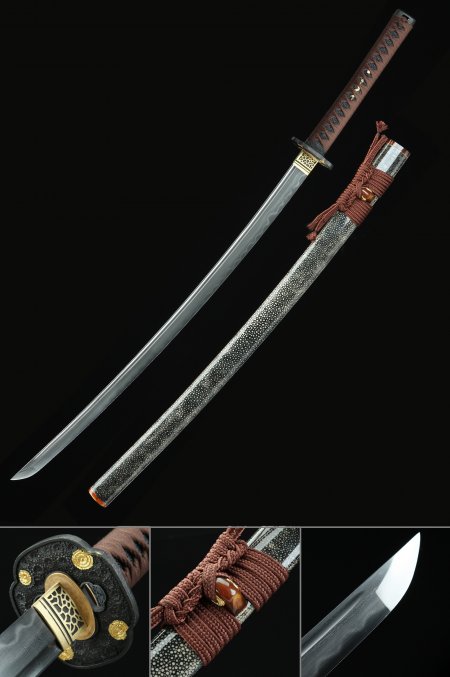
Showing 4 Products

Related Collections

Damascus Odachi13 items


21 Reviews

Damascus Ninjato19 items


19 Reviews

Damascus Chokuto19 items


19 Reviews

Damascus Broadsword7 items


1 Reviews

Frequently Asked Questions

What gives gray Damascus katanas their distinctive look?
The gray appearance on a Damascus steel katana comes from the finishing process applied after forging. Once the blade is ground and shaped, the smith controls the depth of polishing and the type of acid etching or stone finishing used to bring out the folded-layer pattern. A lighter, more muted etch combined with a fine stone polish produces the cooler, gray-toned surface that defines this style. Underneath that finish lies genuine folded Damascus construction — multiple layers of differing steel types welded together repeatedly, creating a grain pattern visible on the blade surface. Because each forging session produces a slightly different flow in the grain, no two gray Damascus blades will ever look identical, which is a core part of their appeal as display collectibles.
How does clay tempering affect a Damascus katana blade?
Clay tempering is a traditional Japanese technique where a layer of clay is applied along the spine of the blade before the final hardening quench. Because the clay insulates the spine, it cools more slowly than the exposed edge, resulting in different hardness levels across the blade. This differential hardening also produces the hamon — the visible temper line that runs along the lower portion of the blade. On a Damascus steel blade, clay tempering adds an additional visual element: the hamon interacts with the folded-layer pattern in unpredictable and visually rich ways, making each blade genuinely one of a kind. For collectors, the presence of a real hamon (as opposed to a cosmetic acid-etched line) is a meaningful quality indicator that speaks to the authenticity of the forging process.
What should I look for in the fittings on a collectible katana?
The fittings — collectively called koshirae — are as important as the blade itself when evaluating a collectible katana. Key components include the tsuba (hand guard), the same (rayskin handle wrap), the ito (cord wrapping over the same), the menuki (decorative handle ornaments), and the saya (scabbard). For display-grade pieces, look for tsuba with clearly defined cast or carved detailing rather than flat stamped designs, genuine rayskin on both the handle and scabbard where specified, and ito wrapping that is tight and symmetrical. Thematic cohesion matters too — a dragon tsuba should be echoed by complementary elements elsewhere in the mounting. These details are what separate a thoughtfully crafted collectible from a decorative reproduction made with cost-cutting shortcuts.
How do I maintain a gray Damascus blade without dulling the pattern?
Maintaining a gray Damascus katana requires a slightly more attentive approach than caring for a standard polished blade, because the surface texture that creates the visible grain pattern can be affected by abrasive cleaning. Never use steel wool or rough cloths — instead, wipe the blade with a soft, lint-free cloth after handling to remove fingerprint oils, which are mildly acidic and can dull the finish over time. Apply a thin coat of choji oil or food-grade mineral oil every two to three months using a soft cloth, working from the spine toward the edge. Store the blade in its saya in a low-humidity environment; silica gel packets in a display case can help regulate moisture. Avoid storing the blade wrapped in cloth for extended periods, as trapped moisture accelerates surface oxidation.
Does a gray Damascus katana pair well with other Japanese blades for display?
Gray Damascus katanas pair exceptionally well with shorter companion blades that share the same Damascus construction and finish language. A tanto or wakizashi from the same folded Damascus family creates a cohesive display set that tells a unified story about the forging tradition. For a wall or cabinet display, the visual contrast between blade lengths and the subtle variation in grain pattern between pieces adds depth without visual conflict. If you prefer a more dramatic pairing, a gray-toned katana alongside a dark or black-lacquered companion piece creates strong tonal contrast. You can explore coordinating shorter blades in our Japanese Damascus Tanto collection, or browse extended polearm formats in the Marble Damascus Steel Naginata collection for a statement display centerpiece.

Customer Reviews

Cart 0 Items

Your cart is empty