
Ninja Practice Sword
Browse our collection of ninja practice swords - hand-forged ninjato and straight-blade collectibles built with the construction integrity that serious practitioners and display collectors both demand. Each piece features a full-tang high-carbon steel blade across grades including 1045, T10, and Manganese Steel, with authentic fittings and a range of finish options from classic black to colorful blade treatments. Free US shipping and hassle-free returns are included on every order.
Free Shipping
129.00 USD
Free Shipping
149.00 USD
Free Shipping
139.00 USD
Free Shipping
159.00 USD
Free Shipping
119.00 USD
Free Shipping
119.00 USD
Free Shipping
119.00 USD
Free Shipping
129.00 USD
Free Shipping
119.00 USD
Free Shipping
139.00 USD
Free Shipping
129.00 USD
Free Shipping
129.00 USD
Free Shipping
129.00 USD
Free Shipping
119.00 USD
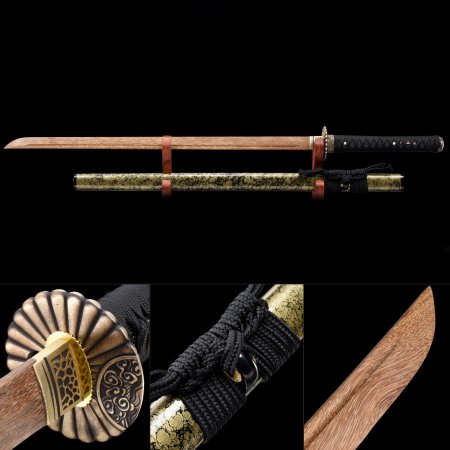
Free Shipping
139.00 USD
Related Collections
Frequently Asked Questions
What construction features make a ninja sword suitable for practice?
Several key construction features distinguish a ninjato genuinely suitable for practice from one that is purely decorative. Full-tang construction is the most critical feature: a practice-grade ninja sword must have the blade steel running continuously from blade tip through the complete handle, secured by a mekugi retention pin. This construction standard ensures the blade-to-handle connection can withstand the repetitive mechanical stress of kata and handling exercises without failure. A partial tang or handle attached only with adhesive will loosen and eventually separate under practice stress. The second critical feature is blade steel grade - high-carbon steel in grades like 1045, T10, or Manganese Steel can be properly heat-treated to achieve the hardness and toughness appropriate to a practice piece. Stainless steel blades, by contrast, are typically too brittle and improperly hardened for practice use. Handle wrapping should be secure and tight with no loose sections that could shift during handling. All pieces in this collection meet these construction standards.
What is the difference between a ninjato and a shikomizue practice sword?
A ninjato and a shikomizue are two distinct straight-blade formats within the shinobi sword tradition, and both are represented in this practice sword collection. A ninjato is the standard straight-bladed short to medium sword associated with the shinobi tradition - it features a visible blade, tsuba guard, wrapped handle, and matching scabbard in the traditional Japanese sword configuration, and is the most familiar format for ninjato collectors and practitioners. A shikomizue, by contrast, is a concealment sword where the blade is housed inside a plain wooden cane or staff exterior that conceals its nature entirely. The wooden staff serves as the scabbard, and the blade can be drawn from the staff when needed. This format is associated in Japanese history and fiction with traveling warriors and blind swordsmen who needed to carry a blade without advertising its presence. For practice and display, a shikomizue presents a fascinating and unusual collecting option that contrasts sharply with the more conventional ninjato configuration.
What steel grades are available in the ninja practice sword collection?
The ninja practice sword collection includes high-carbon steel in grades appropriate for genuine full-tang construction and proper heat treatment. The most accessible option is 1045 carbon steel, a reliable and widely used grade that provides dependable toughness and a consistent blade profile. Manganese Steel is featured across many pieces and offers excellent surface hardness and a deep, even finish quality that performs well in display and practice contexts alike. T10 carbon steel is the premium option: its tightly controlled grain structure allows for the differential heat treatment that can produce a visible hamon temper line along the blade edge - a detail that is particularly valued by collectors who appreciate blade character alongside construction quality. 1090 high-carbon steel is also available in selected pieces, occupying a position above 1045 in terms of achievable hardness. All grades are used with full-tang construction and a mekugi retention pin, confirming the construction integrity appropriate to both practice and display use.
How do I care for a high-carbon steel ninja practice sword after use?
Caring for a high-carbon steel ninja practice sword after handling or practice sessions is straightforward but important. High-carbon steel will oxidize if moisture and skin oils are left on the blade surface, so prompt post-use care is the single most important maintenance habit. After every handling or practice session, wipe the full blade surface with a clean soft lint-free cloth to remove fingerprints, moisture, and any residue from the session. Follow with a thin application of camellia oil or quality mineral oil using a separate clean cloth, buffing away excess until only a barely-visible protective film remains. Pay particular attention to the area near the handle collar where sweat and moisture tend to accumulate during handling. Check the mekugi retention pin after each extended practice session to confirm it has not loosened - the repetitive stress of handling can gradually work the pin loose over time, and a loose mekugi should be replaced before further practice. Store the sword on a display rack or in its scabbard in a dry room with stable temperature.
Customer Reviews
Adriel Sanon
Utah, United States
The sword design is elegant and using it feels so much better for kenjutsu and iaido training. I was disappointed about the saya being plastic instead of wood, but overall I’m happy with what I got.
 |
Black Aluminum Practice Katana - Unsharpened 41-Inch, Iron Tsuba, Dark Blue Handle, Training Sword |
Viktor Dolezel
Maryland, United States
Great quality, great customer services, my son loved it
 |
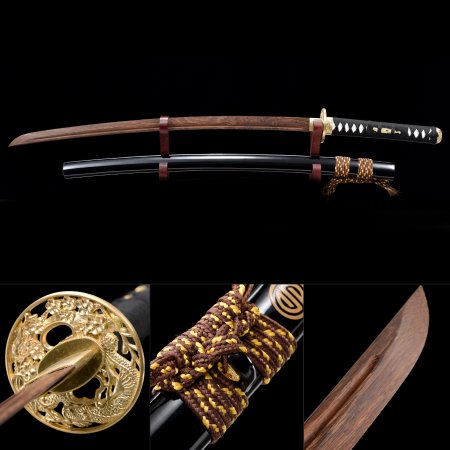
Handmade Japanese Wooden Unsharp Samurai Sword With Brown Blade And Black Scabbard |
Lucas Manuel Kosman
New York, United States
It's beautiful for display. I don't think I'd use it for practicing though.
 |
Handmade Wooden Bokken Practice Wakizashi Sword With Black Scabbard |
Carlito Flores
Arizona, United States
Online ordering was simple and user friendly. My sword was packaged with care and S&H was extremely fast with no issues!
|
Black Aluminum Practice Katana - Unsharpened 41-Inch, Iron Tsuba, Dark Blue Handle, Training Sword |
Leo Vanhanen
Satakunta, Finland
Very good, a little loose from the tsuba but easy to fix. Perfect light training sword.
|
Black Aluminum Practice Katana - Unsharpened 41-Inch, Iron Tsuba, Dark Blue Handle, Training Sword |
Roger Maløya Nygård
Aust Agder, Norway
Its a fine sword to start Iaido training with. A bit light in hand, but has what is needed... hope you take in svords with aluminium/zink blade...
 |
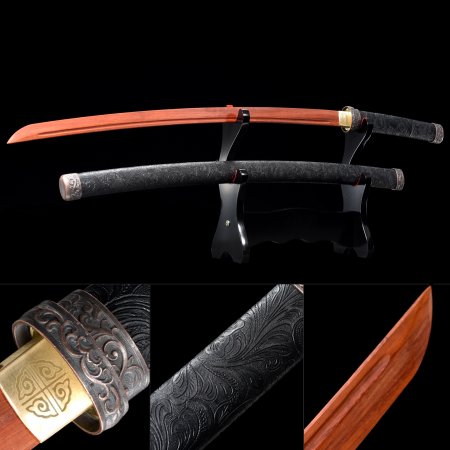
Handmade Wooden Blade Unsharpened Japanese Katana Samurai Sword With Black Scabbard |
Daniel Patrick Thomas
California, United States
I love it. The craftsmanship is second to none. I use it in my daily routine.
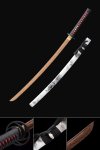 |
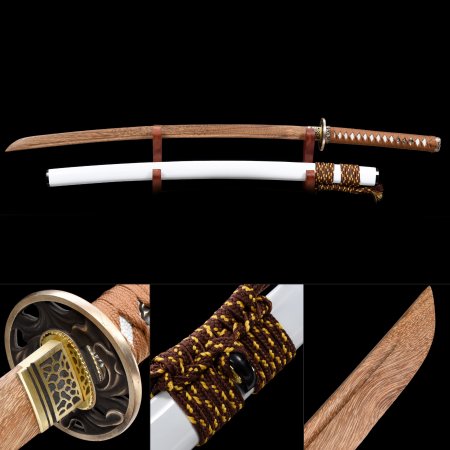
Handmade Brown Wooden Blade Bokken Practice Katana Samurai Sword With White Scabbard |
Jeremy Miller
Maine, United States
Pretty nice sword for martial arts sword forms practice. Probably wont hold up for contact training. It's a very light wood and seems slightly flexible. Overall, nice product for what I wanted it for.
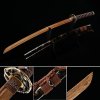 |
Handmade Japanese Wooden Unsharp Katana With Brown Blade And Black Scabbard |