What makes 1090 carbon steel a premium choice for Japanese katana construction?
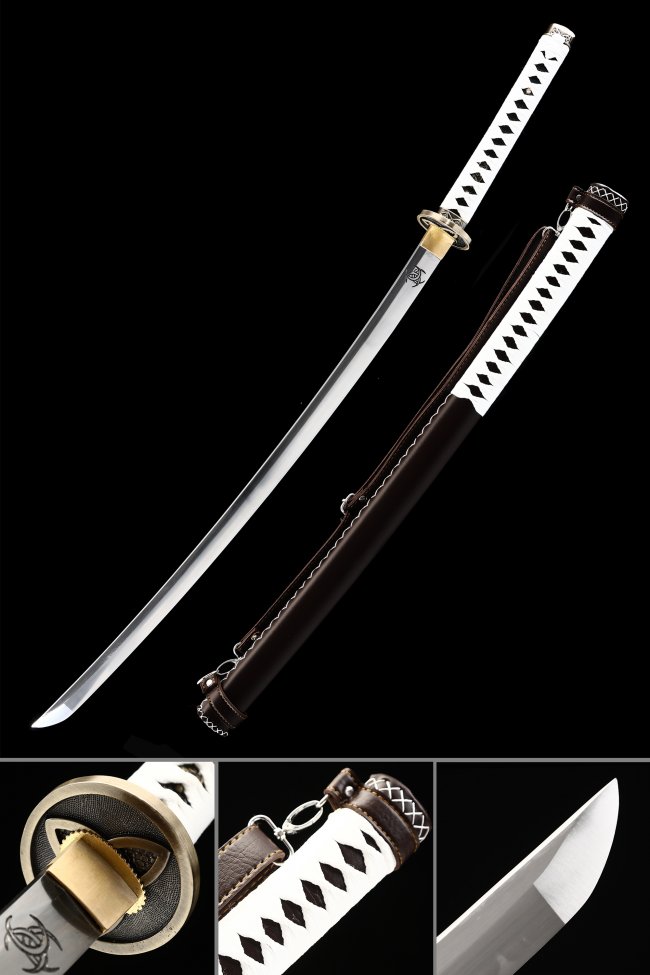
1090 carbon steel earns its premium status within the high-carbon steel hierarchy through several specific material advantages that distinguish it from the more commonly encountered lower grades. At 0.90% carbon content, 1090 achieves significantly greater achievable blade hardness through heat treatment than 1045 (0.45%), 1060 (0.60%), and 1065 (0.65%) grades - the hardness potential increases with carbon content up to a certain point, and 1090 approaches the upper practical limit for straight carbon steel blade construction before specialty alloyed grades like T10 are needed. The higher carbon content also produces a finer grain structure in the steel after proper heat treatment and quench, giving the blade a surface density and polish response that collectors familiar with multiple steel grades can recognize in examination. The surface quality of 1090 supports color treatments with exceptional clarity because the denser grain structure creates a more uniform surface for the treatment to adhere to. For collectors who approach the Japanese katana as a material object and want the best available carbon steel performance, 1090 is the natural ceiling of the standard high-carbon steel range.
What color configurations are available for 1090 carbon steel katana?
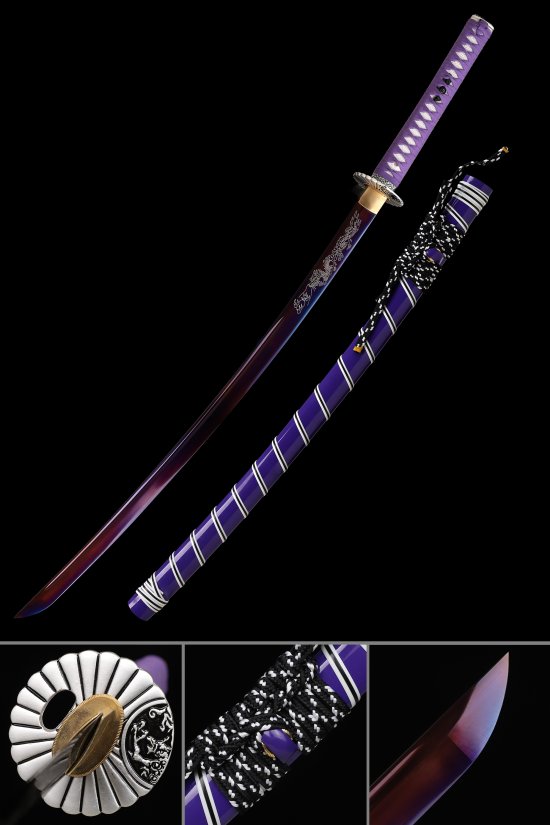
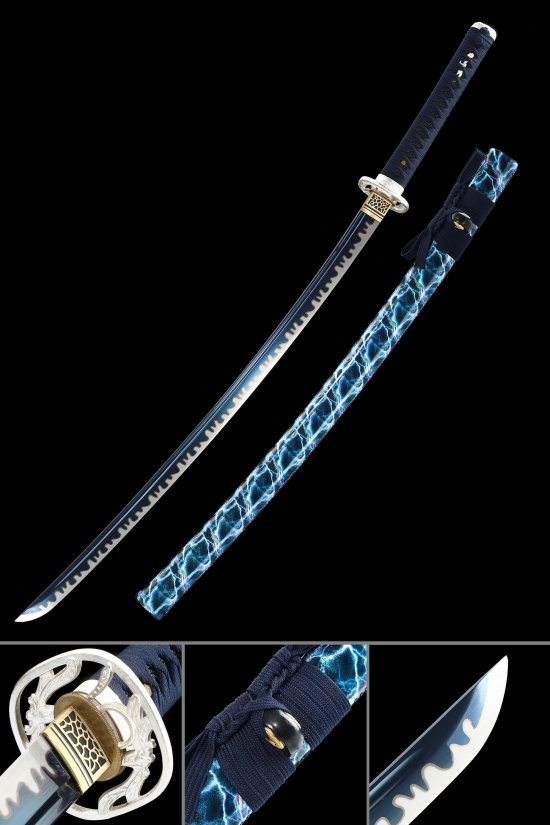
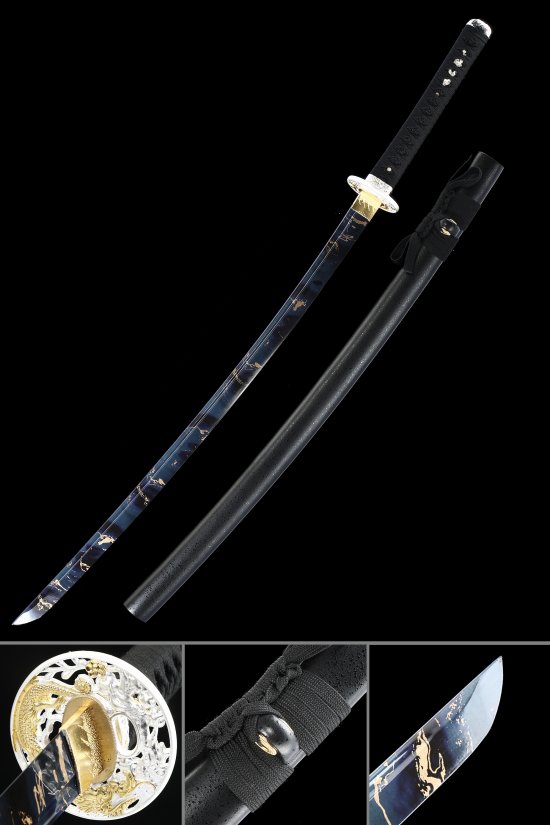
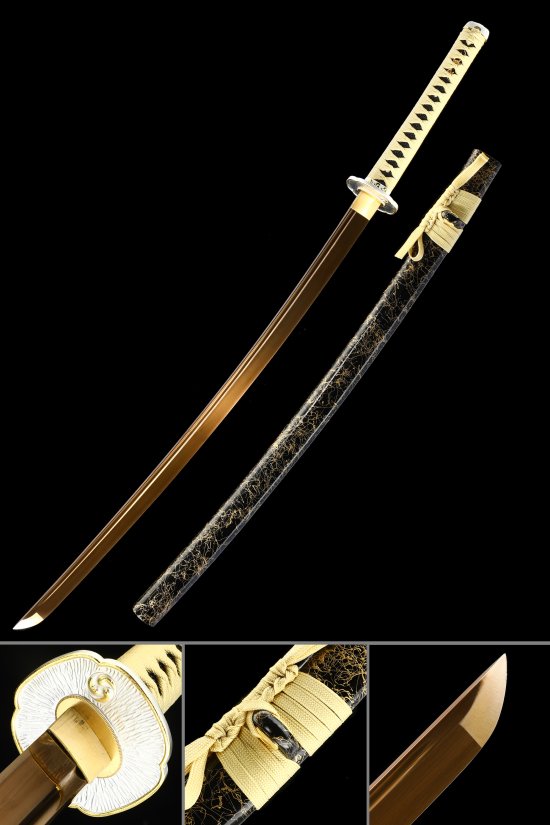
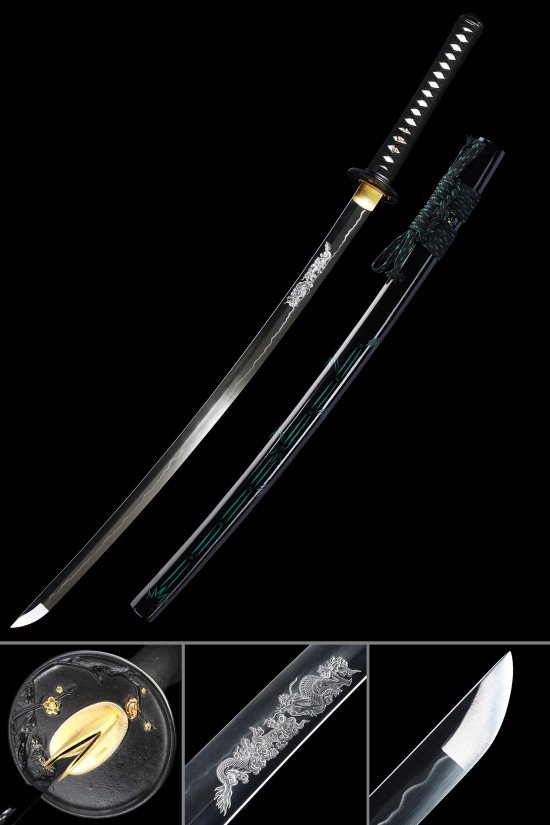
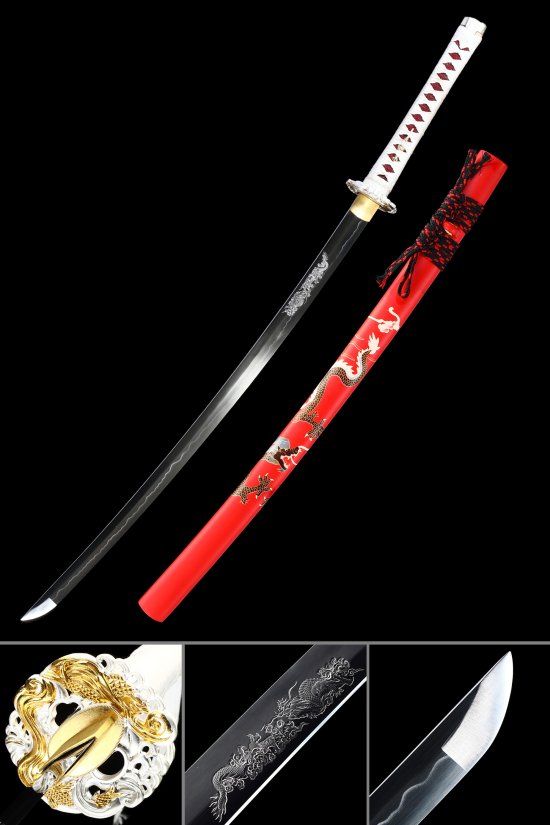
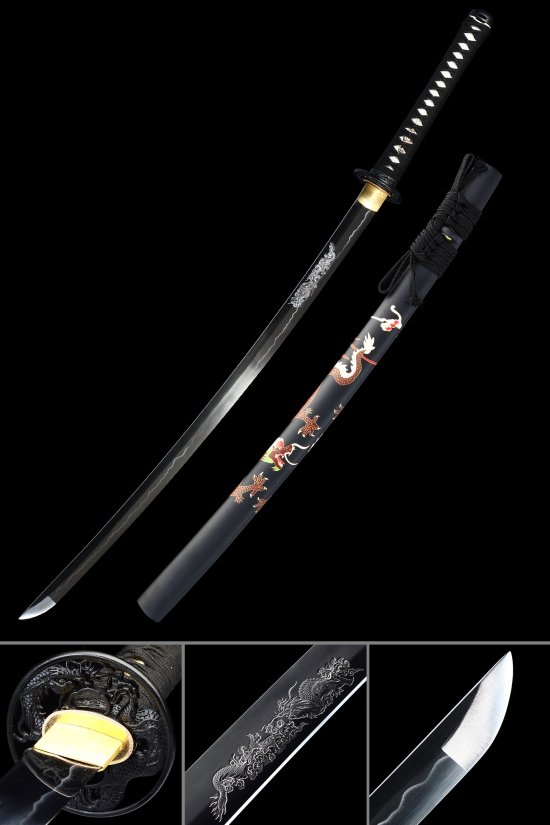
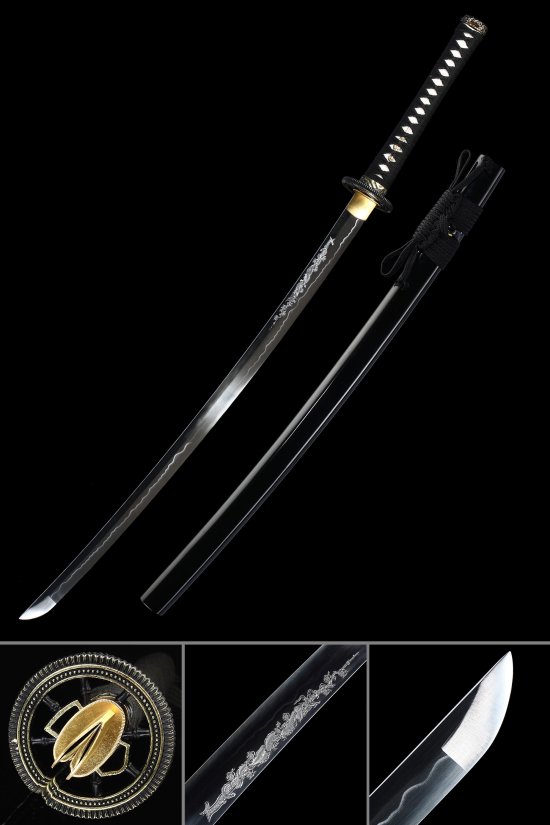
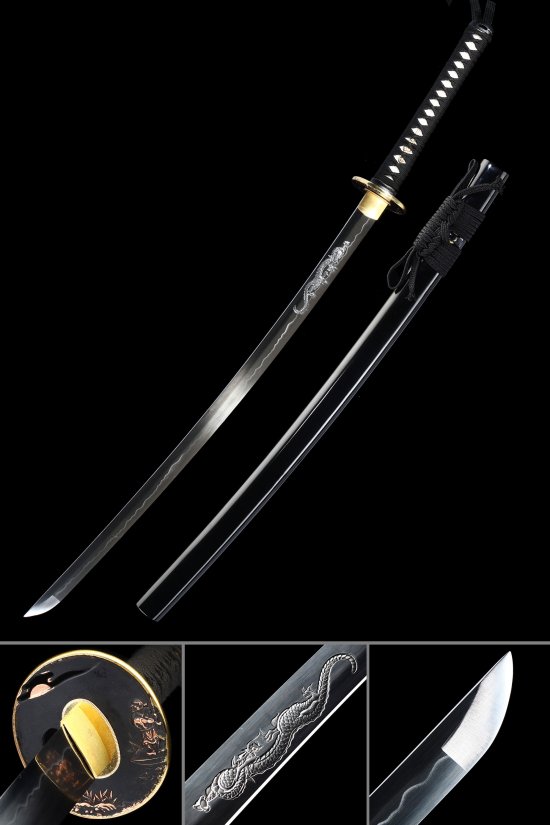
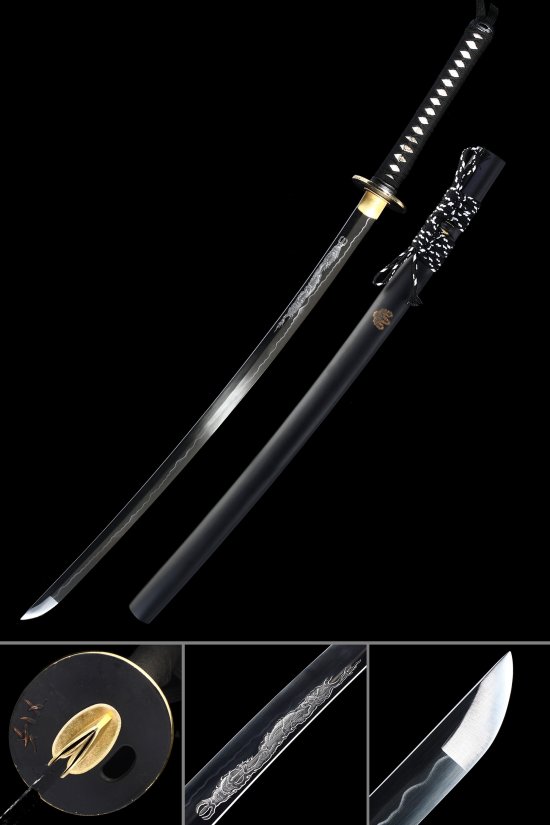
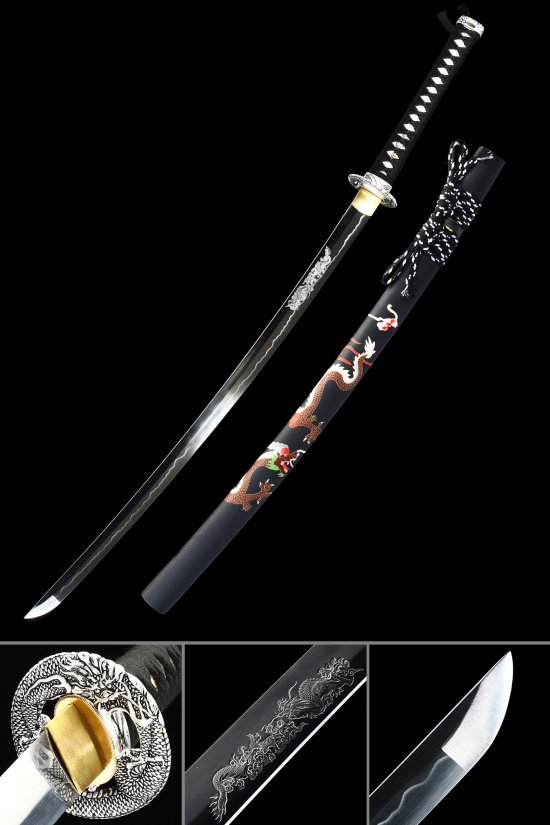
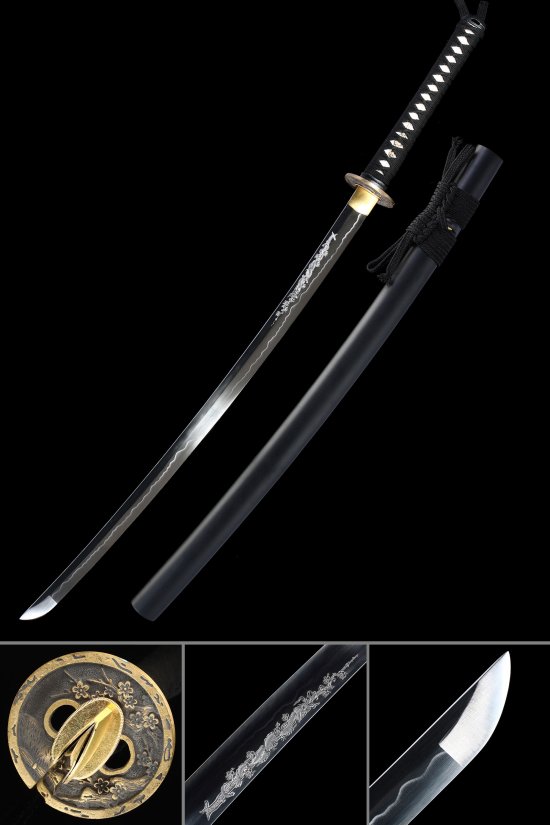
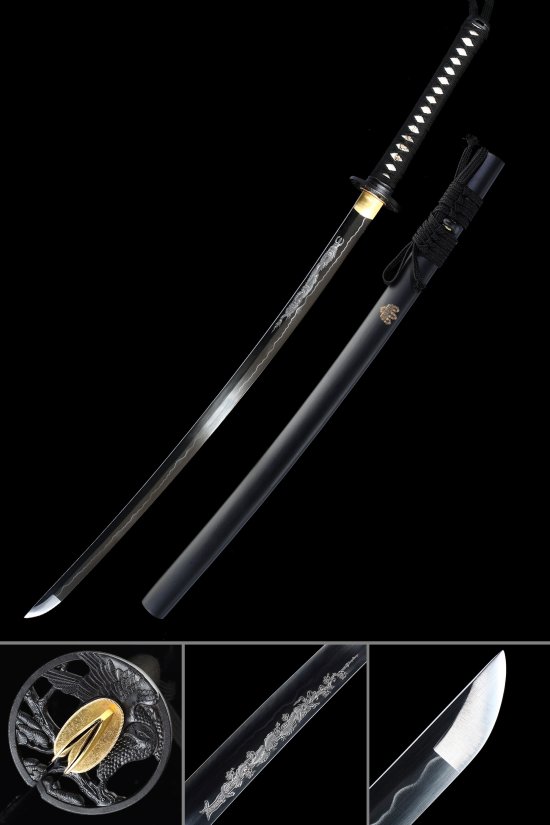
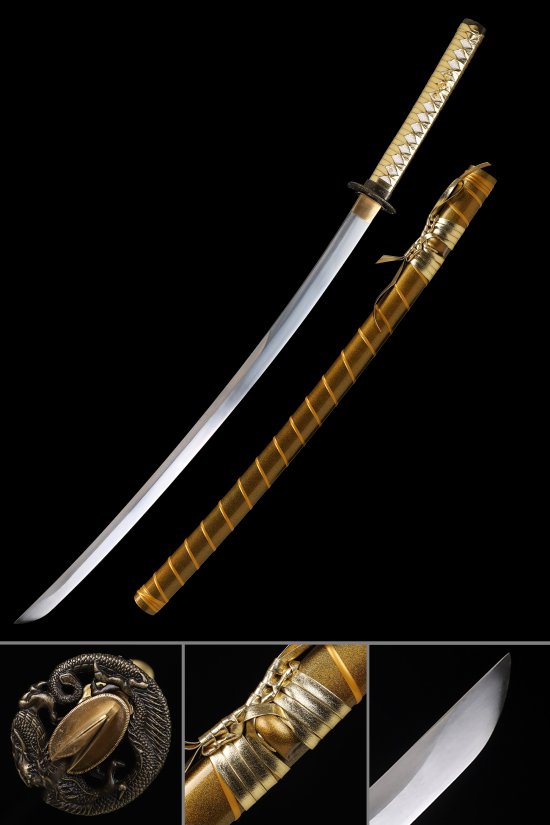
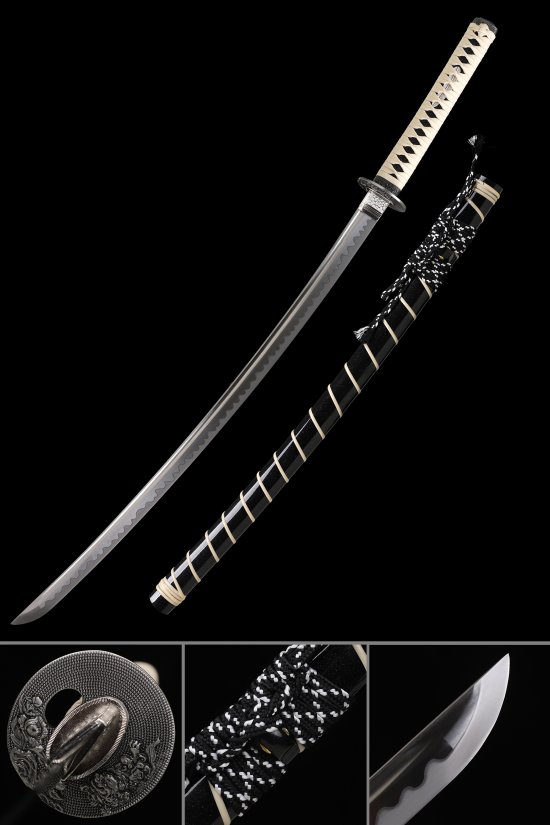
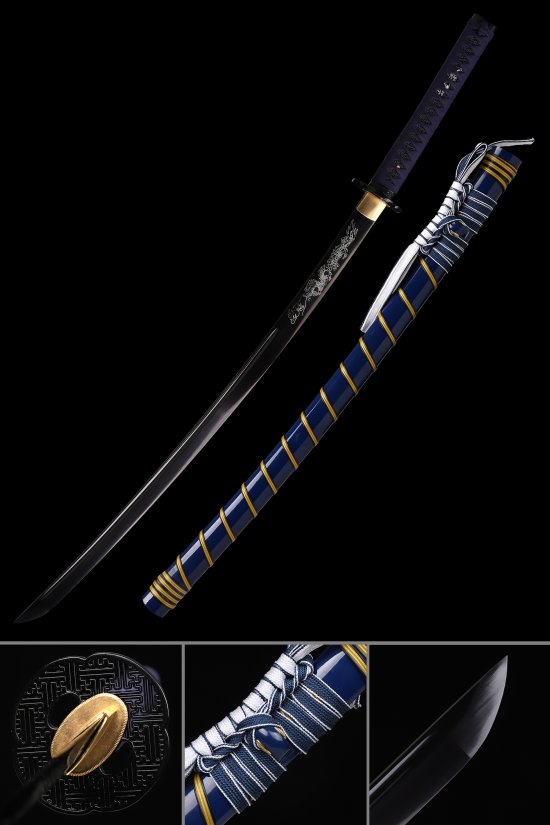
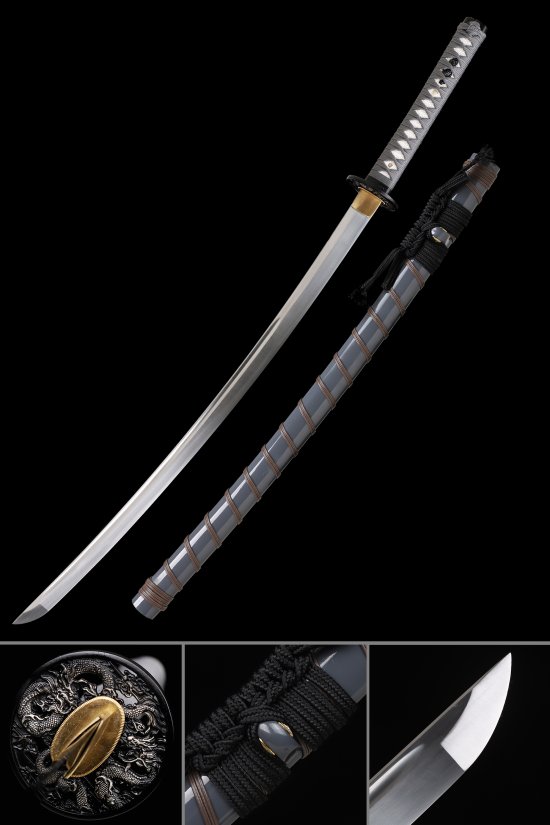
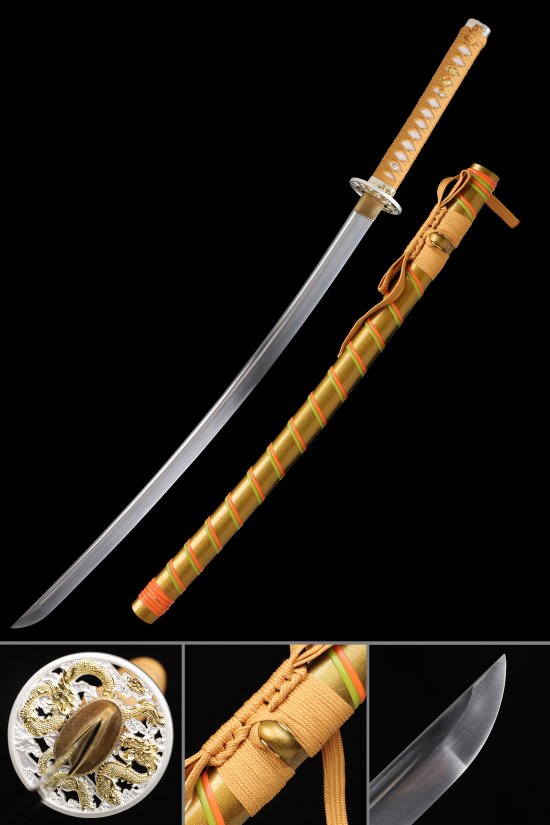
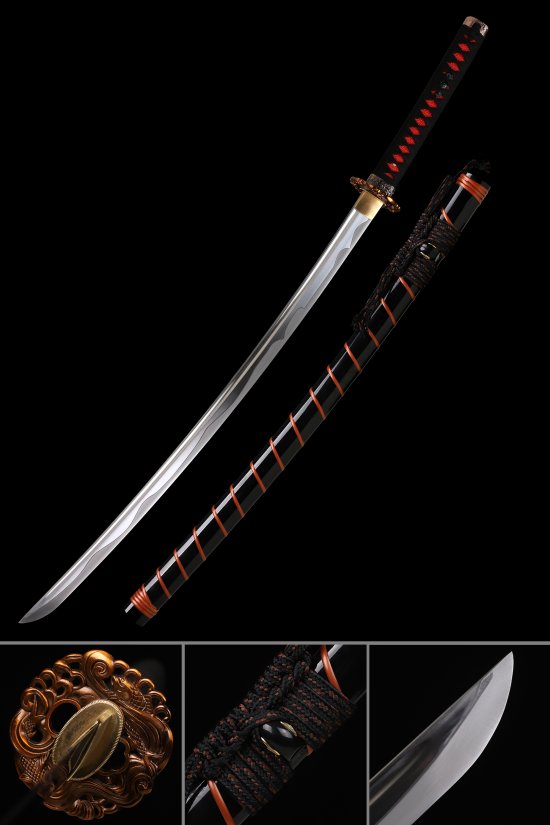
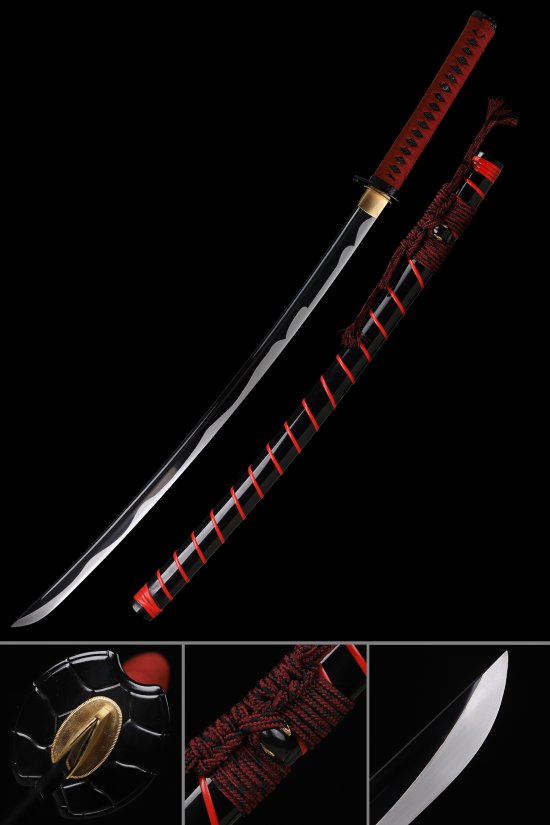
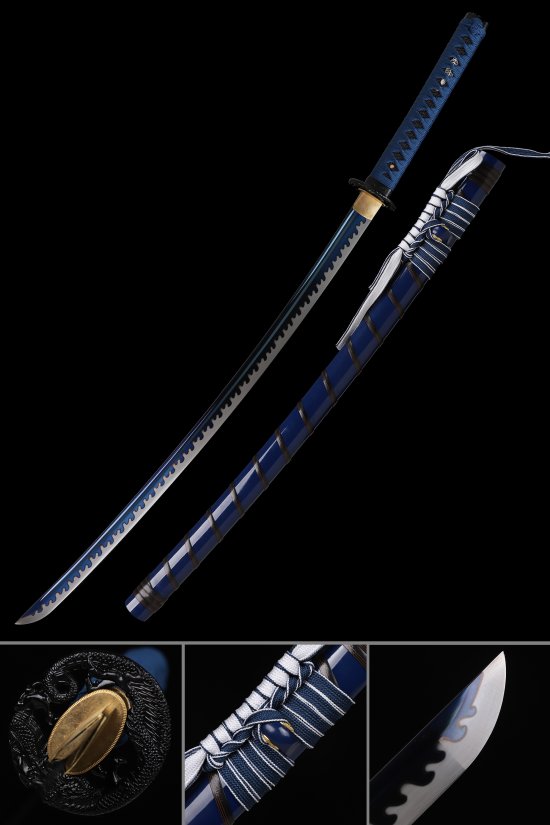
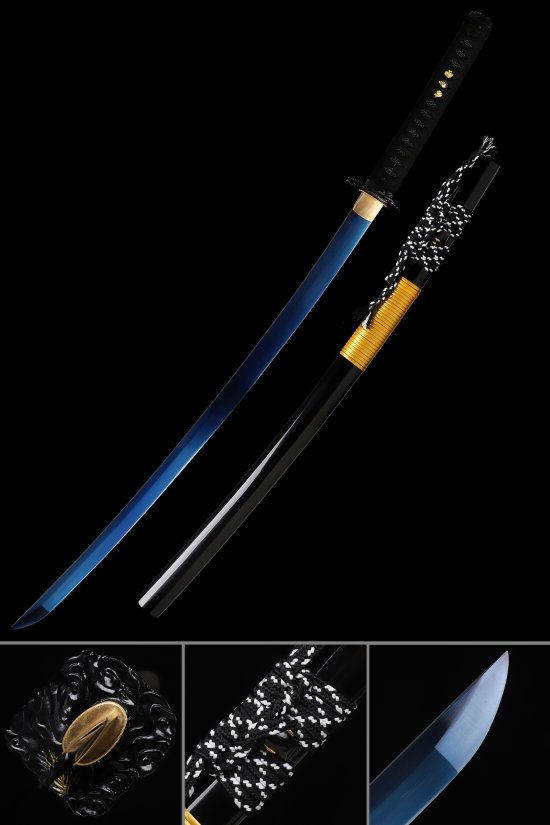
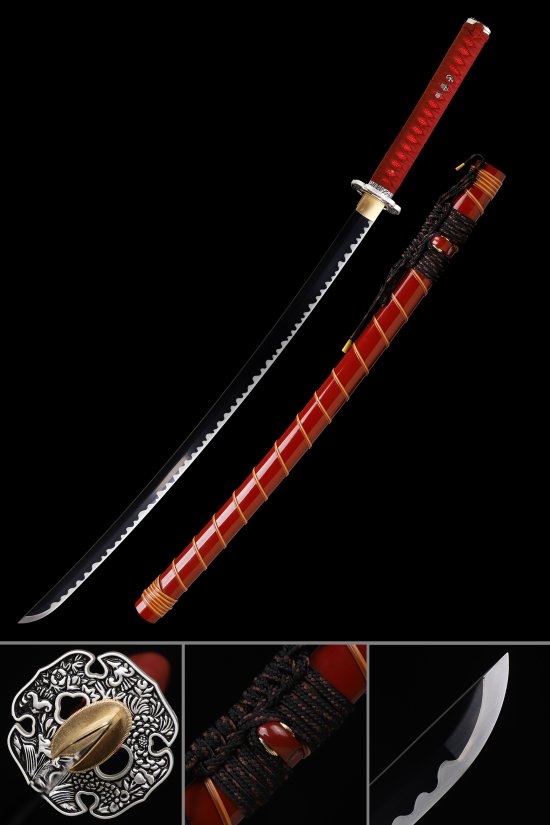
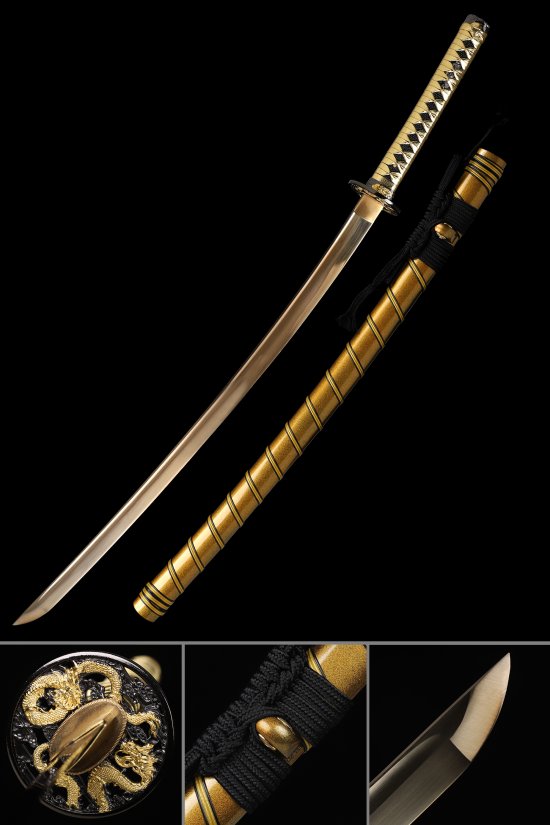
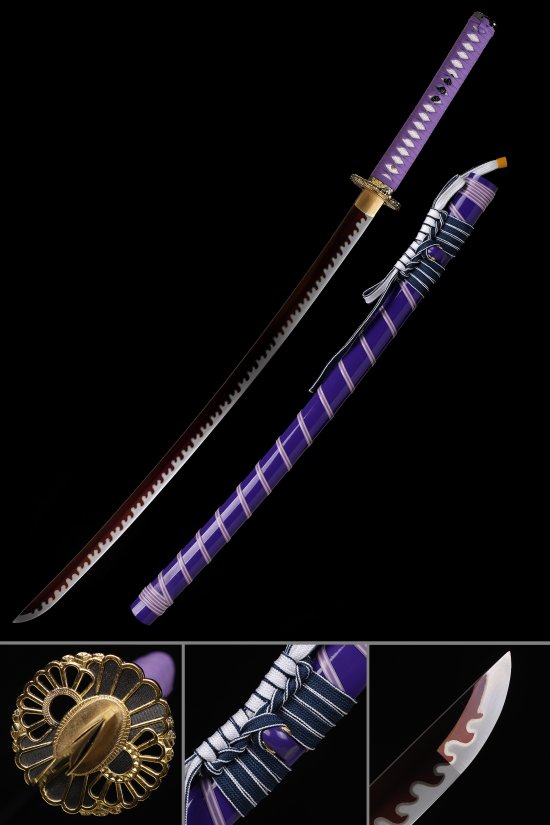
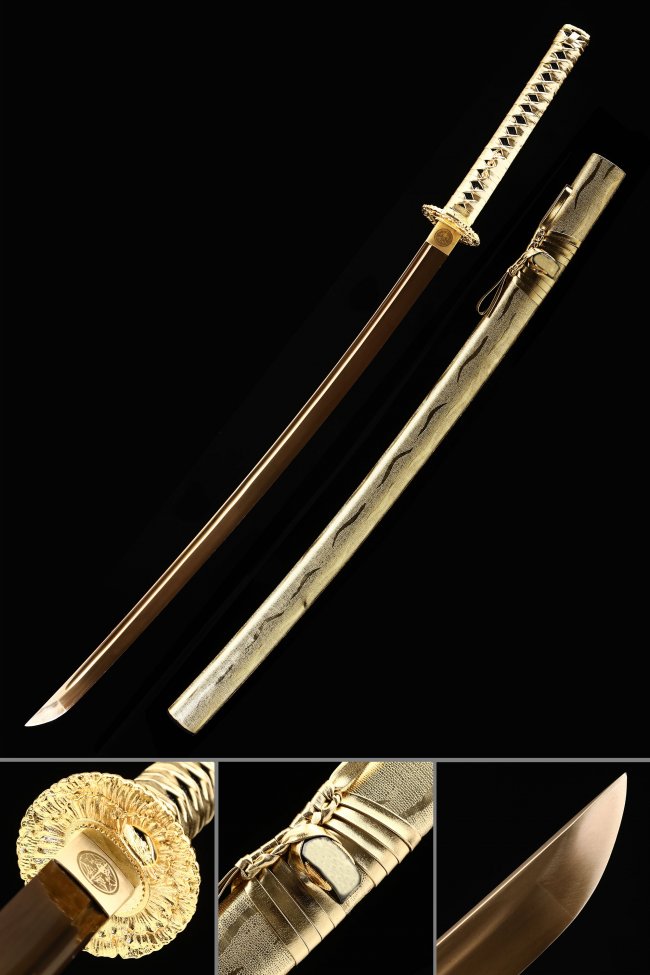
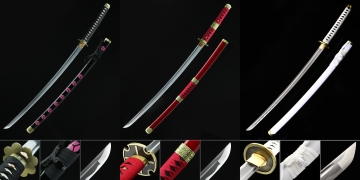
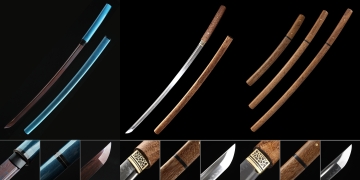
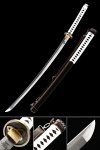
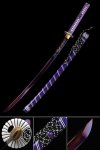
1090 carbon steel katana in this collection are available in one of the widest color ranges of any single steel grade in the collection, reflecting the material's exceptional surface quality and its ability to support vivid color treatments with maximum clarity. Gold blade configurations in 1090 steel deliver warm, luminous golden tones with the saturation that the premium surface quality enables. Black configurations with bamboo-themed scabbards, dragon-themed scabbards, and traditional mounts provide the classic katana aesthetic in the premium grade - these include several distinct configurations across black blade and black scabbard combinations. Red and dark-red blade pieces bring the warm vivid color aesthetic to 1090 steel. Blue blade katana in 1090 carbon steel deliver cool vivid tones. Purple blade configurations add the most distinctive cool-warm intermediate color. Multi-color and gray configurations round out the palette. Gold scabbard pieces complete the warm-tone end of the spectrum. This breadth of color options makes 1090 steel katana appropriate for both collectors who prioritize steel grade and those who prioritize a specific color aesthetic.
How does 1090 carbon steel compare to T10 and Damascus for katana collecting?
1090 carbon steel, T10 tool steel, and Damascus steel occupy different positions in the Japanese katana collecting hierarchy, each with distinct advantages for specific collector preferences. 1090 carbon steel is the highest standard high-carbon steel grade: its 0.90% carbon content delivers exceptional blade hardness and surface quality within the straight high-carbon steel category. T10 tool steel is a specialty grade with additional alloying elements that enhance its fine grain structure and make it particularly well-suited for clay tempering - T10 clay-tempered pieces produce the clearest and most visually impressive hamon of any grade, making T10 the preferred choice for collectors who prioritize the hamon as the primary blade quality indicator. Damascus steel is fold-forged from layered steel billets, creating the distinctive layered surface pattern that is the Damascus grade's primary visual characteristic - Damascus is chosen for its visual surface complexity rather than for any specific hardness or hamon advantage. For a collector building across all grades, 1090 provides the premium straight carbon steel foundation, T10 provides the traditional clay-tempered hamon experience, and Damascus provides the visual layered pattern complexity.
What care routine protects 1090 carbon steel katana blades from oxidation?
1090 carbon steel requires a consistent and attentive care routine because its higher carbon content makes it more reactive to moisture and atmospheric conditions than lower-carbon grades. The care protocol begins immediately after any handling: wipe the complete blade surface with a soft lint-free cloth to remove fingerprints, moisture, and any atmospheric deposits. High-carbon steel reacts with the acids in fingerprints and will show oxidation marks if fingerprints are left on the surface without cleaning. After wiping, apply a thin protective coat of camellia oil or mineral oil to the full blade surface and buff away excess with a clean soft cloth, leaving a fine protective film across the blade. For 1090 carbon steel color treatment pieces, use only soft cloths with light pressure - never abrasive materials, solvents, or metal cleaners that would damage the color surface while attempting to protect the steel beneath it. Store in a stable-humidity environment away from temperature fluctuations, and inspect the blade surface monthly for any early signs of oxidation developing through the protective oil film. Consistent oiling is the most important long-term care practice for premium carbon steel blades.