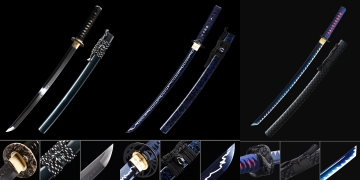
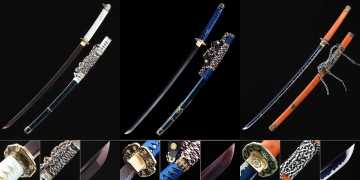
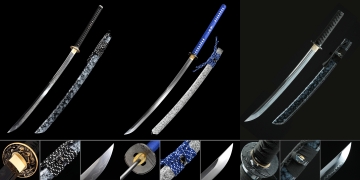
What makes a hamidashi different from a standard tanto?
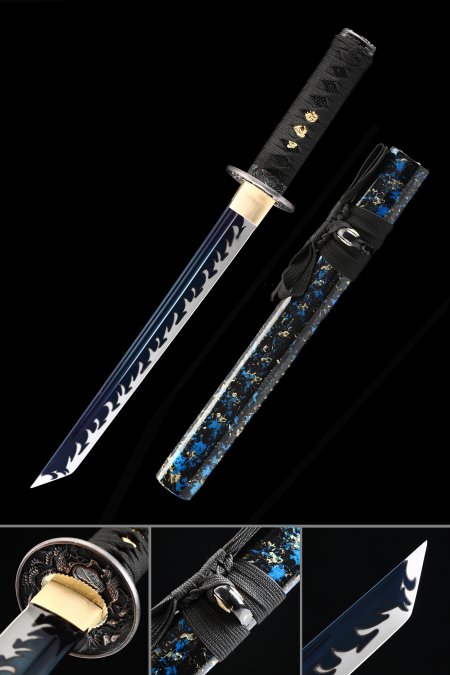
The defining characteristic of a hamidashi is its ko-tsuba — a very small guard that barely extends past the width of the hilt. On a standard tanto, the tsuba is either absent or of conventional proportions; on a hamidashi, it sits as a minimal accent, just enough to provide a visual break between handle and blade without adding bulk. This design originated in Japan's Edo period, when concealed short blades needed slim, unobtrusive profiles. The result is a form that reads as simultaneously restrained and refined, which is a large part of why hamidashi remain popular among collectors focused on classical Japanese short-sword aesthetics.
How is the blue color on these blades actually produced?
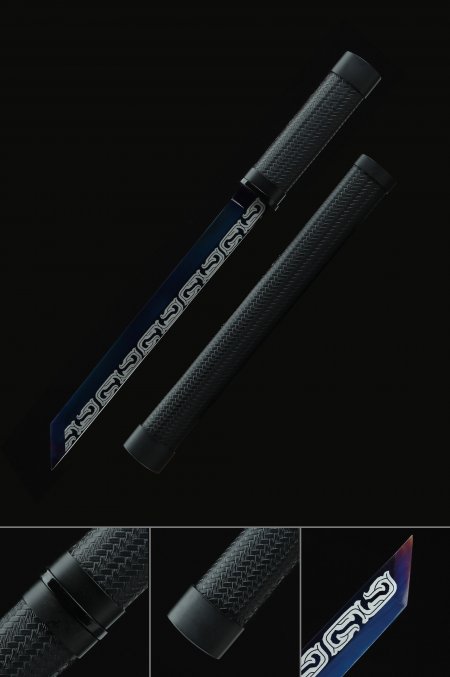
The blue tone is not applied as a coating or finish. It develops through the metallurgical properties of high-manganese steel, which naturally produces cooler chromatic tones during the heat-treatment and quenching process. Some blades also undergo controlled oxidation after polishing, which draws out blue-gray surface hues by allowing a thin, stable oxide layer to form. Because the color is rooted in the steel's own chemistry and surface structure, it does not peel, chip, or rub away under normal handling and display conditions. This is fundamentally different from blued carbon steel finishes or painted decorative pieces, making it a more durable and collectible-appropriate result.
How should I store and maintain a blue blade hamidashi?
Storage environment matters more than most collectors initially expect. High-manganese steel is generally more corrosion-resistant than traditional high-carbon steel, but humidity remains a concern — especially for blades displayed without their saya. Store the tanto horizontally or at a slight downward angle (edge up) inside its scabbard when not on display. Apply a thin coat of choji oil or camellia oil to the blade every two to three months, and always use a soft, lint-free cloth. Avoid touching the blade surface with bare hands, as skin oils accelerate surface oxidation. For lacquer saya, occasional light buffing with a dry cloth is sufficient — avoid moisture and alcohol-based cleaners near the lacquer surface.
Are blue blade hamidashi appropriate as display gifts?
They make a genuinely distinctive gift for someone who appreciates Japanese craftsmanship and visual design. The combination of an unusual blade color, classical short-sword proportions, and carefully matched fittings — such as crane tsuba or carbon fiber saya — creates a display piece that reads as considered and specific rather than generic. For a gift presentation, pairing a hamidashi with a complementary item like a sake set creates a cohesive Japanese-themed display arrangement. The key advantage over more common sword types is that the blue blade reads as unusual and memorable while remaining fully within traditional Japanese blade-making vocabulary.
How does blue blade hamidashi differ from pattern steel versions?
The distinction is primarily visual and material. A blue blade hamidashi draws its aesthetic identity from the chromatic quality of its steel — the cool, deep blue tones that emerge from high-manganese alloys or controlled oxidation. A pattern steel hamidashi, by contrast, derives its character from folded or layered steel construction, where the surface shows flowing grain patterns created during the forging and acid-etching process. Both involve substantial hand craftsmanship, but they appeal to different collector sensibilities: blue blade versions favor color and tonal drama, while pattern steel versions emphasize texture and the visual evidence of the forging process itself.