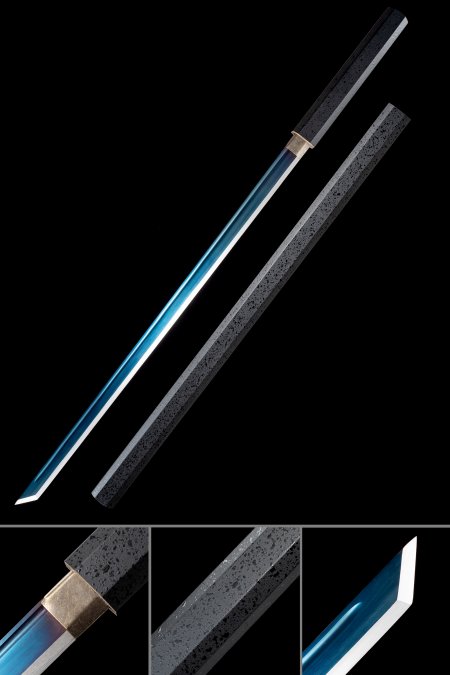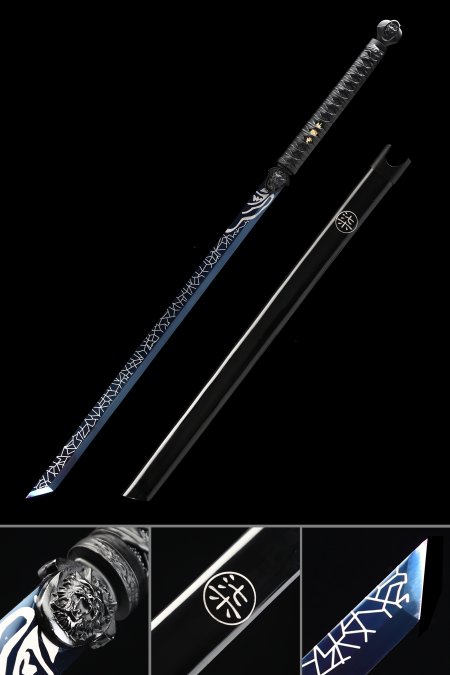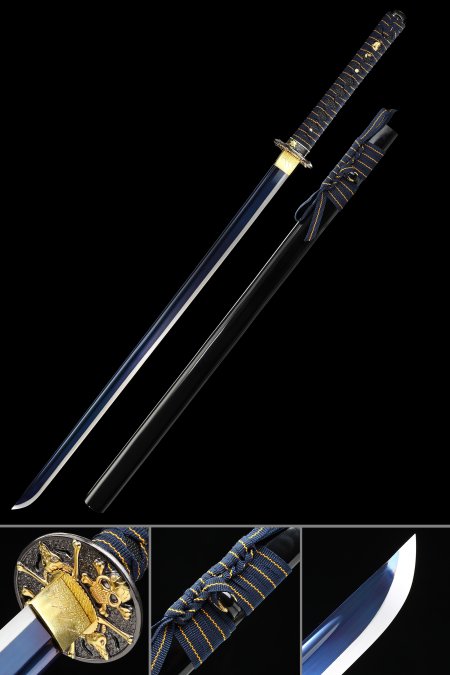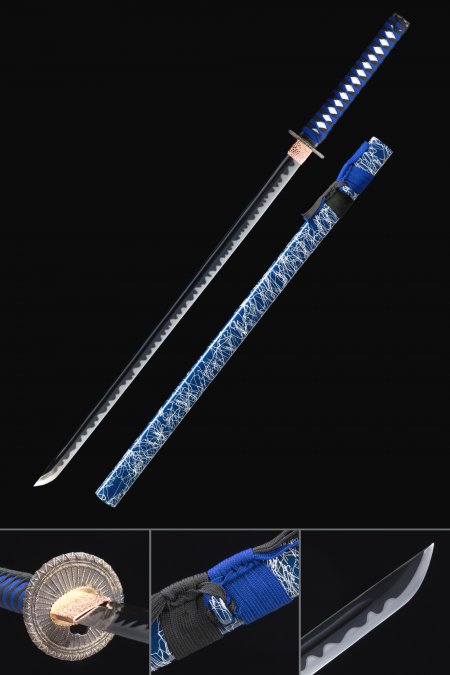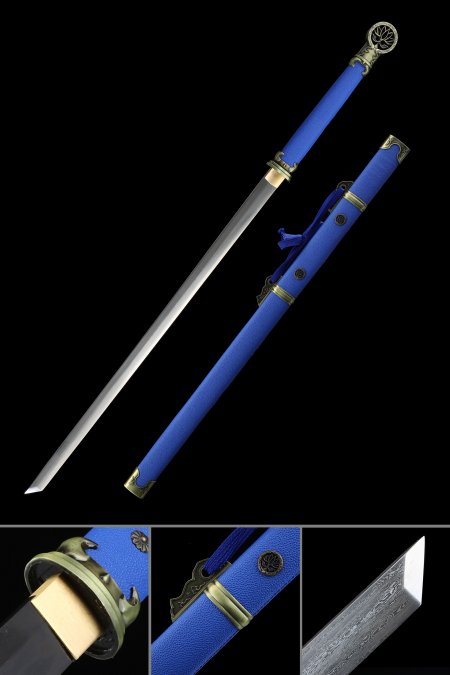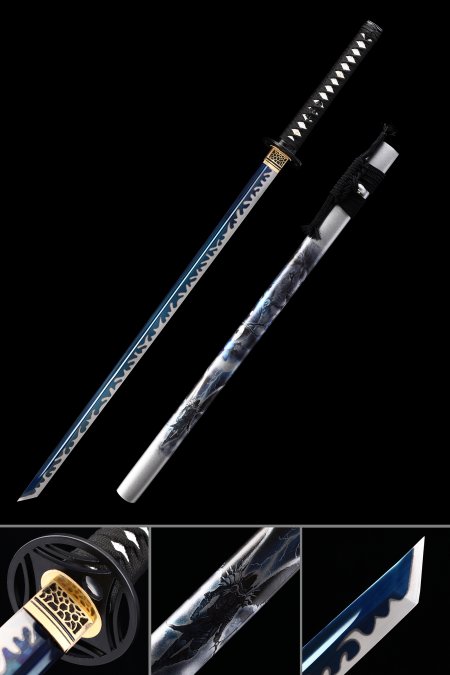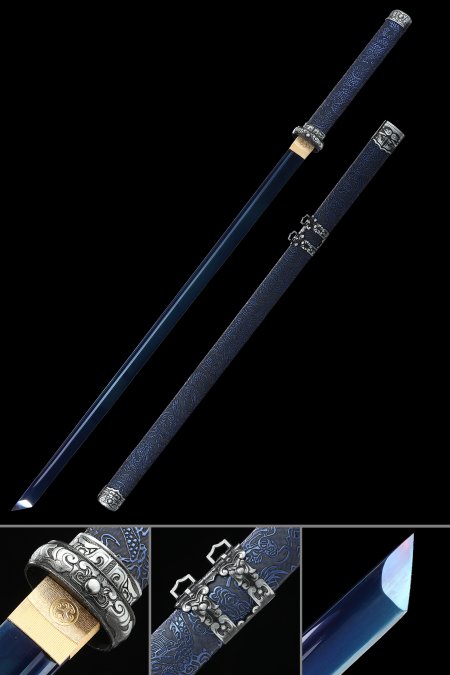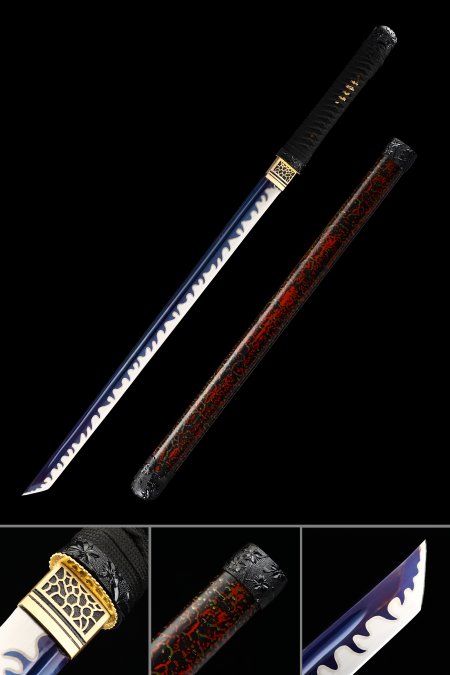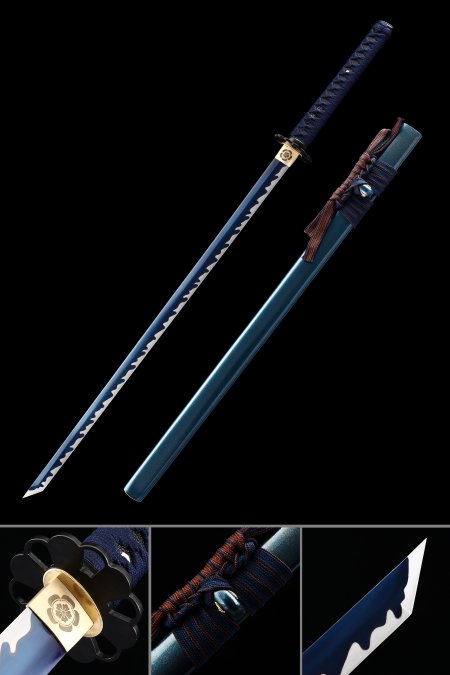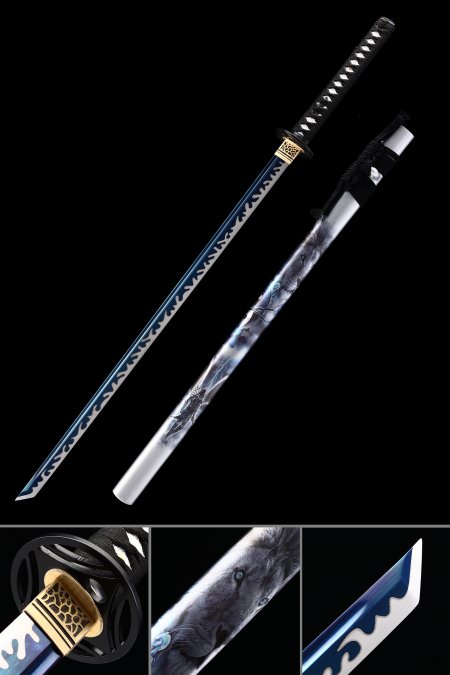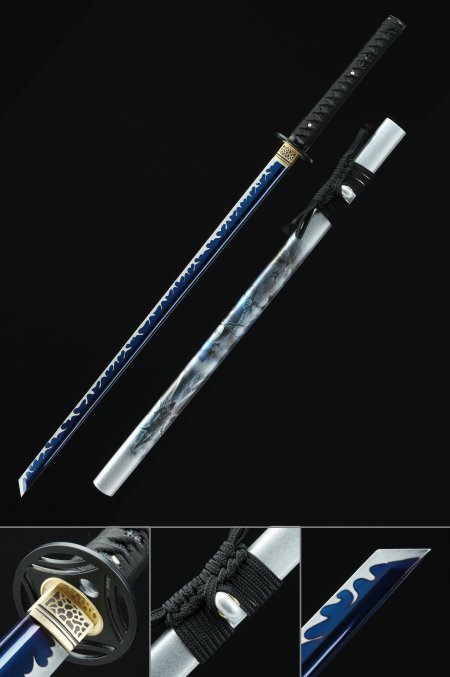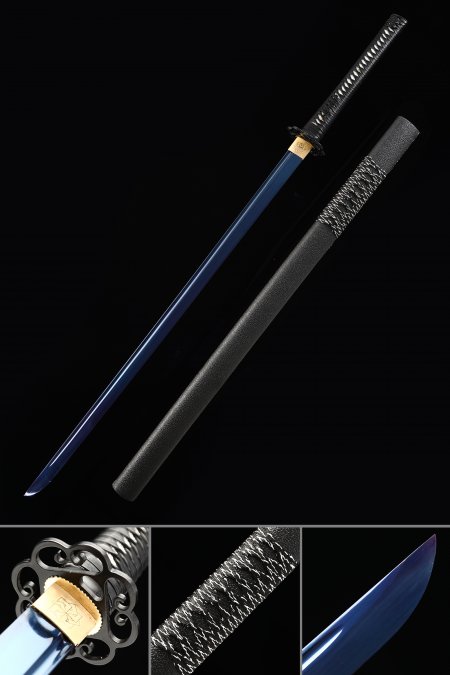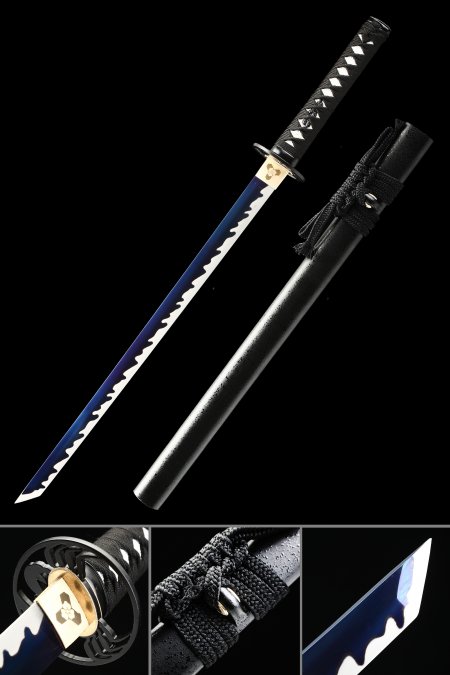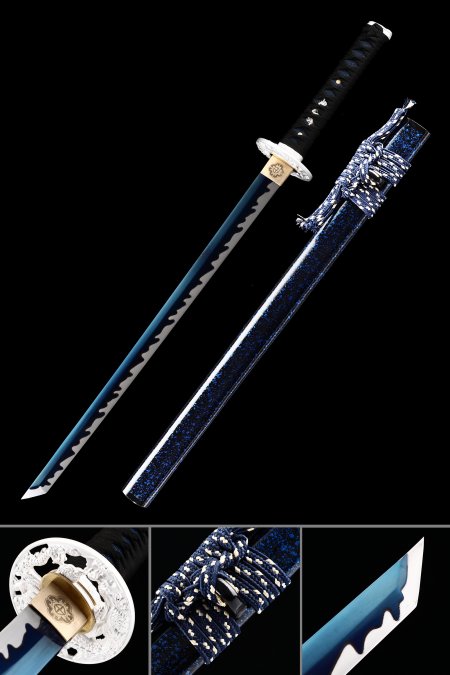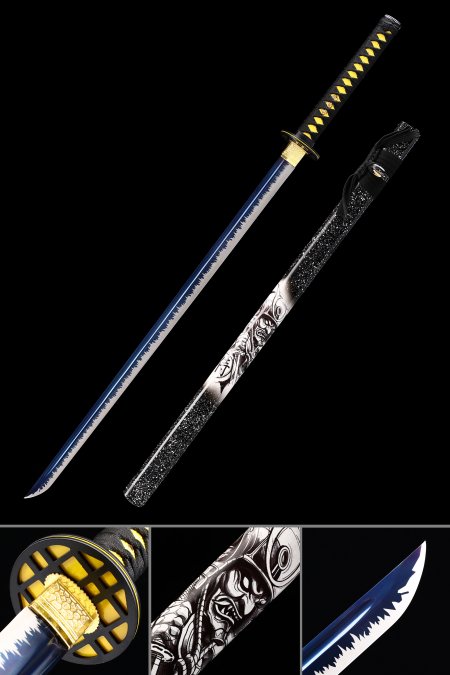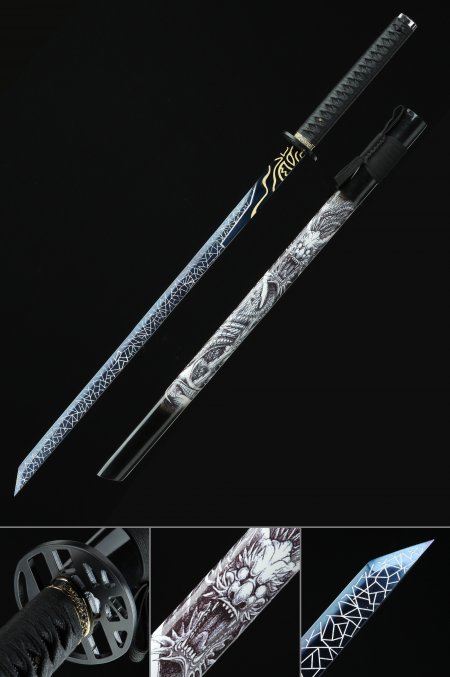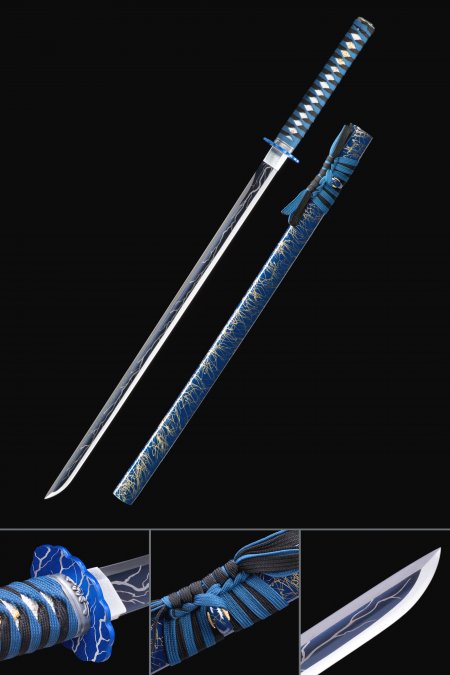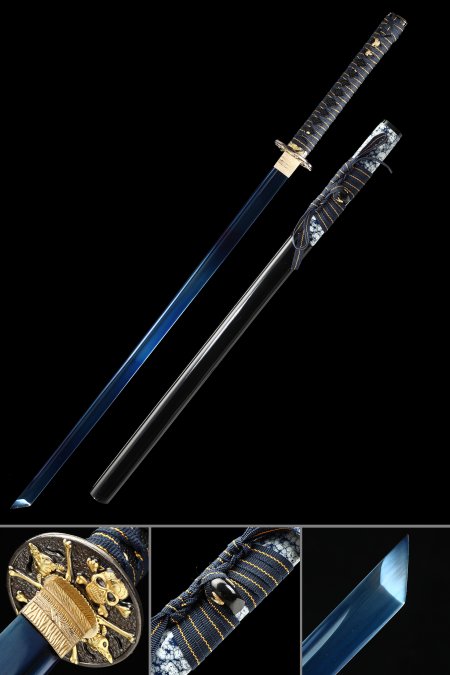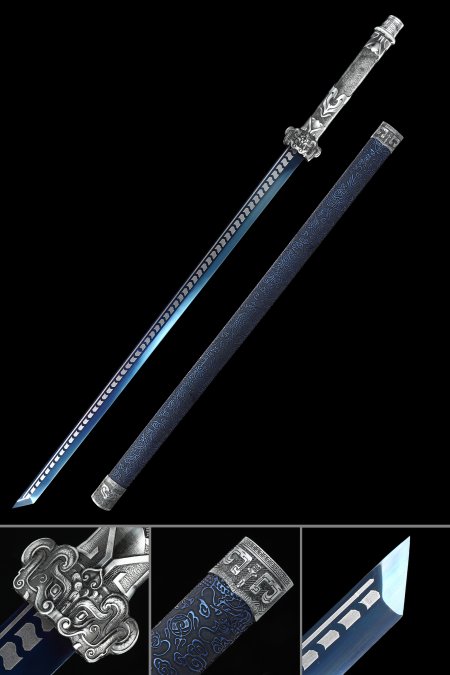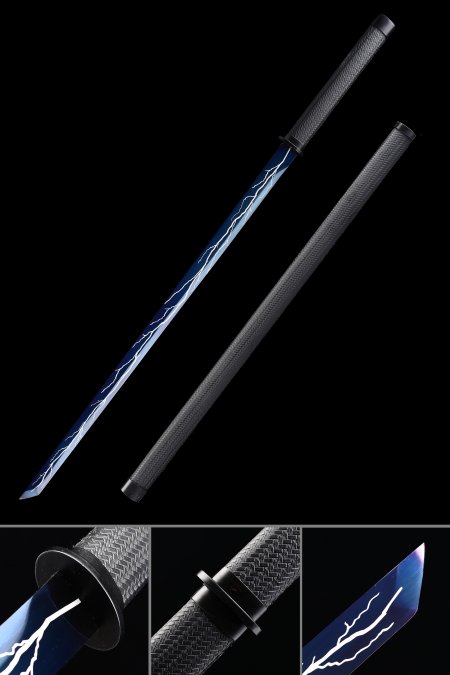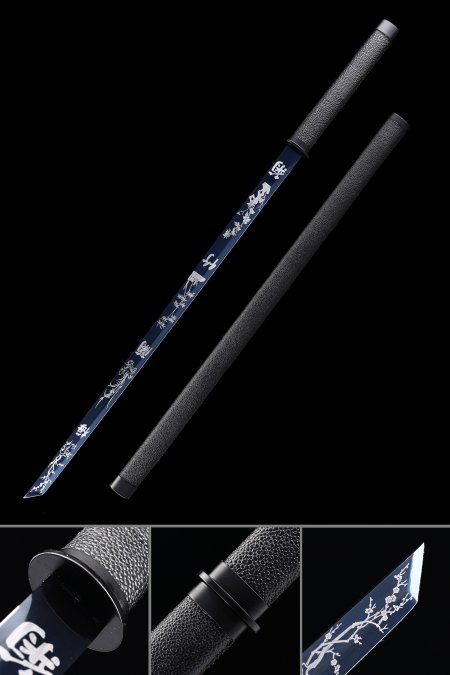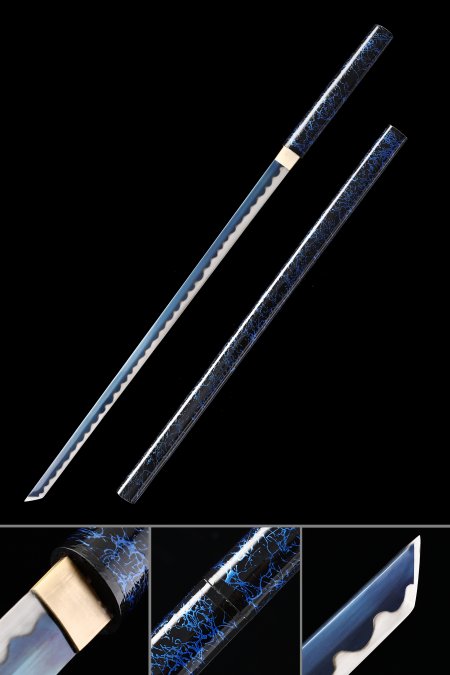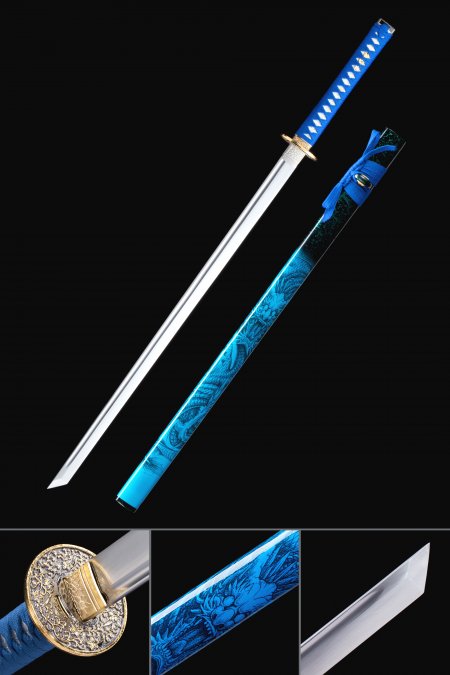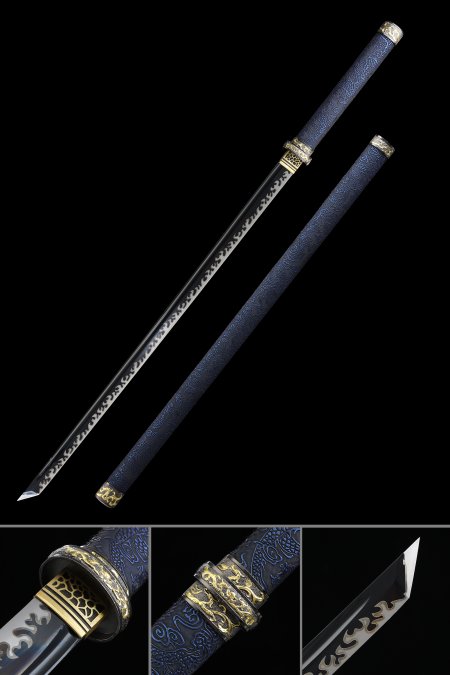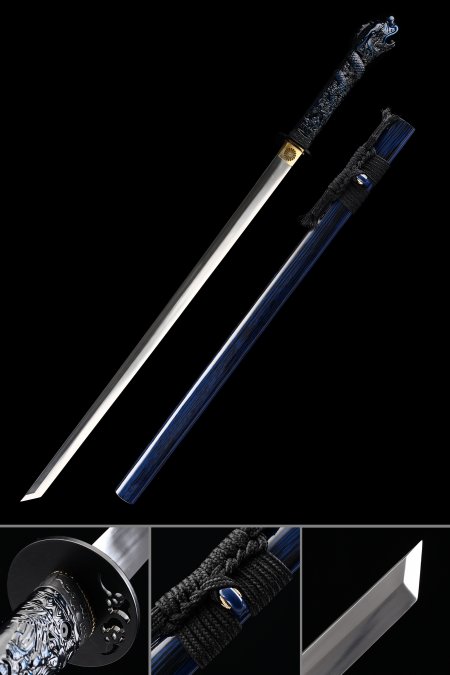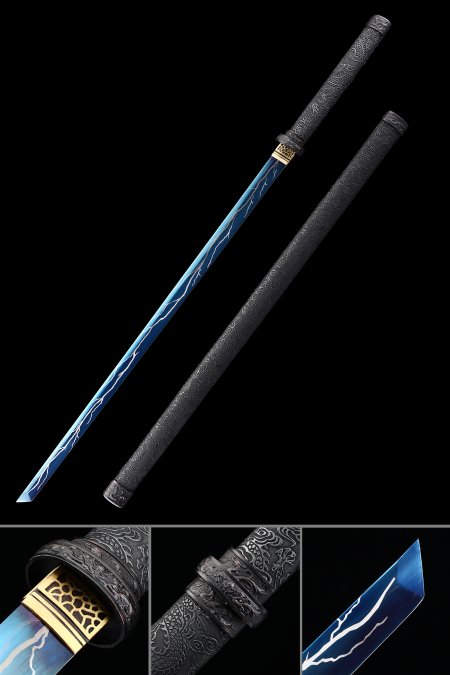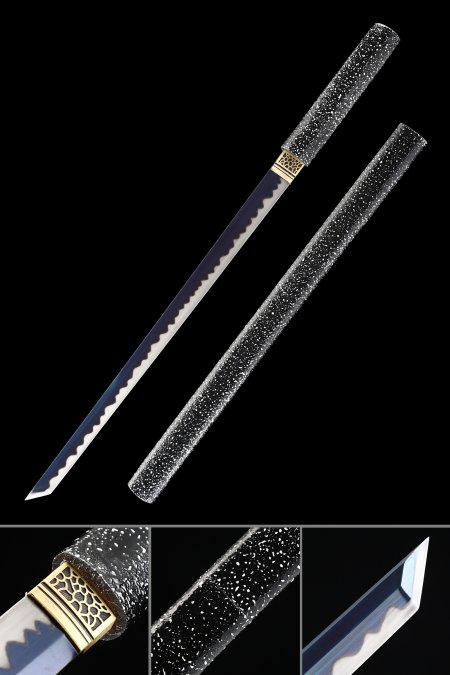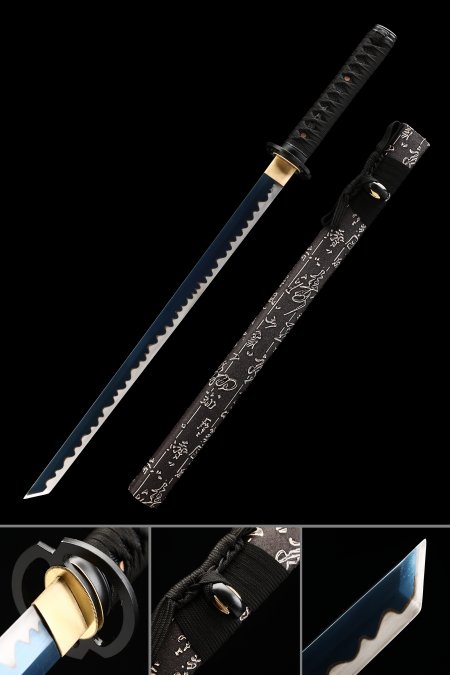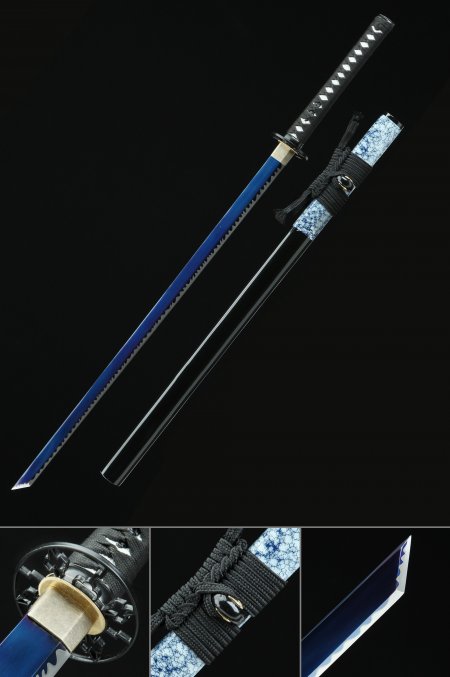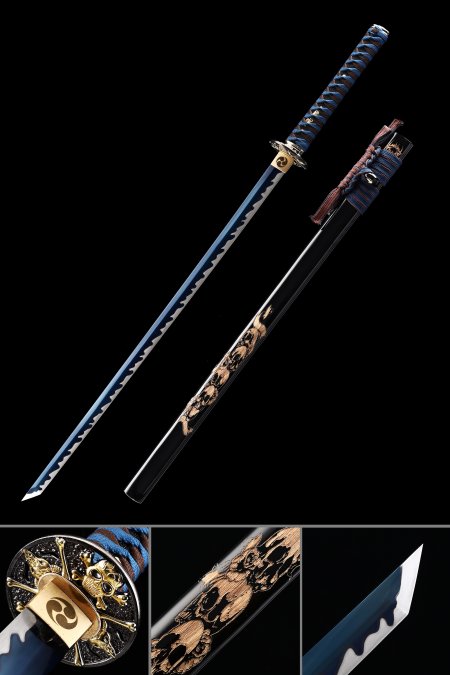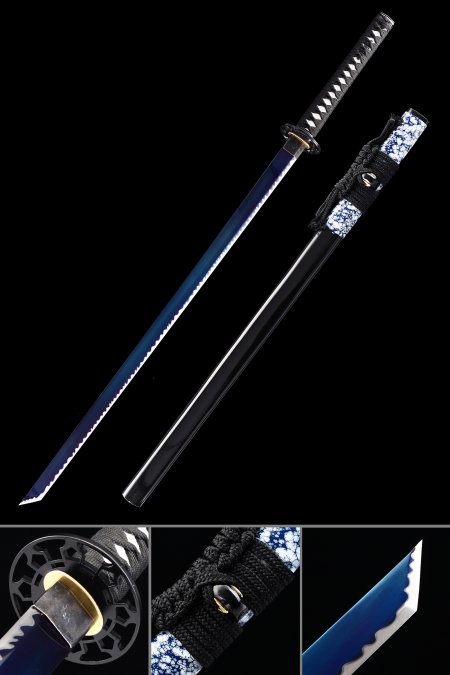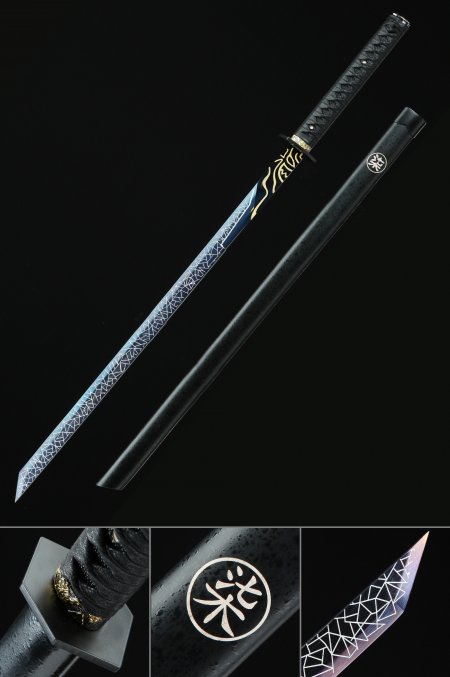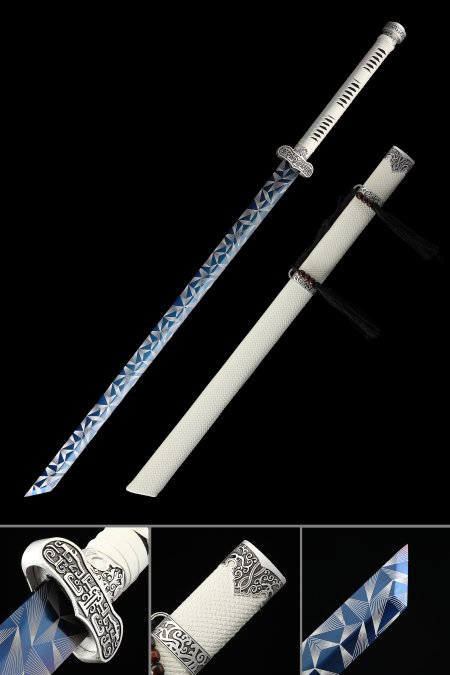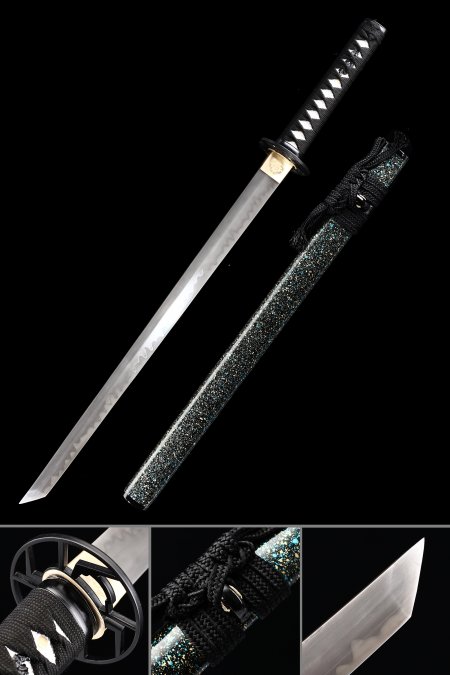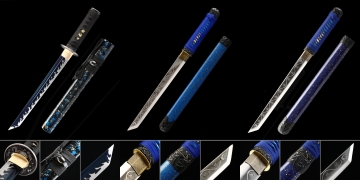
Dark Blue Ninja Sword

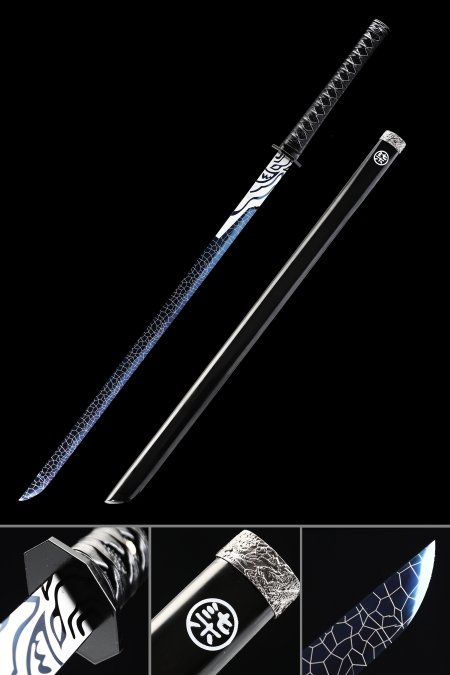
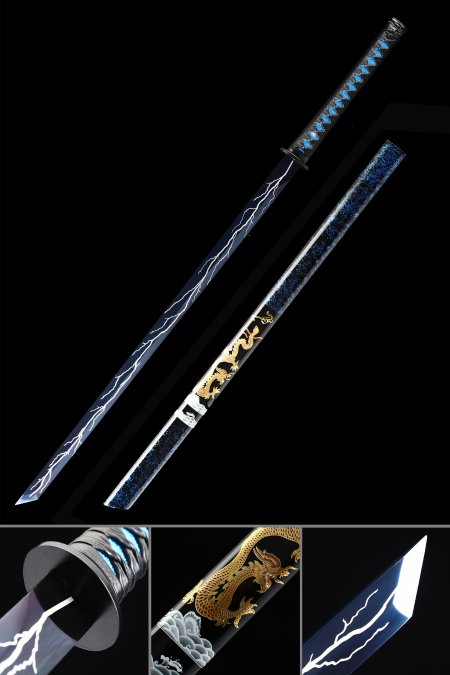
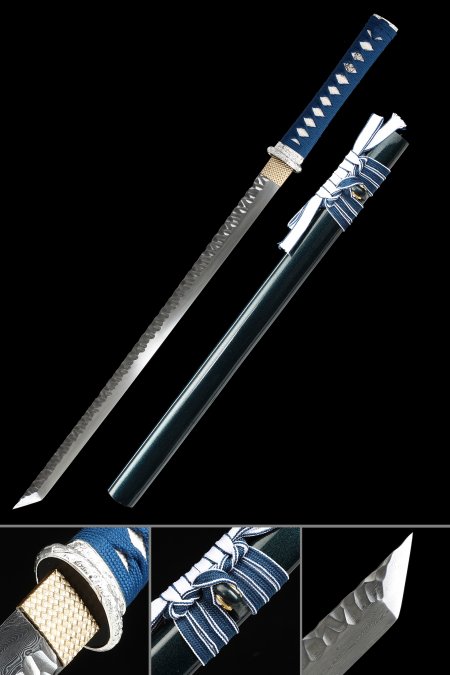
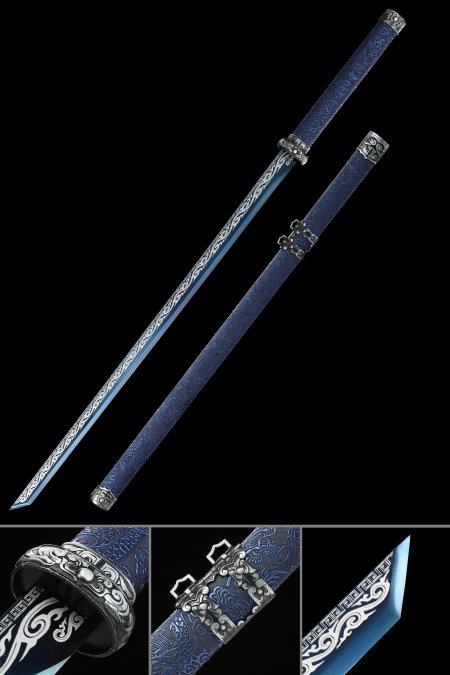
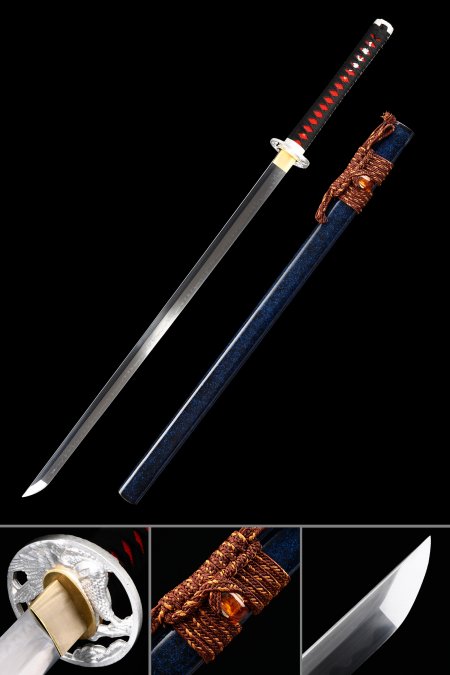
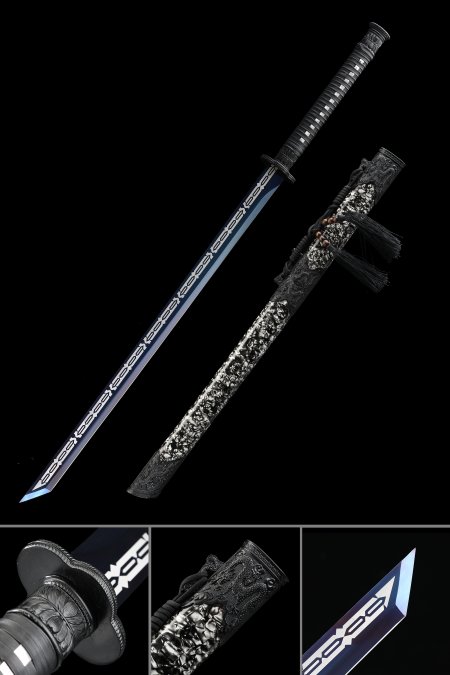
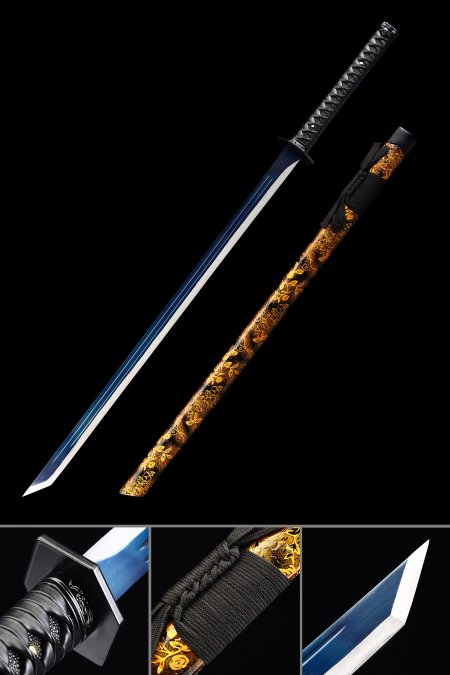
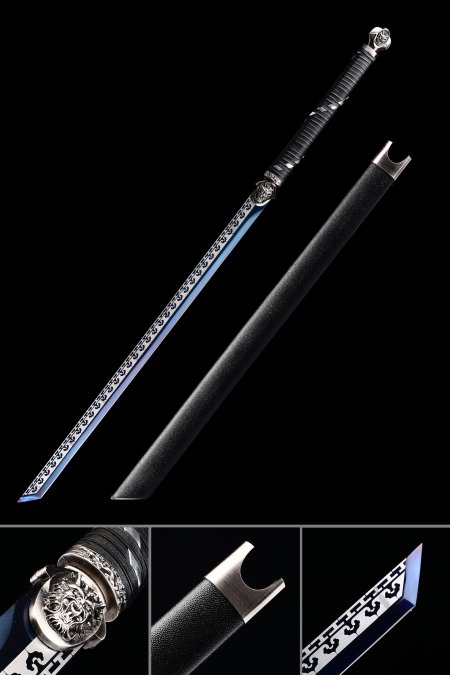
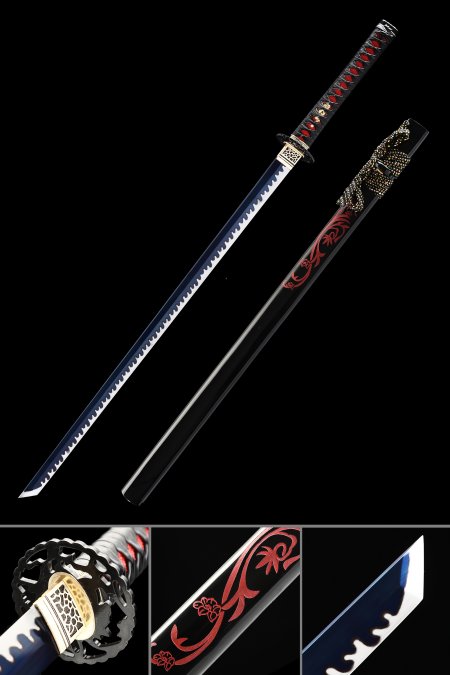
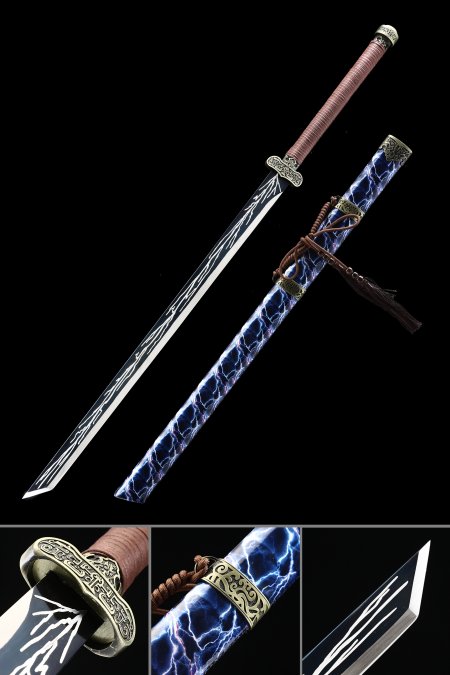
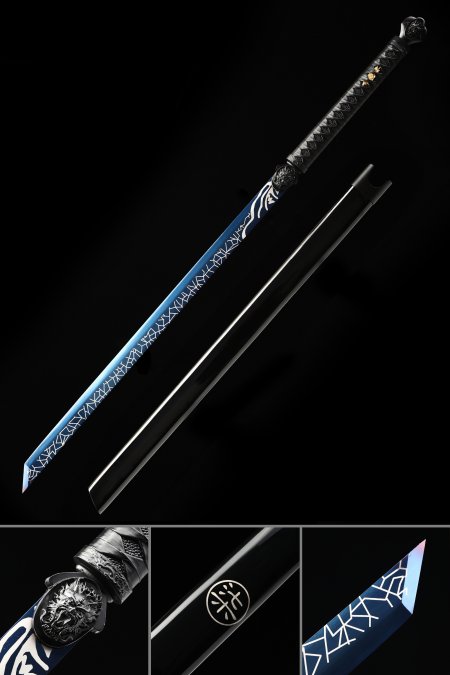
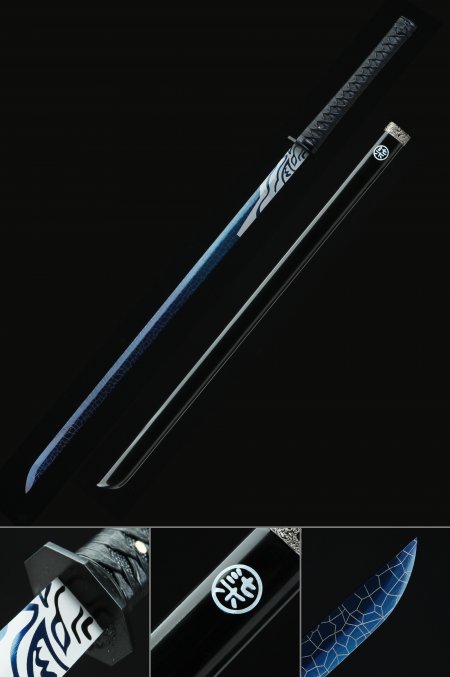
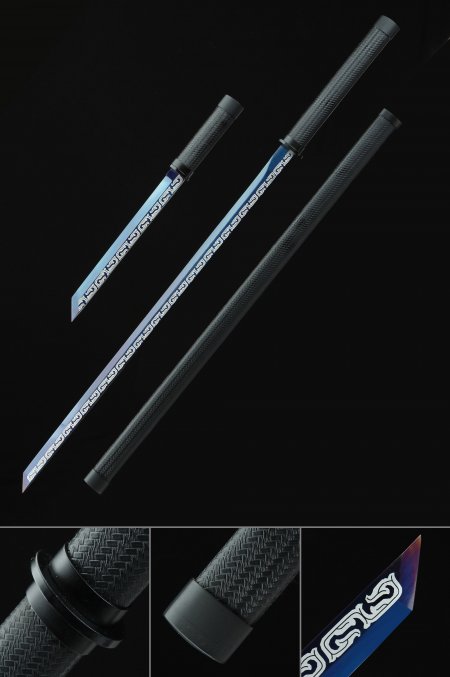
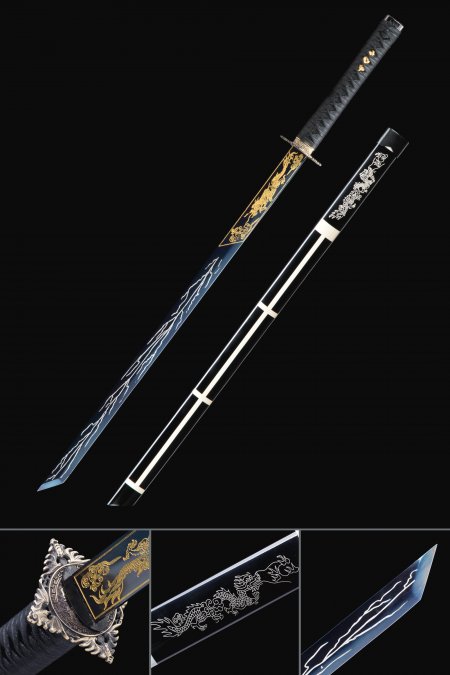
Dark blue ninja swords occupy a singular place in Japanese blade collecting - the straight-profile ninjato silhouette paired with a deep azure finish creates a visual identity that no conventional curved katana can replicate. Each piece in this collection is crafted from proven steel grades such as 1045, 1095, and high manganese, then finished with lacquered saya, engraved tsuba, and wrapped handles that reward close inspection. Free standard shipping is included on every order, and our hassle-free return policy ensures your collecting experience is as refined as the swords themselves.
Showing 53 Products

Related Collections

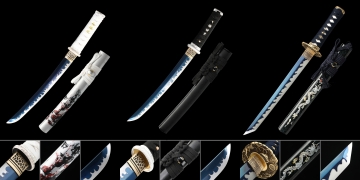
Blue Tanto10 items


68 Reviews

Blue Odachi4 items


16 Reviews

Blue Naginata3 items


7 Reviews

Blue Hamidashi3 items


3 Reviews

Frequently Asked Questions

What makes a ninjato different from a katana?
The most immediate difference is blade geometry. A katana features a pronounced curve along its length - the sori - which was engineered to optimize drawing speed and cutting arc in formal samurai sword tradition. A ninjato, by contrast, has a straight or nearly straight blade, typically with a square or rectangular tsuba rather than the rounded guard common on katana. The ninjato's silhouette is more compact and utilitarian in appearance, which is part of its visual appeal for collectors. The straight profile also means that the blade's finish, whether polished, blued, or lacquered in dark azure, reads with clean geometric clarity from a display standpoint. Both forms share construction principles like full-tang assembly and differential hardening, but the ninjato's distinct proportions give it a separate identity in any serious Japanese blade collection.
How is the dark blue color applied to the blade?
The dark blue finish on these ninjato blades is achieved through one of two main processes, depending on the specific piece. The first is a controlled chemical oxidation or bluing treatment applied directly to the steel surface, which creates a thin, stable iron oxide layer that reads as deep blue in most lighting conditions. This is a traditional metal finishing technique, not a painted or powder-coated surface, so the color has a depth and sheen that changes subtly as light angles shift. The second method involves etching or acid treatment that interacts with the steel's grain structure, particularly on blades with a visible hamon, where the temper line creates a lighter contrast against the darker field. Neither process is purely decorative - both produce a surface that resists light surface oxidation better than raw polished steel, which also has practical benefits for long-term display and storage.
Is 1095 steel or manganese steel better for a display ninjato?
The answer depends on how you intend to use and store the piece. 1095 high-carbon steel has a well-established reputation in blade collecting for holding a clean edge geometry and accepting surface treatments - including blue finishes - with excellent visual results. It is slightly more reactive to humidity, so storage with light oil and in a low-moisture environment is important. Manganese steel, particularly high-manganese alloys, is notable for its flexibility and resistance to chipping under stress; it is harder to induce surface marks through casual handling, which makes it a practical choice for collectors who take pieces off the wall frequently for closer study or photography. For a piece that will remain primarily on display in a controlled environment, 1095 often produces a more refined aesthetic result. For a piece that changes hands more often, manganese offers additional durability with no significant compromise to display quality.
What is a shirasaya mount, and why do some ninjato use it?
Shirasaya is a plain wood mounting style - traditionally unlacquered white wood, though lacquered versions are also common - with no tsuba, no wrap on the handle, and minimal ornament. The design originated in Japan as a long-term storage configuration for blades that were not in active use, intended to let the steel rest without the pressure of a tight handle wrap or the humidity-trapping potential of cord. For collectors, the shirasaya aesthetic has evolved into a display style in its own right: its clean lines place the blade's geometry and finish at the center of attention with no competing visual elements. Several pieces in this dark blue ninjato collection use a lacquered shirasaya in black-blue or silver-engraved finishes, which pairs the minimalist mounting philosophy with a color palette that reinforces the blade's azure tone.
How should I store and maintain a dark blue ninjato long-term?
Long-term storage of a carbon steel or manganese steel ninjato requires consistent attention to two factors: moisture and surface contact. Apply a thin coat of blade oil - choji oil or a neutral mineral oil both work well - every two to three months, or more frequently in humid climates. Wipe the blade gently with a soft cloth before oiling to remove any fingerprint residue, since the acids in skin oils can initiate surface spotting on blued finishes over time. Store the sword horizontally in its saya with the cutting edge facing upward, which is the traditional Japanese practice for preserving the saya's interior lacquer and wood. Avoid direct sunlight on display, as prolonged UV exposure can fade lacquered saya finishes and alter the visual depth of blue blade treatments. A cedar-lined display case or a dedicated sword bag provides an additional buffer against humidity fluctuations.
Customer Reviews

Cart 0 Items

Your cart is empty