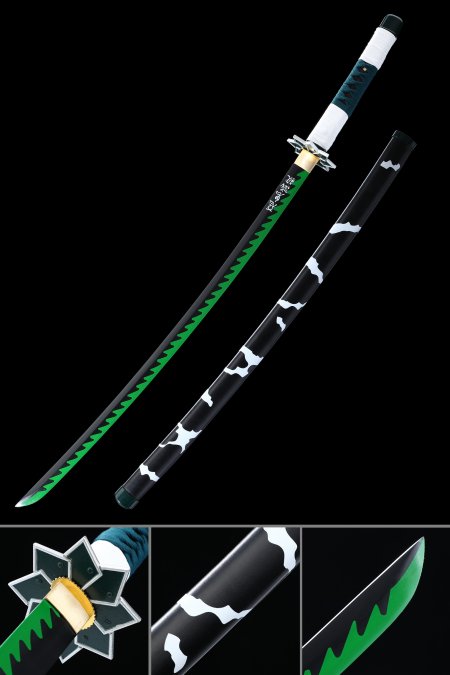
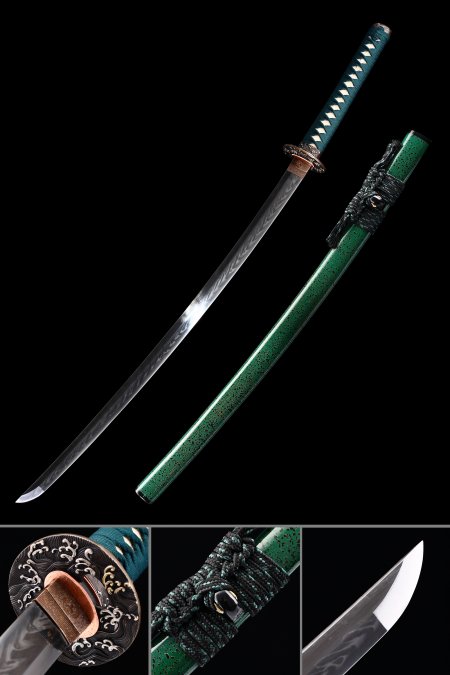
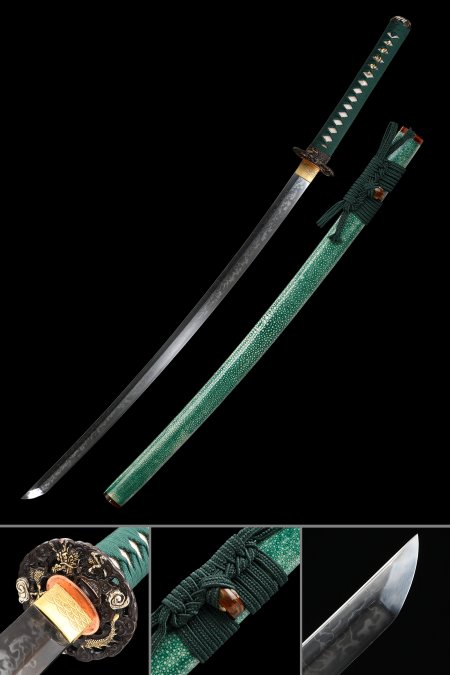
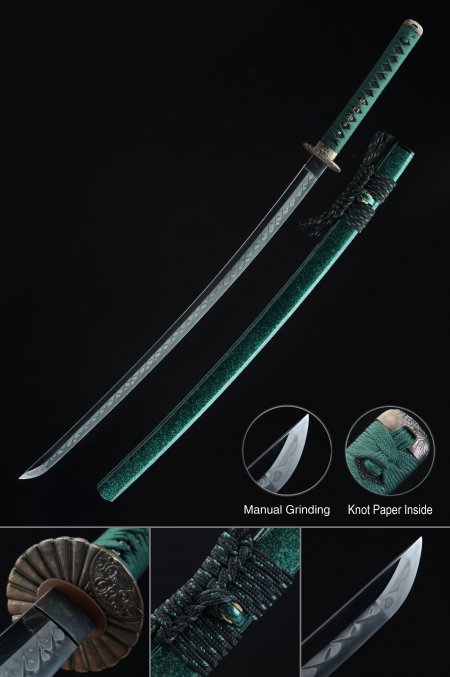
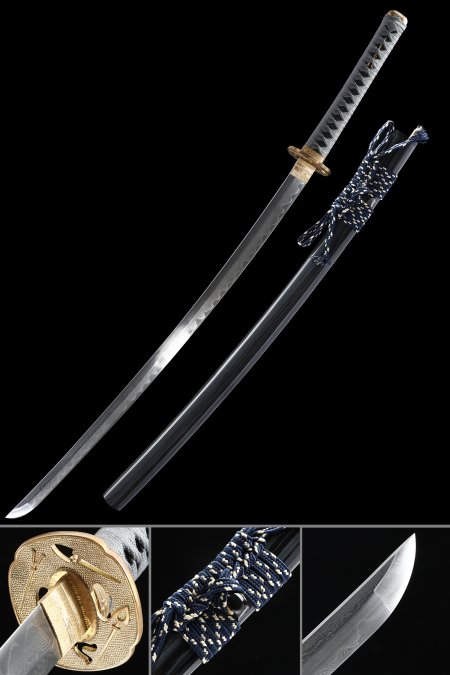
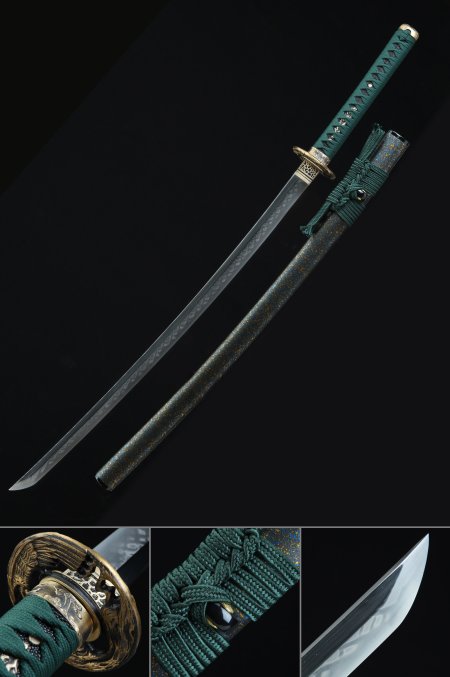
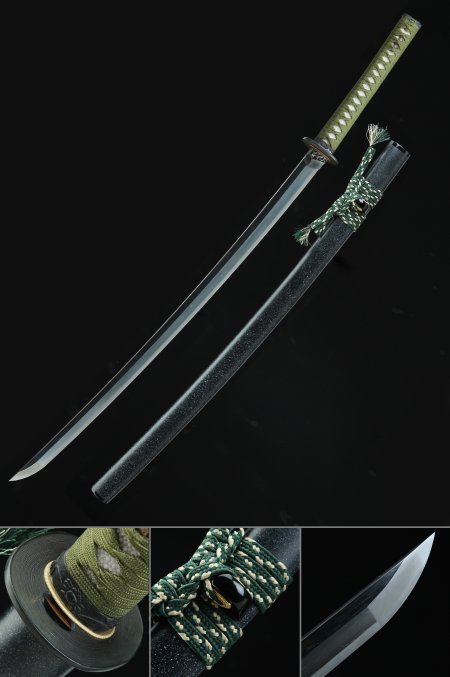
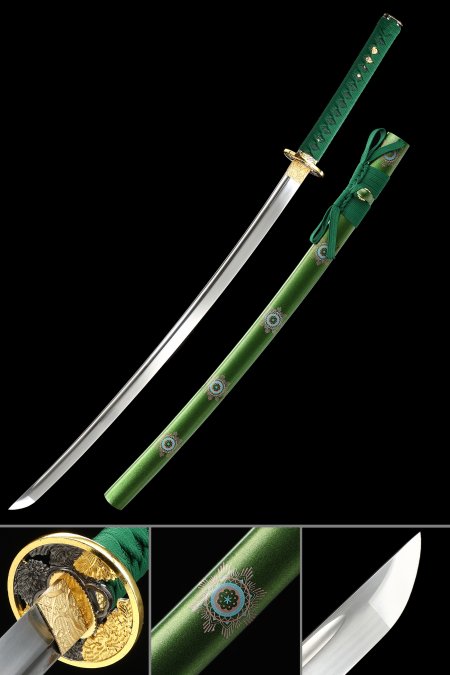
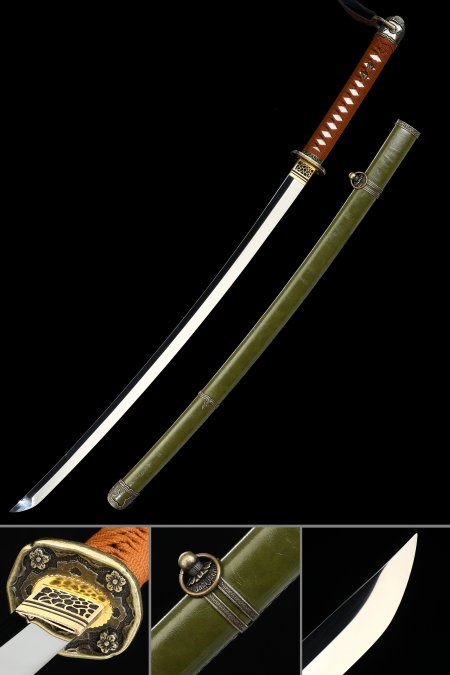
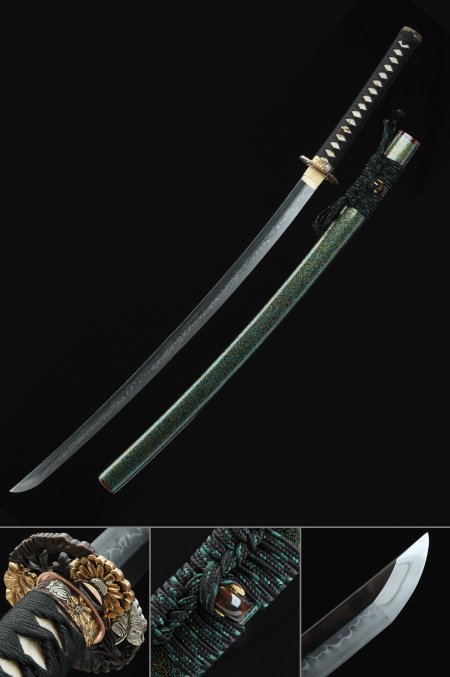
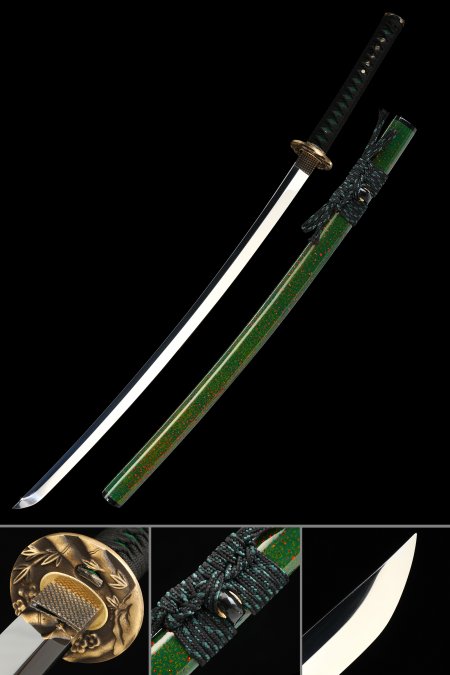
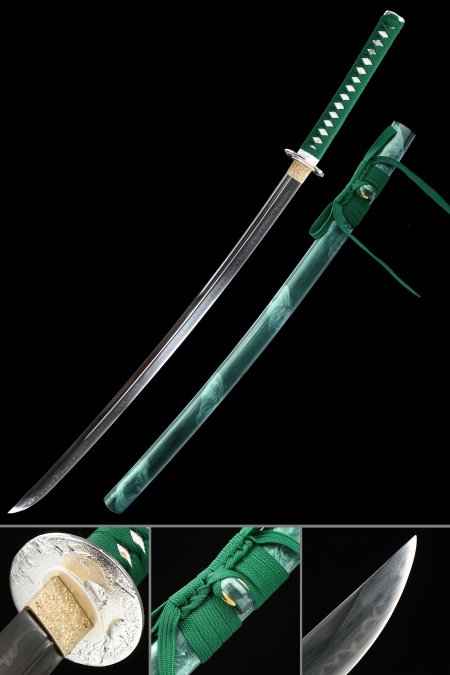
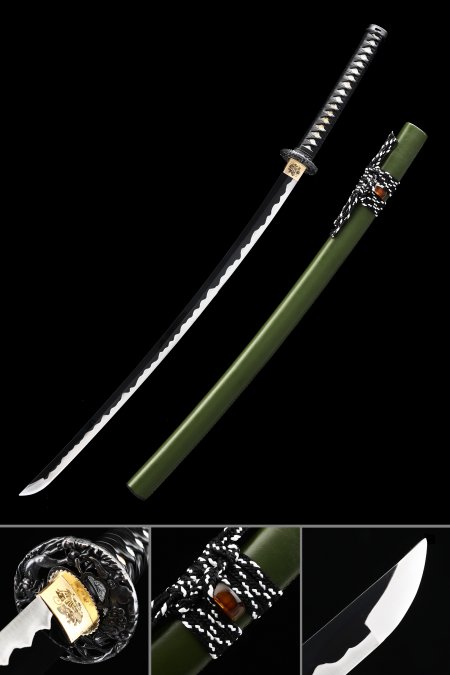
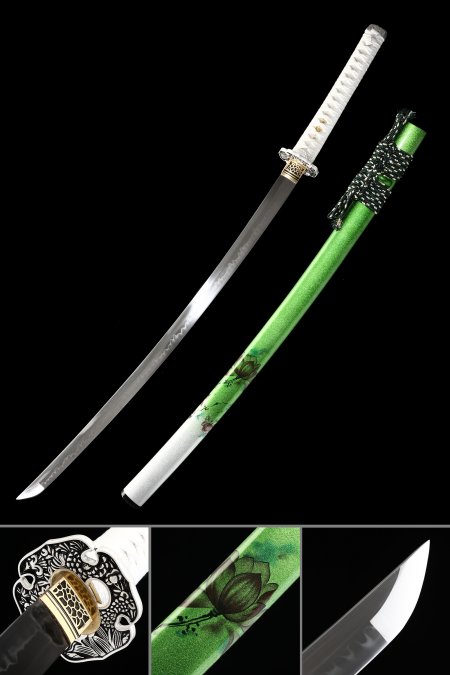
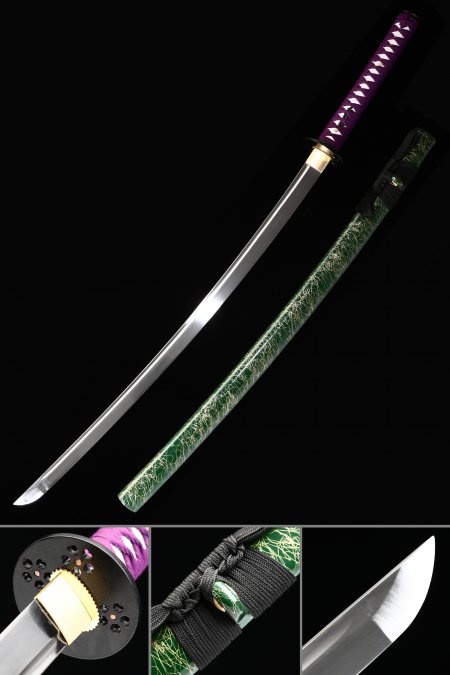
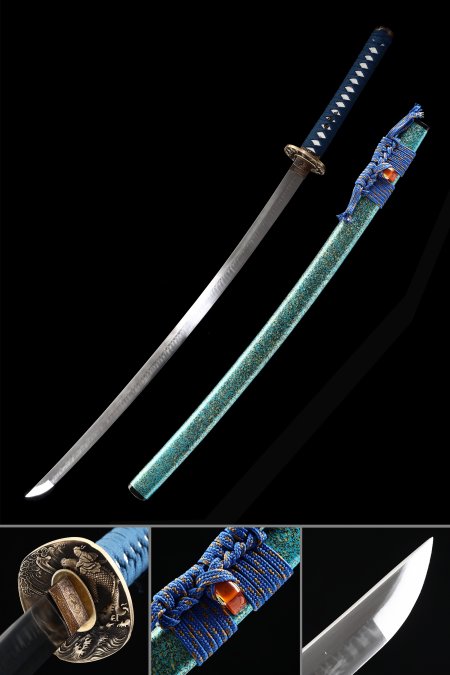
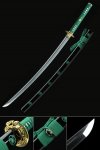
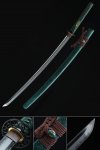
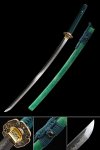
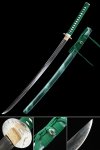
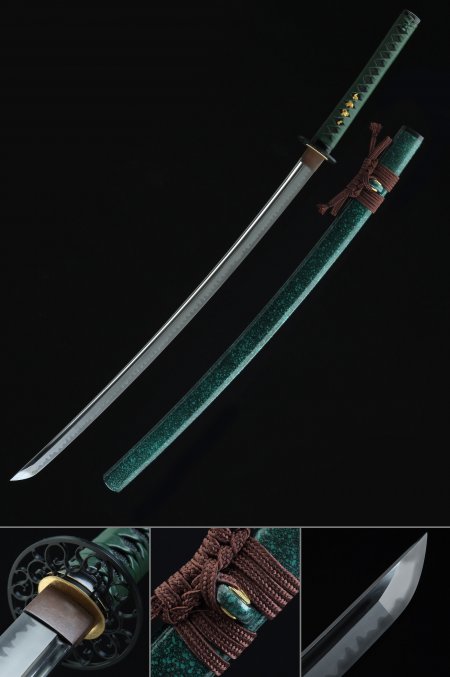
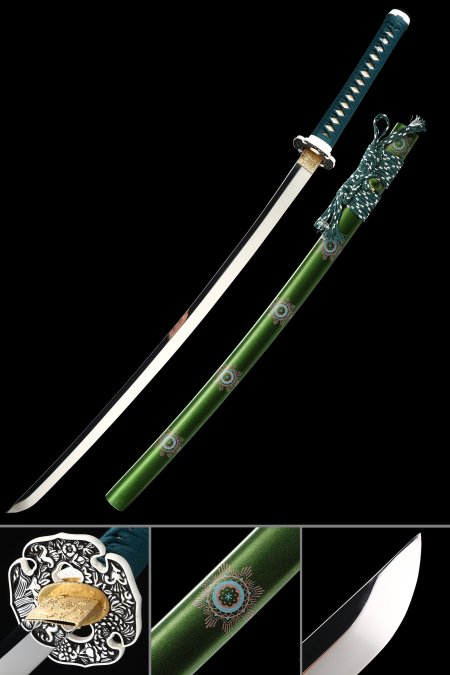
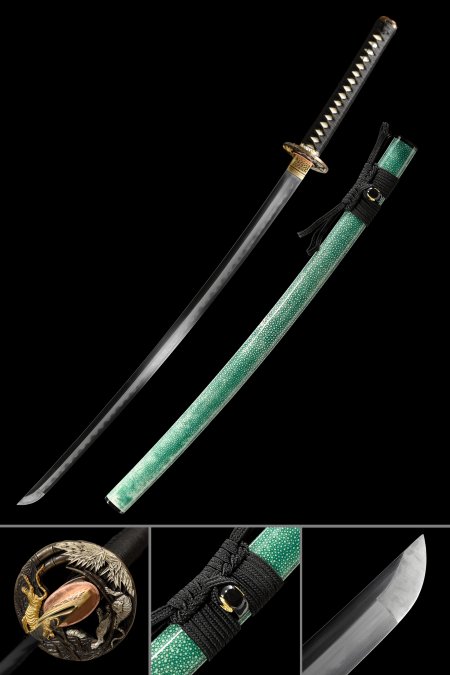
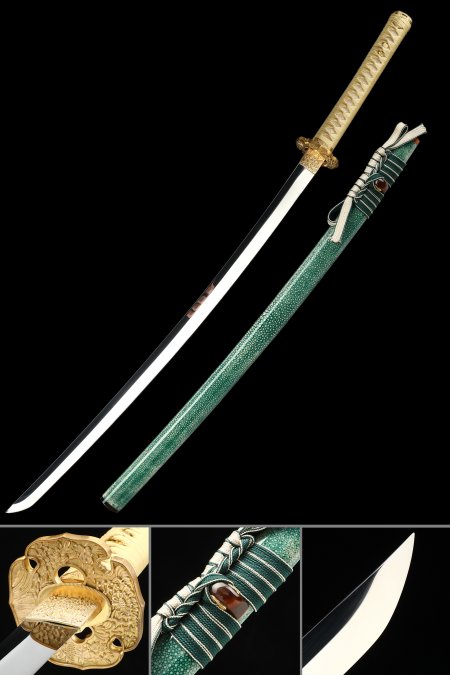
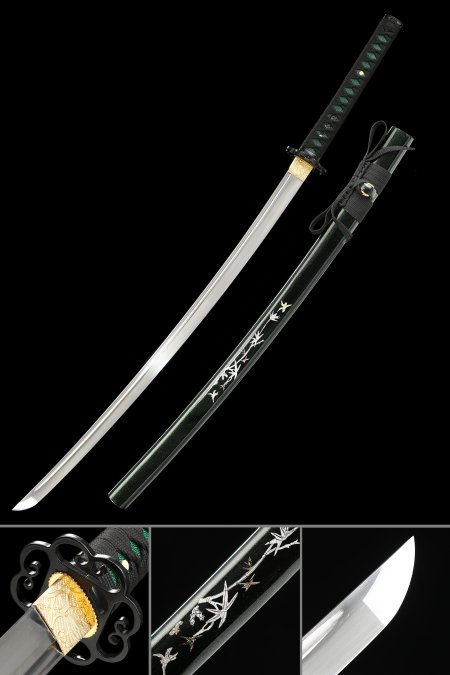
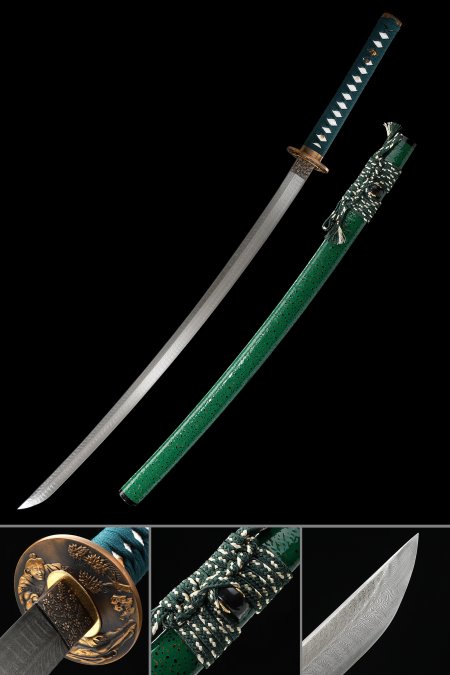
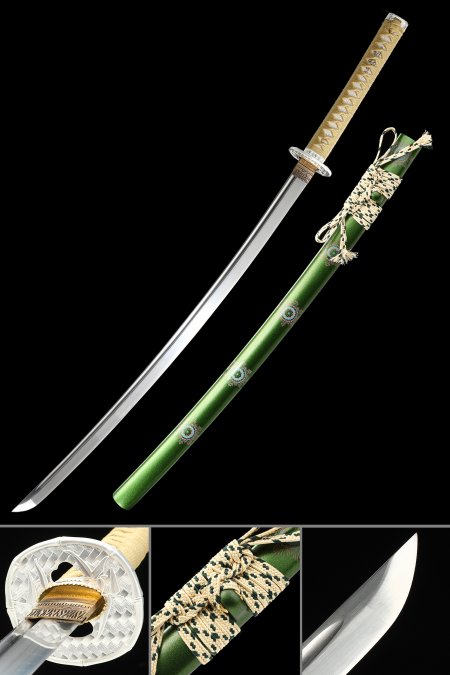
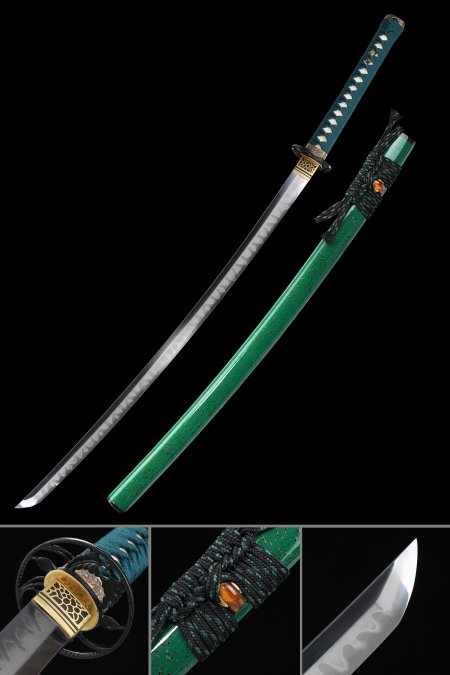
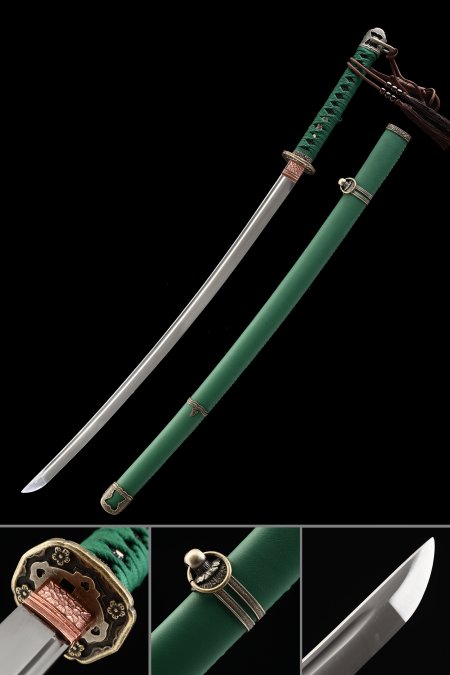
Green Katana Sword

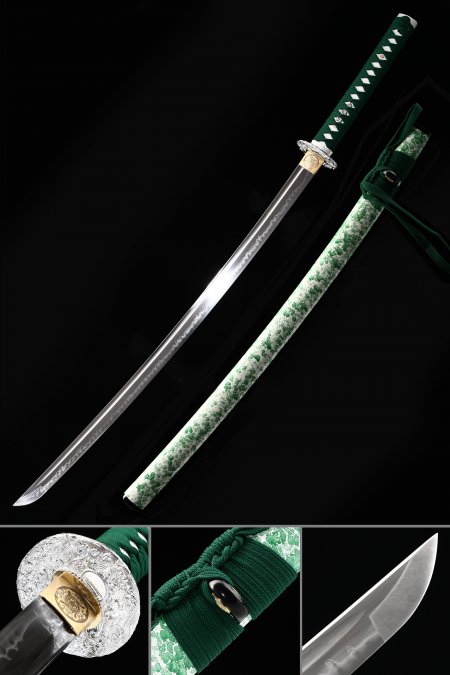
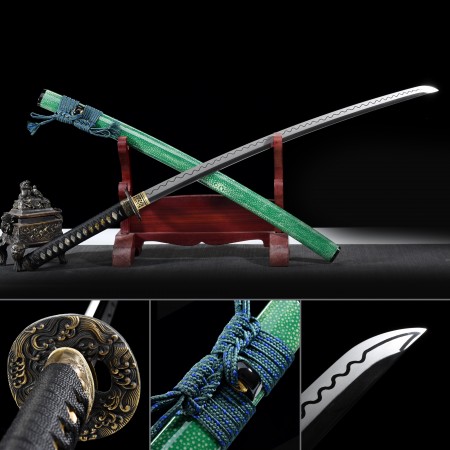
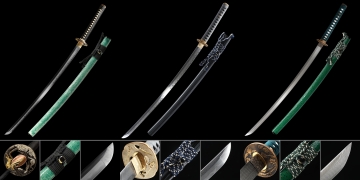
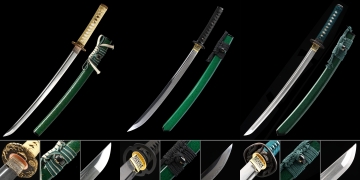
Browse our collection of green katana swords - hand-forged Japanese katana featuring vivid green blade treatments, forest-tone scabbard lacquer, and natural green color configurations, available in 1065, 1045, and Damascus steel with full-tang construction. Green katana evoke Japan's natural landscape - the bamboo grove, the cedar forest, the jade tradition - creating display pieces that bring organic vitality and chromatic distinction to the Japanese sword aesthetic. Free US shipping and hassle-free returns included.
Showing 30 Products

Related Collections

Black And Green Katana5 items


3 Reviews

Green Wakizashi Sword5 items


17 Reviews

Green Damascus Katana3 items


3 Reviews

Green Saya Wakizashi6 items


17 Reviews

Frequently Asked Questions

What green aesthetic options are available in the green katana collection?
Green katana in this collection are available across a range of green aesthetic configurations that span from vivid emerald blade treatments to subtler forest-tone scabbard lacquers. Vivid green blade treatment pieces apply the color directly to the steel surface, creating a blade that reads in immediate chromatic green when drawn from the scabbard. The drawn blade's green reads with particular intensity because the contrast between the green steel and the scabbard interior - typically in a dark or natural tone - creates a moment of chromatic surprise when the sword is presented. Green scabbard lacquer pieces concentrate the color in the sheathed presentation, where the lacquered exterior reads as the dominant green element. Full green configurations - green blade treatment, green scabbard, and coordinated handle wrapping - create completely unified green aesthetic pieces. Damascus steel configurations include green color elements alongside the fold-forged blade patterning.
How does 1065 carbon steel benefit a green katana blade?
1065 carbon steel benefits a green katana blade primarily through its higher carbon content and the grain structure that results from it. At approximately 0.65% carbon content, 1065 steel sits above the common 1045 grade in terms of both achievable hardness through heat treatment and the surface grain density that affects how color treatments adhere to the blade surface. A denser, finer grain surface - which 1065 steel provides over 1045 - allows color treatments to adhere with greater uniformity and definition, creating green blade treatments that read with exceptional clarity and consistency rather than the slight grain-related variation that can appear on less fine-grained steel surfaces. The higher hardness of 1065 steel also means the blade maintains its edge geometry and surface integrity better through extended display and occasional handling. For collectors who want the most precise and well-defined green blade treatment quality, 1065 carbon steel provides a meaningful upgrade from the 1045 grade.
What is the cultural connection between green and the Japanese sword tradition?
Green's connection to the Japanese sword tradition is rooted primarily in the natural world that permeated classical Japanese martial culture. The samurai class practiced their arts within Japan's natural landscape - the bamboo training dojo, the cedar forest shrine, the moss-covered stone garden - and these natural elements entered the decorative language of Japanese sword culture through the motifs and colors applied to sword fittings and lacquerwork. Bamboo, a plant of extraordinary cultural significance in Japan for its strength, flexibility, and speed of growth, is deeply green; its association with the martial virtues of the samurai - strength, adaptability, rapid decisive response - makes bamboo's color a natural fit for the sword aesthetic. Celadon and jade green appear throughout classical Japanese decorative arts as colors of refinement and cultural sophistication. The green of spring foliage references the Japanese tradition of hanami flower viewing and the seasonal awareness that was a cultivated dimension of classical samurai culture. A green katana thus draws from a deep well of natural and cultural associations.
How does a green katana pair with other swords in a display?
A green katana creates versatile and effective display pairings with a wide range of other Japanese sword configurations because its position in the natural color spectrum bridges warm and cool tones. With a black katana, the green provides chromatic contrast that remains within the natural palette - the dark earthy tones of black alongside the organic vitality of green create a composed, forest-influenced display pairing. With a red katana, the green creates a complementary contrast that references traditional Japanese color pairings of natural tones - red cedar and forest green, autumn and spring in the same display. With a white or silver katana, the green provides warm naturalistic balance against the cool luminosity of the white. In a three-sword arrangement, a green katana between a black and a blue piece provides natural warmth that bridges the cool color family without introducing the high-energy drama of red. The green katana's naturalistic character makes it one of the most compositionally flexible chromatic sword pieces in a multi-sword display.

Customer Reviews