What makes a marble ninjato different from a standard ninjato?
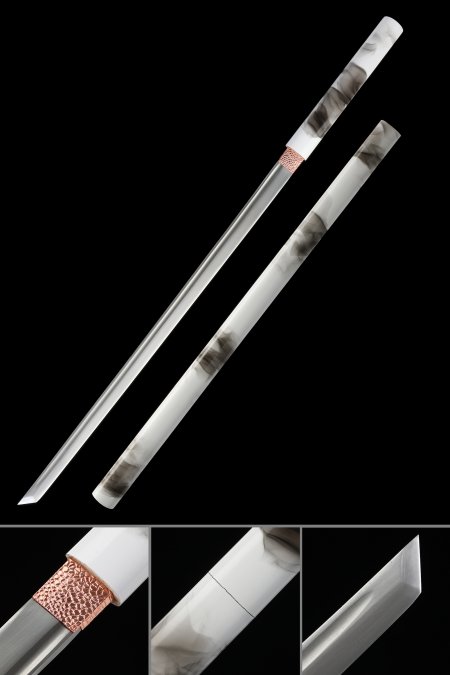
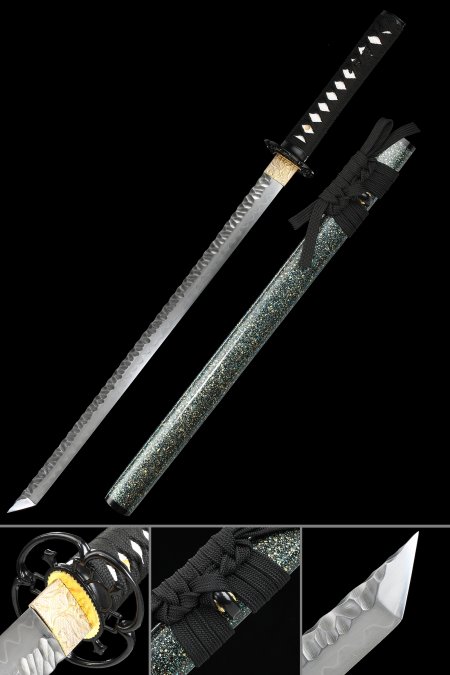
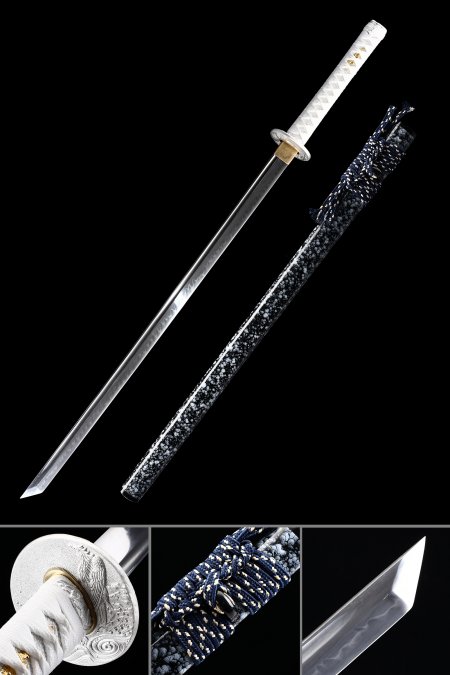
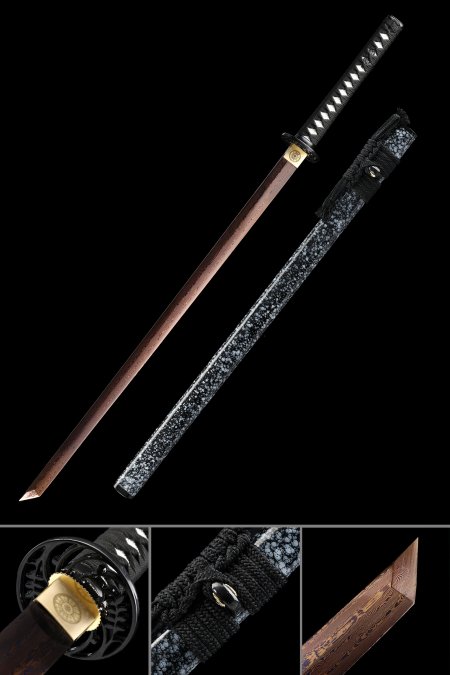
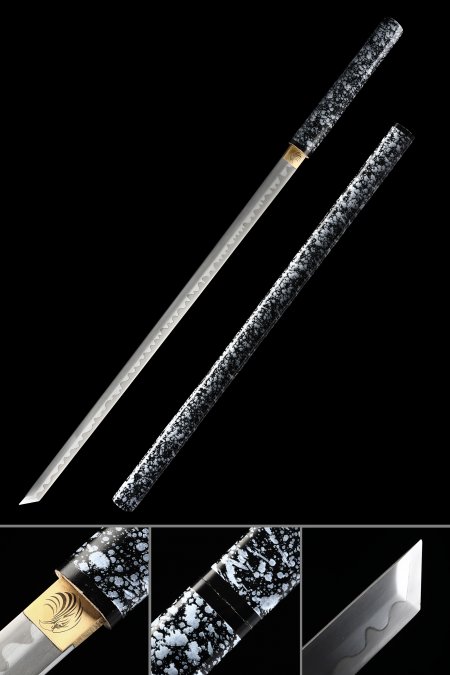
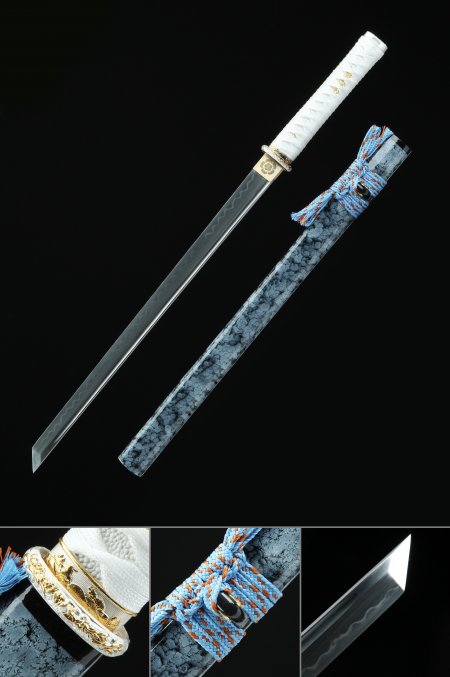
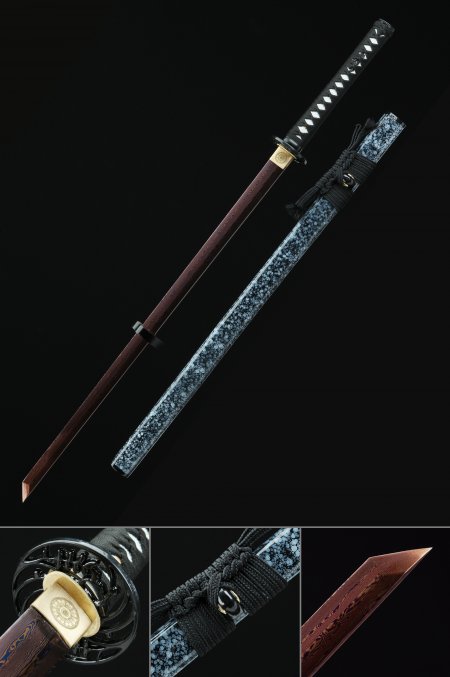
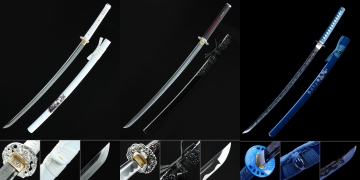
The primary distinction is the scabbard finish. A standard ninjato typically ships with a plain lacquered or matte black saya, while a marble ninjato features a scabbard with layered lacquer work that mimics natural stone veining. The effect is achieved through multiple coats of tinted lacquer applied and partially wiped away before curing, creating organic, non-repeating patterns unique to each piece. The blade geometry remains the same — a straight, single-edged profile with a squared-off kissaki — but the marble saya transforms the overall presentation into something far more visually distinctive on a wall mount or display stand.
What types of steel are used in these marble ninjato blades?
Most pieces in this collection use either T10 carbon steel or Damascus steel. T10 is a high-carbon tungsten-alloy steel favored for its hardness (typically around 60 HRC after proper heat treatment) and its ability to hold a visible hamon line through differential clay tempering. Damascus steel variants are created by repeatedly folding and forge-welding multiple steel layers together, producing the signature wavy surface pattern. Some models also use standard high-carbon steel with colored coatings applied post-forging. Each steel type offers a different visual character — T10 for a clean temper line, Damascus for intricate surface patterning — so the choice depends on which aesthetic appeals to you as a collector.
How should I care for a marble-finished scabbard?
The marble lacquer finish is more delicate than a standard gloss saya, so a few precautions go a long way. Store the sword horizontally on a display stand in a climate-controlled room, avoiding direct sunlight, which can fade the lacquer over time. Wipe the scabbard periodically with a soft, dry microfiber cloth to remove dust and fingerprint oils. Never use chemical cleaners or furniture polish, as solvents can dissolve the layered lacquer that creates the marble effect. For the blade itself, apply a thin coat of choji oil or mineral oil every few weeks to prevent surface oxidation, and always handle the blade with clean hands or cotton gloves to avoid transferring moisture and salts onto the steel.
Is a marble ninjato suitable as a gift for a sword enthusiast?
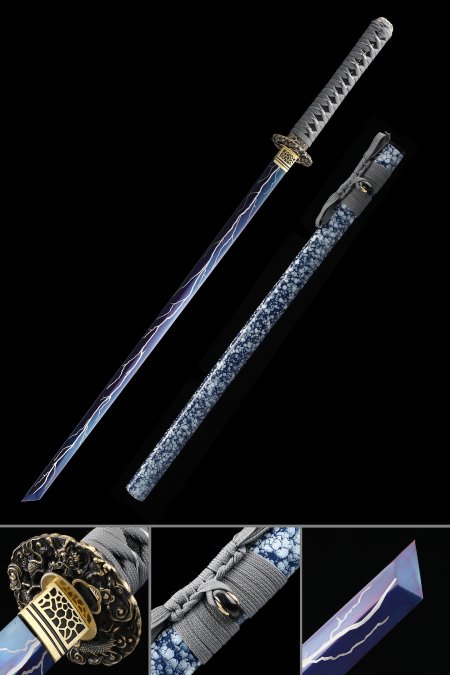
Absolutely — the marble scabbard gives these pieces immediate visual impact that standard replicas lack, making them excellent gifts for collectors or anyone who appreciates Japanese sword aesthetics. The combination of a hand-forged full-tang blade with an artistically finished saya means the recipient receives both craftsmanship and display value in a single piece. For gifting purposes, a T10 model with a visible hamon line tends to impress knowledgeable collectors, while a Damascus variant with a colored blade appeals to those who favor bold, contemporary styling. Pairing one with a wooden display stand creates a complete presentation ready to mount.
What is the typical blade length and weight of a ninjato?
A traditional ninjato blade runs between 19 and 22 inches, shorter than the average katana blade of 27 to 29 inches. This compact length gives the sword a distinctly different proportion — more direct and utilitarian in profile. Total weight with fittings and handle usually falls between 1.8 and 2.4 pounds depending on the steel type and blade thickness. T10 blades tend to sit at the heavier end due to the density of the tungsten-alloy steel, while some Damascus variants can be slightly lighter from the layered forging process. The straight-edged geometry, combined with the shorter blade, creates a balanced piece that sits naturally on horizontal display mounts.