What makes Damascus steel visually different from other blade types?
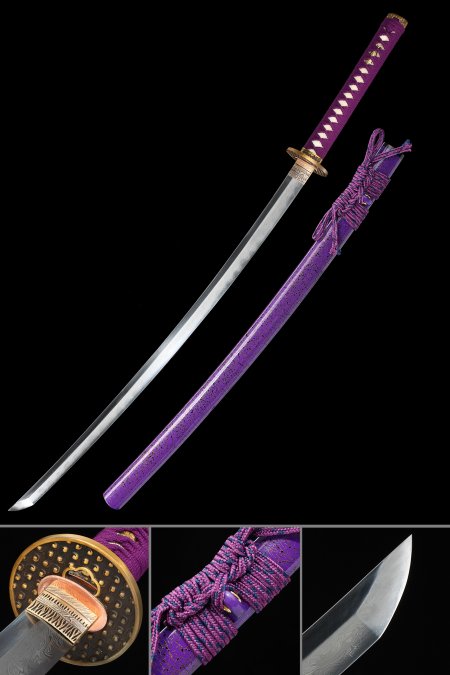
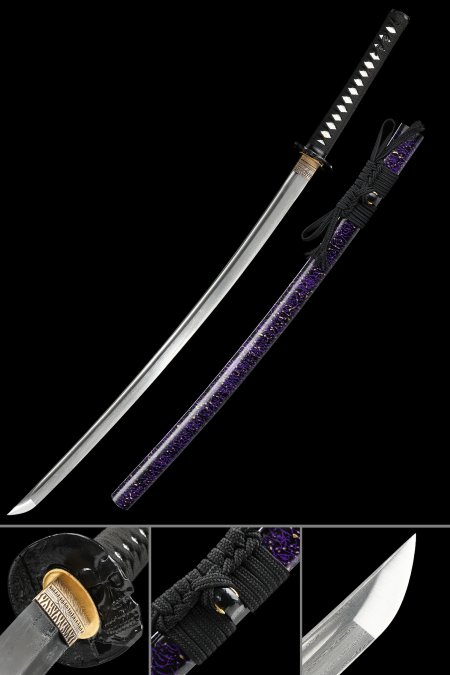
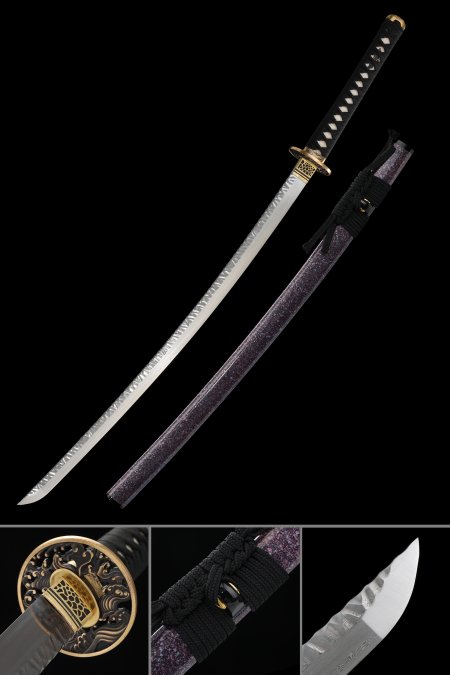
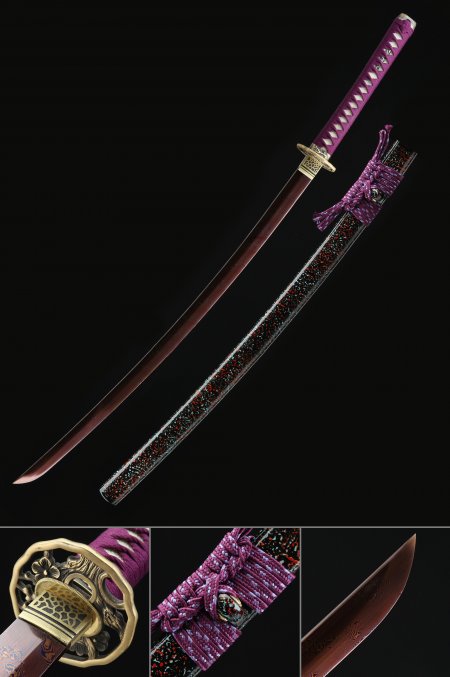
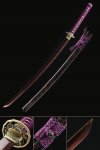
Damascus steel is produced by forge-welding multiple layers of high-carbon and lower-carbon steel together, then repeatedly folding and drawing out the billet. When the finished blade is etched - typically with ferric chloride or a mild acid solution - the different carbon contents react at different rates, revealing the flowing, layered grain pattern beneath the surface. No two Damascus blades share an identical pattern, because even small variations in folding angle, heat, and hammer pressure shift the final design. This is fundamentally different from monosteel blades, which show a uniform, featureless surface after polishing. On a purple-tinted Damascus katana, the etched pattern appears against the colored background, making the layering effect far more visible than it would be on a standard silver-grey finish - which is a significant part of why collectors prize these pieces as display items.
How is the purple color applied to a Damascus katana blade?
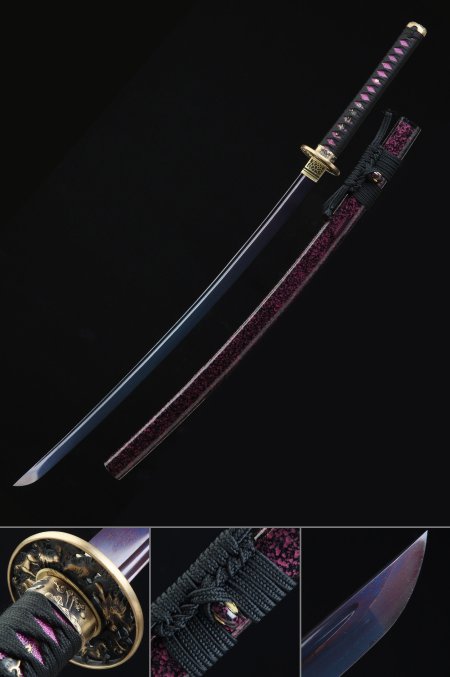
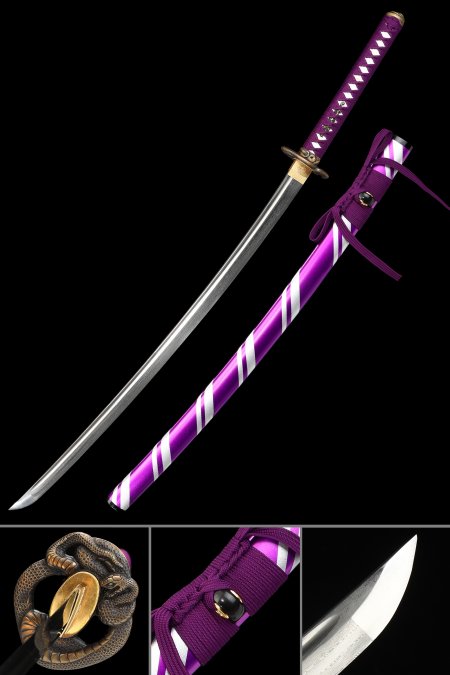
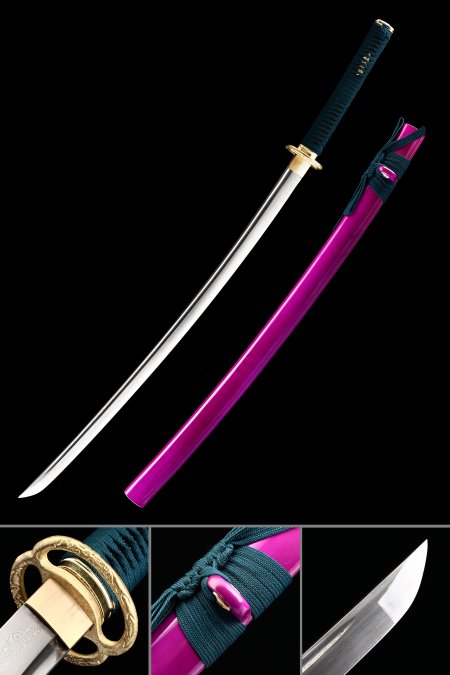
The purple tint on these katana blades is achieved through controlled heat treatment or chemical coloring applied after the initial forging and grinding stages. Heat coloring works by bringing the steel to a precise temperature range - typically around 550-600°F - where the oxidation layer on the surface produces interference colors, including violet and purple tones. Chemical bluing and patination solutions can also produce similar effects with more color consistency across the blade. Importantly, neither process fully conceals the underlying Damascus pattern - the layered grain remains visible through the color, and in many cases the contrast between the colored surface and the etched pattern lines actually sharpens the visual effect. The result is a blade finish that is far more complex than painted or coated steel, because the color is part of the steel's surface rather than applied on top of it.
Does full-tang construction matter for a display katana?
Full-tang construction means the steel of the blade extends in a single unbroken piece through the entire length of the handle, rather than being attached via a short stub or threaded rod. For display collectibles, this matters in two important ways. First, it reflects authentic construction standards - historically correct katanas were always full-tang, so full-tang pieces represent the craft more accurately. Second, it provides long-term structural integrity even in a display context: partial-tang handles can loosen over decades as wood and adhesive shift with humidity changes, while a full-tang assembly remains secure. Collectors who intend to pass pieces down or who display them in environments with seasonal humidity fluctuations will find full-tang construction holds up significantly better over time, and it adds genuine resale and appraisal value compared to decorative-only alternatives.
How should I care for an etched Damascus blade in long-term storage?
Etched Damascus steel has more exposed surface area than a polished monosteel blade, which makes it somewhat more susceptible to oxidation if left untreated. For long-term display or storage, apply a thin, even coat of choji oil - the traditional Japanese blade oil - or pharmaceutical-grade mineral oil every four to six weeks. Use a soft, lint-free cloth to spread the oil in the direction of the grain, then wipe away any excess; pooling oil can attract dust and leave residue in the etched grooves. Store the katana in its saya when not on display, as the wooden scabbard provides a degree of humidity buffering. Avoid storing in leather-lined cases, as tanned leather releases acidic compounds that react with carbon steel over time. If you handle the blade directly, wipe it down afterward - fingerprint oils contain salts that cause spotting on etched surfaces within days.
What tsuba styles are available and how do I choose between them?
The tsubas across this purple Damascus collection span several distinct design languages. Gold dragon tsubas are the most ornate option - their relief-cast dragon motifs pair naturally with the jewel-toned purple palette and suit collectors drawn to East Asian symbolic imagery. Wave-pattern tsubas offer a more restrained, nature-inspired aesthetic that emphasizes the flowing quality already present in the Damascus grain, creating a more unified visual theme across blade and guard. Skull tsubas lean into a darker, more dramatic presentation style that contrasts sharply with the purple lacquer saya. Python-motif guards occupy a middle ground - textural and organic without overtly referencing any single cultural symbol. The practical advice for choosing: consider the display environment first. A traditional wooden sword rack in a minimalist space suits the wave or python designs; a more theatrical or thematic display wall benefits from the dragon or skull options. The tsuba is the visual anchor of the mounted katana when displayed horizontally, so matching it to the surrounding decor pays off.