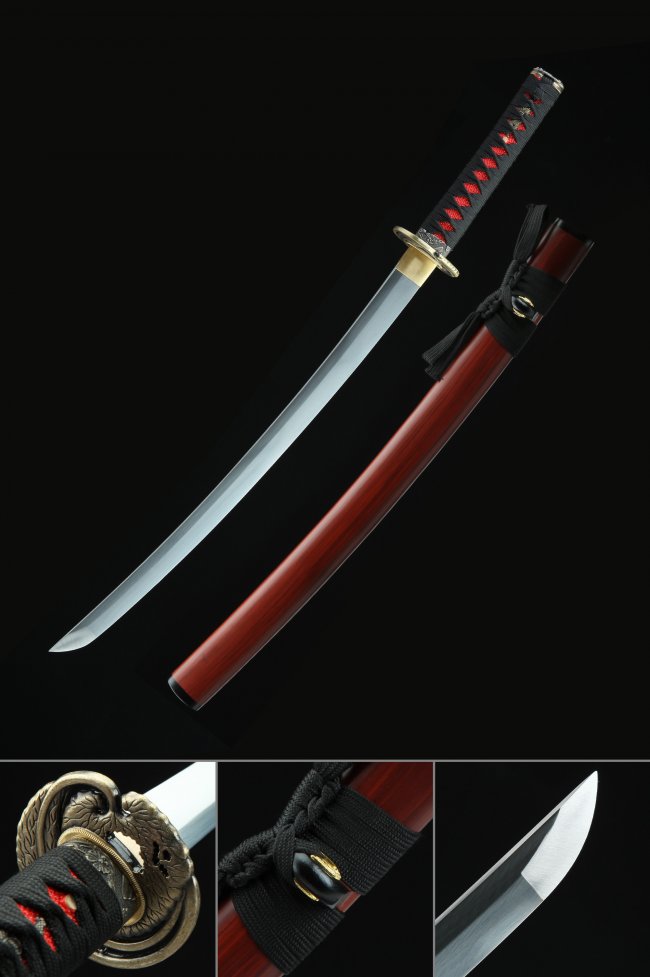
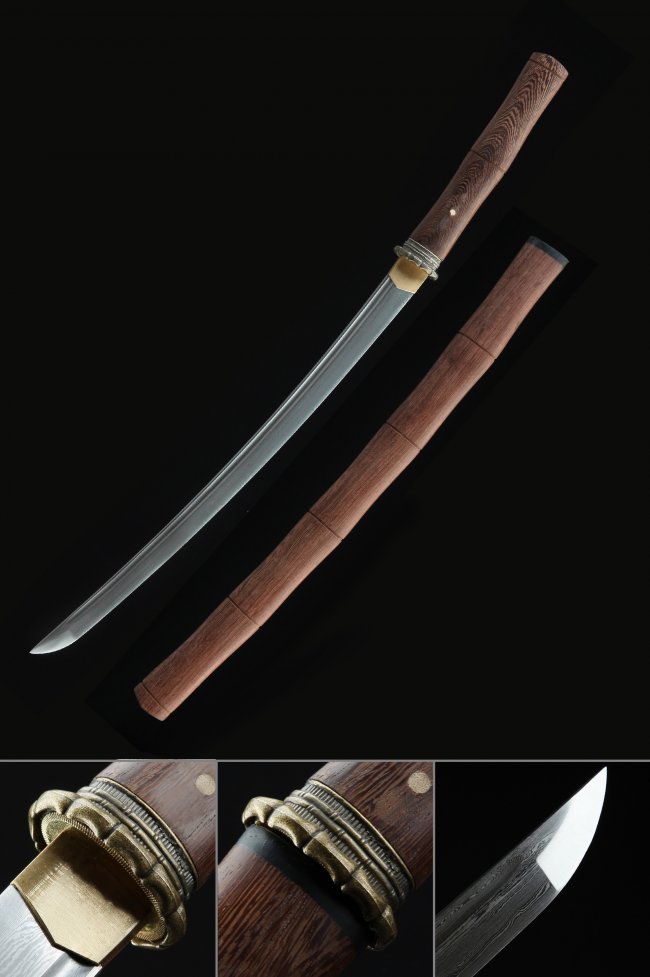
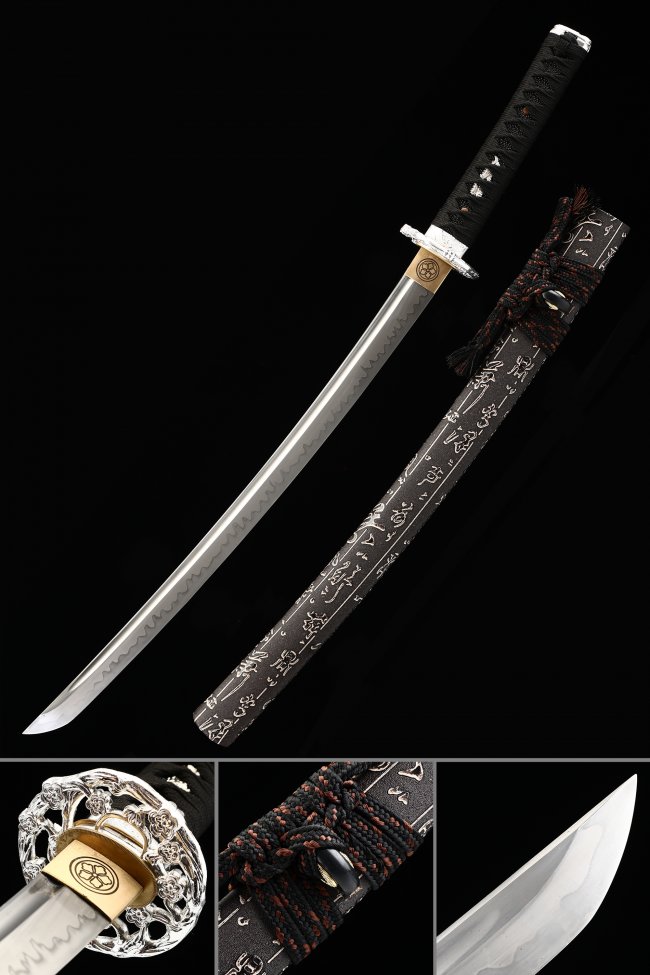
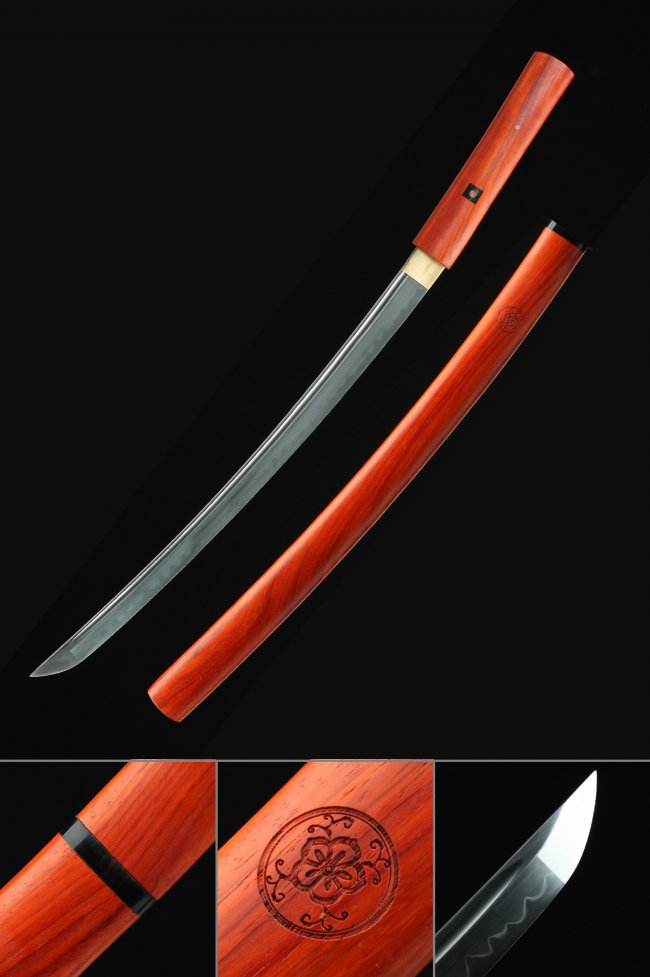
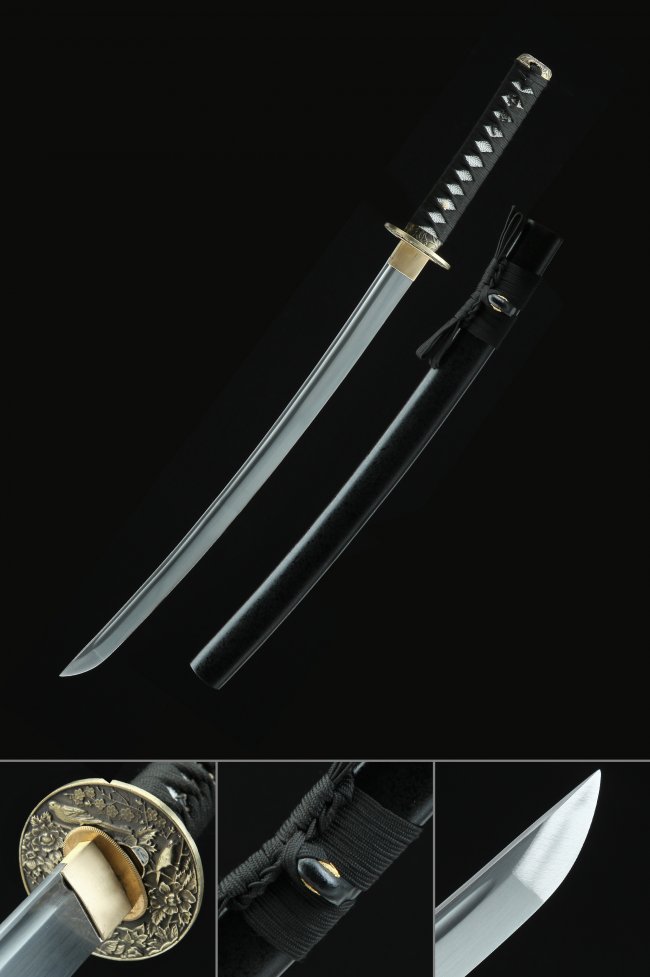
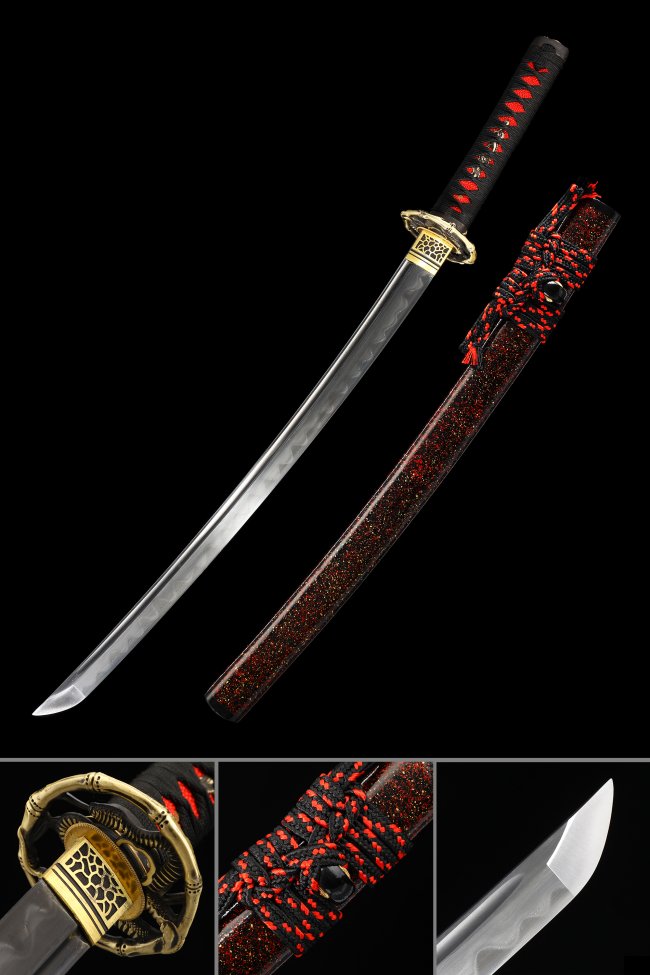
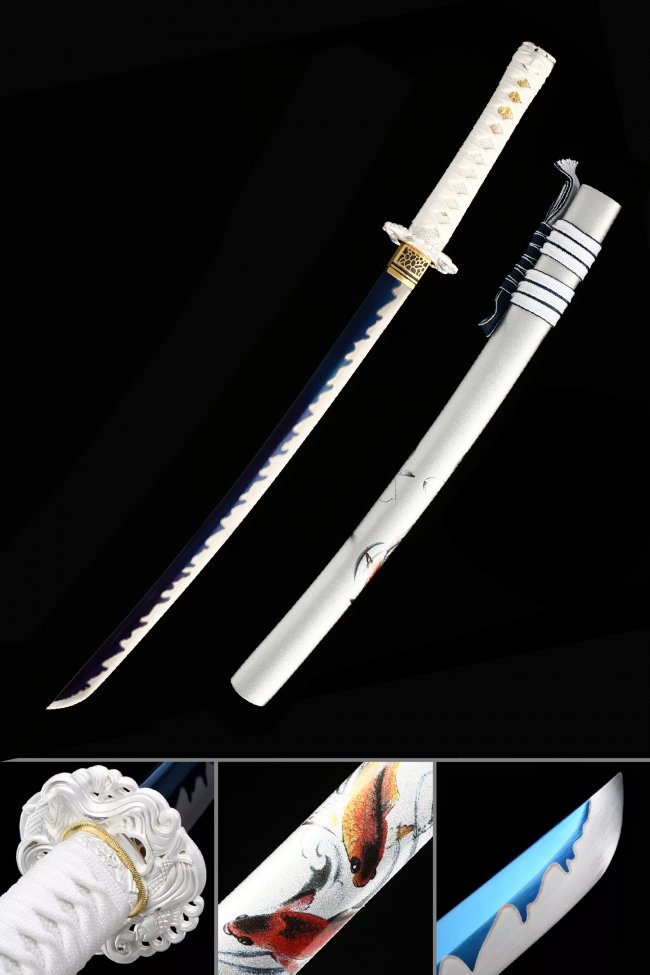
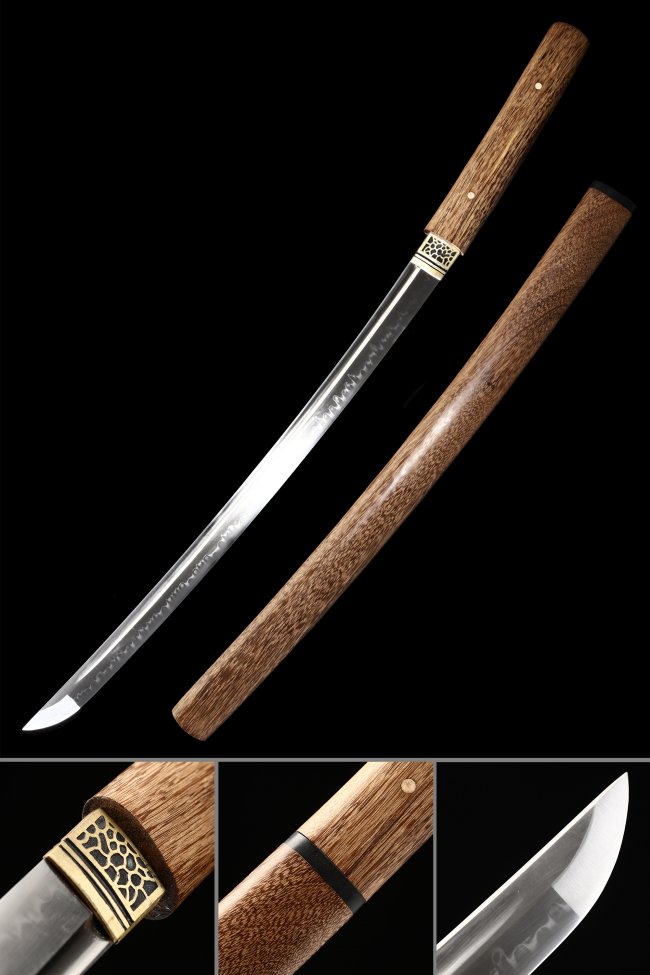
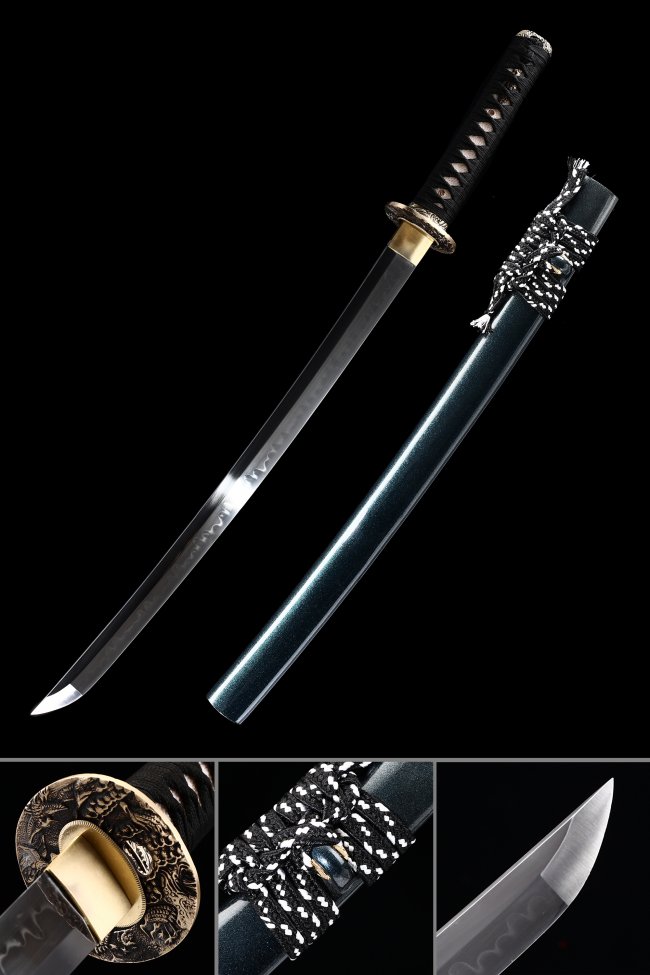
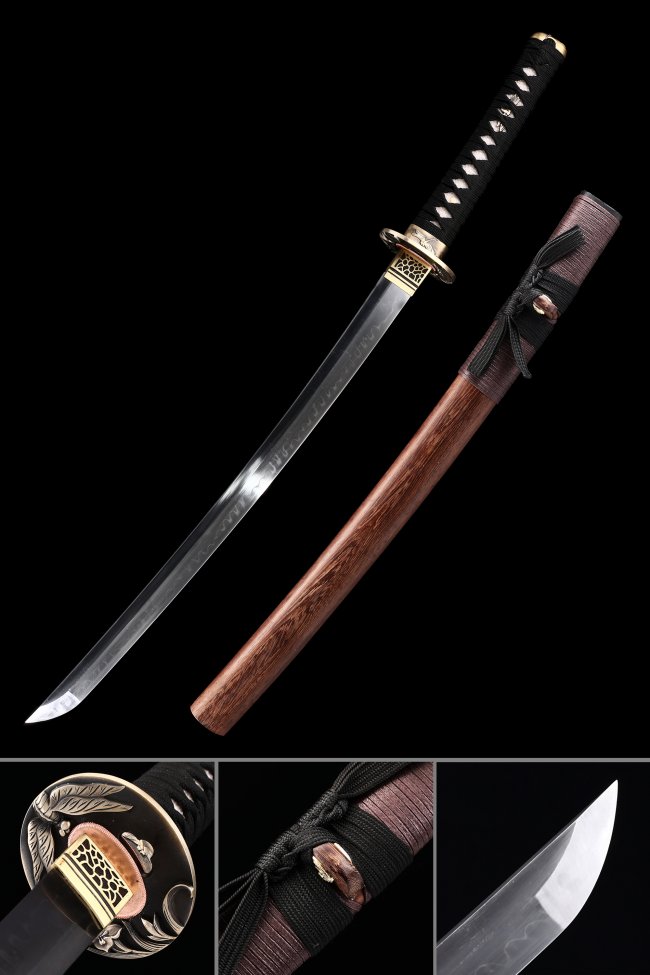
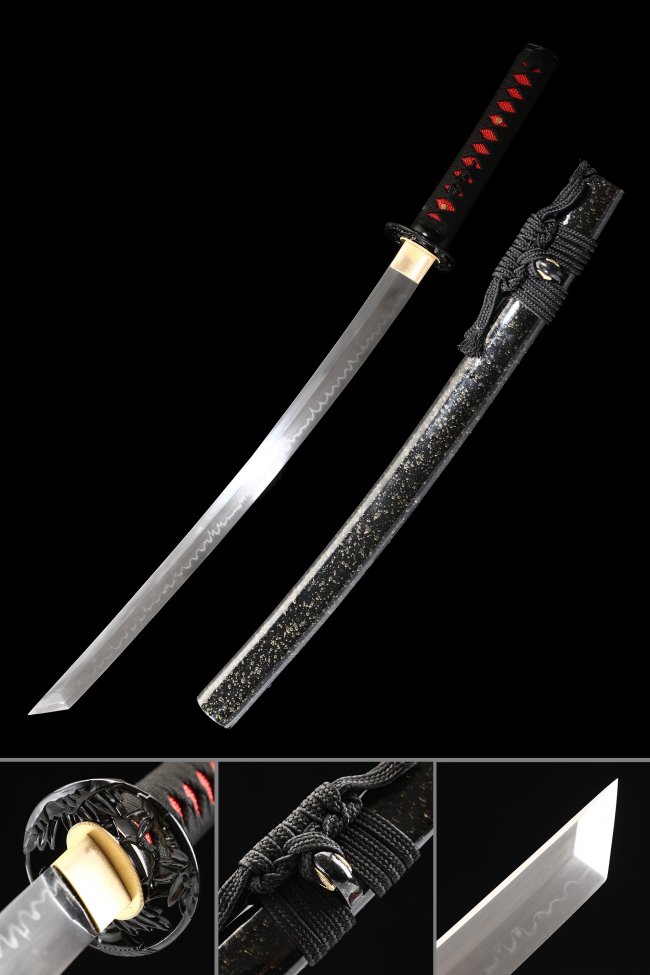
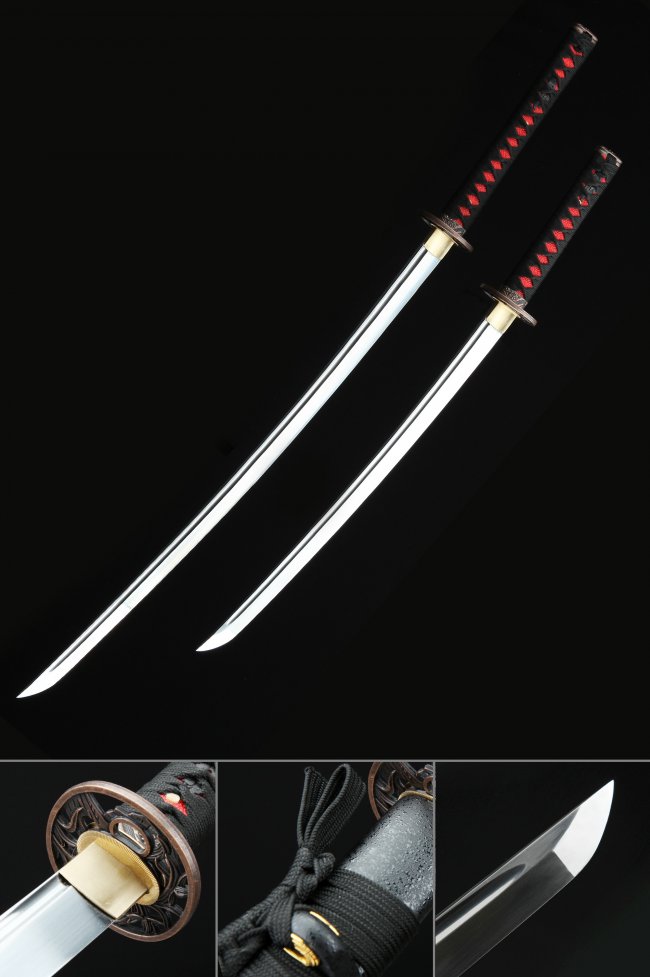
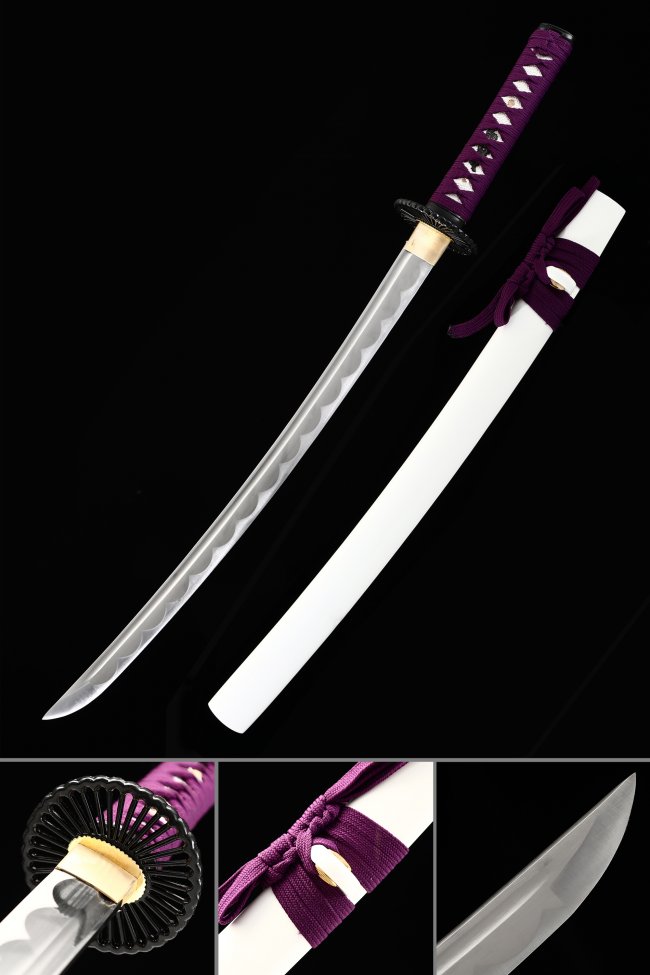
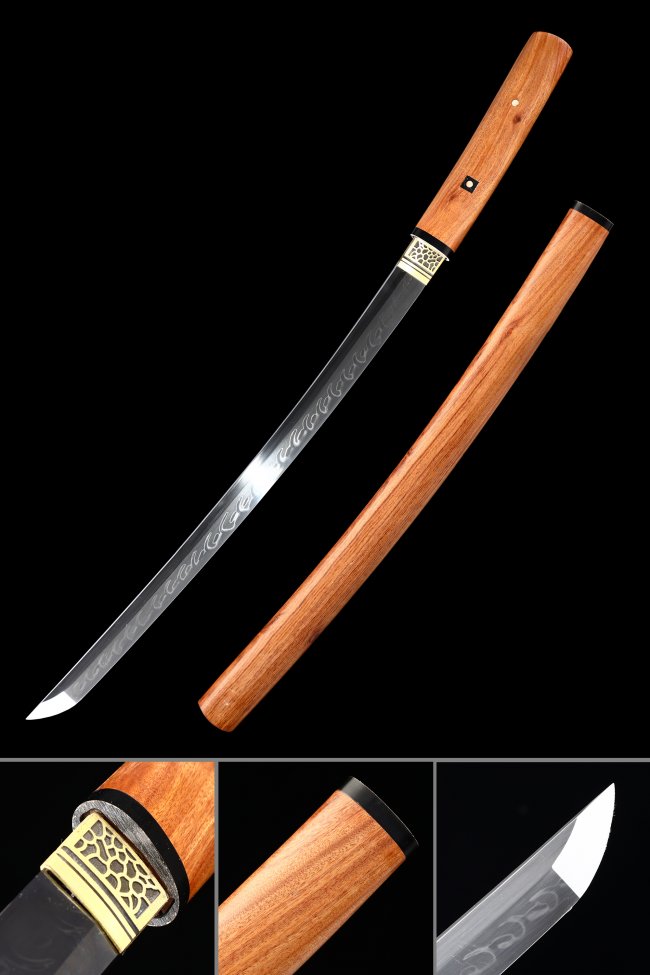
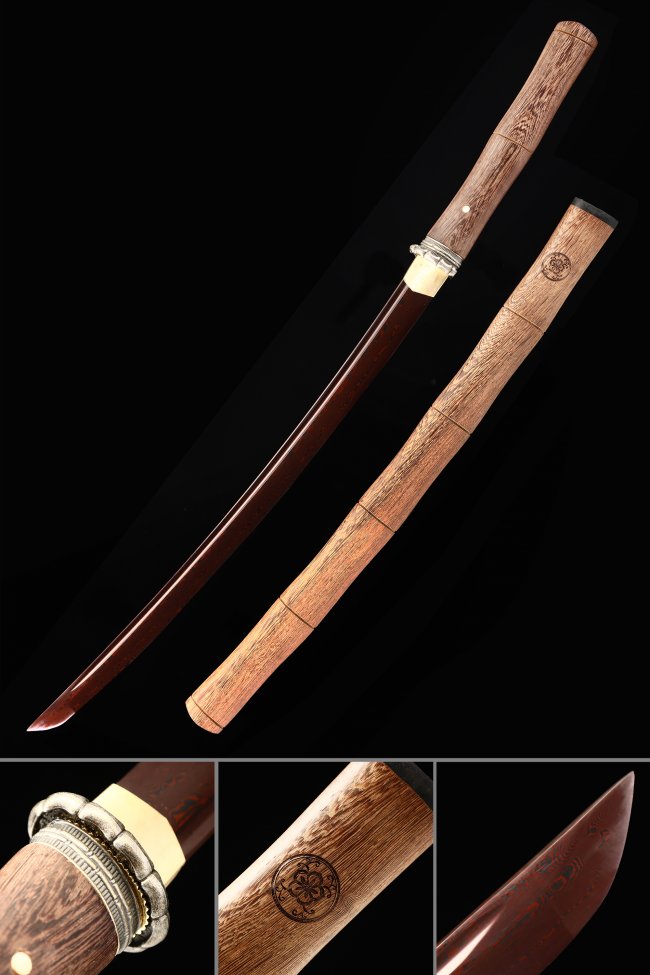
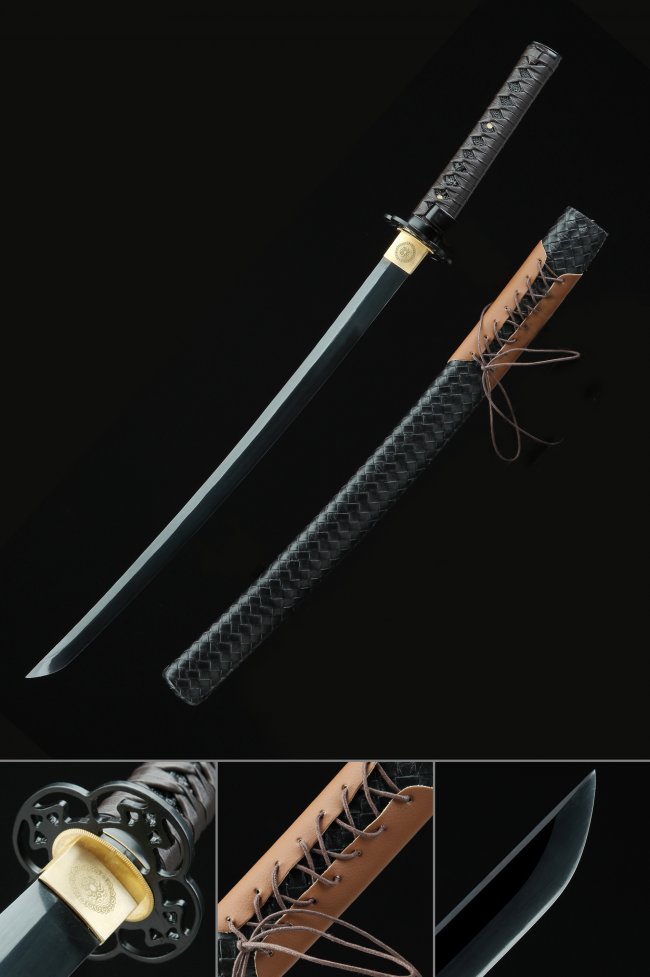
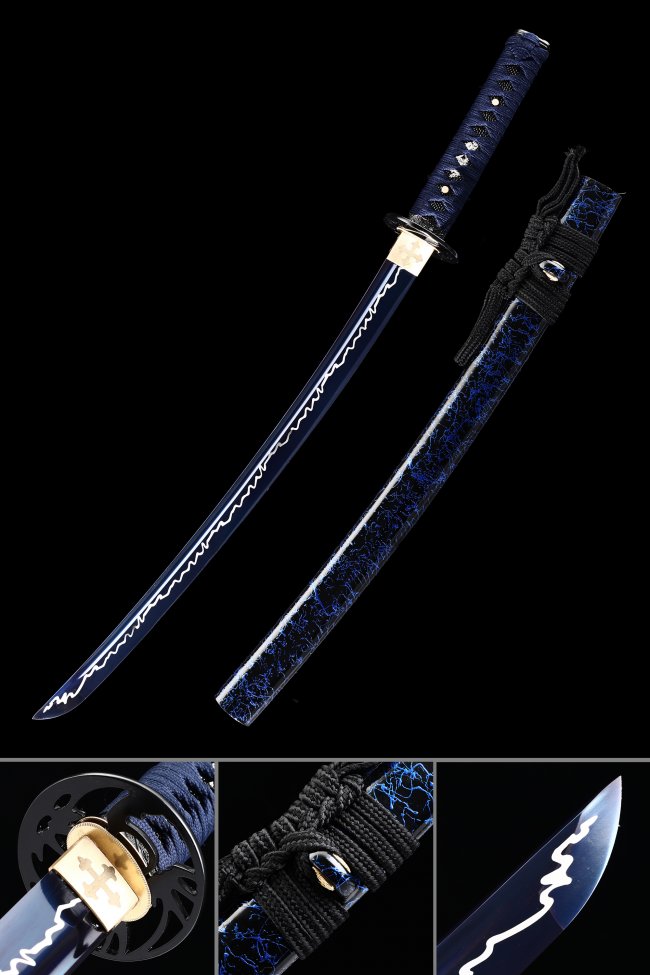
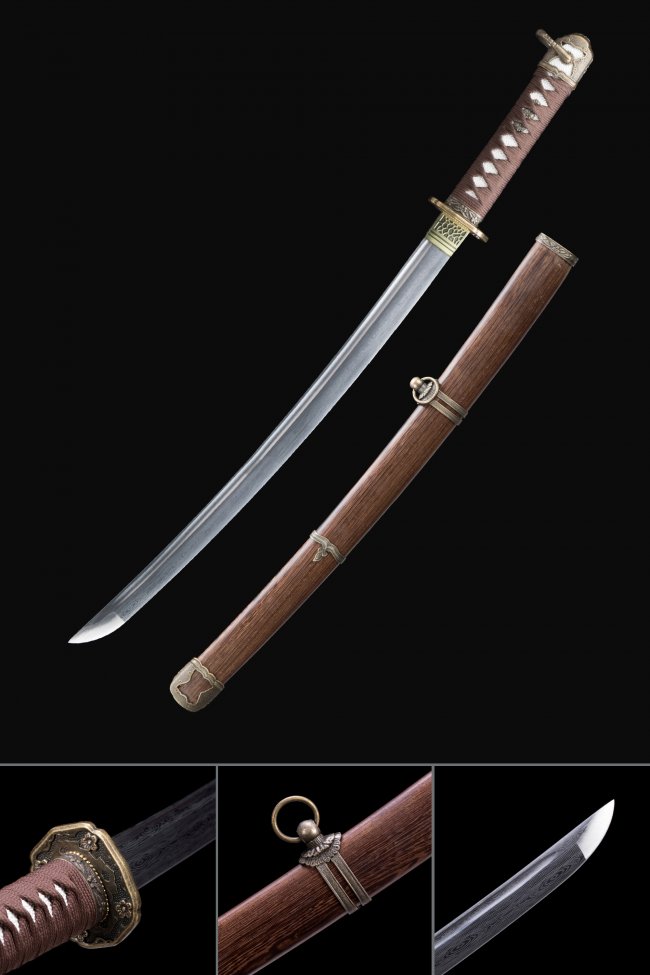
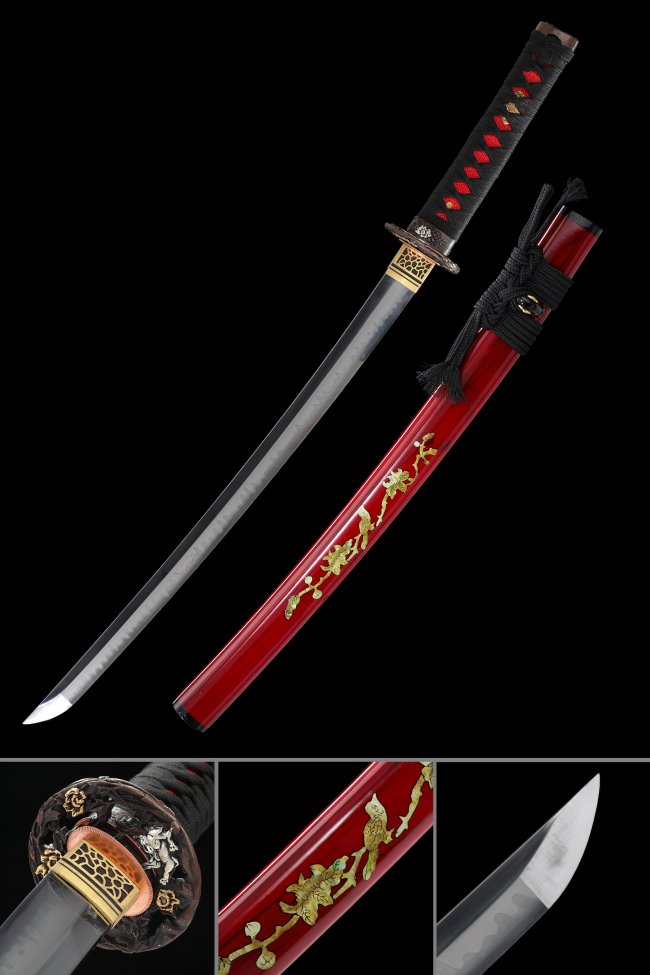
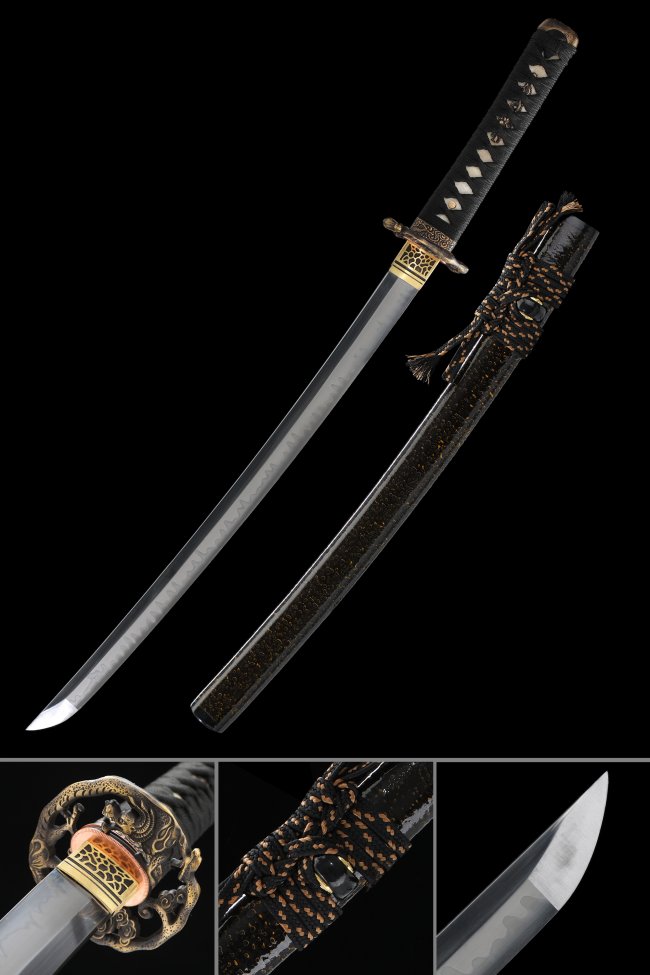
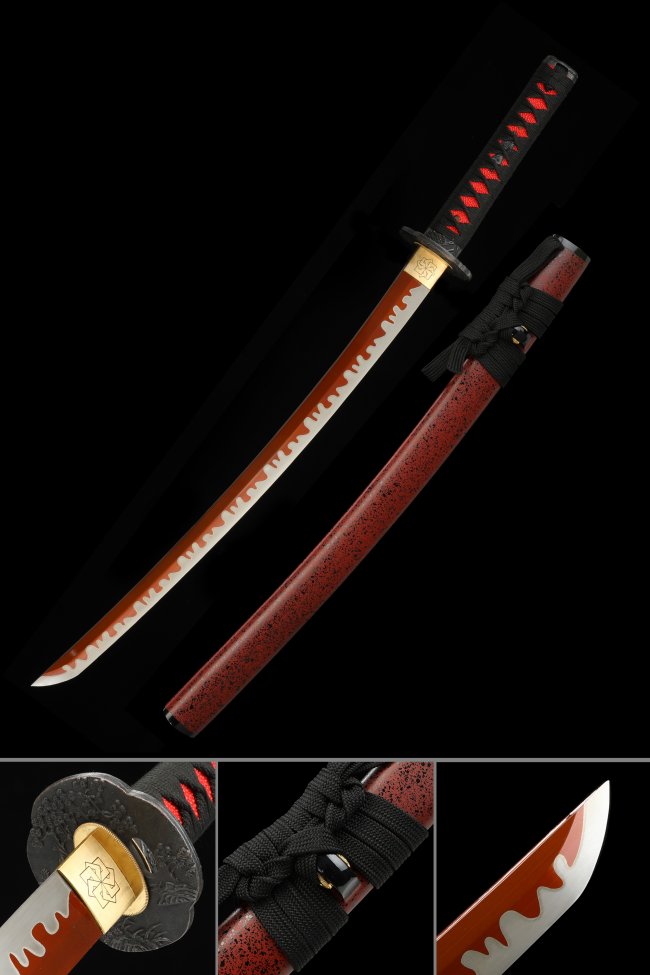
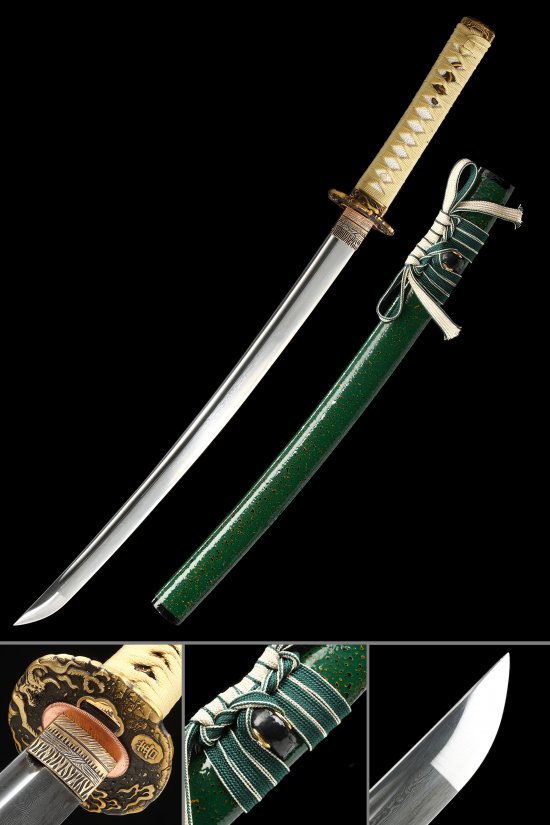
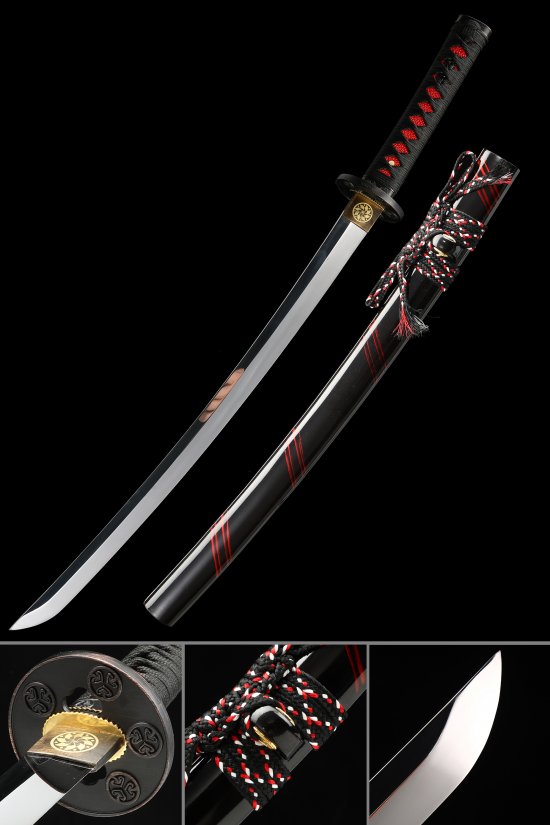
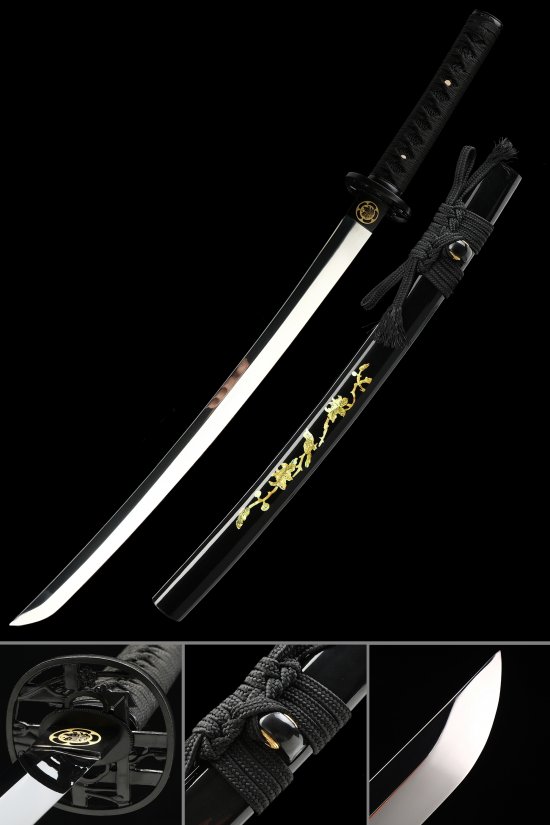
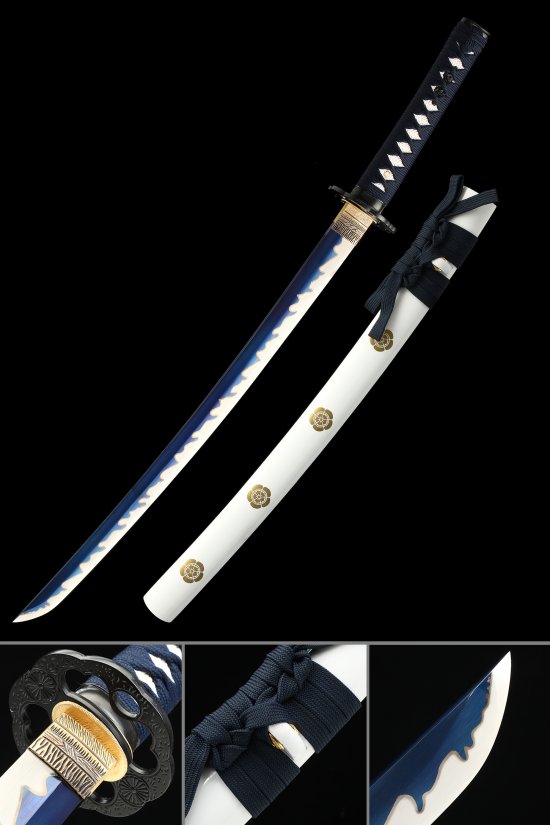
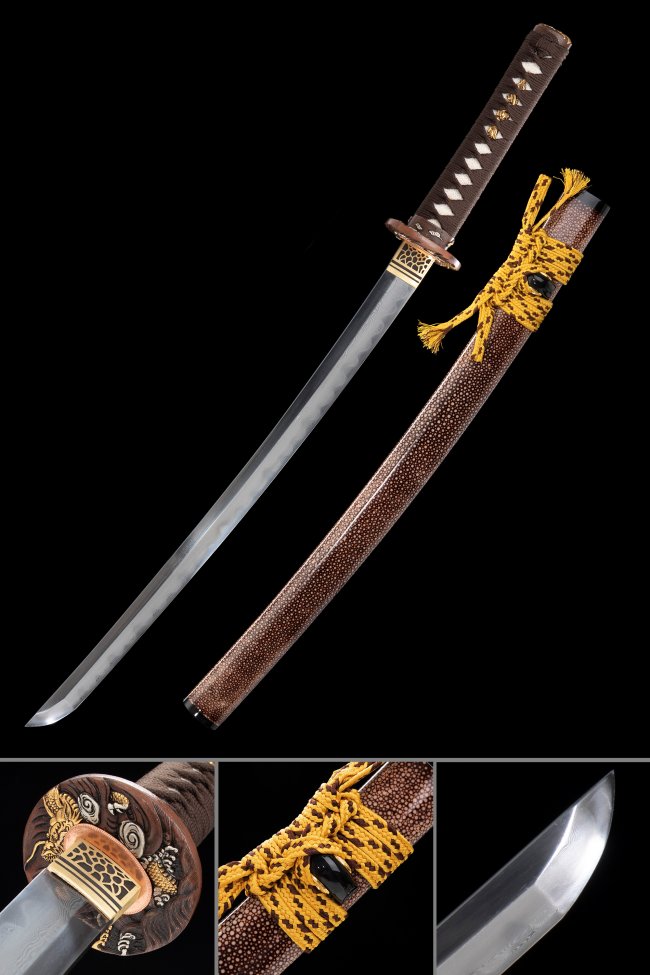
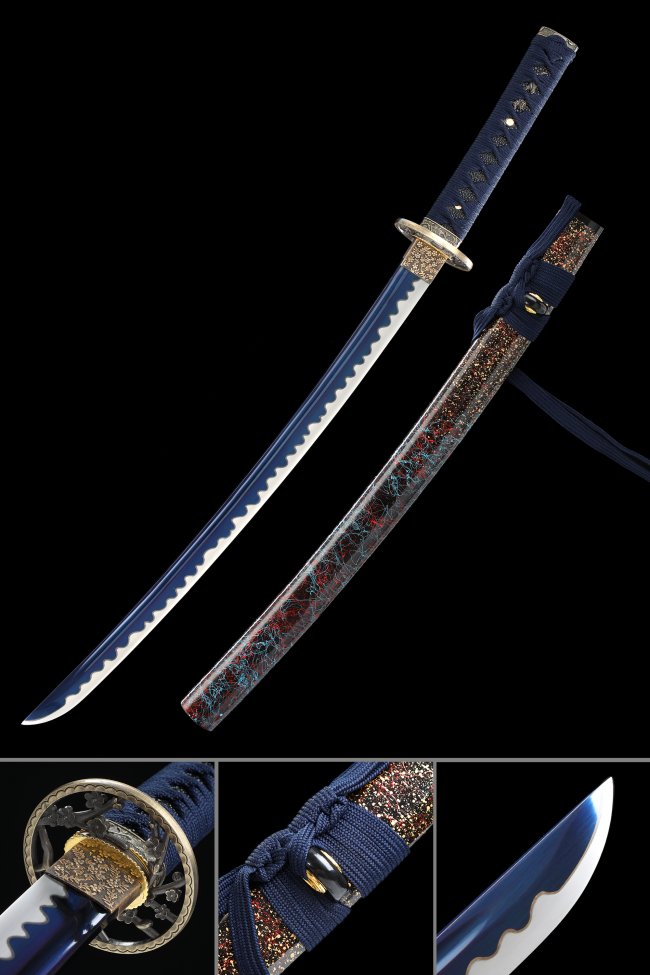
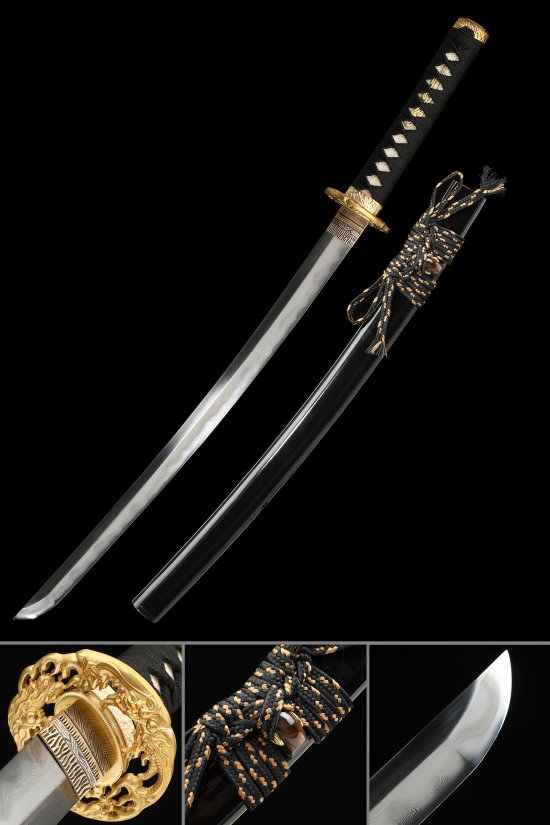
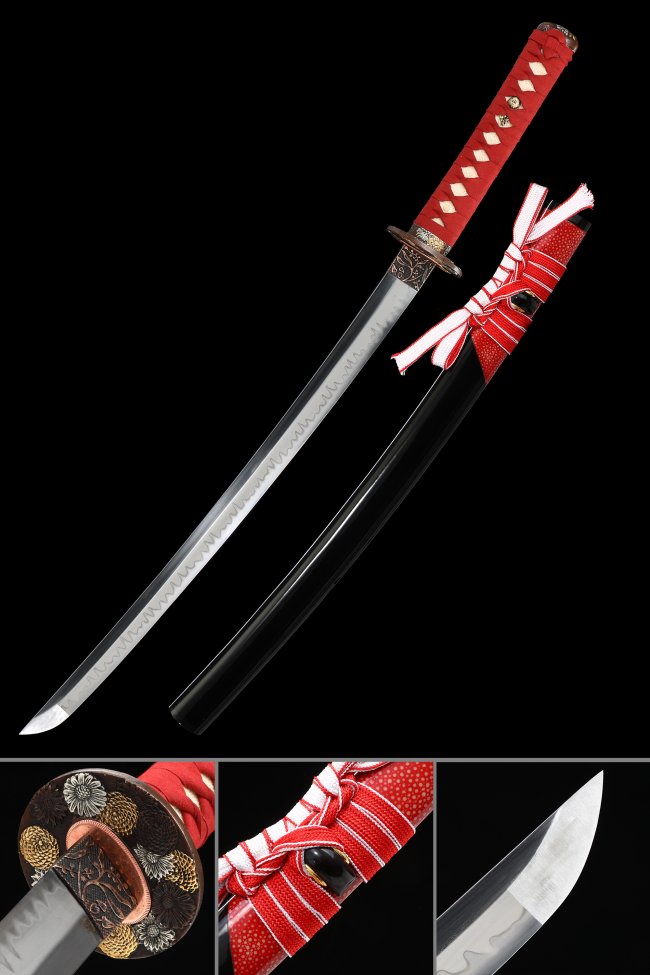
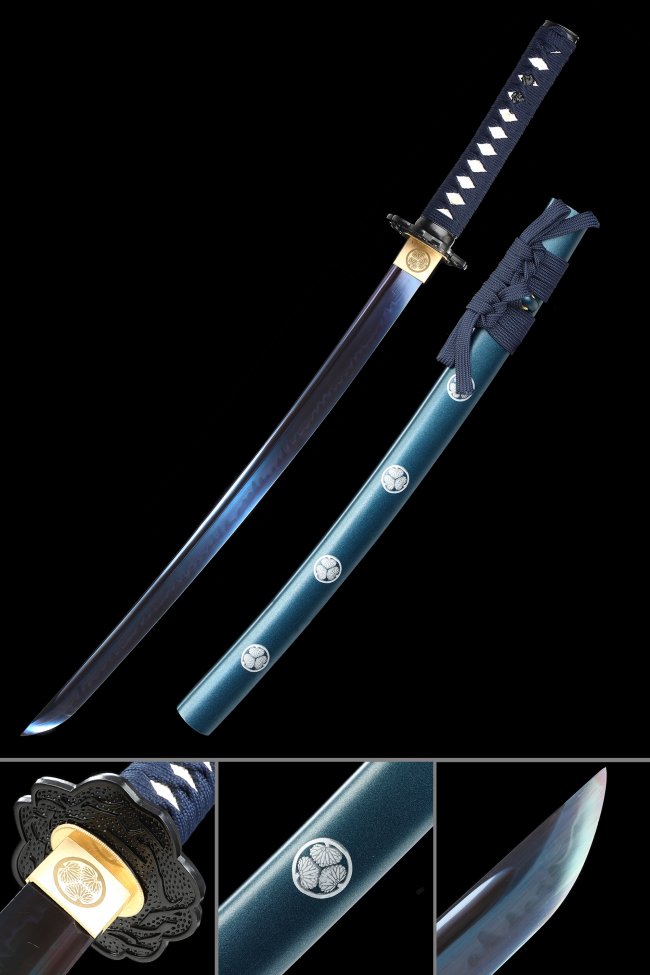
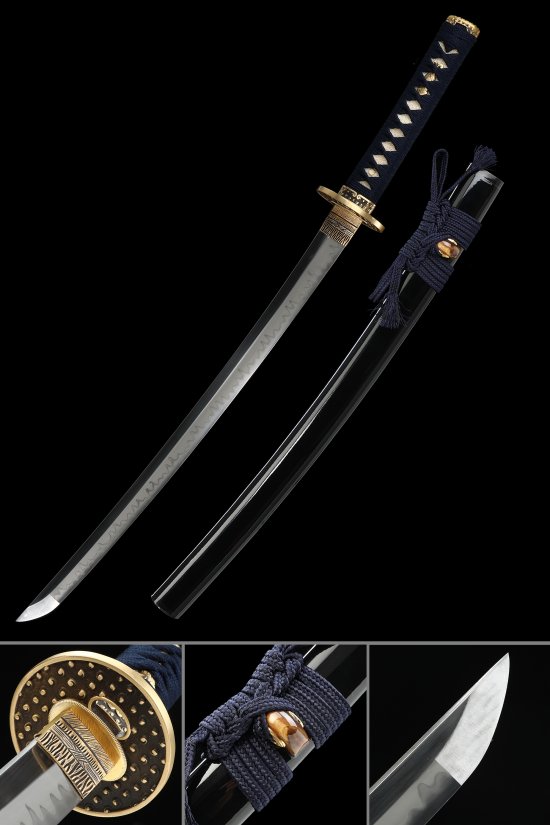
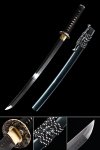
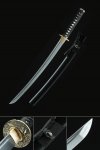
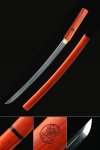
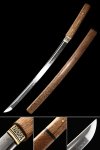
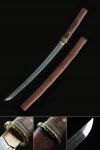
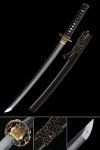
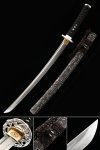
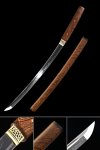
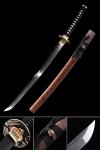
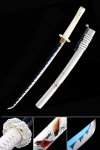
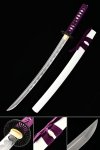
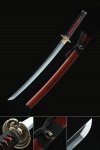
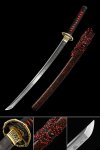
About Our Wakizashi Swords
The wakizashi is the traditional Japanese short sword worn alongside the katana as part of the samurai's daisho — the iconic paired sword set that symbolized warrior status in feudal Japan. With a blade length between 30 and 60 cm, the wakizashi served as a versatile companion blade for close-quarters situations, indoor settings, and as a sidearm when the katana was set aside. At TrueKatana, our wakizashi collection features 108 handmade pieces across multiple steel types, blade finishes, and mounting styles. Each sword is individually hand-forged by skilled swordsmiths using traditional techniques.
Choosing the Right Wakizashi for Your Collection
-- Entry-Level Wakizashi
Our 1045 and 1060 carbon steel wakizashi swords are a great starting point for new collectors. These steels provide reliable durability with full tang construction at an accessible price. Most entry-level models feature traditional curved-blade profiles with wrapped handles and lacquered saya.
-- Mid-Range & Premium Wakizashi
For collectors who want finer craftsmanship, our T10 carbon steel and damascus steel wakizashi swords feature clay-tempered blades with real hamon lines. T10 steel produces a striking grain pattern and excellent edge retention after clay tempering. Damascus steel models display unique layered folding patterns — no two blades are the same.
-- Shirasaya Wakizashi
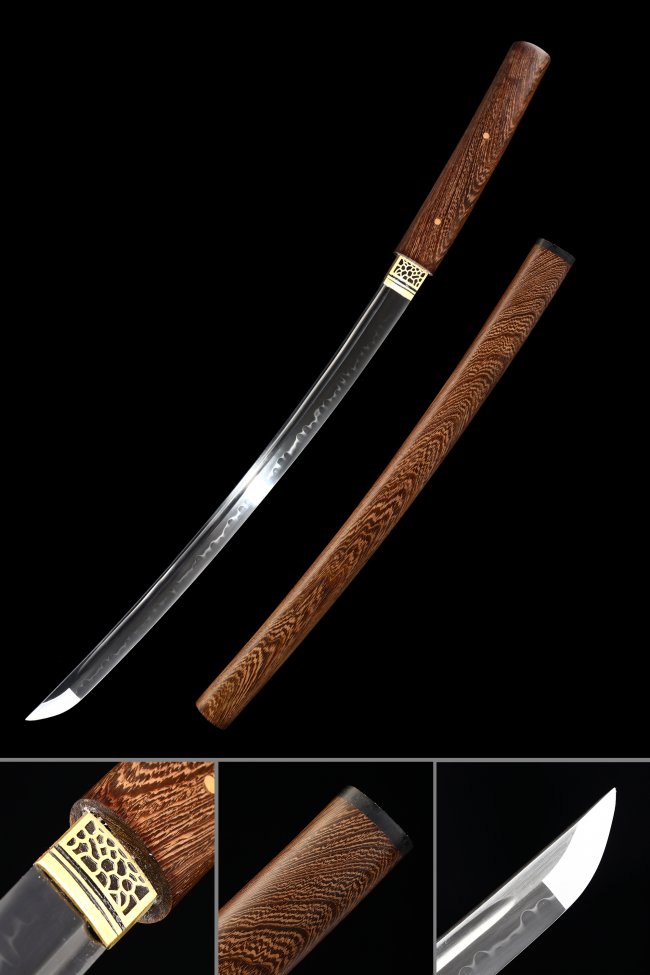
Our shirasaya wakizashi collection features a plain wooden saya and handle without a tsuba or decorative fittings. This minimalist mounting style was traditionally used for long-term blade storage and preservation. Today it's a favorite among collectors who prefer clean aesthetics that let the blade's craftsmanship take center stage.
Battle Ready Wakizashi
Our functional-grade wakizashi swords are built with full tang construction, properly tempered high-carbon steel blades, and secure fittings designed for martial arts practice and cutting exercises. These pieces are suitable for iaido, tameshigiri, and paired sword training alongside a katana.
The Wakizashi and the Daisho Tradition
In feudal Japan, samurai wore two swords together — the longer katana and the shorter wakizashi — as a matched set called the daisho. This pairing was more than practical; it was a mark of social rank and warrior identity. The katana was the primary sword for open combat, while the wakizashi served for close-quarters defense, indoor use, and as a backup weapon. Today, many collectors seek to recreate this tradition by pairing a wakizashi with a matching katana. Our collection includes designs that complement our katana line in steel type, color, and fitting style for those building a complete daisho set.
How to Choose Between a Wakizashi and a Tanto
Both the wakizashi and the tanto are short Japanese blades, but they serve different roles. A wakizashi has a blade length of 30–60 cm with a curved profile similar to a katana — it's essentially a scaled-down katana. A tanto has a blade under 30 cm and was designed primarily as a stabbing and utility knife. For collectors looking for a companion piece to a katana, the wakizashi is the traditional choice. For those who prefer a compact blade with a different aesthetic, the tanto offers its own distinct appeal. TrueKatana carries both, so you can compare styles side by side.
How Our Wakizashi Swords Are Made
-- Steel Selection & Forging
Each wakizashi starts with raw steel — whether 1045 carbon, T10, or layered damascus. The steel is heated, hammered, and shaped by hand into a curved short-blade profile. For folded steel models, the billet is repeatedly folded to create visible grain patterns throughout the blade.
-- Clay Tempering & Hamon
On our clay-tempered models, a layer of clay is applied along the spine before quenching. This process creates differential hardness — a hard cutting edge paired with a flexible spine — and produces the hamon line prized by collectors. Each hamon pattern is unique to the individual blade.
-- Mounting & Finishing
After polishing, the blade is fitted with a habaki collar, tsuba, and handle wrap. Our wakizashi handles use traditional materials including ray skin (samegawa) under silk or cotton cord wrapping. The saya is shaped from wood and finished with lacquer, leather, or specialty coatings depending on the model.