What makes Damascus steel visually different from other blade steels?
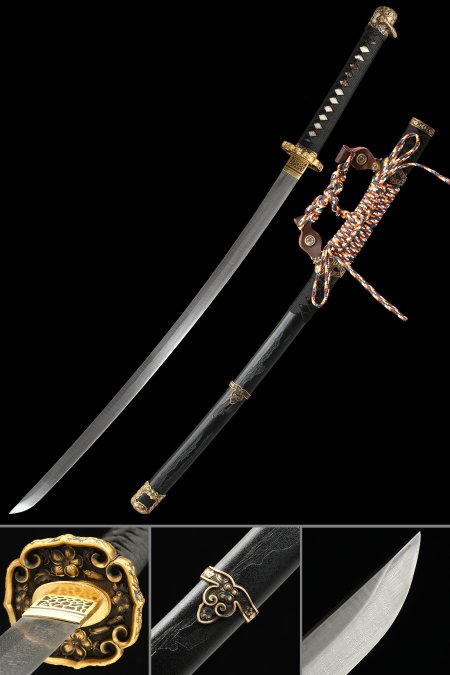
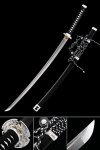
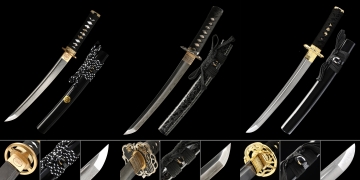
Damascus steel gets its distinctive look from a process of layering and forge-welding multiple steel billets, then manipulating the billet through twisting, grinding, or folding to expose different cross-sections of the grain. The result is a surface pattern - commonly described as ladder, raindrop, or twist - that emerges clearly after the blade is acid-etched during finishing. Because the pattern forms from the physical structure of the steel itself rather than from surface treatment, it cannot be replicated exactly from one blade to the next. On a black-finished tachi, the contrast between the dark treated areas and the bright metallic grain lines is particularly striking, giving the blade a depth that catches light differently depending on the viewing angle. This is one reason Damascus steel remains a top-tier choice among collectors who prioritize visual distinctiveness alongside craftsmanship.
How does a tachi differ from a katana in design and display?
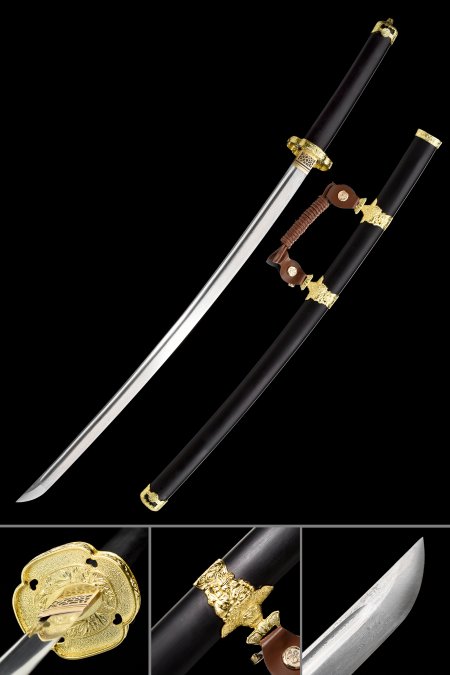
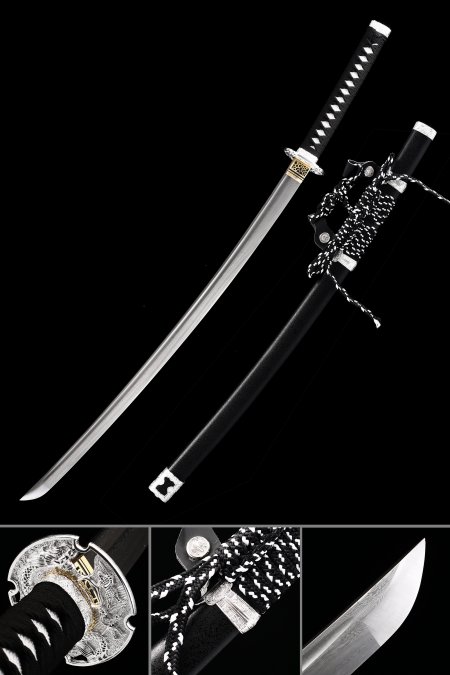
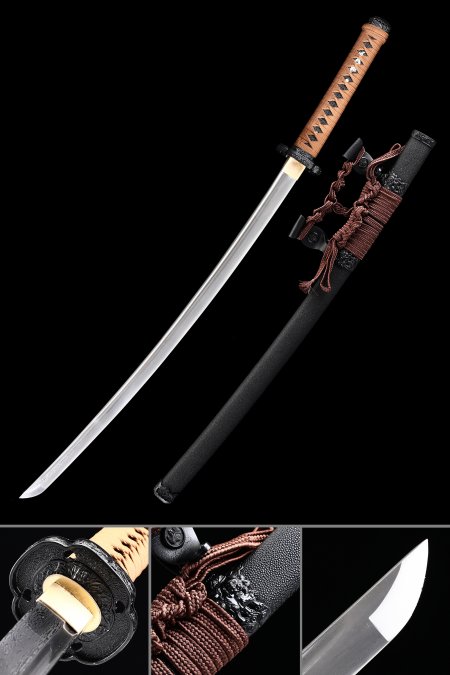
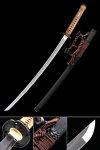
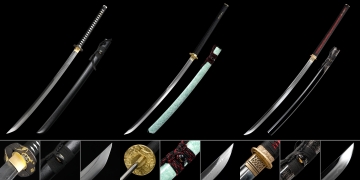
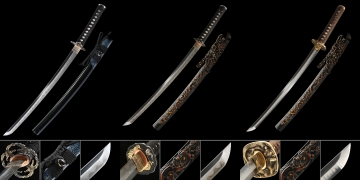
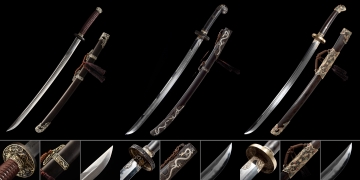
The tachi and katana are often confused, but they differ in meaningful ways beyond blade length. A tachi typically measures longer overall and is worn suspended edge-down from the belt, in contrast to the katana which is thrust through the obi edge-up. This suspended carry position influenced the tachi's greater curvature, which begins further from the tang and sweeps more dramatically toward the tip. For display purposes, this curvature and extra length give the tachi a commanding horizontal profile that fills a wall mount or stand more dramatically than most katana. The tachi also tends to feature more elaborate saya and tsuba ornamentation historically, a tradition reflected in the gold chrysanthemum and dragon tsuba options available in this collection. Collectors who already own katana often find a tachi makes a visually complementary addition that tells a broader story of Japanese blade evolution.
Is full-tang construction important in a collector's tachi?
Yes - full-tang construction is one of the clearest indicators of quality in a hand-forged collectible sword. The tang is the unsharpened steel extension of the blade that runs through the handle. In a full-tang design, this steel extends the entire length of the tsuka, providing structural continuity between blade and handle rather than relying solely on adhesive or pinning through a partial stub. For a display piece, this matters because the handle assembly remains stable over years of wall mounting, seasonal humidity changes, and occasional handling. A partial-tang or rat-tail tang can loosen over time, particularly in a longer blade format like the tachi where leverage forces on the handle are greater. When evaluating a Damascus tachi for your collection, full-tang construction combined with a properly fitted mekugi (retaining pin) is the benchmark to look for.
What is the best way to display and maintain a black lacquer saya?
Black lacquer saya are visually striking but do require some basic care to keep them looking their best over time. Avoid prolonged exposure to direct sunlight, which can cause the lacquer to fade or develop fine surface cracks over several years. High humidity is similarly problematic - lacquered wood can swell, which may affect how smoothly the blade seats and unseats. For display, a horizontal wall mount or a two-tier sword stand keeps the saya's finish evenly supported. When handling the saya, hold it along its length rather than gripping a single point, which reduces stress on the lacquer surface. A soft dry cloth is sufficient for routine dusting. Avoid any solvent-based cleaners, which can strip or cloud the lacquer finish. With these basic precautions, a quality lacquered saya will retain its appearance for decades as part of a static display collection.
Does a Damascus tachi make a good gift for a serious collector?
A Damascus steel tachi is one of the more thoughtful gifts you can give someone who appreciates Japanese blade history or decorative metalwork. Because the Damascus grain pattern is unique to each individual blade, the recipient receives something that is genuinely one of a kind - not a mass-produced decorative item. The black lacquer saya and ornamental tsuba options (gold chrysanthemum, dragon motifs) give these pieces an elevated presentation quality that reads as ceremonial rather than generic. For gifting, the tachi format also benefits from name recognition: even recipients who are newer to Japanese blade collecting typically know the tachi as the historical predecessor to the samurai's katana, which makes it a meaningful conversation piece. Pairing a tachi with a matching display stand elevates the gift further. If the recipient already collects katana, a tachi from this collection creates a visually cohesive set.