Japanese Long Sword

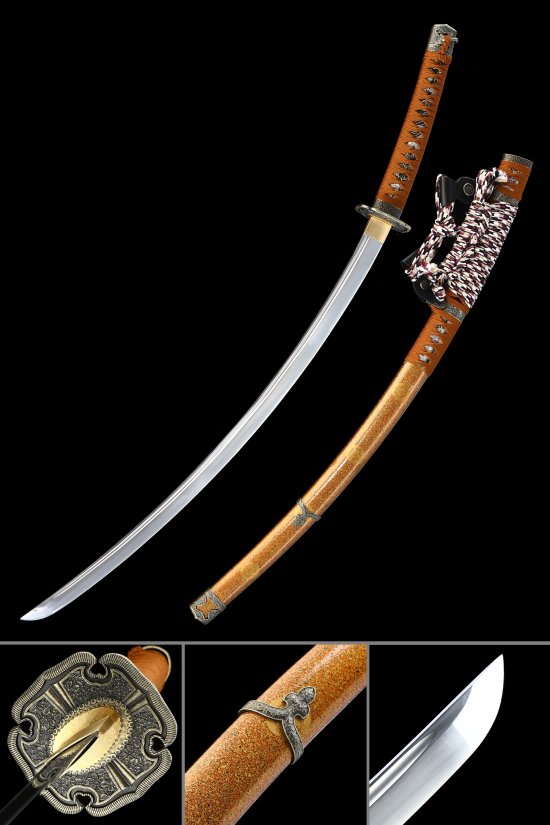
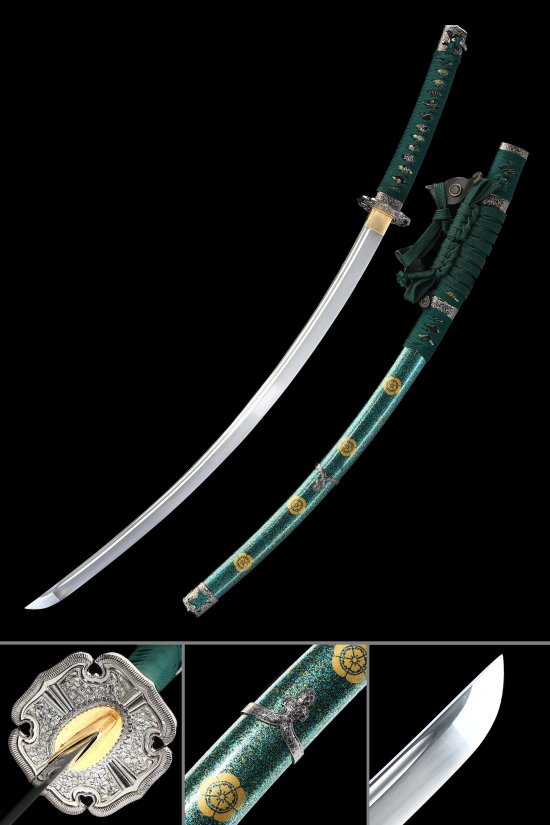
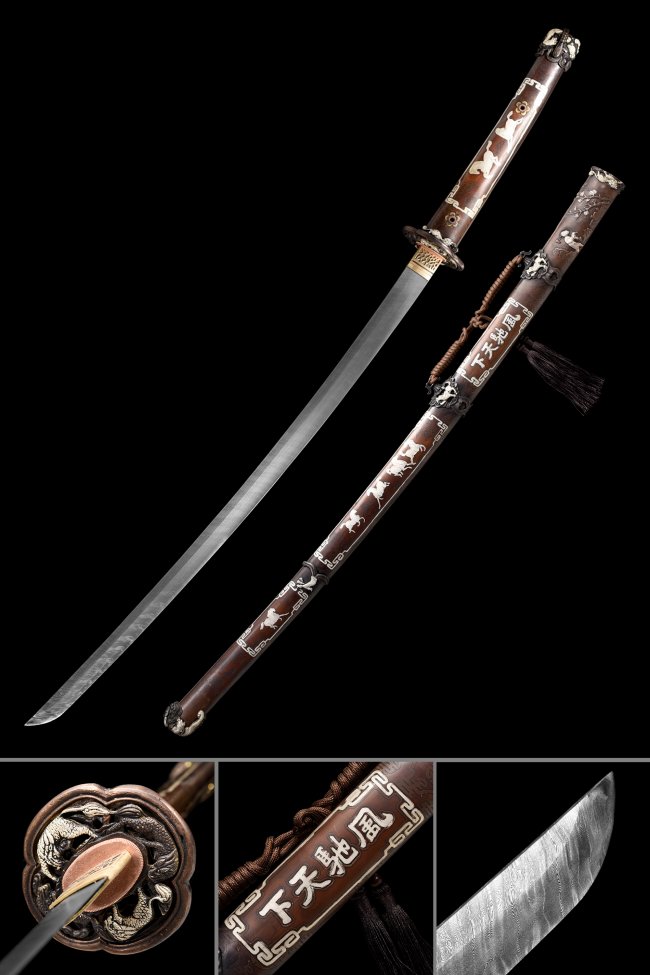
Browse our Japanese long sword collection, featuring hand-forged katana and tachi with blade lengths ranging from 60 to 90 centimeters. These are the full-size blade formats of traditional Japanese sword craft — the katana with its optimized standing-draw curvature and the tachi with its deeper arc designed for mounted use. Each piece features full-tang construction in high-carbon steel with a hand-sharpened edge and traditional fittings. Free U.S. shipping and hassle-free returns on every order.

Showing 15 Products

Related Collections

Carbon Steel Katana124 items


1679 Reviews

Green Katana30 items


127 Reviews

Nodachi Sword42 items


86 Reviews

Japanese Naginata12 items


15 Reviews

Frequently Asked Questions

What is the typical blade length for a Japanese long sword?
Japanese long swords fall in the 60 to 90 centimeter blade range. A standard katana blade measures between 60 and 80 cm (23.5 to 31.5 inches), with most pieces in the 68 to 74 cm range. A tachi blade is similar in length but often extends to 80 to 90 cm with a more pronounced curvature. The overall length including the handle typically reaches 100 to 115 cm for a katana and slightly longer for a tachi. Blades under 60 cm are classified as wakizashi (companion swords), and blades exceeding the standard range are classified as odachi or nodachi (oversized long swords). The standard long sword length was historically optimized for two-handed use with enough reach for effective standing or mounted combat.
What is the difference between a katana and a tachi long sword?
The katana and tachi differ in curvature, wearing method, and historical period. The tachi originated in the Koto period (before 1596) and has a deeper, more pronounced curvature along the blade, with the maximum curve point closer to the handle. It was worn suspended from the belt with the cutting edge facing downward, designed for a sweeping draw while on horseback. The katana evolved during the Muromachi period with a shallower curvature and was thrust through the belt with the edge facing upward, optimized for a fast draw from a standing position. In a display collection, the tachi offers a more dramatic visual profile while the katana presents the more iconic and widely recognized silhouette.
How should I display a Japanese long sword at home?
The traditional display method is a horizontal katana-kake (sword stand) made from lacquered wood. Place the long sword with the cutting edge facing upward and the handle to the left for the standard resting position. Single-tier stands hold one sword, while multi-tier versions can accommodate a complete set with a wakizashi and tanto below. Position the stand at a height where the sword is at or slightly below eye level for maximum visual impact. Avoid placing the display in direct sunlight, as UV exposure can fade the saya lacquer and cause uneven blade discoloration. Wall-mounted racks with padded cradles are an effective alternative for collectors with limited shelf space.
What steel type produces the best hamon on a Japanese long sword?
T10 tool steel and 1095 high-carbon steel produce the most vivid and well-defined hamon temper lines on long swords. Both steels have high carbon content that responds strongly to differential clay tempering, creating a sharp contrast between the hardened edge zone and the softer spine. T10 is generally considered the top choice for hamon quality because its tungsten content adds additional hardness differential during the quenching process. 1095 produces slightly higher peak hardness at the edge, which can create a particularly crisp hamon boundary. Damascus steel also displays hamon when clay tempered, but the folded layer pattern partially overlaps with the hamon line, creating a more complex but less distinctly defined temper boundary.

Customer Reviews

Eli Mohr New York, United States

Overall good weapon nice cutting and feel but something wrong with the glue job inside the saya as it would keep getting on the blade no matter how many times said saya cleaned it and washed it out with soap and water until I cut it in half and removed it and did my own glue job which seemed to fix that but yea cause of that I can’t give it a 5 star I’m sure you’d understand

1060 Carbon Steel Japanese Naginata - Black Hardwood Saya, Full Tang, Hand Forged Polearm 1060 Carbon Steel Japanese Naginata - Black Hardwood Saya, Full Tang, Hand Forged Polearm
Michael E Glass Indiana, United States

The swords arrived 7-8 days after they were shipped. I had received an email confirming the order when I placed it, however I did not receive an email when it shipped, so I didn't know to look for them. They may have been outside a day before I noticed the boxes. With that said the boxes arrived in good shape with no obvious shipping damage. I'm not the biggest fan of the all styrofoam containers, due to it being a little messy when opening the packaging, but I can't deny it did an excellent job in protecting the swords as they arrived in perfect condition. I haven't had a chance to cut any water bottles yet, but all of the swords seem reasonably sharp. Everything seems well built with no obvious defects that I can tell at this time.

Fuuun Kairyuu Damascus Naginata - Pattern Steel, Green Saya, Copper Tsuba, Full Tang Fuuun Kairyuu Damascus Naginata - Pattern Steel, Green Saya, Copper Tsuba, Full Tang
Cosmos Wrenn Tennessee, United States

My first Naganata. I'm hooked. The most solid and we'll balanced sword I have purchased yet. The wooden Saya is a thing of beauty. The entire sword is gorgeous from top to bottom. It came perfect out of the box. Sharp, no rattles, fits perfectly in the saya. It will be my main blade to practise with going forward. Great job!

T10 Naginata - Handcrafted Clay Tempered Steel, Real Hamon, Red Saya, Wave Tsuba, 118cm T10 Naginata - Handcrafted Clay Tempered Steel, Real Hamon, Red Saya, Wave Tsuba, 118cm