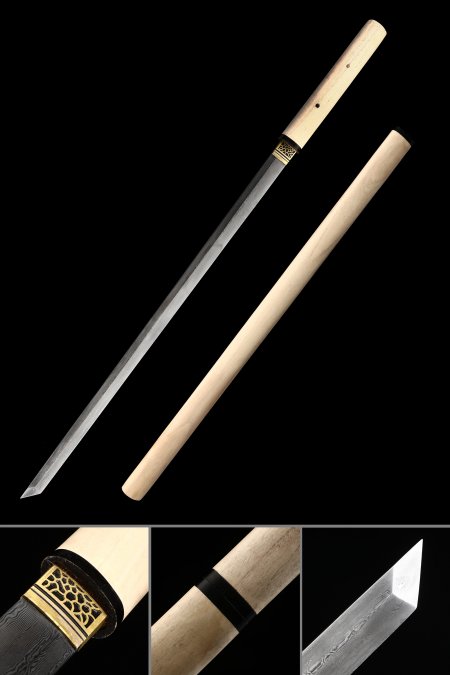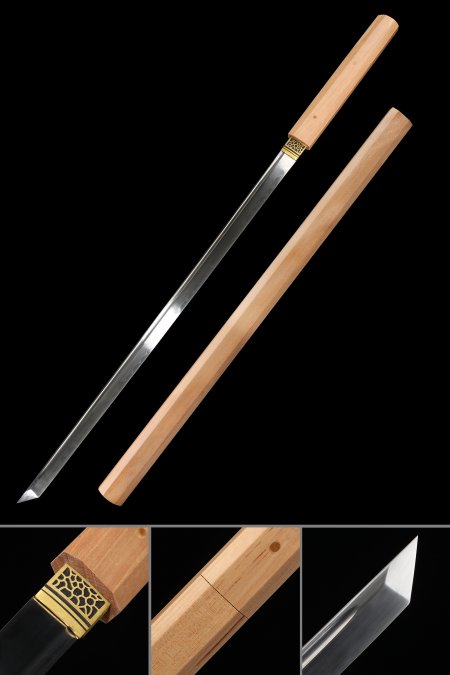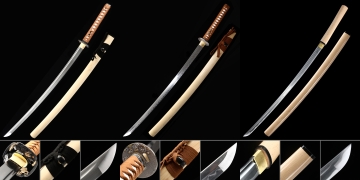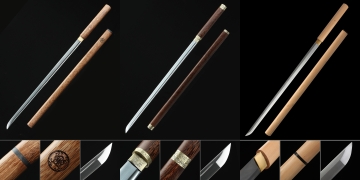
Natural Wood Handle Ninjato

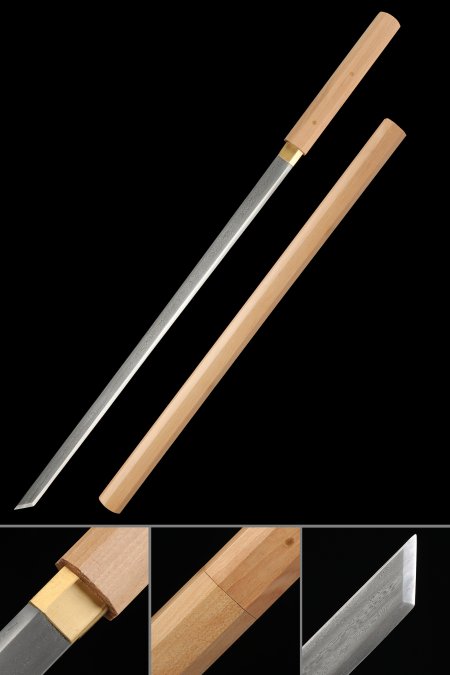
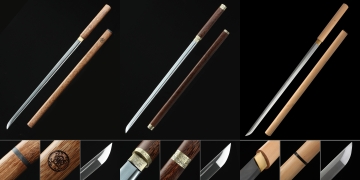
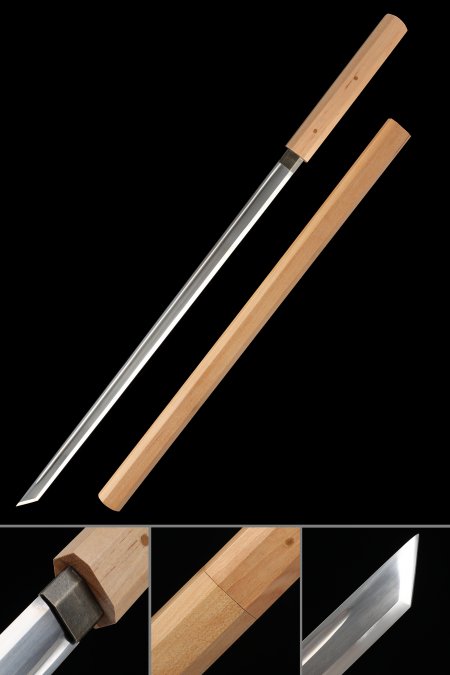
Natural wood handle ninjato occupy a rare intersection of minimalist aesthetics and genuine craftsmanship — each piece shaped from hand-selected hardwood and paired with high-carbon or Damascus steel blades bearing authentic clay-tempered hamon. These are collector-grade display pieces built with full-tang construction and traditional shirasaya or shikomizue mountings that reward close inspection. Every order ships free, and returns are always hassle-free.
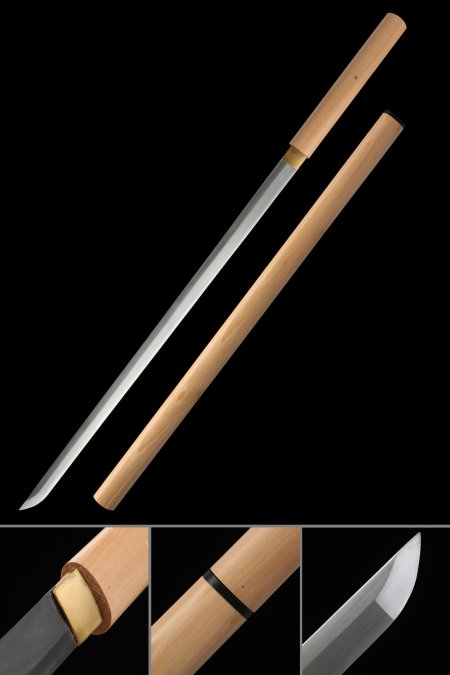
Showing 6 Products

Related Collections

Natural Ninjato16 items


149 Reviews

Natural Wood Ninjato11 items


134 Reviews

Frequently Asked Questions

What makes a ninjato different from a katana in terms of design?
A ninjato is typically characterized by a shorter, straighter blade profile compared to the curved geometry of a traditional katana. While the katana's curvature — known as sori — is a direct result of the differential clay-tempering process that pulls the spine into an arc during quenching, many ninjato designs intentionally maintain a flatter, more linear blade. This affects both the visual presentation and the handling characteristics in display. Mounting styles also differ: ninjato frequently appear in shirasaya or shikomizue configurations with plain hardwood furniture, while katana are more commonly seen with wrapped tsuka, elaborate tsuba, and ornamental menuki. For collectors, the ninjato's minimalist mounting tradition makes it a compelling contrast piece alongside more decorative samurai sword formats.
How does T10 steel compare to Damascus in this collection?
T10 tool steel and Damascus steel represent two distinct approaches to blade making, and both appear across this collection. T10 is a high-carbon steel with a small tungsten addition that improves wear resistance and allows the steel to hold a refined edge after proper heat treatment. When clay-tempered, T10 produces a genuine hamon — a visible temper line along the blade — that is one of the most prized visual features in Japanese-style blade collecting. Damascus steel, by contrast, achieves its character through the layering and forge-welding of two or more alloys, creating a surface grain pattern that becomes visible after etching. Damascus pieces in this collection typically feature a flowing wood-grain or ladder-pattern surface that reads as deeply decorative even in a plain hardwood mounting. Neither is inherently superior — the choice comes down to whether a collector prioritizes the subtle elegance of a hamon or the bold surface patterning of a Damascus layer count.
What is a shikomizue, and why is it popular among collectors?
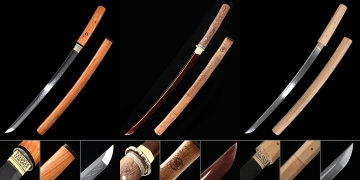
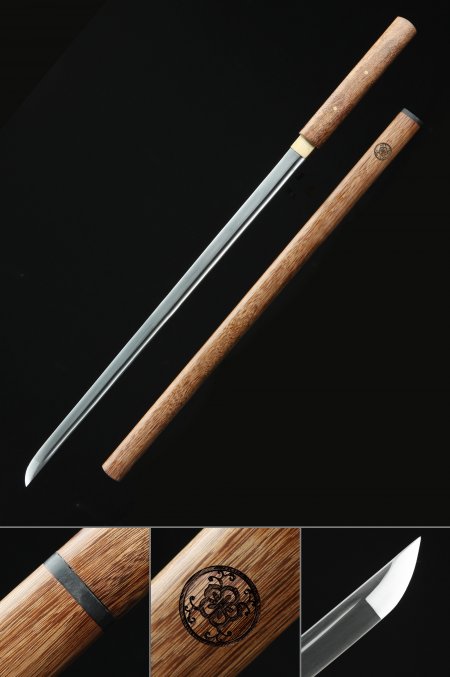
A shikomizue is a blade mounted inside a housing designed to resemble an ordinary walking stick or cane, with the handle and saya forming a continuous wooden form that conceals the blade entirely. The format has a well-documented historical association with travelers and individuals who favored discretion over display — making it one of the more narratively interesting mounting styles in Japanese edged artifact history. For modern collectors, the shikomizue format offers something that more conventional mounts do not: the visual experience of a unified wooden object that reveals a precisely fitted blade upon separation. The engraved floral crest variants in this collection add a layer of decorative intent to an otherwise austere format, bridging the gap between purely functional design and display-focused ornamentation. The format also stores compactly, which is a practical advantage for collectors with limited display space.
How should I store and maintain a natural wood handle ninjato?
Natural hardwood handles and saya are durable but do respond to environmental conditions, particularly humidity fluctuations. For long-term display or storage, aim for a stable indoor environment — ideally between 40% and 60% relative humidity — to prevent the wood from expanding, contracting, or developing surface checks. The wooden surfaces can be lightly treated once or twice a year with a food-safe wood oil or furniture wax to maintain their finish and prevent drying. For the blade itself, a light application of choji oil or a high-grade mineral oil on the steel surface before extended storage will prevent oxidation, particularly in humid climates. Store the piece horizontally or at a slight downward angle toward the tip to encourage any excess oil to distribute evenly rather than pooling at the habaki. Avoid storing in sealed plastic, which traps moisture and accelerates corrosion.
Are these ninjato good display or gift choices for sword enthusiasts?
Natural wood handle ninjato make particularly strong display and gift choices because the hardwood mounting format photographs well, ages gracefully, and communicates an informed aesthetic preference rather than generic decoration. Unlike pieces with synthetic wrapping or heavily lacquered furniture, natural wood mounts suggest familiarity with Japanese blade traditions and tend to read as more considered to knowledgeable recipients. Within this collection, pieces featuring Damascus blades or engraved collars add visible craftsmanship that reads well even to viewers unfamiliar with steel types or mounting conventions. For collectors building a themed display, pairing a natural wood handle ninjato with a complementary format — such as a piece from the Natural 1060 Carbon Steel Ninjato collection — creates a coherent presentation that highlights variation in both steel character and blade geometry.

Customer Reviews