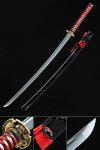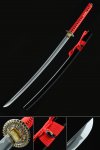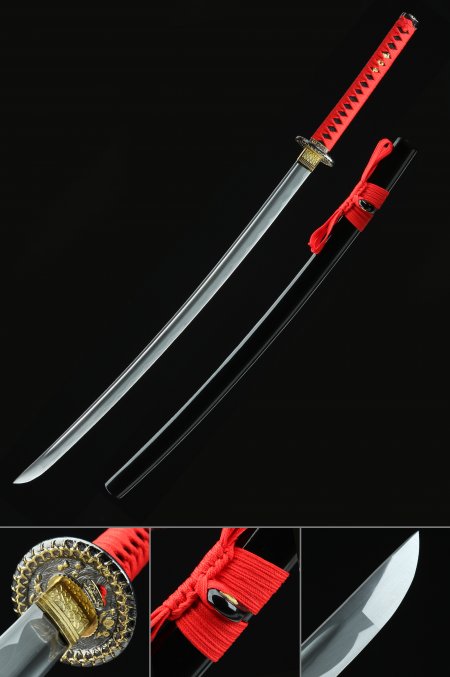
Red-black 1045 Carbon Steel Katana

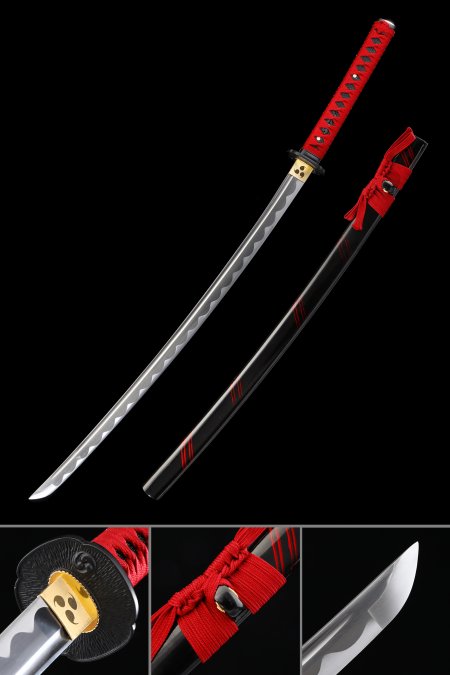
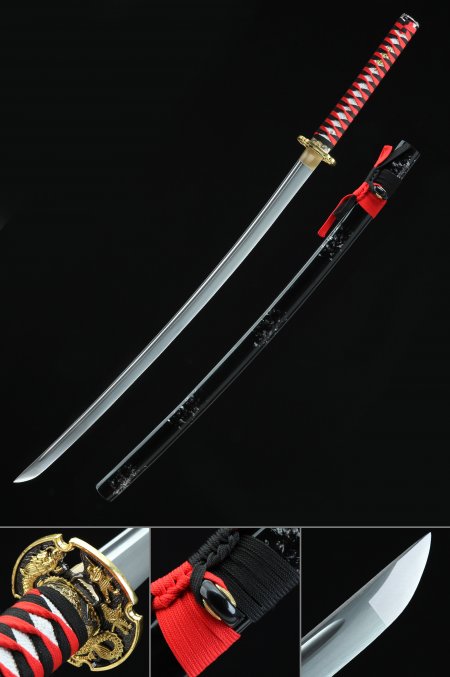
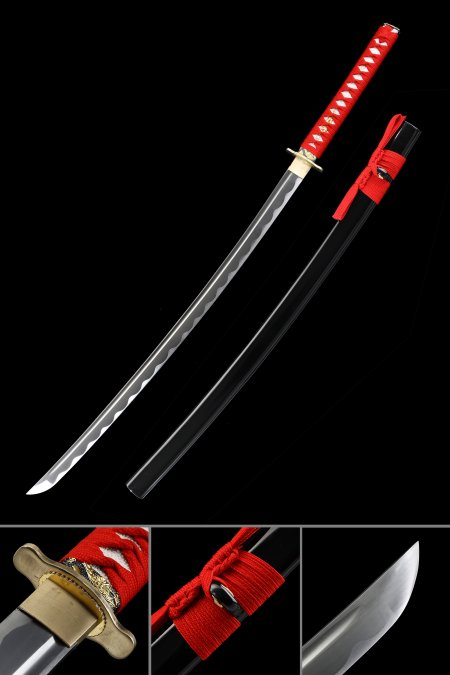
The Red-Black 1045 Carbon Steel Katana collection brings together bold aesthetics and dependable craftsmanship in every piece. Each katana features a hand-forged 1045 carbon steel blade paired with striking red-and-black fittings - from braided ito wraps to lacquered saya - making them standout additions to any serious display. Enjoy free standard shipping on your order, plus hassle-free returns for a confident collecting experience.
Showing 4 Products

Related Collections

Frequently Asked Questions

What makes 1045 carbon steel a good choice for a display katana?
1045 carbon steel sits in the medium-carbon range, with roughly 0.45% carbon content. This composition gives it enough hardness to hold a defined edge and develop a visible hamon during heat treatment, while remaining tough enough to resist the brittleness that can affect higher-carbon steels. For collectors who want a katana that looks authentic and is built with real blade geometry - proper distal taper, a ground bevels, full-tang construction - 1045 steel delivers those qualities at an accessible level. It is a meaningful step above decorative stainless steel, which cannot be properly heat-treated and lacks the structural characteristics associated with traditional Japanese swordsmithing.
How does red ito wrapping affect the handle's durability over time?
Ito wrapping - the diagonal cord binding over the tsuka - plays both an aesthetic and a functional role in katana construction. Red ito on these pieces is typically cotton or synthetic cord wound tightly over samegawa (rayskin or PU rayskin), which provides a grippy underlayer. Over time, natural cotton ito can loosen slightly with humidity changes, so collectors storing pieces in climate-variable environments should periodically inspect the binding tension. Synthetic ito alternatives hold tension more consistently across humidity ranges and resist color fading better under direct light. If you are selecting a piece for long-term wall display near a window, a synthetic-ito model may maintain its appearance more reliably than a natural-fiber option.
What is piano lacquer saya, and how should I care for it?
Piano lacquer refers to a high-gloss finishing process in which multiple coats of lacquer are applied to the wooden saya core and buffed between layers to achieve a deep, mirror-like black surface. The name comes from the same finishing technique applied to high-end piano exteriors. For collectors, this finish is visually striking and reasonably durable under normal display conditions. To maintain it, avoid storing the saya in direct sunlight for extended periods, as UV exposure can cause the lacquer to yellow or crack over time. Wipe the surface with a soft, dry cloth rather than damp materials. Occasional application of a thin coat of paste wax (the kind used for fine woodwork) can preserve the gloss and add a layer of protection against minor contact scratches.
How does a dragon tsuba differ from a chrysanthemum tsuba as a collectible detail?
The tsuba - the handguard positioned between blade and handle - is one of the most expressive components in Japanese sword fitting. Dragon tsuba, common across this collection, are typically cast from alloy and feature dimensional relief work depicting a coiled or ascending dragon, a motif historically associated with power and protection in both Japanese and broader East Asian iconography. Chrysanthemum tsuba take a different approach: the flower pattern carries imperial and ceremonial significance in Japanese culture, as the chrysanthemum is the emblem of the Japanese imperial family. In collecting terms, a chrysanthemum tsuba reads as more formal and court-influenced, while a dragon tsuba leans toward martial and mythological expression. Both are legitimate subjects for thematic collecting, and the choice often comes down to the aesthetic story a collector wants their display to tell.
Is the red-black katana a good gift choice for a first-time sword collector?
Yes, and specifically because the red-black color scheme does the visual work of making the piece immediately impressive to someone encountering a hand-forged katana for the first time. For a recipient who is new to collecting, the combination of a recognizable katana silhouette, bold contrasting fittings, and a glossy lacquered saya creates an impactful presentation that communicates quality without requiring prior knowledge to appreciate. From a practical standpoint, 1045 carbon steel construction and full-tang assembly mean the piece is built to a standard that experienced collectors also respect, so it does not become something the recipient feels they need to upgrade away from as their knowledge grows. Including a proper cleaning kit - oil, wiping cloth, and a brass mekugi punch - makes an excellent accompaniment to turn the gift into a complete introductory collecting set.

Customer Reviews

Cart 0 Items

Your cart is empty