82 Reviews
Free Shipping
169.00 USD
ON SALE! 20% OFF
Was: $209.00

Looking for a real Demon Slayer sword? TrueKatana carries the largest collection of hand-forged Nichirin blade replicas from Kimetsu no Yaiba — built with real high-carbon steel and full-tang construction, not cheap plastic or foam. We stock every fan-favorite Breathing Style weapon: Tanjiro's black Nichirin blade, Zenitsu's yellow thunder katana, Rengoku's flame-red sword, Giyu's blue water blade, Shinobu's poison stinger, Mitsuri's whip-style katana, and the entire Hashira lineup, each crafted with accurate colors, tsuba designs, and authentic hamon patterns that match the anime scene for scene. Over 100,000 customers trust TrueKatana — every sword is handcrafted by experienced swordsmiths, individually inspected before shipping, and backed by a 30-day satisfaction guarantee, with free shipping on all US orders. With 9,800+ verified reviews and a 4.9/5 star rating, this is the ideal starting point for collectors, cosplayers, and anime fans ready to own their first authentic Nichirin blade.
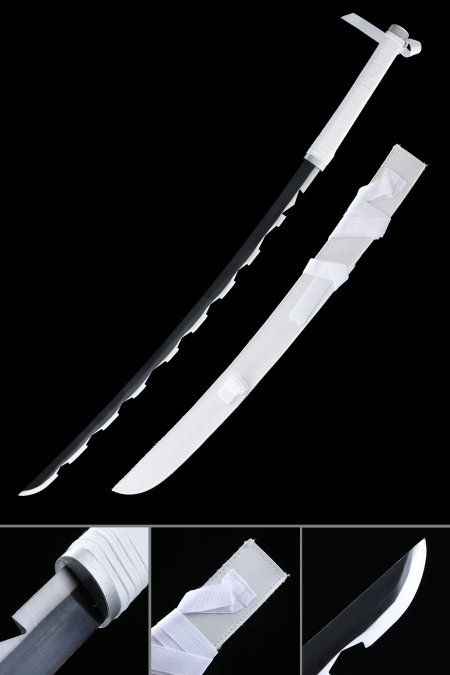
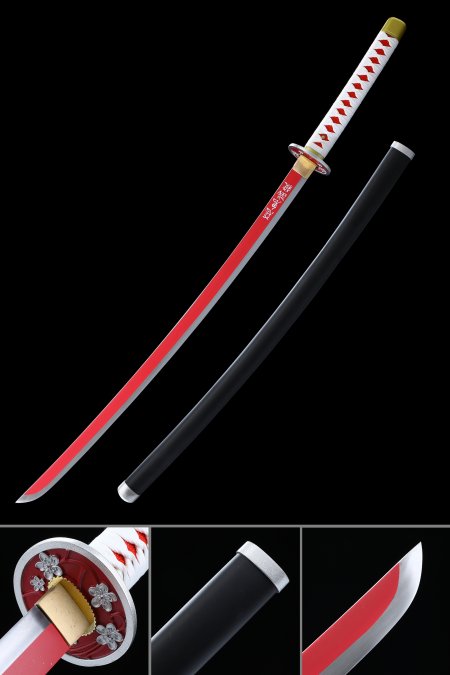
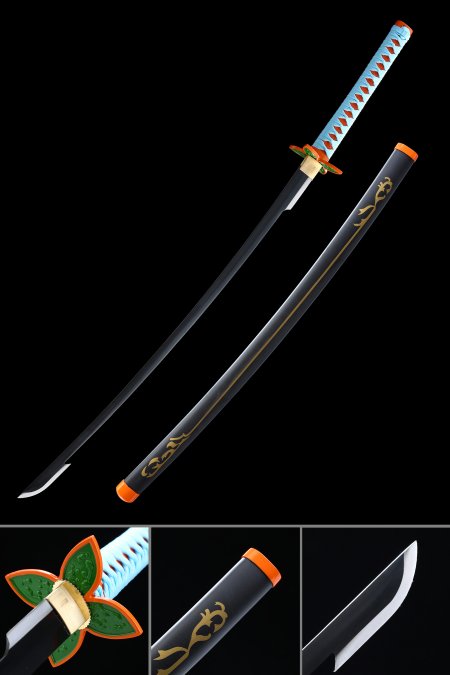
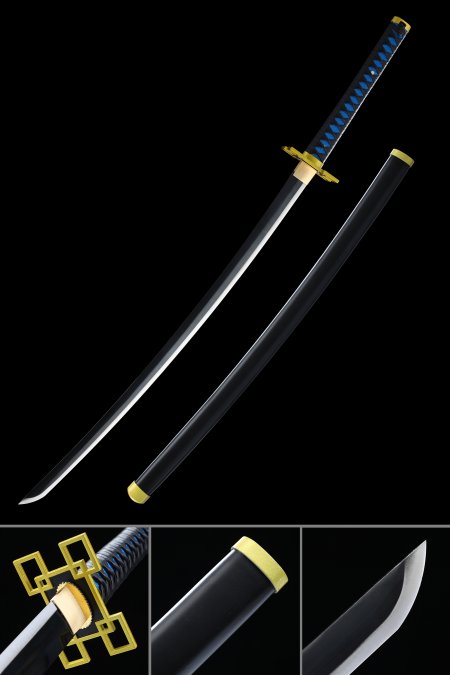
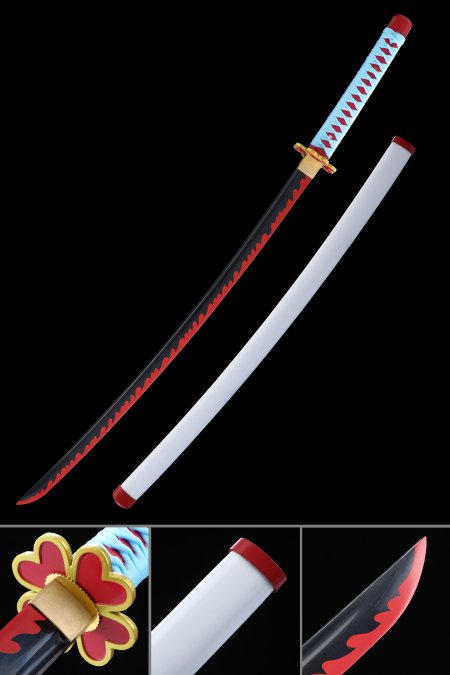
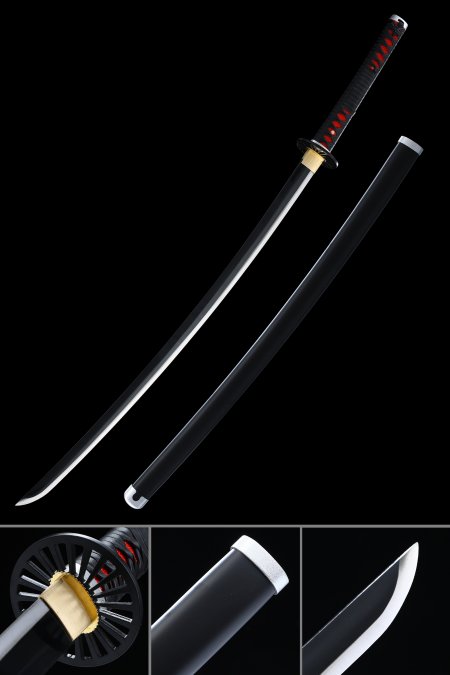
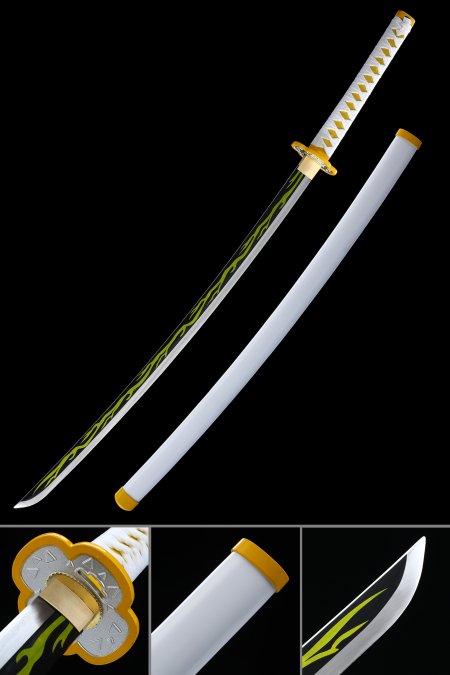
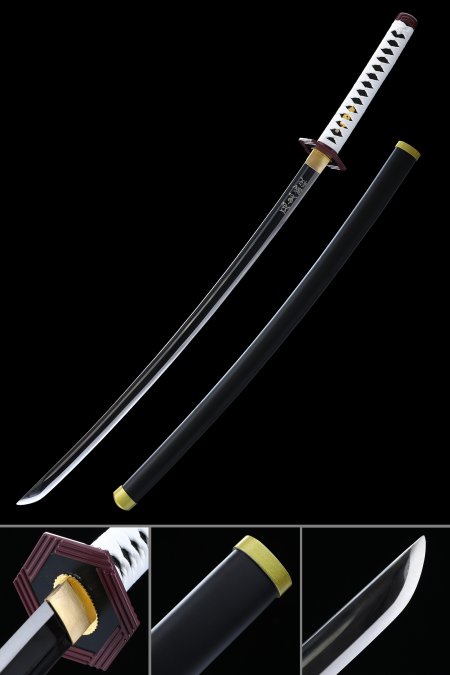
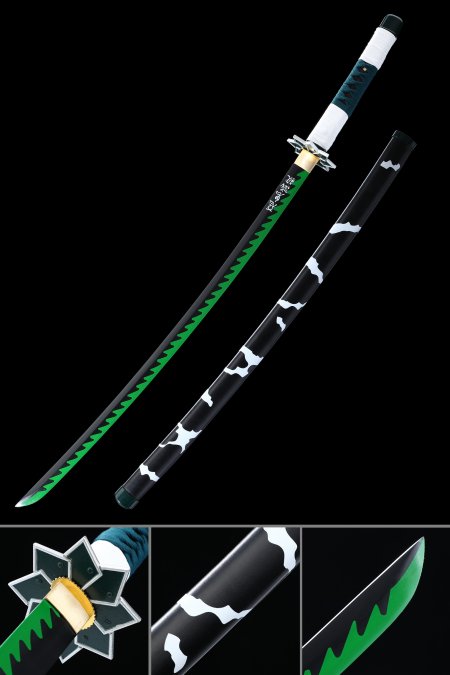
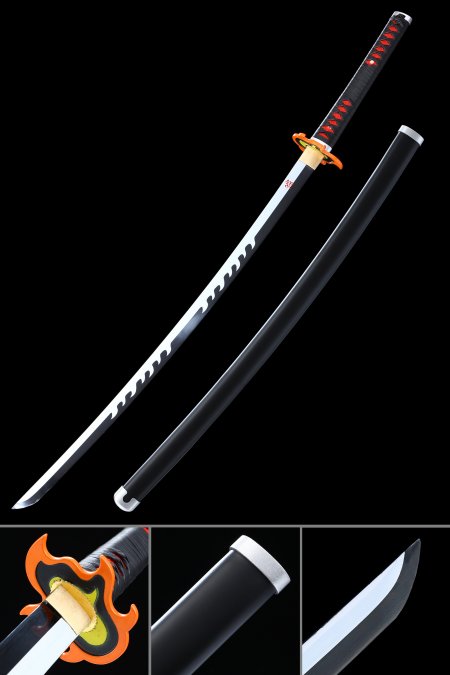
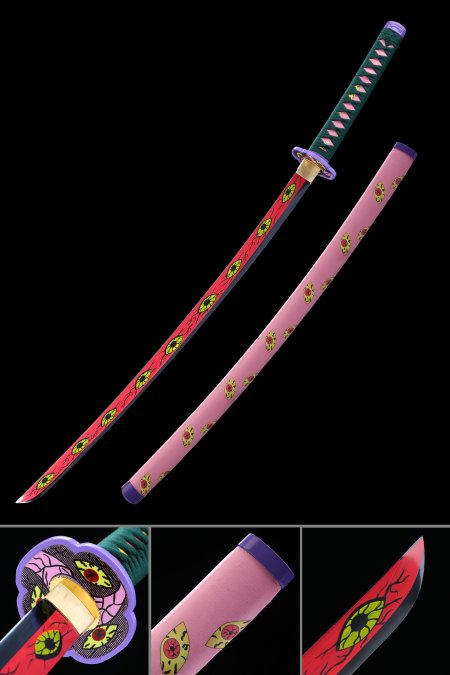
Demon Slayer swords are called Nichirin swords (日輪刀, Nichirin-tō), also commonly known as Nichirin blades or "Color Changing Katanas." They are the primary weapons used by members of the Demon Slayer Corps (鬼殺隊, Kisatsutai) in the anime and manga series Demon Slayer: Kimetsu no Yaiba, created by Koyoharu Gotouge.
What makes Nichirin swords fundamentally different from ordinary katanas is their material composition. They are forged from two extremely rare ores — Scarlet Crimson Iron Sand (猩猩緋砂鉄) and Scarlet Crimson Ore (猩猩緋鉱石). These materials are harvested exclusively from mountaintops that receive constant, uninterrupted sunlight throughout the year, most notably the Sunlight Mountain. Over hundreds of years of continuous sun exposure, these ores absorb and concentrate massive quantities of solar energy deep within their molecular structure. When a master swordsmith forges these ores into a blade using traditional smelting, folding, and tempering techniques, the resulting weapon retains this stored sunlight — and that solar energy is the key to killing demons.
In the world of Demon Slayer, demons are nearly immortal. They regenerate from almost any wound, and conventional weapons — no matter how sharp — cannot permanently destroy them. The only ways to kill a demon are exposure to direct sunlight or decapitation with a Nichirin blade. When a Nichirin sword cuts into a demon, it releases the concentrated solar energy stored within the steel, which disrupts the demon's regeneration ability and, upon decapitation, destroys the demon permanently. This is why the Demon Slayer Corps has relied on Nichirin blades for centuries as their sole effective weapon against the demon threat.
Another defining characteristic of Nichirin swords is their color-changing property. When a newly forged blade is first drawn and held by its intended wielder, the steel changes color. This color is not random — it is determined by the wielder's breathing style compatibility and personal attributes. A swordsman aligned with Water Breathing will produce a blue blade, while one suited for Flame Breathing will produce a red blade. This phenomenon is why Nichirin swords earned the nickname "Color Changing Katanas." The color essentially reveals the path the swordsman is destined to follow.
The most mysterious color is black. Black Nichirin blades are exceptionally rare, and historically, Demon Slayers who wield them are believed to be cursed with short lives. The protagonist, Tanjiro Kamado, wields a black blade — which is later revealed to be connected to Sun Breathing (日の呼吸, Hi no Kokyū), the original and most powerful breathing style from which all other styles are derived. This connection elevates the black blade from a bad omen to a symbol of ultimate potential.
For collectors and fans purchasing replica Nichirin swords, the appeal goes far beyond the anime. These swords represent a rich blend of Japanese sword-making tradition, detailed fictional lore, and iconic character design. A quality hand-forged Nichirin replica — made from real high-carbon steel with full-tang construction and anime-accurate details — is both a functional piece of craftsmanship and a meaningful connection to one of the most beloved anime series in history. Our samurai sword collection represents the best in this tradition.
The color of a Nichirin blade in Demon Slayer is one of the most important visual elements of the series. It is not a decorative choice — each color directly corresponds to a specific Breathing Style and reveals deep information about the wielder's fighting nature, temperament, and potential. Understanding these colors is essential for both fans of the series and collectors who want to choose swords that resonate with them personally.
Black — Sun Breathing (Tanjiro Kamado) Black is the rarest and most enigmatic Nichirin blade color. For most of the series' history, black blades were considered a bad omen — Demon Slayers who wielded them were believed to die young, and no black-blade wielder had ever become a Hashira. However, the truth is far more significant. Black blades are connected to Sun Breathing, the original Breathing Style created by Yoriichi Tsugikuni, the strongest Demon Slayer who ever lived. All other Breathing Styles are derivatives of Sun Breathing. Tanjiro's black blade absorbs the most sunlight of any Nichirin color, making it potentially the most powerful weapon against demons. The blade's dark reputation likely stems from the fact that Sun Breathing was nearly lost to history, and those who unknowingly inherited fragments of it lacked the full technique needed to survive. Tanjiro is the first wielder in generations to fully unlock Sun Breathing's potential through his family's Hinokami Kagura dance.
Blue — Water Breathing (Giyu Tomioka) Blue represents Water Breathing, one of the five core Breathing Styles and arguably the most versatile. Water Breathing emphasizes fluid, adaptable movements that can shift between offense and defense seamlessly. The Water Hashira, Giyu Tomioka, is one of the first major characters introduced in the series. Water Breathing contains 11 forms — 10 standard forms plus Giyu's self-created Eleventh Form: Dead Calm, which creates a zone of absolute stillness that negates all incoming attacks. The blue blade reflects the calm, controlled nature of water and its ability to adapt to any situation.
Yellow — Thunder Breathing (Zenitsu Agatsuma) Yellow symbolizes Thunder Breathing, a style built entirely around explosive speed. Zenitsu Agatsuma's yellow blade features a lightning bolt hamon pattern along the cutting edge. Thunder Breathing focuses on concentrating all energy into the legs and then releasing it in a single, blindingly fast strike. Despite only mastering the First Form — Thunderclap and Flash — Zenitsu has refined it to such an extreme degree that he can execute variations including Sixfold, Eightfold, and eventually Godspeed. The yellow blade perfectly captures the electric, high-voltage nature of this fighting style.
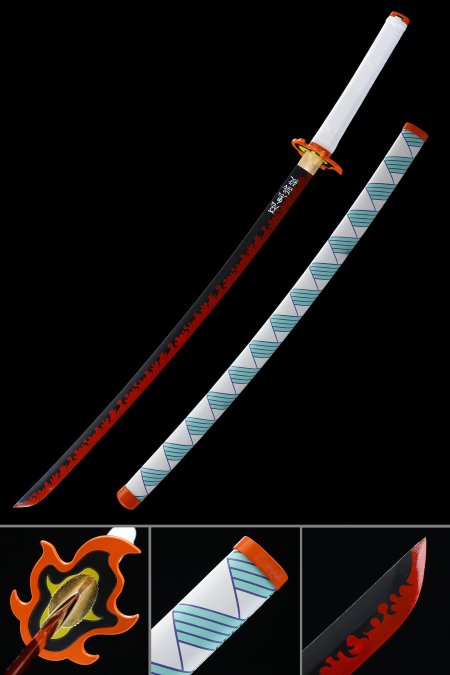
Red/Orange — Flame Breathing (Kyojuro Rengoku) Red represents Flame Breathing, a style defined by overwhelming offensive power and unyielding willpower. The Flame Hashira Kyojuro Rengoku's red-orange blade, with its distinctive flame-shaped tsuba, is one of the most iconic weapons in the series. Rengoku's final stand against the Upper Moon Three demon Akaza during the Mugen Train arc became a defining moment of the anime and cemented his sword as the most emotionally significant weapon in the story. Flame Breathing contains nine forms, each generating intense heat and destructive force.
Pink — Love Breathing (Mitsuri Kanroji) Pink represents Love Breathing, a unique derivative of Flame Breathing developed by Love Hashira Mitsuri Kanroji. Her blade is unlike any other Nichirin sword — it is extremely thin, flexible, and much longer than a standard katana, resembling a whip more than a sword. This unusual design takes advantage of Mitsuri's extraordinary physical attributes: her muscles are eight times denser than a normal person's, giving her incredible strength and flexibility. The pink color reflects the emotional, passionate nature of her fighting style.
White — Mist Breathing (Muichiro Tokito) White represents Mist Breathing, a style focused on obscuring the wielder's movements and disorienting opponents. Mist Hashira Muichiro Tokito became a Hashira just two months after picking up a sword — the fastest ascension in Corps history. His white blade reflects the ethereal, hard-to-grasp nature of mist itself.
Green — Wind Breathing (Sanemi Shinazugawa) Green represents Wind Breathing, one of the most aggressive and physically demanding styles. Wind Hashira Sanemi Shinazugawa's green blade matches his ferocious, relentless fighting approach. Wind Breathing generates cutting gales and cyclone-like slashes.
Gray — Stone Breathing (Gyomei Himejima) Gray represents Stone Breathing, the style with the greatest raw physical power. Stone Hashira Gyomei Himejima is considered the strongest Hashira of the current generation. His weapon is not a sword at all — it is a spiked flail connected by a chain to an axe, both made of Nichirin steel.
Lavender — Serpent Breathing (Obanai Iguro) Lavender represents Serpent Breathing, characterized by sinuous, twisting attack patterns. Serpent Hashira Obanai Iguro wields a uniquely shaped wavy blade that mirrors the slithering motion of a snake.
Light Purple — Insect Breathing (Shinobu Kocho) Light purple represents Insect Breathing, a derivative of Water Breathing. Insect Hashira Shinobu Kocho's blade is entirely unique — it lacks a cutting edge and instead features a needle-like tip designed to stab and inject lethal wisteria poison into demons.
For collectors, understanding these color meanings adds depth to every sword purchase. Each blade is not just a weapon — it is a symbol of a character's identity, philosophy, and journey. Explore our anime katana collection to find your perfect Nichirin blade.
Across the global anime sword collecting community, certain Demon Slayer swords consistently outsell and outrank others in popularity. Based on sales data, fan polls, and community discussions, here is a detailed ranking of the most sought-after Nichirin blade replicas:
#1 — Tanjiro Kamado's Black Nichirin Sword Tanjiro's sword holds the top spot by a wide margin. As the series protagonist, his weapon is the most instantly recognizable Demon Slayer sword in existence. Collectors particularly seek the version with Rengoku's flame-shaped tsuba — a design Tanjiro adopts after inheriting the Flame Hashira's will following the Mugen Train arc. This version carries deep emotional significance within the story and serves as a tribute to one of the most beloved characters. The black blade itself is visually striking and pairs well with almost any display setup. For many first-time buyers, Tanjiro's sword is the entry point into building a larger collection.
#2 — Zenitsu Agatsuma's Yellow Thunder Katana Zenitsu's sword is a close second in popularity. The vivid yellow color with the lightning bolt hamon pattern makes it one of the most visually striking swords in the collection. Zenitsu is a fan-favorite character whose comedic personality contrasts with his devastating combat ability, and his sword embodies that duality — bright and eye-catching, yet representative of lethal speed. The yellow blade also photographs exceptionally well, making it a popular choice for cosplay and social media content.
#3 — Kyojuro Rengoku's Flame-Red Blade Rengoku's sword surged in popularity after the Demon Slayer: Mugen Train movie became the highest-grossing anime film in Japanese box office history. His unwavering courage and heroic final stand transformed his flame-patterned blade into a symbol of determination and sacrifice. The red-orange coloring and distinctive flame tsuba make this sword an emotional purchase for many fans — it represents not just a weapon, but a character's legacy.
#4 — Giyu Tomioka's Blue Water Sword Giyu's blue blade appeals to fans who prefer a more understated, elegant aesthetic. As the first Hashira introduced in the series (and the one who set Tanjiro's journey in motion), Giyu holds a special place in the story. His sword's deep blue color represents the calm precision of Water Breathing, and the clean design makes it a versatile display piece that complements other swords in a collection.
#5 — Shinobu Kocho's Insect Stinger Blade Shinobu's sword attracts collectors specifically because of its unique design. Unlike every other Nichirin blade, hers has no cutting edge — just a needle-point tip. This one-of-a-kind design makes it a conversation piece in any collection and is particularly popular among female fans and cosplayers who appreciate Shinobu's character.
Other strong sellers include Mitsuri Kanroji's flexible pink whip-blade (popular for its unusual shape), Sanemi Shinazugawa's green wind sword (favored by fans of aggressive characters), and Inosuke Sword (a distinctive two-sword set). Collectors building complete Hashira sets will naturally need all nine, but these top five are consistently the most purchased individual pieces.
Understanding the materials used in Demon Slayer sword replicas is critical for making an informed purchase. The blade steel, handle construction, and fittings all determine the sword's durability, appearance, and suitability for different uses. Here is a comprehensive breakdown:
Blade Steel Types
The blade is the most important component of any sword replica. Three types of carbon steel are most commonly used for Demon Slayer swords:
1045 Carbon Steel — Contains 0.45% carbon content. This is the entry-level option for functional steel swords. It offers a good balance between toughness and flexibility, making it resistant to breaking or chipping under normal handling conditions. 1045 steel is easy to sharpen and maintain. It is ideal for display and cosplay use, and is the most affordable carbon steel option. The tradeoff is that it does not hold an edge as long as higher-carbon alternatives and is slightly more susceptible to corrosion, so regular oiling is recommended.
1060 Carbon Steel — Contains 0.60% carbon content. This is a step up in hardness and edge retention. 1060 steel blades can be sharpened to a finer edge and will hold that edge longer under use. The increased carbon content makes the blade slightly less flexible, but it remains tough enough for functional use. This steel is popular among collectors who want a blade that can handle light cutting exercises (such as tatami mat cutting) in addition to display.
T10 Tool Steel — A high-carbon steel tool steel with approximately 1.0% carbon content plus tungsten additives. T10 is the premium option for Demon Slayer replicas. It is commonly clay-tempered, a process where the swordsmith applies clay in varying thicknesses along the blade before quenching. The differential hardening produces a hard cutting edge (for sharpness) and a softer spine (for flexibility), along with a visible hamon line — the same distinctive wavy pattern seen on traditional Japanese katanas. T10 steel offers the best combination of edge retention, toughness, and aesthetic beauty.
Handle Construction
A quality Demon Slayer sword replica features a handle (tsuka) built with the same components as a traditional Japanese katana. The core is a wooden grip that encases the blade's tang. Genuine ray skin (samegawa) is wrapped around the wood to provide a textured base layer. Over this, cotton or silk cord (tsuka ito) is woven in a traditional pattern to create a secure, comfortable grip. The handle is secured to the tang with bamboo pegs (mekugi) — the same method used in real Japanese swords for centuries.
Fittings
The tsuba (hand guard) is one of the most important elements for character accuracy in Demon Slayer replicas. Each character's tsuba has a distinctive design — Tanjiro's features a black circular guard (or the flame-shaped variant), Rengoku's has an ornate flame pattern, Zenitsu's incorporates a hexagonal shape, and so on. Quality replicas cast these tsubas in metal alloys and finish them with accurate colors and detailing. Additional fittings include the habaki (blade collar), fuchi and kashira (pommel cap and collar), and the saya (scabbard), which is typically lacquered wood finished in a color that matches the character's aesthetic.
Full-Tang vs. Rat-Tail Tang
One of the most important distinctions in sword construction is the tang — the portion of the blade that extends into the handle. Full tang sword construction means the blade steel runs the entire length of the handle, providing maximum strength, balance, and durability. This is the standard for all quality sword replicas and is what TrueKatana uses. Cheap alternatives often use a "rat-tail" tang — a thin rod welded to the blade base — which is structurally weak and can snap under stress. Always verify full-tang construction before purchasing any metal sword replica.
This is one of the most practical questions for fans planning to bring a Demon Slayer sword to a cosplay event. The answer depends on the convention's specific weapon policy, the type of sword you bring, and how you handle it. Here is a detailed guide:
Convention Weapon Policies
Most major anime and comic conventions — including Comic-Con International, Anime Expo, Anime NYC, Otakon, and similar events — allow prop weapons under specific conditions. The general rules typically include: weapons must be peace-bonded (secured in the scabbard with a zip tie or similar fastener so they cannot be drawn), blades must not have a sharp or live edge, weapons must be inspected at a designated checkpoint upon entry, and attendees must not swing, brandish, or point weapons at other people. Some smaller conventions may ban metal weapons entirely, permitting only foam, wood, or plastic props. Always check the specific rules of the convention you plan to attend before bringing any sword.
Metal Swords at Conventions
TrueKatana Demon Slayer swords are made from real carbon steel, which means they are heavier and more realistic than foam or plastic alternatives. At conventions that allow metal props, these swords are the top choice for serious cosplayers because they look authentic in person and in photographs. The key is to ensure the blade is not sharpened and to keep the sword peace-bonded at all times. Most conventions have a weapons check station near the entrance where staff will inspect your sword, apply a peace bond, and clear you for entry.
Advantages of Metal Swords for Cosplay
There are several reasons why experienced cosplayers prefer metal Demon Slayer replicas over cheaper alternatives. First, authenticity — a real steel blade with accurate weight, balance, and finish looks dramatically better than plastic or foam, both in person and on camera. Second, durability — metal swords withstand the rigors of convention travel, posing, and handling without denting, bending, or breaking like foam props can. Third, photography — metal blades reflect light naturally, creating stunning visual effects in cosplay photos that plastic simply cannot replicate. For cosplayers who invest significant time and money into accurate costumes, a matching high-quality sword elevates the entire ensemble.
Safety Tips
If you bring a metal Demon Slayer sword to a convention, follow these safety practices: keep the sword sheathed and peace-bonded whenever you are walking the convention floor; only unsheathe for posed photographs when you have clear space around you; never swing the sword, even playfully; transport the sword in a padded bag or case to and from the event; and be aware of your surroundings in crowded areas, as a sheathed katana can still bump into people if you turn suddenly.
Alternative Options
For conventions that prohibit metal weapons, or for younger fans, wooden or foam Demon Slayer swords are available as alternatives. These are lighter, safer, and universally accepted at all events. We also offer practice katana options for training. However, they lack the visual impact and collector value of a forged steel replica.
Displaying a Demon Slayer sword collection is an art form in itself. The way you present your swords affects not only the visual impact but also the long-term preservation of each blade. Here are detailed recommendations for creating an impressive and safe display:
Display Stand Options
The most common display method is a horizontal katana stand (katanakake). These come in single-sword and multi-tier versions. For collectors building a full Hashira set of nine swords, a multi-tier wall-mounted rack is the most space-efficient and visually impressive option — it allows you to arrange all nine blades in a dramatic vertical array. For individual swords or smaller collections, tabletop stands in single, double, or triple configurations work well on desks, bookshelves, or mantelpieces.
Traditional Japanese display convention places the sword horizontally with the blade edge facing upward and the handle to the left. This is the "peace position" — in feudal Japan, a sword displayed with the handle to the right (ready to draw) was considered a sign of hostility. While this may not be a concern for anime replicas, following the traditional orientation adds an authentic touch.
Wall Mounting
Wall-mounted displays are popular because they save floor and shelf space while creating a dramatic focal point. Options include individual horizontal brackets (which hold a single sword parallel to the wall), vertical wall racks (for multiple swords displayed edge-up), and custom display boards (where swords are mounted alongside character artwork, figures, or other memorabilia). When wall-mounting, ensure the brackets are secured into wall studs or use appropriate anchors — a steel katana can weigh 900 grams to 1.3 kilograms, and a multi-sword display needs strong support.
Environmental Considerations
Where you place your display matters as much as how. Avoid direct sunlight — prolonged UV exposure can fade handle wrappings, discolor scabbard lacquer, and cause the blade to heat up, which accelerates oxidation. Avoid high-humidity areas like bathrooms, basements, or rooms without climate control, as moisture is the primary enemy of carbon steel. Ideal conditions are a dry, well-ventilated room with stable temperature between 60–75°F (15–24°C) and humidity below 55%.
Themed Display Ideas
Many collectors go beyond simple sword stands and create themed displays. Popular approaches include: organizing swords by character group (main trio, all Hashira, or Upper Moon weapons); pairing each sword with a corresponding character figure or poster; adding LED backlighting to create a dramatic visual effect; and building a dedicated display shelf or cabinet with glass doors to protect against dust while maintaining visibility. Some collectors even create custom backdrops painted in each character's color theme.
Rotation and Care
If you own more swords than you can display at once, consider rotating your display seasonally or based on events. Before storing any sword long-term, clean and oil the blade, wrap it in a soft cloth, and store it in a dry location. When rotating swords back into display, inspect for any signs of corrosion and clean again before placing on the stand.
roper maintenance is essential for preserving the beauty and structural integrity of your Demon Slayer sword. Carbon steel — while superior to stainless steel in strength, edge retention, and historical authenticity — is more reactive to environmental factors and requires regular care. Here is a complete maintenance guide:
Regular Cleaning (After Every Handling)
Every time you handle your sword — even briefly — clean the blade before putting it back on display. Human skin produces oils, salts, and moisture that transfer to the steel surface on contact. If left uncleaned, these residues create acidic spots that initiate rust within days, especially in humid climates. Use a soft, clean microfiber cloth or traditional Japanese sword-cleaning cloth (nuguigami) to wipe the entire blade surface from the habaki (blade collar) to the tip. Always wipe in one direction — from base to tip — to avoid accidental cuts and to prevent pushing debris back along the blade.
Oiling (Monthly or Bi-Monthly)
Applying a thin layer of oil to the blade creates a protective barrier against moisture and oxidation. Traditional Japanese sword care uses choji oil (clove oil), but mineral oil, camellia oil, or any food-grade mineral oil works equally well. Apply a small amount to a clean, soft cloth and wipe it evenly across the entire blade surface — both sides, including the flat of the blade, the edge, and the spine. Pay special attention to the hamon line area (where the clay tempering creates a transition between hard and soft steel) and the area near the habaki, as moisture can accumulate at metal-to-metal contact points. Do not over-oil — a barely visible sheen is sufficient. Excess oil attracts dust and can seep into the handle.
Rust Prevention and Treatment
If you notice small rust spots forming, act quickly. Light surface rust (orange-brown spots that have not pitted the steel) can be removed with fine-grade steel wool (0000 grade) or a rust eraser, using gentle circular motions. After removing the rust, immediately clean and oil the affected area. For stubborn spots, a small amount of metal polish can help. If rust has progressed to deep pitting (you can feel the depression with your fingernail), the damage is permanent and the blade's surface has been compromised. Prevention is always better than treatment — consistent cleaning and oiling make rust virtually impossible.
Handle and Fitting Maintenance
The sword handle (tsuka) requires periodic inspection. Check that the bamboo pegs (mekugi) are secure and that the handle does not rattle or wobble on the tang. If the cotton or silk tsuka ito wrapping becomes loose, it can be re-tightened by carefully pushing the wraps back into position. The tsuba (hand guard) and other fittings should be wiped with a dry cloth to remove dust. If metal fittings show tarnish, a gentle polish with a soft cloth restores their appearance.
Scabbard Care
The saya (scabbard) is typically made of lacquered wood. Wipe it with a dry cloth to remove dust and fingerprints. Do not expose the scabbard to extreme heat or prolonged direct sunlight, as this can cause the lacquer to crack or the wood to warp. When sheathing the sword, do so slowly and carefully to avoid scraping the blade against the scabbard's inner walls, which can scratch both the blade and the scabbard lining.
Storage Between Displays
If you are storing a sword for an extended period (weeks or months), apply a slightly heavier coat of oil than normal, wrap the blade in acid-free tissue paper or a soft cloth sleeve, and place it in a location with stable temperature and low humidity. Avoid storing swords in attics, garages, or unfinished basements where temperature and humidity fluctuate significantly.
This is a common question among buyers who are curious about how anime replica swords relate to traditional Japanese swords. While there are significant differences in purpose, legal status, and cultural context, high-quality Demon Slayer replicas share many construction elements with real Japanese katanas. Here is a detailed comparison:
Materials
Traditional Japanese katanas (nihontō) are forged from tamahagane — a type of steel produced in a tatara smelting furnace using iron sand and charcoal. Tamahagane is extremely labor-intensive to produce and can cost hundreds of dollars per kilogram. The resulting steel has unique carbon distribution that, when folded and forged by a master smith, produces the distinctive grain patterns (jihada) that make each traditional katana unique.
Demon Slayer replica swords use modern high-carbon steel — 1045, 1060, or T10 — which is produced through industrial processes. While not as romantically sourced as tamahagane, modern carbon steel is metallurgically consistent, widely available, and produces excellent functional blades. In terms of cutting ability and durability, modern carbon steel often matches or exceeds tamahagane performance at a fraction of the cost.
Forging Process
A traditional Japanese katana requires weeks to months of labor by a licensed swordsmith (tōshō). The process involves smelting tamahagane, folding the steel (often 8–16 times, creating thousands of layers), shaping the blade, applying clay for differential hardening (creating the hamon), quenching, and extensive hand-polishing (togishi) that can take as long as the forging itself. A single traditional katana can cost $5,000 to $50,000 or more.
Quality Demon Slayer replicas follow a simplified version of this process. The steel is heated, hammered into shape, heat-treated (and sometimes clay-tempered for a visible hamon), and assembled with traditional-style fittings. The process takes 7–15 days and is performed by experienced swordsmiths, though without the extreme refinement of a nihontō. The result is a functional, well-built sword at a price point accessible to most fans and collectors.
Design
The most obvious difference is aesthetic. Traditional Japanese katanas follow established historical styles — specific blade curvatures (sori), point shapes (kissaki), and subtle decorative elements that vary by school and era. Demon Slayer replicas are designed to match fictional characters, which means bright blade colors, character-specific tsuba designs, and decorative elements that would never appear on a historical weapon. Tanjiro's black blade with a flame tsuba, Zenitsu's yellow lightning-pattern blade, or Shinobu's needle-point weapon are all unique to the Demon Slayer universe.
Legal Considerations
In Japan, traditionally made katanas are classified as cultural artifacts and regulated under the Firearms and Swords Control Law. Only licensed swordsmiths can produce them, and each blade must be registered with the government. Modern replica swords — including anime replicas — are not subject to these same cultural artifact regulations, though weapon carry and import laws vary by country. In the United States, sword ownership is legal in all states, though some states and municipalities have restrictions on carrying swords in public. Always check your local laws regarding sword ownership and transport.
Collector Value
Traditional katanas appreciate in value over time, especially those made by famous smiths or with historical provenance. Demon Slayer replicas derive their value from the anime's cultural significance and the craftsmanship quality. While they are unlikely to appreciate like nihontō, limited-edition or premium-material Demon Slayer swords can hold their value well, particularly as the series continues to grow in popularity worldwide.
Yes — assembling a complete set of all nine Hashira Nichirin swords is one of the most popular goals among serious Demon Slayer collectors, and TrueKatana offers every Hashira weapon in the collection. Here is everything you need to know about building a full set:
The Complete Hashira Lineup
A full Hashira sword set includes nine weapons, one for each pillar of the Demon Slayer Corps: Giyu Tomioka's blue Water Breathing katana, Kyojuro Rengoku's red-orange Flame Breathing katana, Tengen Uzui's dual Sound Breathing cleavers (connected by chain), Muichiro Tokito's white Mist Breathing katana, Mitsuri Kanroji's pink Love Breathing flexible blade, Obanai Iguro's lavender Serpent Breathing wavy blade, Sanemi Shinazugawa's green Wind Breathing katana, Gyomei Himejima's gray Stone Breathing flail-and-axe weapon, and Shinobu Kocho's light purple Insect Breathing stinger katana. Together, these nine weapons represent every primary Breathing Style in the Demon Slayer universe and create a visually stunning rainbow of blade colors when displayed together.
Display Planning
A nine-sword display requires thoughtful planning. The most popular approach is a multi-tier wall-mounted rack that arranges the swords horizontally in a vertical stack. This configuration creates a dramatic visual impact — imagine nine Nichirin blades in blue, red, orange, white, pink, lavender, green, gray, and light purple displayed from floor to ceiling. Another approach is a dedicated display cabinet or shelf unit where each sword has its own space alongside character figures, artwork, or name plates.
Arrangement order is a matter of personal preference. Some collectors organize by color spectrum (blue to red to yellow), others by the order Hashira appear in the anime, and others by personal favorite. One popular arrangement follows the official Hashira meeting seating order.
Building Over Time
Most collectors build their Hashira set gradually rather than purchasing all nine at once. A common strategy is to start with your favorite character's sword, then add one new piece every month or on special occasions. This approach spreads the investment over time and gives you the pleasure of watching your collection grow. Starting with Rengoku's sword (the most emotionally significant) or Tanjiro's sword (the protagonist's weapon, technically not a Hashira but often included) is a popular choice for the first purchase.
Beyond the Nine Hashira
Dedicated collectors often expand beyond the core nine to include weapons from other important characters. Popular additions include Tanjiro Kamado's black sword (with both the standard tsuba and the Rengoku flame tsuba variant), Zenitsu Agatsuma's yellow katana, Inosuke Hashibira's dual indigo-gray chipped blades, Kanao Sword, and even demon weapons like Kokushibo Sword. A truly comprehensive Demon Slayer sword collection can include 15 or more distinct weapons. TrueKatana also offers replicas from other popular anime series, including One Piece Sword, Naruto Sword, and Bleach Sword collections.
Consistency
When building a set, consistency in quality and style matters. Purchasing all swords from the same maker — like TrueKatana — ensures uniform blade length, handle construction, finish quality, and overall aesthetic. Mixing swords from different manufacturers often results in noticeable differences in scale, color accuracy, and craftsmanship that can detract from the display.
Delivery time is one of the most common questions from first-time buyers. Because TrueKatana Demon Slayer swords are handcrafted — not mass-produced from a warehouse shelf — the timeline involves both a production phase and a shipping phase. Here is a detailed breakdown of what to expect:
Production Time (7–15 Business Days)
Every TrueKatana sword is made to order by skilled swordsmiths. After you place your order, your sword enters the production queue. The forging process — from raw steel to finished, assembled sword — typically takes 7 to 15 business days depending on the specific model, blade steel type, and current order volume. More complex designs (such as Mitsuri's flexible blade or Gyomei's flail weapon) may require additional production time due to their non-standard construction. Premium steel options like T10 clay-tempered blades also require additional time for the differential hardening process.
During production, each sword goes through multiple stages: steel selection and cutting, heating and forging, grinding and shaping, heat treatment (quenching and tempering), handle assembly (ray skin, tsuka ito wrapping, fitting installation), scabbard fitting, and final quality inspection. Rushing any of these steps would compromise quality, which is why TrueKatana allows adequate time for each order.
Shipping Time
After production and quality inspection, your sword is securely packaged in a reinforced box designed to protect the blade, handle, and fittings during transit. Shipping times vary by destination:
For US domestic orders: standard shipping typically takes 7 to 14 business days after the sword ships. TrueKatana offers free shipping on all US orders. Expedited shipping options may be available at checkout for faster delivery.
For international orders: delivery typically takes 14 to 28 business days depending on the destination country, customs processing times, and local postal service efficiency. International customers should be aware that customs duties or import taxes may apply depending on their country's regulations — these are the buyer's responsibility and are not included in the order total.
Order Tracking
Every order receives a tracking number once the sword ships. You can use this number to monitor your package's journey from the workshop to your doorstep through the carrier's tracking system. TrueKatana's customer service team is also available to answer questions about order status.
Tips for Faster Delivery
If you need a Demon Slayer sword by a specific date — such as a cosplay convention or a gift occasion — plan ahead. Count backwards from your event date: allow 15 business days for production plus your estimated shipping time, and add a buffer of 5–7 days for any unexpected delays. Ordering 4 to 6 weeks before your needed date is a safe general guideline. For US customers who need faster service, check TrueKatana's in-stock collection — these are pre-made swords that ship within 1 to 3 business days without the standard production wait.
Packaging and Protection
Every sword is packaged with care to survive long-distance shipping. The blade is wrapped in protective material, the handle and fittings are cushioned to prevent movement, and the entire sword is placed in a reinforced corrugated box. This packaging is designed to withstand the bumps and handling of transit. Upon arrival, inspect your sword immediately — if anything appears damaged during shipping, contact TrueKatana's customer support team to arrange a replacement or resolution under the 30-day satisfaction guarantee.
If you are new to anime sword collecting and want your first Demon Slayer Nichirin blade, the choice can feel overwhelming given the variety of characters, blade colors, and steel types available. Here is a practical guide to help you make the right first purchase:
Best Character Choice: Tanjiro Kamado's Black Nichirin Sword
For most first-time buyers, Tanjiro's sword is the ideal starting point. As the main character of the series, his weapon is the most universally recognized Demon Slayer sword. It pairs well with any display setup due to its classic black color, and it holds the broadest appeal — even people who are not deeply familiar with the anime will recognize it. The version with Rengoku's flame-shaped tsuba is especially recommended because it represents a pivotal moment in the story and has the most visually interesting guard design.
If Tanjiro is not your favorite character, go with whoever resonates with you most. The emotional connection to a character is ultimately what makes collecting meaningful. Zenitsu's yellow blade, Rengoku's red blade, and Giyu's blue blade are all excellent first choices that are visually striking and highly popular.
Recommended Steel Type: 1045 Carbon Steel
For a first sword, 1045 carbon steel offers the best value. It is durable, affordable, and provides a genuine forged-steel experience without the premium price of higher-carbon options. The blade is tough enough for display and careful handling, and it is more forgiving than harder steels (less likely to chip if accidentally bumped). As your collection grows and your knowledge deepens, you can invest in 1060 or T10 steel for premium additions.
What to Look For
When evaluating your first purchase, prioritize these factors: full tang sword construction (the blade steel must run the full length of the handle — this is non-negotiable for safety and durability), accurate character design (correct blade color, tsuba pattern, and handle wrapping), quality steel (avoid stainless steel or unspecified "alloy" blades — real carbon steel is the standard), and a reputable seller with verified customer reviews and a satisfaction guarantee.
What to Avoid
Be cautious of extremely low-priced Demon Slayer swords (under $50). These are almost always made from thin stainless steel or zinc alloy with a rat-tail tang, painted rather than forged blade colors, and loose fittings that rattle. They look cheap in person, break easily, and can be genuinely dangerous if the blade separates from the handle. A quality hand-forged replica is an investment that lasts — a cheap prop is money wasted.
Starting Your Collection
Many collectors begin with a single favorite character's sword and build from there. A natural progression is: start with a handmade katana like Tanjiro's sword, then add the other two main characters (Zenitsu and Inosuke), then expand into the Hashira set one sword at a time. This approach gives you a satisfying collection milestone at three swords and a long-term goal of completing all nine Hashira. For serious enthusiasts, consider exploring our battle ready katana and sharp katanacollections, or browse katana for sale for additional options. Our katana set packages offer great value for collectors building their collections.
The blade was well made with good detail from the show it's inspired by and came at a timely manner it was a lovely gift to give to a family member.
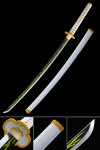 |
Zenitsu Agatsuma Sword - Kimetsu No Yaiba Thunder Breathing Nichirin, 1045 Carbon Steel, Yellow Blade |
10/10 would recommend it took 2 weeks but it’s worth it
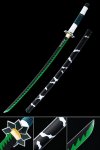 |
Sanemi Shinazugawa Sword - Kimetsu No Yaiba Wind Hashira Nichirin, 1045 Carbon Steel, Green Tsuba |
The sword came fast, its nice and sharp and I love how detailed it is
|
Zenitsu Agatsuma Sword - Kimetsu No Yaiba Thunder Breathing Nichirin, 1045 Carbon Steel, Yellow Blade |
Got here very fast (within about 4-5 days). Looks awesome as a centerpiece on my wall. Has a very durable feel to it. Would purchase from here again in the future.
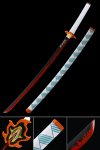 |
Rengoku Sword - Kimetsu No Yaiba Flame Hashira Nichirin Replica, 1045 Carbon Steel |
This was a very nice katana, exceeding my expectations based on the cost. It was my daughter's favorite Christmas gift and a great replica of the Shinobu katana from Demon Slayer
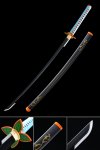 |
Shinobu Sword - Kimetsu No Yaiba Insect Hashira Nichirin Replica, 1045 Carbon Steel, Butterfly Tsuba |
It is amazing!!! Came very quickly and is really just beautiful. My husband absolutely loves it, and we will be getting more in the future!
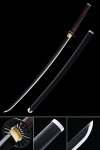 |
Tanjiro Kamado Sword - Kimetsu No Yaiba Nichirin Replica, 1045 Carbon Steel, White Scabbard |
I had to order a gift last minute (12/16) and was super nervous but Truekatana pulled through, was true to their advertising and delivered as promised. My gift arrived on 12/23 and it is exactly what I expected/ordered, perfect. Thank you! My only critique, to show fairness is that I didn't receive a shipping confirmation (adding to the super nervousness). Considering the whole experience I will still give 5 stars and order from them in the future.
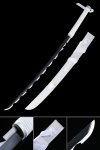 |
Inosuke Sword - Kimetsu No Yaiba Beast Hashira Nichirin Replica, 1045 Carbon Steel, Jagged Edge |
Good quality, pretty heavy, not too sharp. Definitely good for displaying. Definitely will get more from here, when I can
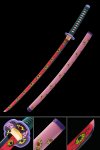 |
Kokushibo Sword - Kimetsu No Yaiba Upper Moon One Nichirin, 1045 Carbon Steel, Eye Tsuba |