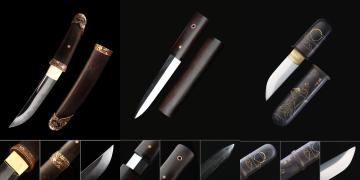
What does the sageo cord do on a tanto?
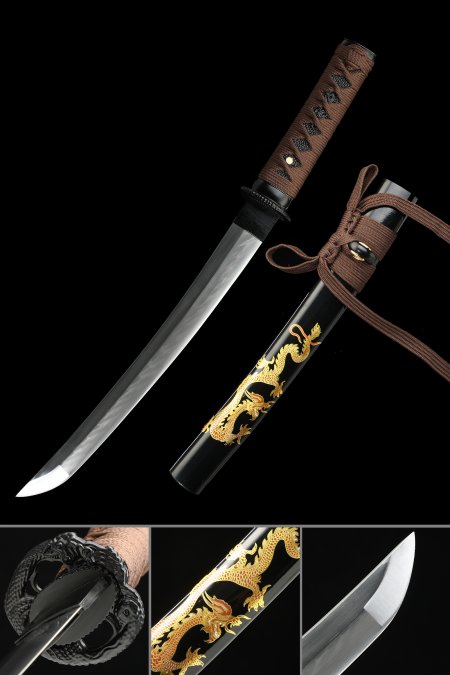
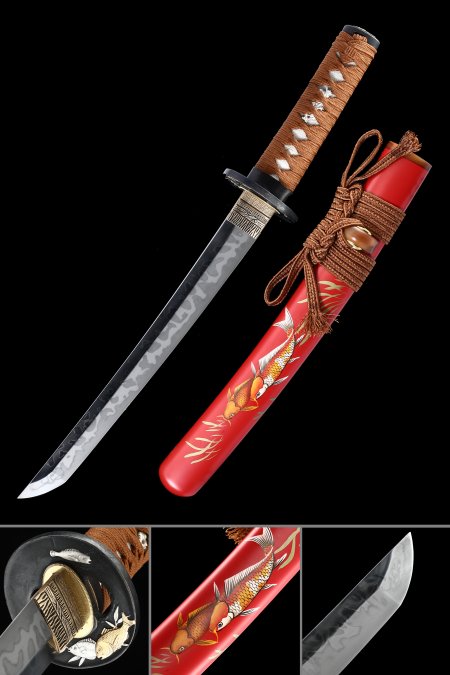
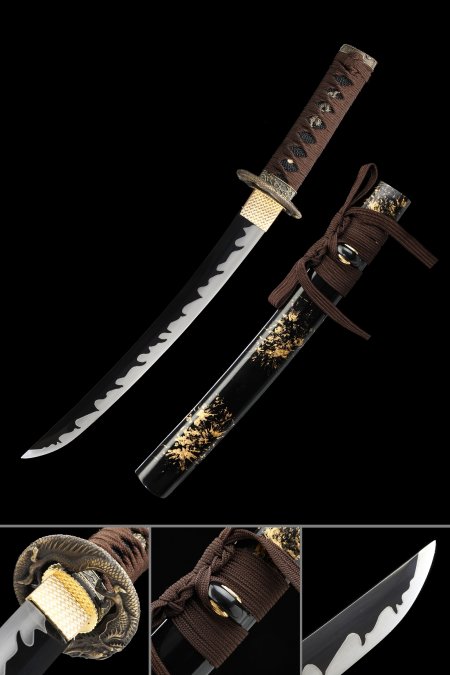
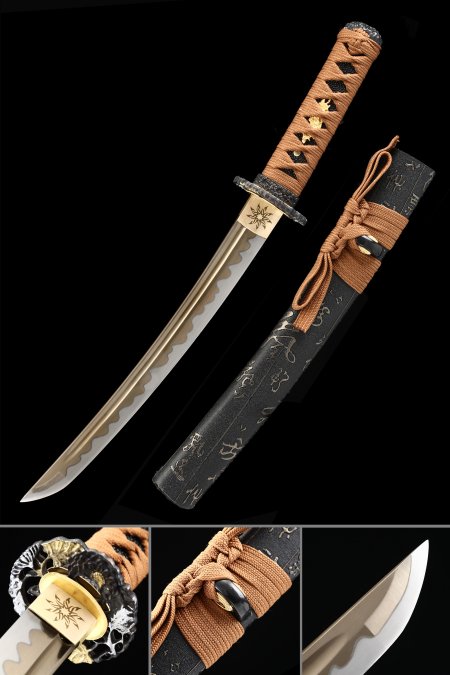
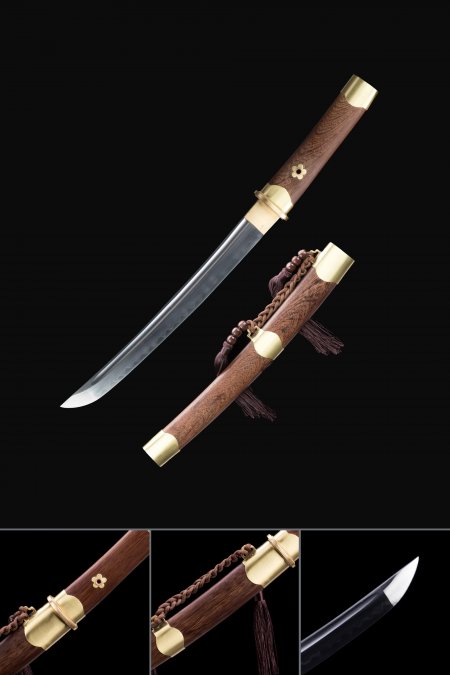
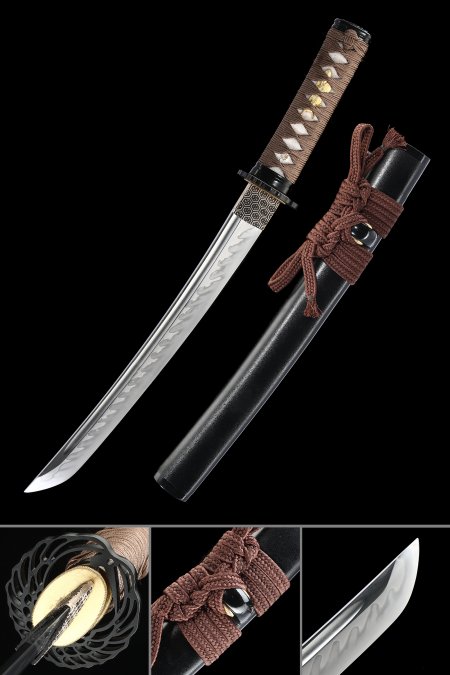
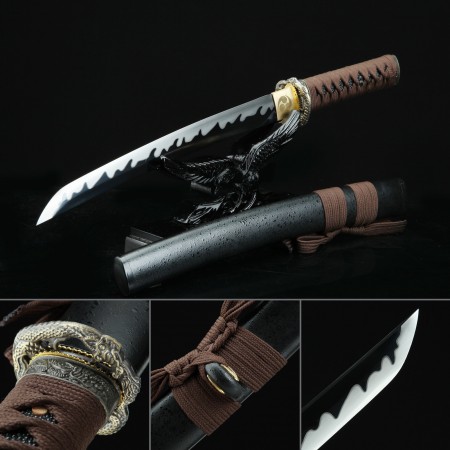
The sageo is the braided cord threaded through the kurigata, a small knob on the saya (scabbard). Historically, it served practical purposes such as securing the saya to the wearer's obi (belt) or binding a restrained opponent's hands. On a display collectible, the sageo is a key aesthetic element — its color, material, and length all contribute to the overall visual harmony of the koshirae. A brown sageo is particularly sought after because it complements warm-toned fittings, lacquered saya, and matching brown ito (handle wrap), creating a unified, traditionally grounded presentation that collectors find visually cohesive.
How does T10 steel differ from high manganese steel in a tanto?
T10 is a high-carbon tool steel containing roughly 0.95–1.04% carbon along with trace silicon, which contributes to fine grain structure and the ability to produce a distinct hamon when clay tempered. It polishes well and holds edge geometry cleanly, making it a favorite for display-quality tantos where visible detail matters. High manganese steel, by contrast, has a higher manganese content that improves toughness and resistance to deformation. It tends to be less brittle than high-carbon steel but may not display the same hamon clarity after quenching. For collectors prioritizing visible temper line aesthetics, T10 with clay tempering is generally the more visually rewarding choice.
How should I store a lacquered tanto saya long-term?
Lacquered wood saya are sensitive to the same conditions that affect fine furniture. Store the tanto horizontally on a display stand in a room with stable humidity — ideally between 40% and 60% relative humidity. Avoid placement near heating vents, air conditioners, or windows with direct sunlight exposure, all of which cause the wood to expand and contract and can lead to lacquer cracking or peeling. If the saya surface appears dull over time, a very light application of Renaissance Wax or a dry microfiber buffing can restore sheen without introducing moisture. Keep the blade lightly oiled before inserting it into the saya for long-term storage to prevent any surface oxidation.
Are hand-painted saya designs durable enough for display use?
Hand-painted saya, such as those featuring koi or flame motifs, are finished with lacquer layers that protect the painted artwork from casual handling and dust. For pure display use on a stand, these finishes are quite durable and will retain their appearance for many years under stable conditions. However, they are more delicate than plain lacquered saya if regularly handled or transported. If you plan to rotate a painted-saya tanto in and out of storage frequently, wrapping the saya in a soft cloth sleeve during transport will prevent contact scratches. The artwork itself is applied by hand, which means minor variations and brush texture are intentional characteristics of the piece rather than defects.
Can a brown sageo tanto make a meaningful collector's gift?
Absolutely. A tanto with coordinated brown sageo and matching ito wrap presents exceptionally well as a gift because the tonal consistency reads as intentional and refined, even to someone unfamiliar with Japanese blade collecting. The compact size of the tanto means it displays elegantly on a desk, bookshelf, or wall mount without requiring a dedicated display case. For gifting purposes, pieces featuring engraved saya (kanji inscriptions or decorative motifs) or distinctive tsuba designs — such as dragon or snake motifs — add an additional layer of visual storytelling that recipients tend to appreciate. Pairing the tanto with a simple wooden display stand elevates the presentation further.