What steel types are used in Camo Katana blades?
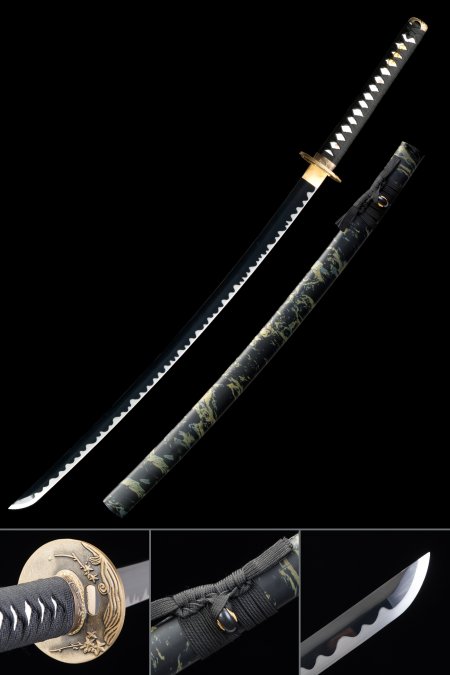
The Camo Katana collection features three primary steel types, each with distinct characteristics. Clay-tempered 1095 high-carbon steel is the most traditional choice: the clay coating applied before quenching creates a real hamon temper line and differentially hardens the blade for a balance of edge hardness and spine flexibility. Hand-forged Damascus steel is produced by layering and forge-welding multiple alloys, resulting in a flowing grain pattern unique to each blade. Manganese steel offers reliable toughness and is well-suited to display pieces that are handled frequently. Your choice of steel should reflect how you intend to display and care for the piece, as carbon and Damascus steels require regular oiling to prevent oxidation, while manganese is comparatively lower maintenance.
How is the camouflage finish applied to the saya?
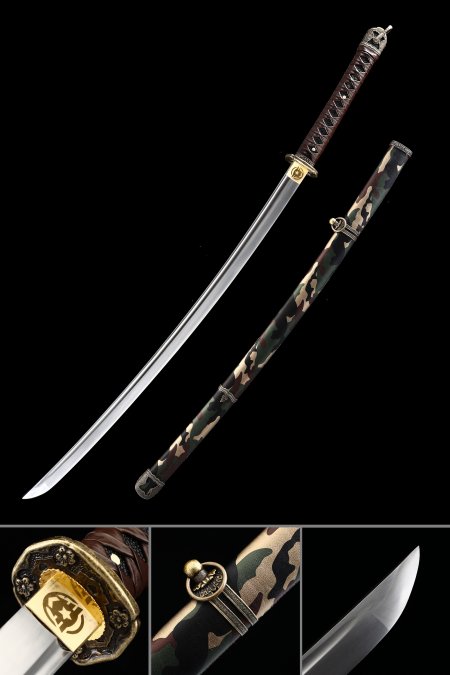
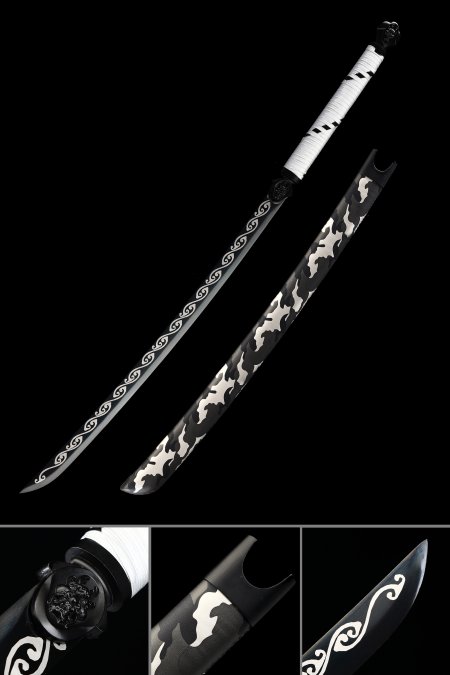
Depending on the specific piece, the camouflage finish on the saya is achieved through different methods. Wood saya are either hand-lacquered with multi-tone camo color work or wrapped in camouflage-pattern fabric sealed with a protective coating. Leather-wrapped saya, such as those on the Type 98 Shin Gunto replica, use genuine or synthetic camo leather cut and stitched around a wood core, closely replicating the construction style of historical military mountings. The finish is applied over the entire saya including the koiguchi (mouth) area, and paired with coordinating sageo cord for a unified presentation. These finishes are designed for display durability, though prolonged direct sunlight can fade any dyed or lacquered surface over time.
How does a Camo Katana differ from a standard black or natural-wood katana?
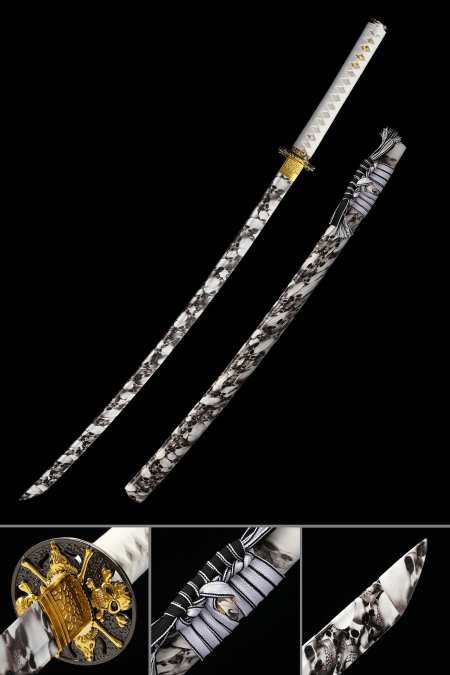
Beyond the obvious visual distinction, Camo Katana pieces in this collection often feature fittings chosen specifically to complement the bold saya aesthetic — dragon tsuba, crane engravings, skull motifs, and contrasting ito colors like white or gray rather than the more traditional black or brown. The blade geometry and full-tang construction remain consistent with standard katana proportions, so the difference is primarily one of presentation and collector identity. A standard natural-wood or black saya katana tends to suit a more historically focused display, while a camo katana makes a stronger visual statement in a modern or thematic collection. Both categories reflect equally serious forging standards within this collection.
Is the Type 98 Shin Gunto design historically accurate?
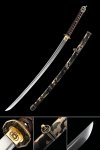
The Type 98 Shin Gunto was the standard officer's sword used by the Imperial Japanese Army from 1938 onward, characterized by a machine-made or traditionally shaped blade mounted in military-style koshirae with an aluminum or copper alloy tsuba and a distinctive brown leather-wrapped handle. The replica in this collection captures the essential visual profile of that mounting style — including the camouflage leather saya that references field-use sword covers documented in period photographs. It is presented as a collectible replica rather than a museum-grade reproduction, making it accessible to military history enthusiasts and Japanese sword collectors who want to represent this historically significant sword type in their display without the provenance cost of an original artifact.
What is the best way to display and maintain a Camo Katana?
For display, a horizontal two-tier sword stand or a wall-mounted rack works well and keeps the saya's camouflage finish visible as part of the composition. Avoid placing the sword in direct sunlight, as UV exposure gradually fades both lacquered and leather-wrapped saya finishes. For steel maintenance, apply a thin coat of choji oil or a neutral food-grade mineral oil to the blade every one to three months, wiping away any fingerprints first with a soft cloth — skin oils accelerate oxidation on high-carbon and Damascus steel. Store the blade in its saya when not actively on display. The ito wrapping on the tsuka should be kept dry; if it becomes damp, allow it to air-dry naturally away from direct heat sources to prevent shrinkage or warping of the underlying samegawa ray skin.