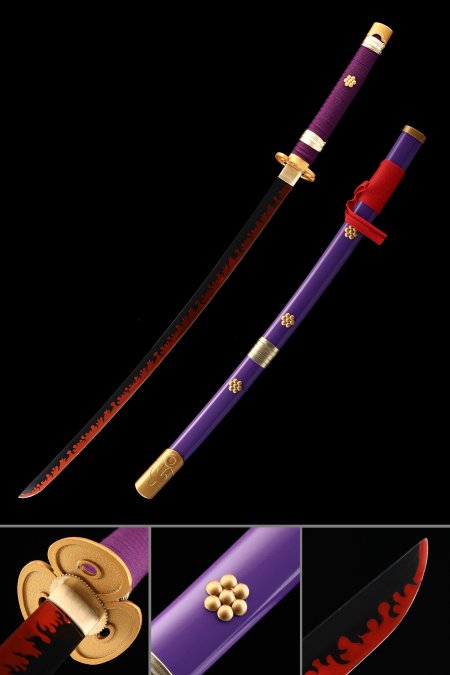
Purple 1045 Carbon Steel Katana

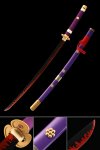
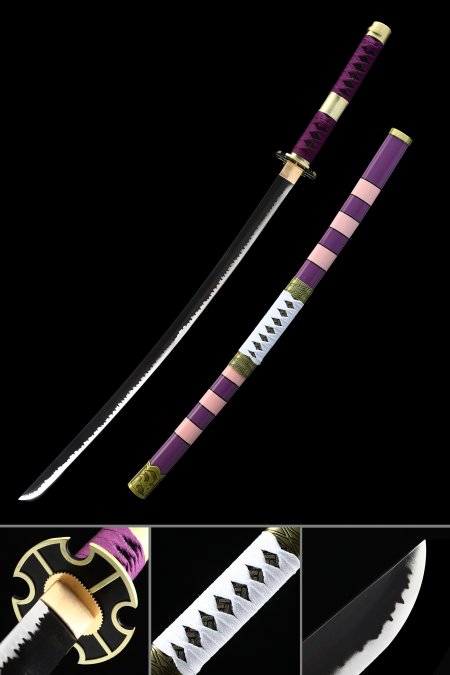
The Purple 1045 Carbon Steel Katana collection brings together hand-forged blades and richly lacquered purple scabbards — a striking combination for discerning collectors who appreciate both visual drama and authentic craftsmanship. Each piece in this lineup is constructed from 1045 carbon steel, full-tang, and finished with traditional fittings that honor classical Japanese sword aesthetics. Whether displayed on a wall mount or added to a growing collection, these katana make a bold statement. Enjoy free standard shipping on your order, plus a straightforward return policy designed to keep your collecting experience worry-free.
Showing 2 Products

Related Collections

1045 Ninjato19 items


539 Reviews

1045 Tachi Sword3 items


15 Reviews

Frequently Asked Questions

What makes 1045 carbon steel a good choice for display katana?
1045 carbon steel contains roughly 0.45% carbon, placing it in the mid-range of carbon steel grades. For collectible and display-oriented katana, this composition provides a reliable level of structural integrity — the blade holds its form over time without becoming brittle in typical indoor conditions. Full-tang construction, which is standard in this collection, distributes the steel through the entire handle core, making the piece far more stable than decorative swords with rat-tail tangs. While higher-carbon steels like 1095 or T10 offer different performance characteristics, 1045 remains a respected choice for collectors who prioritize consistent craftsmanship and long-term display quality at an accessible entry point.
How does purple lacquer affect the value of a collectible katana?
Purple lacquer saya (scabbards) are comparatively rare in both historical and contemporary katana production. In classical Japanese sword culture, certain lacquer colors carried social and symbolic associations — purple in particular was linked to nobility and distinction. For modern collectors, a purple-lacquered scabbard immediately differentiates a piece from the far more common black or brown finishes, making it visually distinctive on a display stand or in a collection cabinet. The lacquer itself, when properly applied in multiple layers over a wood base, also serves a practical function: it creates a moisture-resistant surface that helps protect the saya from humidity-related warping. Collectors should still store pieces in controlled humidity environments, but a quality lacquer finish adds a meaningful layer of passive protection.
Are anime-inspired katana replicas considered serious collectibles?
Within the collector community, anime-inspired replicas occupy a well-established and growing niche. Pieces referencing specific fictional swords — such as those drawn from One Piece lore — carry narrative and cultural context that purely generic designs do not. When the underlying craftsmanship meets genuine standards (hand-forged blade, full-tang construction, traditional hardware), the replica designation refers to the design inspiration rather than any compromise in build quality. Many collectors display anime-inspired katana alongside historically-styled pieces precisely because they represent a distinct category: artifacts of contemporary popular culture rendered in traditional Japanese craft techniques. Their collectible value is real and increasingly recognized by serious enthusiasts.
How should I store and maintain a lacquered katana scabbard?
Lacquered saya require modest but consistent care. Avoid exposing the scabbard to direct sunlight for extended periods, as UV exposure can fade or crack the lacquer finish over time — particularly vivid colors like purple. Store the piece in an environment with relative humidity between 40% and 60%; excessive dryness causes the underlying wood to contract, potentially stressing the lacquer, while high humidity risks swelling and warping. When cleaning, use a soft, dry cloth rather than any liquid cleaner. The blade itself should be lightly coated with a thin layer of choji oil (or a comparable mineral oil) every few months to prevent surface oxidation, and the habaki (blade collar) should be inspected periodically to ensure it seats cleanly in the saya without forcing.
How does this collection compare to Purple 1095 Carbon Steel Katana?
The primary difference lies in carbon content and the resulting material properties. 1095 carbon steel contains approximately 0.95% carbon — roughly double that of 1045 — which produces a harder blade capable of holding a finer edge geometry. For display collectors, this distinction is largely aesthetic and philosophical: a 1095 blade will often show more pronounced hamon (the temper line along the edge) when properly heat-treated, adding visual depth that enthusiasts prize. 1045, by contrast, is somewhat tougher in the sense that it is less prone to chipping under stress, and it is generally easier to polish to a clean mirror finish. Both are legitimate choices for a high-quality collectible katana; the decision often comes down to whether you prioritize the visual drama of a prominent hamon or a cleaner, more uniform blade appearance.

Customer Reviews

Cart 0 Items

Your cart is empty