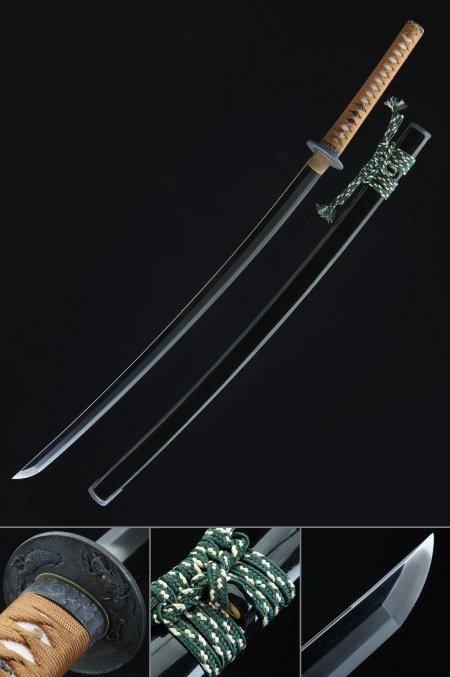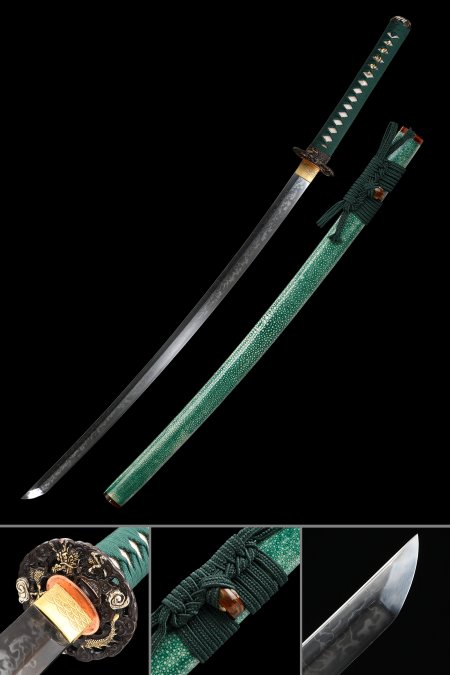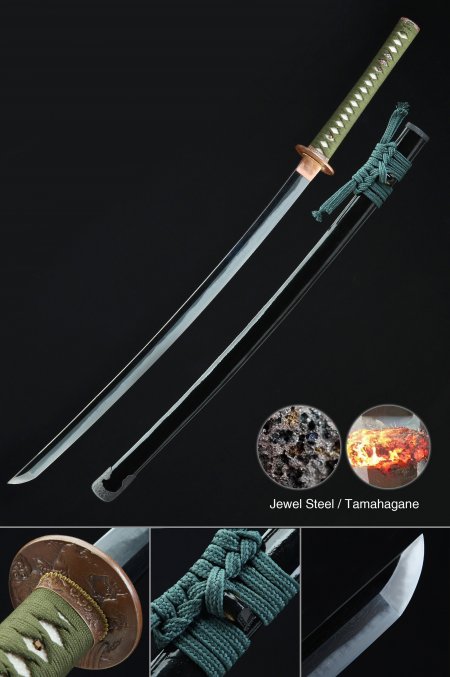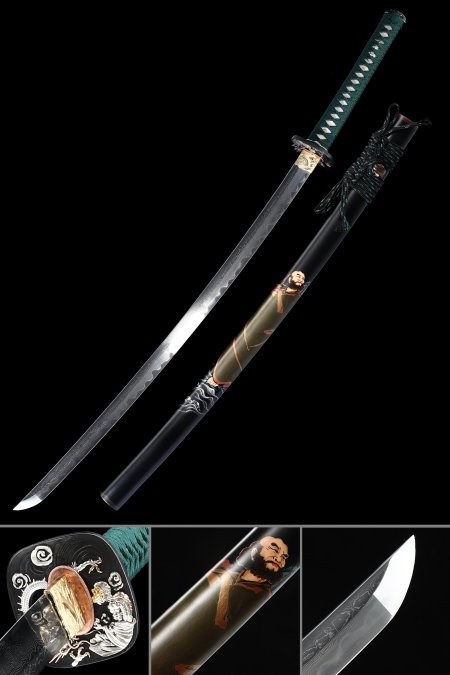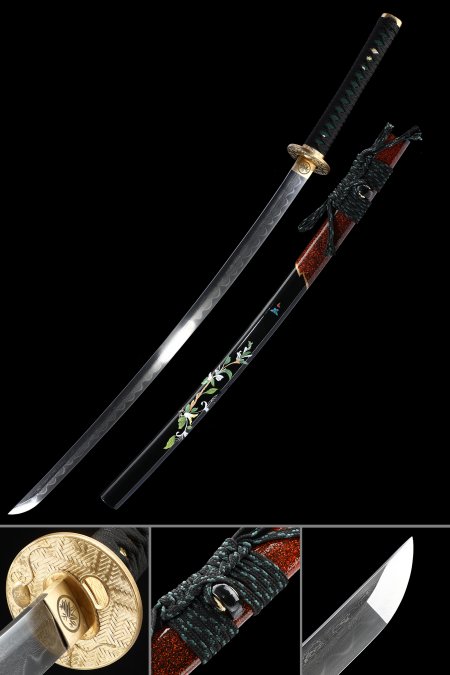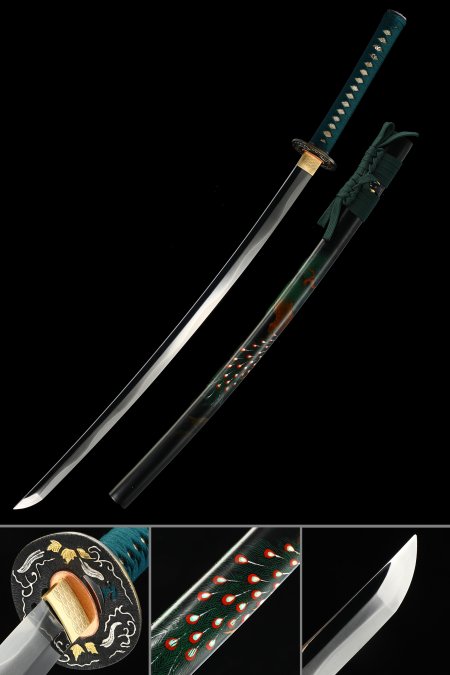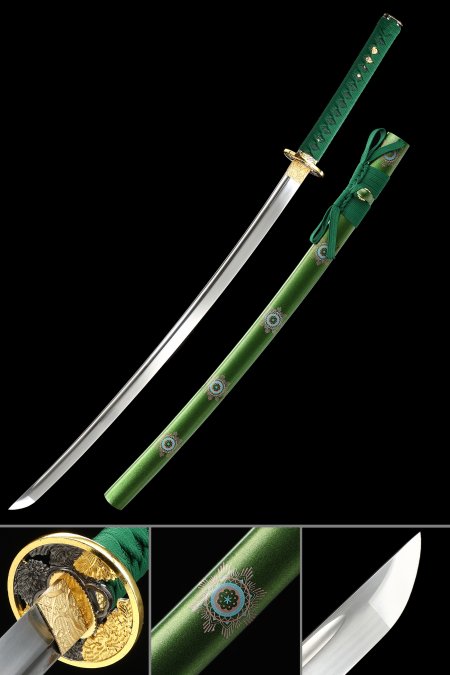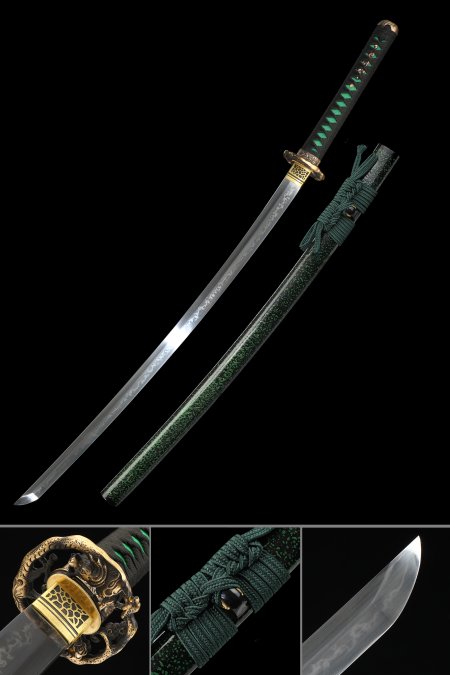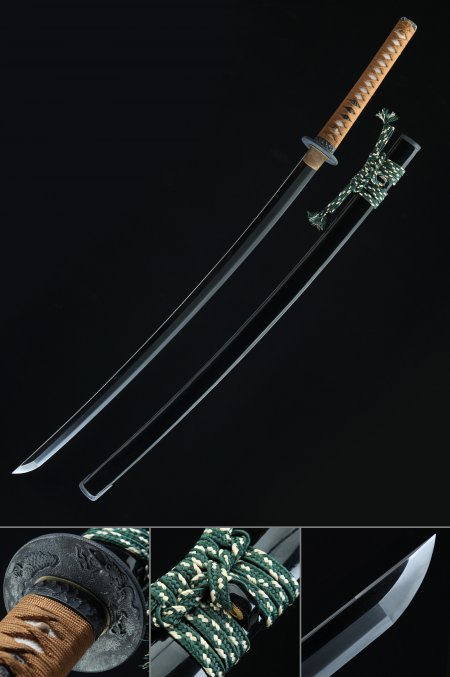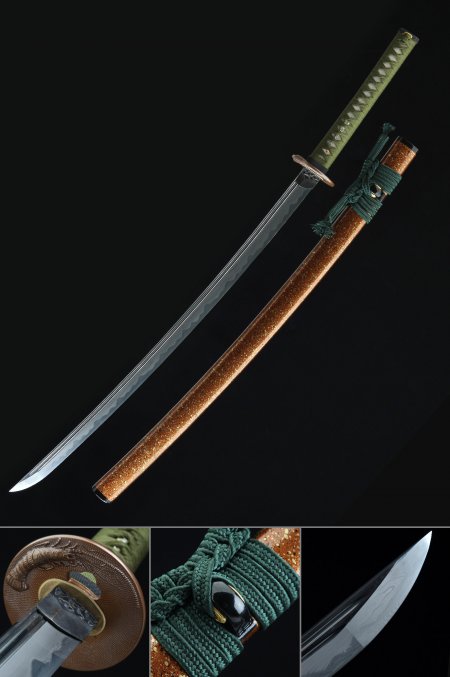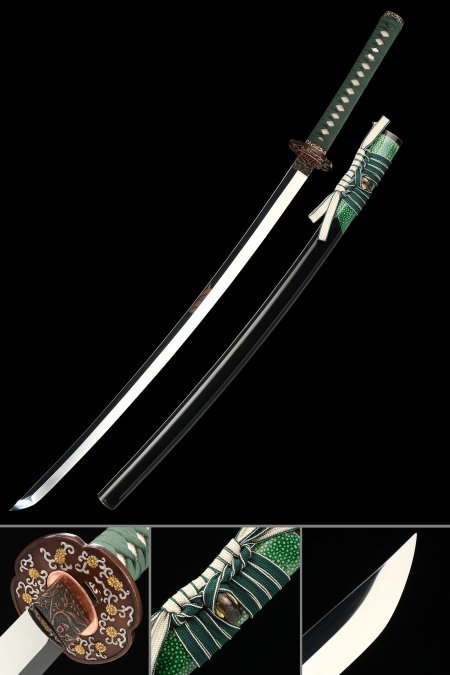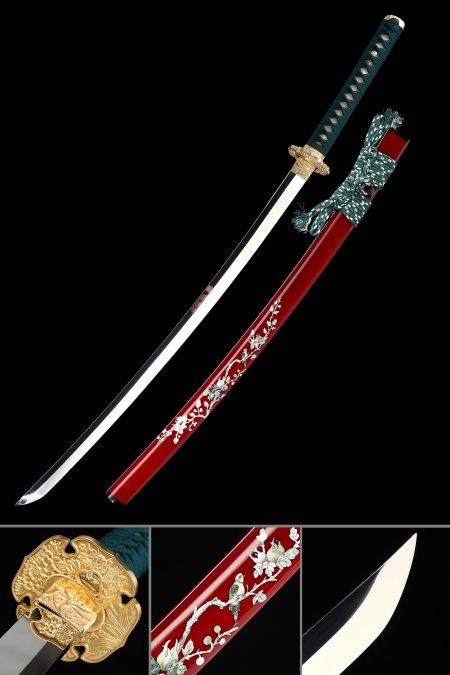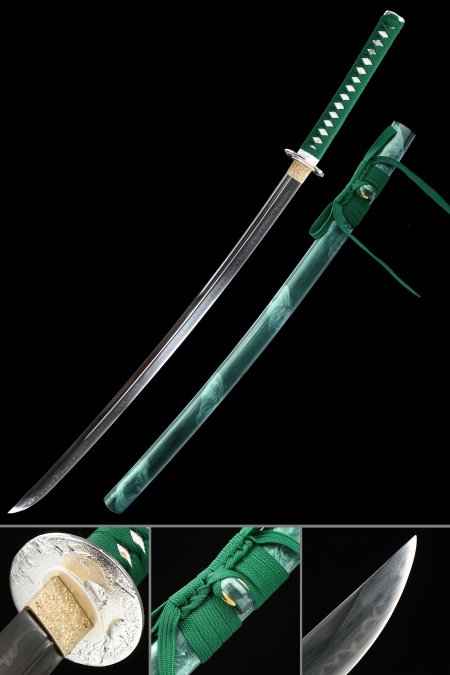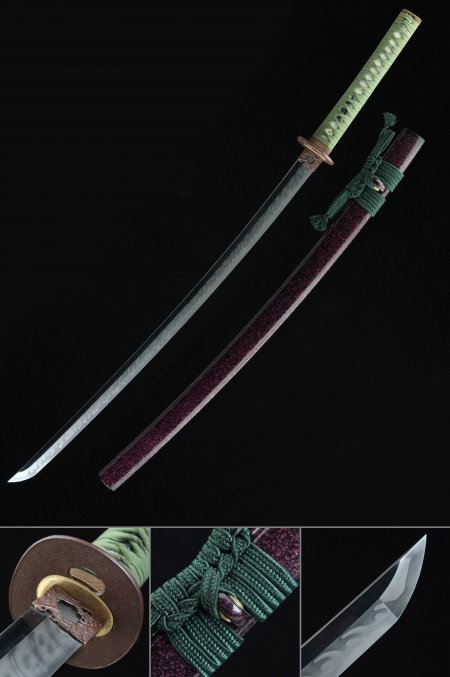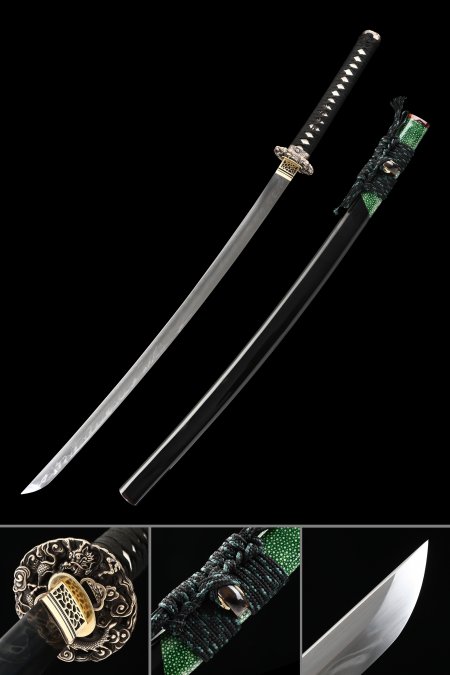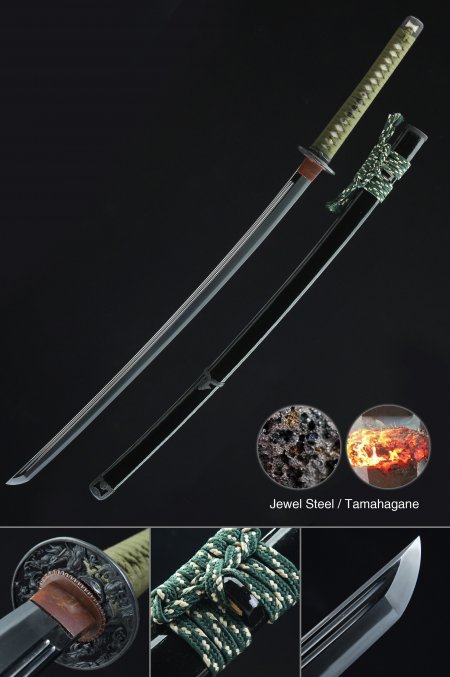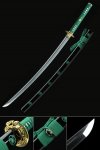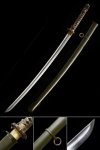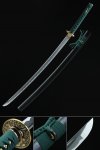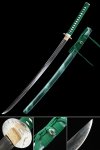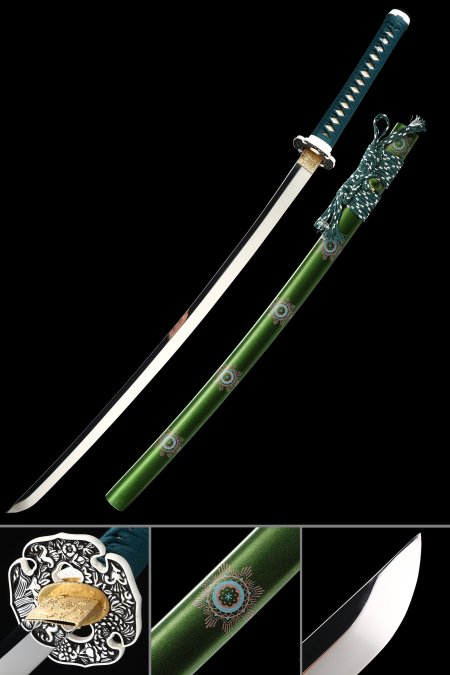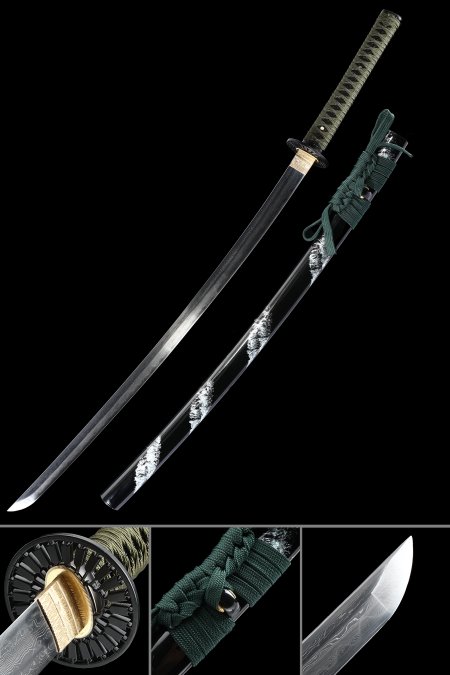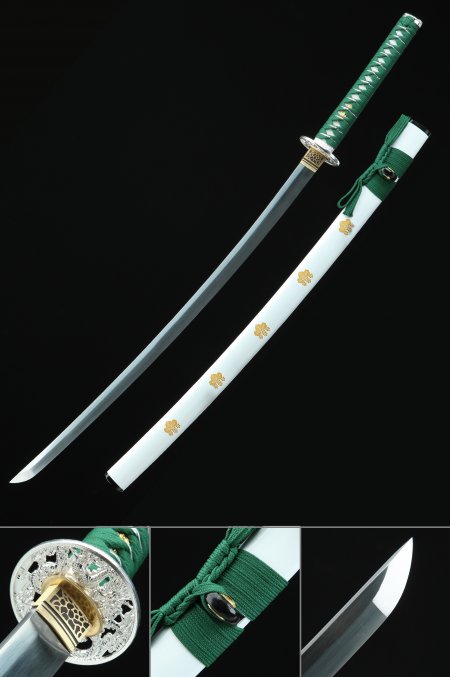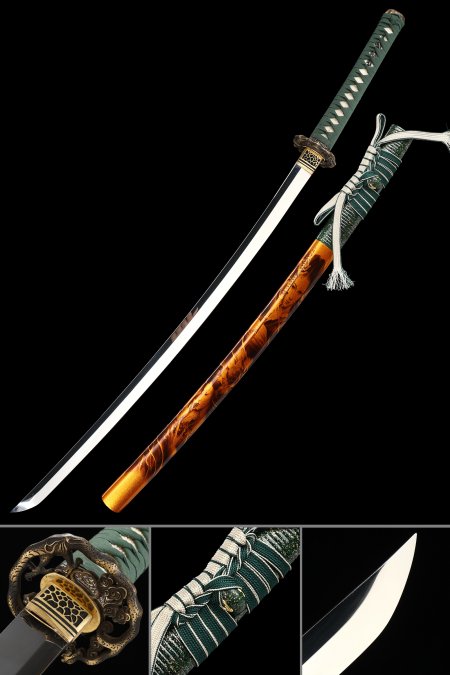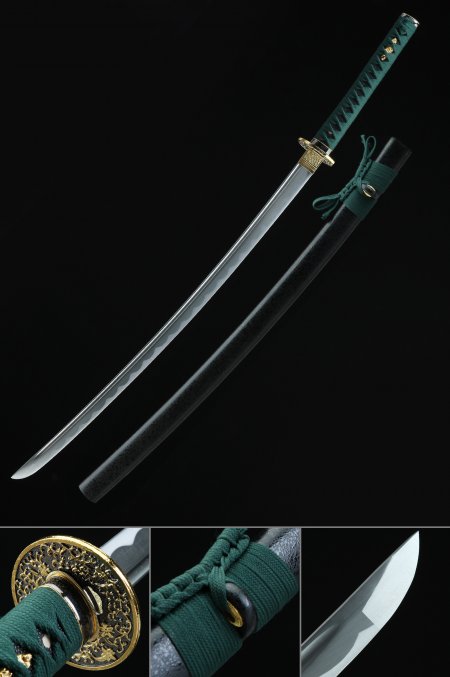
Green Sageo Katana

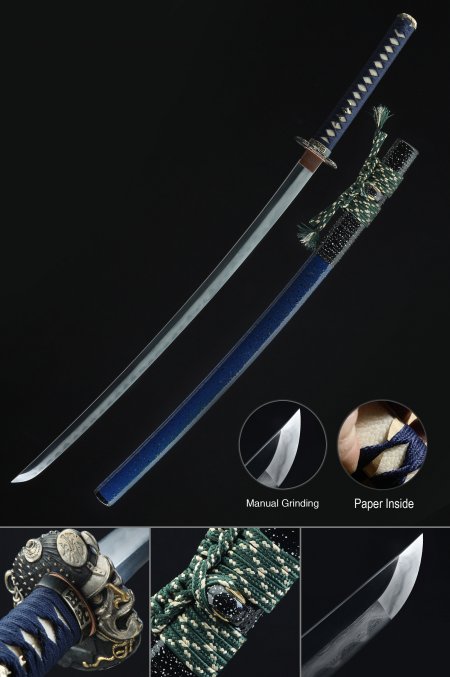
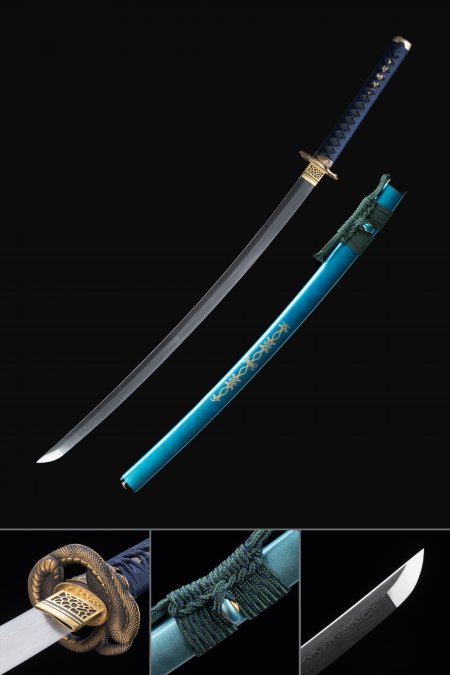
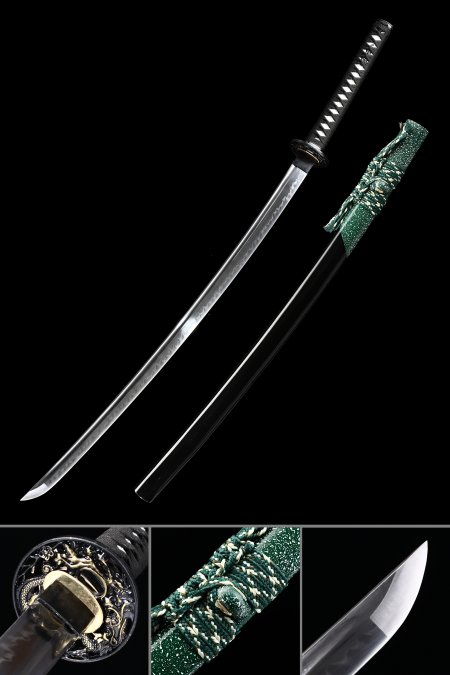
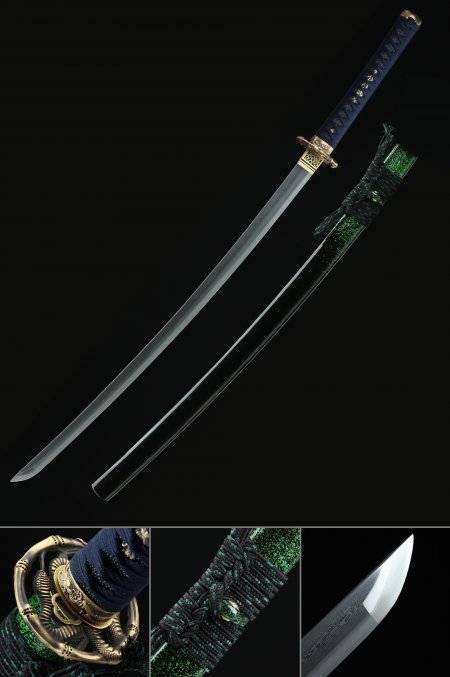
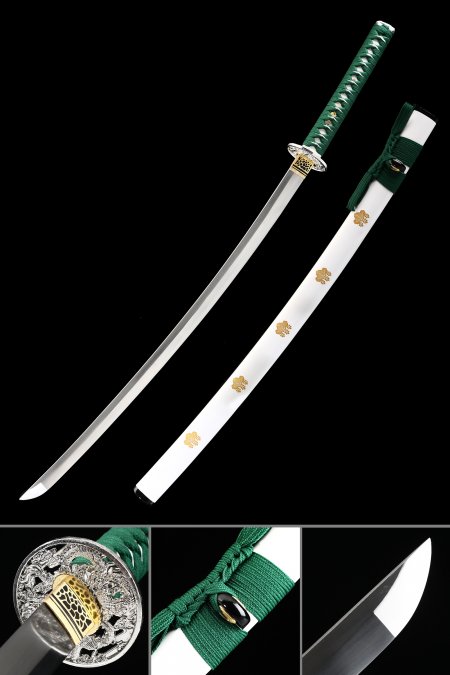
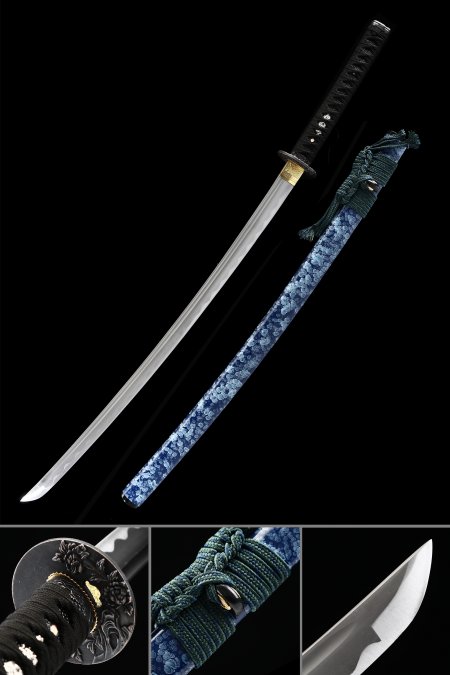
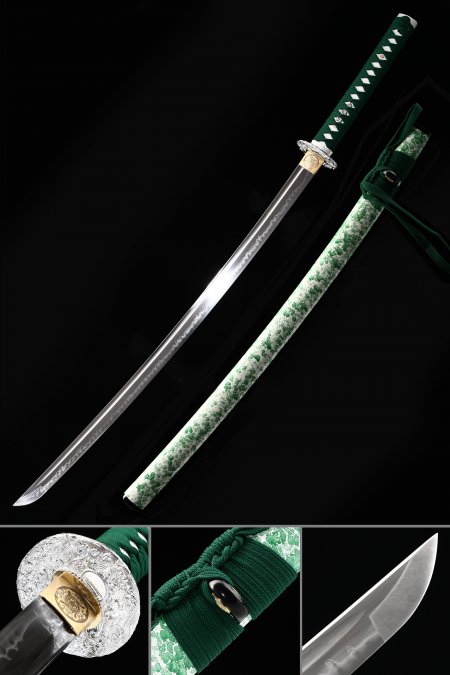
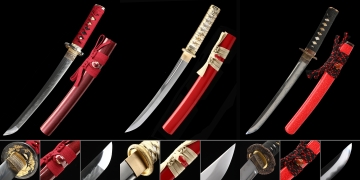
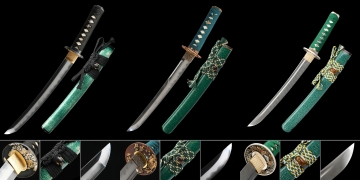
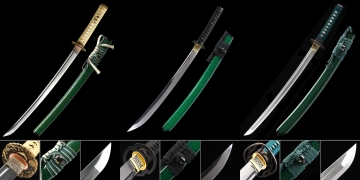
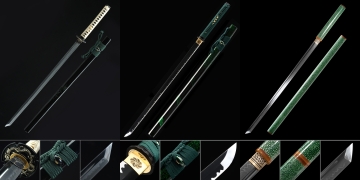
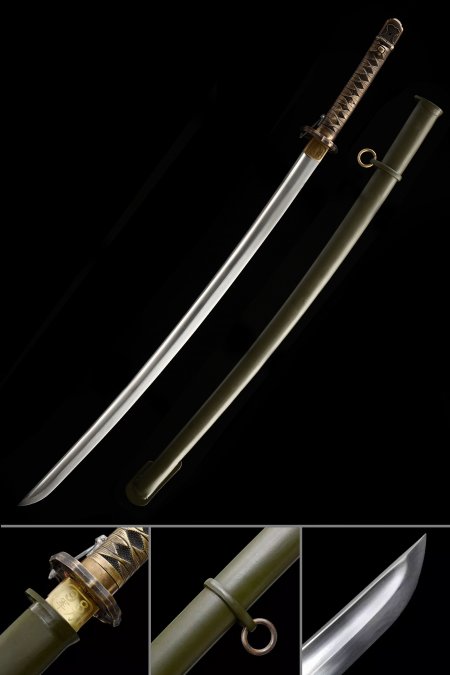
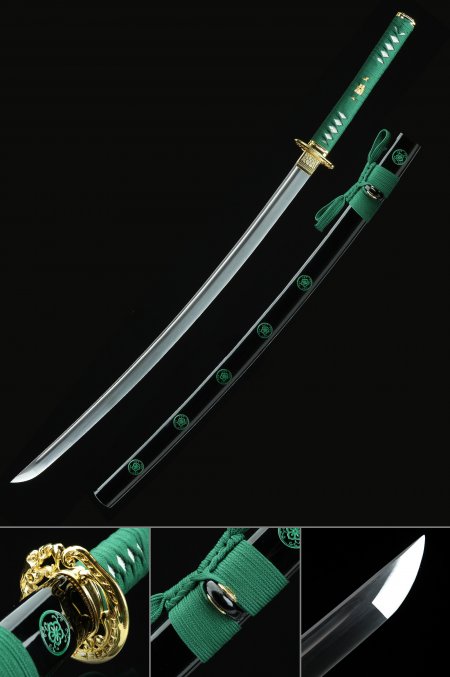
A green sageo is more than a finishing cord - it's a deliberate aesthetic choice that signals refinement and intention in any serious collection. Every katana in this series is hand-forged to full-tang construction, dressed in authentic silk or cotton sageo in rich green tones, and paired with hand-selected tsuba ranging from gold floral motifs to dragon and snake carvings. Whether your display case calls for a Damascus-layered blade with visible hamon or a clean 1095 high-carbon grind housed in lacquered hardwood saya, each piece is crafted with the detail that distinguishes a true collectible from ordinary decorative reproductions. Free standard shipping on all orders, plus hassle-free returns.
Showing 30 Products

Related Collections

Red Tanto16 items


23 Reviews

Green Tanto3 items


Reviews

Green Wakizashi5 items


17 Reviews

Green Ninjato1 items


Reviews

Frequently Asked Questions

What does the sageo cord do on a katana?
The sageo is the braided cord threaded through the kurigata - the small knob on the saya, or scabbard. Historically, it was used to tie the saya to the wearer's obi so the sword stayed secured during movement. In a modern collectible context, the sageo no longer serves that functional role, but it remains an essential part of authentic Japanese sword mounting tradition. Its color, material, and braiding style all contribute to the overall aesthetic of the piece. On a display katana, a well-chosen sageo in green silk or woven cotton visually connects the handle wrap and scabbard finish into a unified composition, which is why collectors pay close attention to this detail when selecting a piece for display.
How does Damascus steel differ from 1095 carbon steel in these katana?
Damascus steel and 1095 high-carbon steel are two distinct blade construction approaches, each with a different visual and structural character. Damascus is created by layering and folding multiple steel types together, then etching the finished blade to reveal a flowing grain pattern - no two Damascus blades display the same pattern, which makes each piece individually unique. This layered construction is prized among collectors for its visual complexity. 1095 high-carbon steel, by contrast, is a single-alloy steel known for its hardness, fine edge retention, and consistent behavior through the heat-treatment process. A 1095 blade is often the preferred choice when a visible hamon - the differential hardening line - is the priority, since the contrast between hardened edge and softer spine shows most distinctly on mono-steel blades. Both are legitimate collector-grade choices; the decision usually comes down to whether you value the visual drama of layered grain or the classical authenticity of a clean hamon line.
What is a real hamon, and why does it matter to collectors?
A hamon is the visible line along a katana blade that marks the boundary between the hardened cutting edge and the softer, more flexible spine. A real hamon is produced through a process called tsuchioki, where the bladesmith applies a clay mixture to the blade before quenching it in water or oil. The areas left uncoated cool rapidly and harden, while the clay-coated spine cools more slowly and remains tough. This differential hardening is a defining characteristic of authentic Japanese sword-making tradition. For collectors, a genuine hamon is a mark of honest craftsmanship - it cannot be faked with acid etching and still look correct up close. When you see a real hamon on a collectible katana, you are looking at a physical record of the heat-treatment process, which gives the piece both historical legitimacy and visual character that purely decorative reproductions cannot replicate.
How should I maintain and store a green sageo katana on display?
Proper care protects both the blade and the fittings over years of display. For the blade, apply a thin coat of choji oil or mineral oil every few months using a soft cloth to prevent oxidation - avoid fingerprints directly on the polished surface, as skin oils accelerate spotting. Store the katana horizontally or on a display stand with the edge facing upward in the traditional manner, away from direct sunlight, which can fade the green sageo and ito wrap over time. Humidity is the primary enemy of lacquered saya: keep the display environment between 40-55% relative humidity to prevent the lacquer from cracking or the wood from warping. For the sageo cord itself, avoid excessive handling or compression that would distort the braid - if the cord gets dusty, a soft dry brush is sufficient. Never store the blade inserted tightly into a humid saya for extended periods.
Is a green sageo katana a good gift for a collector?
A green sageo katana works particularly well as a collector's gift because the color choice itself demonstrates that thought went into the selection - it is not a default configuration. Green sageo paired with matching ito wrap and a complementary lacquered saya creates a visually cohesive piece that stands out in any display setting. For a recipient who already owns katana with standard black or red mountings, a green-themed piece adds meaningful variety to their collection. The range of blade steels and tsuba designs in this collection - from gold floral guards to dragon and snake motifs - means there is room to match the gift to the recipient's existing aesthetic preferences. Full-tang construction and hand-forged blades ensure the piece has the structural authenticity that knowledgeable collectors notice and value, making it a gift that holds up to scrutiny beyond its visual presentation.

Customer Reviews

Cart 0 Items

Your cart is empty